batteries and battery care

UngaWunga

Pattern Altitude
Joined
Oct 27, 2014
Messages
2,265
Display Name
UngaWunga
Home Airfield
7B3
Love me tender... how many of y'all keep your battery on a battery tender while your plane sits?
My 172s battery is about 6 years old, and if it sits for a few days while not on a tender, it won't have enough juice to start the engine.
One day off the tender, it'll have enough power. Anything longer and it gets sketchy.
I'll be replacing the battery, but am curious if keeping the battery on the tender is doing it harm. AGM battery with an AGM 12v battery tender.
 
Some do not like to be on the tender in hot weather.
Mine isn’t the style with a temperature sensor, so I have it on a timer in the summer; only connected from 2am-7am.
 
One day off the tender, it'll have enough power. Anything longer and it gets sketchy.
Just to add, that sounds more like there is a parasitic drain on the battery. And over time even with a tender connected that continuous drain/charge cycle will permanently damage the battery. Regardless, before you install a new battery I would give your battery and charging system a good check up to see if it meets spec. If installing a Concorde they have some bulletins that will take you through the parasitic drain checks and address the methods for maintenance charging (tender). All lead acid batteries do not like continuous charging even at the trickle charge level, however, when compared to no mx charging over periods of inactivity, you'll still be money and battery life ahead by leaving a proper tender connected 24/7 vs none.
 
Never used a battery tender on my plane, equipped with AGM (Concorde) batteries. Never an issue. Just keep the battery properly charged (ensure the charging system is regulated to the proper voltage). AGM batteries have low self-discharge rates, especially in the winter.

The quickest way to kill an AGM battery is to leave it partially or fully discharged for any length of time. Then it becomes irreversibly sulfated. It may produce "nominal" open current voltage when maximally charged, but it will not have much capacity and will lose voltage quickly under load. Overcharging an AGM battery can deplete the electrolyte.

I don't touch my battery other than trying to fly it as often as possible, but that could be a month or more in the winter when the hangar doors are frozen. Starts right up in the spring after winter inactivity.
 
Never used a battery tender on my plane, equipped with AGM (Concorde) batteries. Never an issue. Just keep the battery properly charged (ensure the charging system is regulated to the proper voltage).
...
I don't touch my battery other than trying to fly it as often as possible, but that could be a month or more in the winter when the hangar doors are frozen. Starts right up in the spring after winter inactivity.
:yeahthat:

No sense getting a new battery if it will be doomed to the same fate.

What is your bus voltage when the engine is running and the alternator is on? My voltage regulator got dorked up at one annual and the resulting chronically low voltage injured the battery.

I got an Odyssey in 2020 and it's been fine since then. I plug in a desulfator from time to time but that's it.
 
I don't use a battery tender. I believe they do more harm than good. I have, a couple of times, connected a low level power supply when having the avionics on for extended periods while upgrading software or learning the systems on the ground.

I have an Odyssey battery (experimental) and at times it has sat for a week or two and I've never had a starting issue. My planes charges at 14.7 (recommended for the PC-680 battery). If you are going to connect a battery maintainer be certain it is for your AGM type battery. Be sure your battery stays charged after a flight. Leaving it at less than full charge can shorten its life ...
 
I use a temperature sensing unit specific for Concorde AGM batteries (current plane and previous one).
 
The quickest way to kill an AGM battery is to leave it partially or fully discharged for any length of time. Then it becomes irreversibly sulfated. It may produce "nominal" open current voltage when maximally charged, but it will not have much capacity and will lose voltage quickly under load. Overcharging an AGM battery can deplete the electrolyte.
That applies to any lead-acid battery.
 
I bought a Concorde BatteryMinder that includes temperature sensing, set up with the quick-connect charging line. As I'm currently one of the ramp peasants without access to power, I have paired it up with a Jackery portable power station, which I got as a refurbished unit on the cheap and gives solid AC power. Works brilliantly, returning my battery to a full charge and desulfating if I haven't been able to fly for a bit. The only limitation is that the power unit seems to have a 24-hour limit (and uses about 10-15% of its capacity over that time) before it turns off. Still, it gets me to a fully charged state every time over that 24 hours, so that's really all I need. I will generally plug it in once every few weeks to ensure that the battery is reasonably maintained and just leave it until the next time I'm at the plane.
 
I have a Concorde RG-35AXC that is always on a battery minder brand charger/maintainer when my plane is in its hangar. And it's the charger designed specifically for that battery.
 
Just to add, that sounds more like there is a parasitic drain on the battery.
Yeah, it's either that or just an old battery. OP states it is six years old. Airplane batteries are pretty badly mistreated compared to most batteries and wear out pretty quickly.

Super simple to check if there is a load being put on it though...
 
Yeah, it's either that or just an old battery. OP states it is six years old.
True. But I don't use battery age as a primary disqualifier. Have seen 2 year-old batteries with same symptoms. However, as you mentioned, after a simple electrical drain check plus a standard battery capacity check, one can make an informed call. Even if you can't add more life to the existing battery, with an electrical system operating to spec and using the recommended preventative measures, there should be no reason the new battery installed couldn't go 7+ years.
 
True. But I don't use battery age as a primary disqualifier. Have seen 2 year-old batteries with same symptoms. However, as you mentioned, after a simple electrical drain check plus a standard battery capacity check, one can make an informed call.
Yeah, for sure parasitic drain exists. Just giving him another possibility to consider.
Even if you can't add more life to the existing battery, with an electrical system operating to spec and using the recommended preventative measures, there should be no reason the new battery installed couldn't go 7+ years.
You have had way better luck than me. :-)

I tend to get ~4 years out of a battery.
 
Ok, just looked through the the logs. I was wrong on the date. 25XC battery installed in 2014. I think I got my money's worth out of it. Will buy another.

Interesting to read the differences on tenders, though. I was concerned about a parasitic drain, and I can check that next time I'm at the hangar with a voltmeter. The Concorde tender looks impressive, and should be for its price. I know, aviation...
 
:yeahthat:

No sense getting a new battery if it will be doomed to the same fate.

What is your bus voltage when the engine is running and the alternator is on? My voltage regulator got dorked up at one annual and the resulting chronically low voltage injured the battery.

I got an Odyssey in 2020 and it's been fine since then. I plug in a desulfator from time to time but that's it.
The absolutely correct voltage depends on the ambient temp, but 13.8-14.2 V is a good range. Mine is set around 14.0 V. A couple of annuals ago it had drifted to 13.5V. Not good. Partially damaged that battery.
 
Where is the temperature sensor?
That's a good question. The unit has a light indicating "temperature compensation". The ambient temperature is sensed at the unit itself, although there is a $22 optional accessory to check the temperature at the battery for the most optimal charge. In my plane, the battery is just behind the rear bulkhead and I have the battery minder leads permanently attached, with a quick-connect coming through the access port. When I charge, both the BatteryMinder and the Jackery unit are in the baggage compartment and I just hook up the quick-connect. I presume that the temperature is roughly ambient in both locations, although I suppose the temperature would probably rise somewhat within the battery box while charging. For my purposes, I'm not sure it makes that much of a difference.
 
That's a good question.
Its built into the charger. Where the optional ABS temp sensors come into play depends on the location of the battery. About the only place I found where they made a difference was for batteries located in an engine compartment which could vary the surrounding temps.

The Concorde tender looks impressive, and should be for its price. I know, aviation...
Definitely got your money's worth. No reason you cant get similar with new battery. Concorde has a bulletin on checking parasitic drain but there are also a number of youtube videos as well for vehicles which is same process. Regardless, the main reason for the cost increase is more the small market share of these specific chargers vs simply aviation as I was told.
 
Concorde and Gill have a capacity check if you fly IFR might be nice to know your battery will last more than 5 minutes should the alternator fail. Parasitic draw down, older Cessna 172 had a fuse you could pull to keep the clock from running the battery down in a few days. Some people just disconnect the battery if it is going to sit for a while, parasitic draw you might want to find out what is draining the battery. If it's the clock you might want to put a switch in the circuit if it is a radio, can you live with the loss of information if you switch off the keep alive to stop it.
 
In central Florida, I get 3-4 years max. That has been consistent across a dozen vehicles: cars, boats, planes. The heat and humidity just kills 'em. I used to try various revival tricks, now I just head to AutoZone when they start showing signs. That said, I just put my Jeep battery on a reconditioner after it wouldn't start yesterday.

I am about to install an EarthX Lithium in my Decathlon. Curious to see how that fares over time in this weather.
 
Last edited:
1747697980715.png

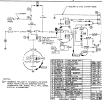
This diagram is from a Cessna 182 manual and is for the external power system. At the top is a diode, #13, that I once found shorted in a 185 that had a parasitic drain problem. That diode had partially shorted, forming a path between the battery (#1, on the left) and cable D-PA-11, which connects to the point labelled P4.13, near the big B in the middle of the picture. That terminal is connected via the ammeter, #4, to the bus, and anything that is fed off the bus and is live whenever the master is on will suck amperage that depends on the degree of short in that diode. The engine gauges, panel lights if they're left turned up some, the turn coordinator, and so on. That 185's battery would go dead over a weekend, all because of a 25-cent diode. Took a while to find that. I think diode #9 was partly responsible; if it was open, the voltage spike off the master contactor coil (#2 or #19) that occurs when it is shut off probably blasted that #13 diode because the reverse voltage on it was around 600 volts. Such diodes normally are rated for 50 peak inverse volts. I have measured such spikes on an oscilloscope. #9 does not usually suffer because the spike is forward on it, and it shunts that spike and kills it. It's there to protect radios and such that might be on and connected to the main bus. I have found those diodes broken by people working around the contactor. They're small and fragile. We went through a series of blind encoders on one airplane before I found that diode broken. Those encoders are often wired directly to a breaker on the bus.
 
"Pro Tips for Maintenance - Aircraft Batteries"
Topic: Lead Acid Aircraft Battery Maintenance, Proper Servicing, and Testing
On Wednesday, June 18, 2025 at 19:00 Central Daylight Time (17:00 PDT; 18:00 MDT; 20:00 EDT; 14:00 HST; 16:00 AKDT; 17:00 Arizona; Thursday, June 19, 2025 00:00 GMT)

Select Number: GL15136828

Description:
The battery is the heart of your aircraft. Concorde Battery Corporation, aviation's leading battery manufacturer, presents the recommended methodologies for proper servicing, capacity testing, and charging an aircraft battery.

To view further details and registration information for this webinar, click here:
http://www.faasafety.gov/SPANS/event_details.aspx?eid=136828

The sponsor for this seminar is:
FAASTeam


The following credit(s) are available for the WINGS/AMT Programs:
AMT: 1.00

Basic Knowledge 3 - 1 Credit


Click here to view the WINGS help page: https://www.faasafety.gov/OnlineHelp/Default.aspx?page=/WINGS/pub/default.aspx
 
Back
Top