Aviation mechanic school

francisco collazos

Line Up and Wait
Joined
Jun 11, 2021
Messages
650
Display Name
ciscovet
I hope this is the correct forum to ask this question.
My girlfriend's 15 yr old son is thinking about becoming an aviation mechanic and possibly an A/P IA. What would be the most cost effective way to get into the profession? Tech school? Apprenticeship? Community college? Any tips I could pass on to him would be welcomed. We live near Tampa Florida.
 
What would be the most cost effective way to get into the profession?
In my experience, the most cost-effective way has been the community college route. However, it may not be the quickest route as there are schools out there that have accelerated programs and can get through the same curriculum in half the time, but at a premium. No idea whats available in FL on either side. And if he likes electronics have him include aviation avionics and electronics in his studies, if available, as an A&P/IA with an avionics background is the golden ticket.
 
I know one A&P who got there in one year. I believe it was at Ionia, Michigan. Our grandson, a high school senior, is hoping to get into Delta's program. I believe Lake Superior College in Duluth has a program. A long way from Florida, I know, but there must be many closer ones.
 
There are a couple of options in pinellas county.
 
I think if I had a stepchild I'd shove them into A&P school also. :D
 
A former motorcycle mechanic (very experienced wrench guy) is working part time for a local IA gaining hours towards an A&P. He's self-admittedly not a great test taker and has plans to attend a two week course to prepare for his written exam. There's a two week course somewhere in Tennessee that supposedly nearly everyone passes after attending. The course is located somewhere around Nashville TN.

I think this mentorship type of training while getting paid (probably at low pay) could be a good method of learning if the licensed aircraft mechanic is willing to participate in an on the job training setup.
 
I think this mentorship type of training while getting paid (probably at low pay) could be a good method of learning if the licensed aircraft mechanic is willing to participate in an on the job training setup.
It's the Baker's School of Aeronautics. And 35-40 years ago quite a few people got their A&P via the OJT method, but things were different then. It's how I got mine.
 
My take is ojt is good for a retirement or second career.

I’d advise a recent high school grad to go the Part 147 School route.

Finding the right one might not be easy.

Some folks may not know that at one time there were a number of

High School A&P Programs; plus one in prison!

Vo-Tech Ed was often used as a dumping ground and took quite a hit

about 40 years ago. Who needs mechanics, plumbers, cosmetologists,

etc, etc. I believe a comeback is currently underway though.
 
Last edited:
I’m a retired A&P. There are a couple of ways to get your ticket. An A&P school, military experience (get your documentation before you discharge), OJT with a lot of documentation.

I used to say ‘if you want to get paid what I get paid without 2 years of training, drive a truck’, you’ll never be home but you’ll get paid. Today we see the driverless car evolving into the driverless truck.

Working your way into an A&P license means finding an employer like Delta that has a program. If you go that route, it’ll be on you to document every job you do every day and get your lead mechanic to sign your book. You will have to get an A&P to sign off on the jobs you do. When you have enough hours in enough categories you can take the tests.

If you enlist in the military, you get all the training. You also get the opportunity to go to school and a bachelors degree is very possible if you are willing to work for it.

I worked with a 20 year navy retiree at Delta airlines when he was a new hire. He worked on fighter jests on aircraft carriers. When he got out the military helped him with his documentation and he was given his license after taking his tests.
 
It's the Baker's School of Aeronautics. And 35-40 years ago quite a few people got their A&P via the OJT method, but things were different then. It's how I got mine.

Curious, what has changed to make becoming an A&P so different today? Is it basically a lack of interest in working with your hands versus playing with computer games and the rest of electronic type distractions?
 
Curious, what has changed to make becoming an A&P so different today? Is it basically a lack of interest in working with your hands versus playing with computer games and the rest of electronic type distractions?

I don’t think you can paint ALL with the same brush. Previously I mentioned

lack of emphasis regarding Vo- tech. it seems to me that that young people

are shortchanged as far as “ World of Work” information. IMHO parents,

schools, family and friends should be involved in helping with decision

making.Those of us involved with aviation can help with this too. The

Young Eagles Program supported by EAA is primarily for pilots. IIRC

they also introductory Tech programs. Those at Oshkosh are quite popular.


Required tasks have changed. My training included splicing wood spars

and woven cable splices. Yeah; I am that old. Alternating Current was a very

minor topic.Composite Repair and Electronics are much more significant

now.
 
Find a two year schools with good reviews and get it done.

I apprenticed for my A&P. It was never intended to be my primary career. It’s a great way to get certified if you can’t do full time school for some reason. I would recommend the full time school if the goal is a career in maintaining.
 
I vote community college. My local school was almost free with some grants. At the time, I was tempted by the more expensive options thinking it would be “better”. That would have been a huge waste of money. Airlines do not care where you went to school. Too many of my AMTs are still paying student loans.
 
Curious, what has changed to make becoming an A&P so different today? Is it basically a lack of interest in working with your hands versus playing with computer games and the rest of electronic type distractions?
As a recent grad, I can say that there was a strong push at my HS for a "liberal arts degree pathway to a white collar career" in school. Real sciences and engineering were given lip service. Computer science confused them. And blue collar careers were "for those who couldn't handle school." But, if you think about it, that is where a lot of salary growth will have to occur in the future. Plumbing, electrical, HVAC, welding, mechanics ... among other trades will be darned hard to automate or offshore. And anyone who took ECON 101 knows what happens when demand outpaces supply.
 
Curious, what has changed to make becoming an A&P so different today? Is it basically a lack of interest in working with your hands versus playing with computer games and the rest of electronic type distractions?
Yes and no. With the OJT route, the numbers of mechanic helper type jobs declined significantly in the mid-80s and changes to FAA policy all reduced the opportunities for interested people to pursue their A&P via OJT. Even the FAA's switch from GADOs to FSDOs created an additional barrier in a number of regions. Unfortunately, by the time anyone realized what was happening, half a generation of potentional A&Ps found computers or other opportunities which still continues today.
 
I recommend the military approach but if not, then the Community College. Also one of the local high schools has a program to get the A part of A&P before graduation.

I have audited 2-3 A&P courses at the CC and everyone of the students I was in class with had job offers before graduating.
 
There are numerous options in the Tampa area. Polk Community College in Polk County has a very active aviation program. I think HCC has a program. National Aviation Academy has a trade school at PIE.
 
One thing to check out ASAP with the community college side of things, are the wait lists for a class slot. My local school only has 25 slots for day classes and about 30 total for the nights and hybrid schedules. I started the process in October of 2024 and still don't have a class date yet....... There were more than 200 in the session I attended to start the application process for the A&P side of things and another 250 or so for the pilot's side.
 
There are numerous options in the Tampa area. Polk Community College in Polk County has a very active aviation program. I think HCC has a program. National Aviation Academy has a trade school at PIE.

@2-Bit Speed is a Polk alum, though not in aviation. PCC does have a decent aviation program, but their aviation maintenance degree does not include getting an A&P. AFAIK, they don't have a way to give students the shop time required. They do offer credit hours toward the degree for obtaining your A&P, and they might coordinate with other facilities' programs to make that happen, but I'm not sure. It might be worth investigating a bit.

 
@2-Bit Speed is a Polk alum, though not in aviation. PCC does have a decent aviation program, but their aviation maintenance degree does not include getting an A&P. AFAIK, they don't have a way to give students the shop time required.

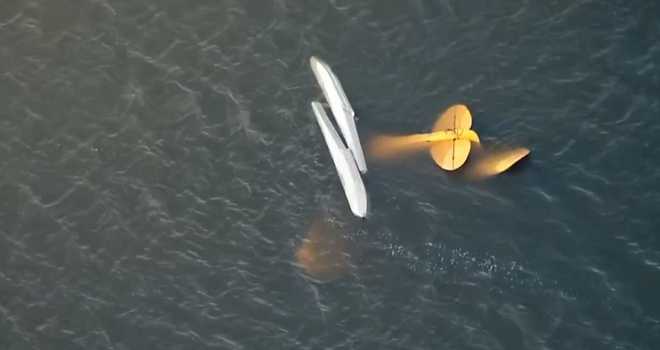
Come to think of it, we had two young Italian men at our airfield who were PCC aviation graduates, and they got their A&P by interning with my buddy's shop. One got his IA. Odd that they don't work on their own training fleet. I see those darn things all over the place, usually dive bombing the pattern with 72 radio calls per landing. I believe one of the aircraft in the midair with the Jack Brown seaplane was a PCC training bird, yes?

In any event, central Florida is a hotbed for aviation training of all sorts. I think there might be a school at Lakeland also. So I'm sure the OP's GF's son can find numerous options.
 
Odd that they don't work on their own training fleet.

I don't know, but I wouldn't be surprised to learn it's a matter of getting a dedicated maintenance facility and equipment. That could be a substantial investment. I think their planes are based at Lakeland.

I see those darn things all over the place, usually dive bombing the pattern with 72 radio calls per landing. I believe one of the aircraft in the midair with the Jack Brown seaplane was a PCC training bird, yes?

Yes, it was. The PCC plane, a Warrior, was doing pattern work at KGIF (Winter Haven) when a NORDO Cub from Jack Brown's climbed through the pattern, opposite to pattern direction. Four dead.

 
Odd that they don't work on their own training fleet.

I just noticed this from the report on the air-to-air collision:
"...as a Cherokee Piper 161 fixed-wing plane operated by Sunrise Aviation on behalf of Polk State College."​

It's possible that Polk doesn't own their own fleet of aircraft, but has a lease arrangement of some sort.
 
A Part 147 AMT School route is quite an undertaking.

Lots of equipment from across the whole aircraft type spectrum.

Record - keeping and make-up time is a hidden cost also.

Mohawk Valley in NY shut down recently.
 
Los Angeles has a high school program for A&P program for high school students in the valley.
 
I know nothing of the specifics of earning A&P
but generally speaking from a very high level... young kid looking into a trade.
Yeah, I'm a fan of the idea of a community college or university approach rather than a targeted accelerated path.
I reckon the community college, especially an associate's degree program, would probably be the way to go...over a certificated trade school approach
Since I'd reckon part of the program will be foundational general education classes that will help no matter which way they end up going.

My middle child has just graduated HS and is off to college next year. Currently on a Speech and Language Pathology track, but may land into some other science track....pre-med oriented stuff maybe. Regardless, I'm trying to put a bug in her ear about not being shy about taking courses if the opportunity arises that may not be required for her major. Stuff that may be interesting to her that might be worth exploring, but more to the point of this discussion, general ed things may be helpful getting into one of the paths she has in mind as a fall-back plan, etc... In her case math and science prerequisites that may not be required for CSD, but would be if she decides to switch majors to Bio or whatever she has in mind, just to keep that door open
+ things like business-oriented stuff. Even to the point of say for example, getting a minor in business if that might work out. (I know this sort of idea likely doesn't make sense when considering time and money and GPA).
No matter the degree, I figure everyone can benefit by learning more about business and communication...and my opinion is that every college graduate, even science or liberal arts or trade oriented folks, should have had some classes in things like report writing, how to communicate affectively (such as personality based team building stuff, public speaking, etc...), how to have a meeting, how to keep books, make and understand proffit/loss statements, etc....
and yeah, this from an engineering major that has spent the majority of his young life thinking that business majors were always the partiers that couldn't or wouldn't cut it for a "real" degree....and then spent quite a few years after that, wondering how so many of those slackers ended up making big money in sales or management jobs.
 
I know nothing of the specifics of earning A&P
but generally speaking from a very high level... young kid looking into a trade.
Yeah, I'm a fan of the idea of a community college or university approach rather than a targeted accelerated path.
I reckon the community college, especially an associate's degree program, would probably be the way to go...over a certificated trade school approach
Since I'd reckon part of the program will be foundational general education classes that will help no matter which way they end up going.

My middle child has just graduated HS and is off to college next year. Currently on a Speech and Language Pathology track, but may land into some other science track....pre-med oriented stuff maybe. Regardless, I'm trying to put a bug in her ear about not being shy about taking courses if the opportunity arises that may not be required for her major. Stuff that may be interesting to her that might be worth exploring, but more to the point of this discussion, general ed things may be helpful getting into one of the paths she has in mind as a fall-back plan, etc... In her case math and science prerequisites that may not be required for CSD, but would be if she decides to switch majors to Bio or whatever she has in mind, just to keep that door open
+ things like business-oriented stuff. Even to the point of say for example, getting a minor in business if that might work out. (I know this sort of idea likely doesn't make sense when considering time and money and GPA).
No matter the degree, I figure everyone can benefit by learning more about business and communication...and my opinion is that every college graduate, even science or liberal arts or trade oriented folks, should have had some classes in things like report writing, how to communicate affectively (such as personality based team building stuff, public speaking, etc...), how to have a meeting, how to keep books, make and understand proffit/loss statements, etc....
and yeah, this from an engineering major that has spent the majority of his young life thinking that business majors were always the partiers that couldn't or wouldn't cut it for a "real" degree....and then spent quite a few years after that, wondering how so many of those slackers ended up making big money in sales or management jobs.
From the "interesting, but not of practical use" file: pre-pandemic, a university located in suburban Chicago was looking for Bush Pilots, A&Ps, and Speech and Language pathologists to go to South America. One had to be willing to live in off-grid camps. It was a project to map and record indigenous languages.
 
From the "interesting, but not of practical use" file: pre-pandemic, a university located in suburban Chicago was looking for Bush Pilots, A&Ps, and Speech and Language pathologists to go to South America. One had to be willing to live in off-grid camps. It was a
There are also a number of missionary groups with aviation assets that provide paths for people to obtain pilot and mechanic certificates as part of supporting their mission.
 
Last edited:
I got my ticket in the late 90’s in southern California. I had a wife and three kids, so going back to school was no picnic. I could pay to go full time at a school in about 18 months, or community college would be cheaper but take 30 months.

I ended up working 40 hr weeks at Robinson helicopter while going to A&P school full time in the evenings. I was also working 2 part time jobs. I was getting a total of 4 hours sleep per day, but not all at once.

When I finished my A&P. Robinson helicopter upped my pay by .25 per hour and made me a lead, which I only found out about when I saw my name on an FAA roster posted on a wall.

I escaped California in 2001 and am ever so glad I did. My first home 10 miles south of the Atlanta airport was 4 bedrooms on 1 acre, and I paid 150k in 2003. My current home is 5 bedrooms on 4.5 acres. I bought it 5 years ago for 500k. You just can’t get either in California..

Btw I keep my daily driver across the street. $250 month for the T-hangar IMG_5087.jpeg
IMG_6960.png
 
I'm at a tech college, classes run from 4:30 - 8:00 or so M-Thurs. Almost all in the class are working and going to school at same time (and a couple of old retired guys like me). It is 2 years start to finish / last practical-oral test with DME.

If you did the day classes, I think it's 1 1/2 years. As college tuition goes, it's very affordable.

TANGENT: So many people need A&P's, job outlook should be great. Not only airlines, but any place that needs a high level mechanic. Disney, Ford/GM, Robotic companies, etc.

Salary? If you go to a Delta, they'll stick you in more classes. Then you start at the bottom under the wing of someone for a short time until you show you know what a screw driver is. Then more classes Within a few years, if you put in the overtime you'll be getting close to if not over 6 figures. And it goes up from there.

And..... lots of people are retiring, so the shortage is getting worse. So if this is something he has a knack for and likes, he can make a good career out of it.
 
BONUS: We also have a waiting list, as we are limited (FAA rules) to how large the class can be. Want to move up on the wait list? Write a note outlining how you are focused and serious about this opportunity. Show examples of how you showed up for classes, are dependable, didn't skip assignments, clean (can pass any drug test, no bad decisions with alcohol, etc.) You have good math grades. (Basic algebra, and you can add without a calculator). You don't quit, you don't drop out of things. Add some references.

Send this to whoever the dean of the college is, as well as who runs the A&P department. Schedule an appointment and talk these people in person, or at least on the phone.

No one else will be doing this, and you'll be at the top of the list.
I wish I could do this, but with my flying schedule, there is just no way.
 
Just received this email from my home drome:
-------------------------------------------------------------------------------------------------------

The U.S. Department of Transportation and the Federal Aviation Administration (FAA) announced a $26 million investment to support the next generation of aviation professionals through the Aviation Workforce Development Grant Program. The investments will strengthen the workforce pipeline for the aerospace industry–from mechanics and technicians to pilots and drone operators.
Applications are due by June 18, 2026.

The FAA’s investment will go towards:
  • Aviation training programs to equip future pilots with technical skills
  • Aviation apprenticeships and internships to provide new pilots with hands-on experience
  • Proactive student outreach to bolster recruitment numbers
  • Training future pilots using state-of-the-art tools like simulators

“More Americans are flying today than ever before! At USDOT, we are investing in our aviation workforce to meet growing demand while maintaining the highest standards of safety,” said U.S. Transportation Secretary Sean P. Duffy. “We have the safest airspace in the world thanks to our commitment to equipping our talented workforce with the tools and experience they need to take flight.”

“More Americans are taking to the skies and demand for skilled aviation workers continues to grow,” said FAA Administrator Bryan Bedford. “These new funding opportunities support education and training programs that help build a strong pipeline of talent and invest in the future of America’s aviation workforce.”

Available Grant Programs:


Who Can Apply?

Eligible applicants include schools, aviation organizations, aviation-related nonprofit organizations, air carriers, labor groups, and state, local, territorial, and Tribal governments.

How to Apply:

Review the Notice of Funding Opportunity and apply directly on Grants.gov using the links below:

The FAA encourages eligible organizations to share this opportunity with their networks and consider how these grants can support aviation workforce development efforts in their communities. Together, we can help build and sustain the next generation of aviation professionals supporting the safest and most complex airspace system in the world.


April Rowe
Technical Advisor
Southern Region (ASO)

Federal Aviation Administration
U.S. Department of Transportation
(404) 305-5003

[email protected]
 
Curious, what has changed to make becoming an A&P so different today?
When I went to get the endorsements to take the tests I just walked into the Oakland FSDO. No appointments, no scanners, hell you could even smoke a cigarette while getting interviewed.
 
Education policies are developed that are not really in the public’s best

interests. One AMT School is currently in the process of shutting down.

Not because of lack of students or ability to get the first job. Rather it’s

because of graduates were placed outside the county but the same state.

This is not the first program to close from this rationale.
 
If you have a Community College available to you, I'd say do that. Keep in mind that many of them have multiple year waiting lists to get in so you may want to start contacting them now. Military there's too many variables and I only know a few of them that got their Certificates from using only their military experience, the rest had to go to a Part 147 school. One thing I've never understood is why there are more Aviation High Schools that specialize in training students for Maintenance work, like they have in Queens NY (if someone knows of one in another part of the country I'd love to know about it). Be very wary of the chain schools like AIM, we're having issue with students that were barely taught anything while they were there (not to mention obscenely expensive).
 
Buffalo NY, Rochester NY and NYC HAD A&P Programs as did

Cleveland,Ohio. They were all public high schools.

Vo-Tech is always more expensive than academic education.

Principals generally don’t like FAA telling them how to run the school.
 
Back
Top