Another pilot bails

In shrink wrap, sure. But if we're talking about cells potted in some mystery-epoxy and encased by some sort of bomb-proof plastic, I have questions.

Normally it's the mechanic but @Ed Haywood raises a good question about combining the two regs (owner produced part + preventive maintenance).
Re epoxy, depending on what it's for, I think it could be fine. Could Boeing spec their own formula for epoxy? Sure. Is a manufacturer of replacement batteries for ELTs in Pipers going to do that? Seems very unlikely. So there are off the shelf choices from 3M, Loctite, etc., and from those I see colors and whether you want UL 94 HB or V0. I could make an argument that a 3M product with a UL rating is an industry standard mix that's equivalent to or better than anything else in terms of strength and temperature range.

Now if someone is using a product off-label, like using a mechanical fastener to provide an electrical connection, or vice-versa, then yeah, I could see it being a PITA to document the same function. And I'm also sure there are a lot of cases where build your own isn't going to work.
 
So if I’m an A&P, I could create the document, sign it, build and install. But then is the IA going to accept it at annual?
 
Does the FISDO or someone need to approve, or do you just put this documentation in the log book?

You document in the logbook the maintenance action, R&R of the part. It’s just like any other part, and as far as I can see there’s no regulation requiring manufacturing documentation.

If you want an A&P to do the part swap he might want to see documentation for his own reasons, but you can install an ELT battery yourself as PM.
 
So if I’m an A&P, I could create the document, sign it, build and install. But then is the IA going to accept it at annual?

I’m pretty sure mine would. Ask yours.

If the IA reads a log entry that just says you replaced the battery, is he going to then remove the battery to see who made it?
 
If you want an A&P to do the part swap he might want to see documentation for his own reasons, but you can install an ELT battery yourself as PM.
Did the OEM follow a documented procedure as part of applying the expiration sticker to the battery? Do you have access to the document and/or able to replicate that procedure?
 
We allow threads that don’t ask questions.

As far as this discussion goes, I’m curious how the aging pilot population is really distributed through the ages. For every retiree who bails out of GA, how many younger pilots are joining? Asked another way, and with less room for anecdote and selection bias, what is the ratio of 60-year-old GA pilots to 40-year-olds? (I figure 40 is roughly the average age for when a person who wants to fly but isn’t a complete spendthrift decides he can finally afford it.)
I'm doing my best to have a pilot replace me. My son has his PP check ride scheduled in a couple of weeks. :)

Oh, and I'm in an aviation desert. We have a local airport, but the FBO is set up for larger aircraft maintenance. No EAA. No flight school. No independent owner/instructors. There is nothing special that would motivate someone to fly in and visit. The airport doesn't even have credit card fuel. You can only fuel during business hours, during the week.
 
Did the OEM follow a documented procedure as part of applying the expiration sticker to the battery? Do you have access to the document and/or able to replicate that procedure?

No one says I have to follow the OEM's procedure, if there even is one; the standard is assessing that the parts are airworthy. The 9V Energizers are standard parts made to industry standards (ANSI 1604A in this case) and come with expiration dates that give me the info to create the expiration sticker. The product datasheet is here, and it includes discharge curves and shelf life: https://data.energizer.com/pdfs/522.pdf .
 
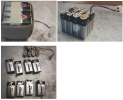
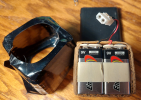
FYI, here's one of my battery packs, opened up:

1756480035637.png

It's nothing more than 8 Energizers wrapped with tape and cardboard.
 
So if I’m an A&P, I could create the document, sign it, build and install. But then is the IA going to accept it at annual?

Technically an A&P cannot make an owner-produced part. The aircraft owner must control production. However, there is a loophole; the owner can provide the specifications and contract the A&P to fabricate it.

There are two approvals required for any aircraft part: production approval and installation approval. Not just anyone can make an airplane part. The FAA has a whole separate body of regulations for production approval. Owner production is one way to produce a part eligible for installation on a certificated aircraft. Others include PMA, TSO, and standard parts.

Installation approval is separate. The installer must confirm the part is eligible to install and the repair is airworthy. For preventative maintenance, the owner is the installer. For a minor repair or alteration, the A&P is the installer. For a major repair or alteration, the IA must approve the repair using FAA approved data such as an STC or field approval.

I hate to propagate Mike Busch stuff, but this article is a good overview: Owner Produced Parts

I recommend you read up on Preventative Maintenance under 14 CFR Part 43 Appendix A. Be sure to read the Coleal memorandum, in which the FAA states that Appendix A is a list of examples, not an exhaustive list.
 
Last edited:
Oh, and I'm in an aviation desert. We have a local airport, but the FBO is set up for larger aircraft maintenance. No EAA. No flight school. No independent owner/instructors. There is nothing special that would motivate someone to fly in and visit. The airport doesn't even have credit card fuel. You can only fuel during business hours, during the week.

You should move.

But not to Florida. Florida is full.
 
No one says I have to follow the OEM's procedure, if there even is one; the standard is assessing that the parts are airworthy. The 9V Energizers are standard parts made to industry standards (ANSI 1604A in this case) and come with expiration dates that give me the info to create the expiration sticker. The product datasheet is here, and it includes discharge curves and shelf life: https://data.energizer.com/pdfs/522.pdf .
The real problem with owner produced parts is that most of us can’t put our hands on the available data, so the parts we’d produce would be undocumented “by guess, and by gosh” parts that an AI probably WOULD flag.

That doesn’t mean owner produced parts are bad, or even undesirable, just that many of us will have an incorrect idea of what it actually means. We need some form of “professional” help to produce the parts.

As @Brad W indicated, education is necessary.
 
I hate to propagate Mike Busch stuff, but this article is a good overview: Owner Produced Parts

The article is pretty good, but this part:
The owner should make and sign a logbook entry that identifies the part as an owner-produced repair part under FAR 21.303(b)(2), describes the approved data used in manufacturing the part (generally either a manufacturer-supplied drawing or duplication of an existing approved part), and explains the owner’s participation in controlling the design, manufacture or quality of the part (e.g., furnished materials or supervised the manufacture). The owner must sign and date the logbook entry.​
​
The mechanic should then document the repair work and approve the aircraft for return to service with a normal logbook entry made in accordance with FAR 43.9. The mechanic’s entry can state that he helped manufacture the owner-produced part, but should clearly state that the owner supervised the manufacture, furnished the materials, or otherwise participated in controlling the design, manufacture or quality of the part.​
is merely Busch's opinion and is not required by any regulation I've found. I don't see where the regs require us to keep any information about the source of parts, how they were manufactured, the location of the mineshaft that sourced the copper, etc., etc.

In other writings, Busch stresses that the only things that should go into the logbook are a description of the work performed, the date, and the mechanic's signature and certificate number. Why he chooses to deviate from that guidance, which is supported by the regs, is a mystery to me.

In any event, keep in mind that maintenance records are only required to be retained for a year, or until the maintenance action is repeated, whichever comes first. Even if there were a requirement that you document the source of your parts, you'd be free to pitch it after a year.
 
No one says I have to follow the OEM's procedure, if there even is one; the standard is assessing that the parts are airworthy.

I believe the standard is that the part conforms to the type design. If it does not conform but is airworthy, then it would be an alteration, not preventative maintenance, and I don't think you could do it as PM.

The Saavy article says: "As a general rule, this means that either the owner-produced part was made from a manufacturer-approved drawing, or that it was made by duplicating an existing approved part and that all materials and dimensions can be determined from the existing part."

In the case of your ELT battery, materials and dimensions are easily determined from the existing part, so you are GTG IMO.
 
No one says I have to follow the OEM's procedure, if there even is one; the standard is assessing that the parts are airworthy. The 9V Energizers are standard parts made to industry standards (ANSI 1604A in this case) and come with expiration dates that give me the info to create the expiration sticker. The product datasheet is here, and it includes discharge curves and shelf life: https://data.energizer.com/pdfs/522.pdf .
Would it be legal to produce your own "EXP 9/2027" sticker and apply it over the "EXP 8/2025" sticker, saving yourself the trouble of ordering a new set of Energizers from Amazon?
 
Regarding the owner produced parts discussion: I have been through the ringer with the FAA over non-certified parts (in my case via field approval / approved data) and I would caution anyone that the interpretation of those two items about approved data and design applicability of owner produced parts will 100% be up to the discretion of the inspector. My experience with the FAA is overwhelming negative, petty, and vindictive - even if YOU are operating in good faith, I would not expect the same from your friendly FSDO inspector. They truly aren’t happy until you’re not happy.

Does that mean you shouldn’t go down the owner produced parts road? I dunno. I have come to the opinion that each and every one of us flies at the pleasure of whichever FSDO employee we happen to bump into. There is no consistency or accountability in their enforcement actions; if they want to come after you they’ll find a reason and a way. At some point you might just conclude eff it, I’m gonna do the 9 volt battery thing. Yes, I really am that cynical, but it comes from experience.

I've said it before. You've got to really love it to do it. Having a community helps. Having a "mission" helps A LOT.

The only thing in that story that surprises me is the 75-100 hours/yr. I don't understand how anybody flies those kind of hours in their local area unless they're doing aerobatics.

$140/hr is above average, but is it out of line? Shop rate to get my tractor worked on is $150. Most auto shops are higher than that.

I’m in full agreement with the above. Owning a GA plane is a labor of love - it is just not worth it if you don’t have the passion. If the regulatory environment, costs, convenience, and capability were all better, then it wouldn’t require so much passion, but given how things are, you have to be 100% committed come hell or high water.

I also agree with the other point - the only thing surprising about the original post was the 75-100 hour a year claim, especially if only put-putting around! Man I’d be bored to tears!
 
The real problem with owner produced parts is that most of us can’t put our hands on the available data, so the parts we’d produce would be undocumented “by guess, and by gosh” parts that an AI probably WOULD flag.

Remember that it's possible to reverse-engineer the parts if you can't obtain the OEM data. You can scan a piece of interior trim, for example, and manufacture it using a 3D printer, without having to obtain a 60-year-old drawing from Textron.

In this case, the reverse-engineering is merely disassembling the OEM pack and identifying standard parts made to an industry standard (which you're allowed to replace anyway). You then re-use the connectors and wiring with some fresh cardboard and tape and with new batteries to create a new pack. I can argue this in two ways: (1) the new pack is an owner produced part, or (2) it's merely replacement of standard parts (the Energizers) in the existing pack. Either of these are allowed under the regs.

The only log entry necessary is "Replaced ELT battery and confirmed correct ELT operation. Joe Blow <signed>, PP cert 314159."
 
Neighbor at the airport has a cherokee like mine. We joke that the two are "cousins" because the serial numbers are fairly close. He bought it about 15 years ago, bought the hangar at the airport at the same time. He sold both this past month. The hangar cost about $40K, he sold it for "six figures" but didn't provide any details.

I asked why and his answer while very reasonable, might be forecasting the next few years of the aging population, if it's not already happening.
1) $$$ is out of sight. Battery for the ELT (we have the same) is $130 when 2 years ago, it was about $35.
2) The A&P/IA he used for 10 years got transferred to Chicago (United)
3) His backup A&P/IA died before covid.
4) He doesn't like the A&P/IA he had to use this year, and really hated how much it cost.
Note: He's a cheap guy, altho he & his wife take a cruise every year.
As a note: I can understand and sympathize. Last year the A&P/IA I use was charging $125/hr. This year, $140/hr.
5) He thinks 100UL is going to damage, possibly destroy the engine (Lycoming 360 A4A)

He flys about 75-100 hrs a year but only took a few trips more than 3 hours in all the time he owned the cherokee.
Never went to OSH because his wife doesn't like crowds, despite my explanations. But asked about it once in a while.
Never joined EAA, AOPA, Colorado Pilots or any other aviation organization
No clue who did his BFRs, as I don't think he ever talked to either of the two (now three) schools on the field.
Mostly just poked holes in the sky. Didn't even go for the $100 breakfast/burger very often.
His wife is still working - project manager at the university medical center but he retired a couple years ago because his employer went bankrupt.

Personally, I don't consider that plane airworthy, as he & his wife painted control surfaces with auto spray paint and AFAIK, didn't strip the old paint, and never had the control surfaces balanced properly. Which means the IA just signed off without checking. I let him use mine once for his BFR because his was in the shop. Only once.
He put blinky wing lights on it but never added shoulder harnesses, which was the very first update I did to my cherokee.
People get older and facts are weighted differently.
 
The Saavy article says: "As a general rule, this means that either the owner-produced part was made from a manufacturer-approved drawing, or that it was made by duplicating an existing approved part and that all materials and dimensions can be determined from the existing part."

In the case of your ELT battery, materials and dimensions are easily determined from the existing part, so you are GTG IMO.
:yeahthat:

Agreed!
 
In this case, the reverse-engineering is merely disassembling the OEM pack and identifying standard parts made to an industry standard (which you're allowed to replace anyway).
But again, identifying that there is an industry standard that applies would be an assumption at best for most of us.
 
But again, identifying that there is an industry standard that applies would be an assumption at best for most of us.

Really? You wouldn't know that ubiquitous 9V alkaline batteries are made to some sort of industry standard? And your google-fu wouldn' help you locate it in about ten seconds?
 
Would it be legal to produce your own "EXP 9/2027" sticker and apply it over the "EXP 8/2025" sticker, saving yourself the trouble of ordering a new set of Energizers from Amazon?

I'd say no, because the batteries would still be beyond their required replacement date. And how would you log that truthfully?
 
Really? You wouldn't know that ubiquitous 9V alkaline batteries are made to some sort of industry standard? And your google-fu wouldn' help you locate it in about ten seconds?
I’m saying that it wouldn’t cross most people’s minds that a standard, and therefore the necessity for those 10 seconds, exist for a “non-aviation” product like a 9V alkaline battery.
 
I have come to the opinion that each and every one of us flies at the pleasure of whichever FSDO employee we happen to bump into. There is no consistency or accountability in their enforcement actions; if they want to come after you they’ll find a reason and a way.

Then there's little point in worrying about what they may think. In a "damned if you do, damned if you don't" situation, I might as well take my chances against being damned for doing.
 
I’m saying that it wouldn’t cross most people’s minds that a standard, and therefore the necessity for those 10 seconds, exist for a “non-aviation” product like a 9V alkaline battery.

If true, such people should not be maintaining their own airplanes. There are industry standards for virtually everything, from plumbing fixtures to light bulbs, from flashlight batteries to sparkplugs. Otherwise we'd have a helluva time repairing anything.
 
So….

As an airplane owner I create a document. I make the part.

If I’m also an A&P I can I install that part. Or, even though I’m both an owner and an A&P I can’t ACT as BOTH owner and A&P?

And - where does this part/design documentation have to reside?
 
The article is pretty good, but this part:
The owner should make and sign a logbook entry that identifies the part as an owner-produced repair part under FAR 21.303(b)(2), describes the approved data used in manufacturing the part (generally either a manufacturer-supplied drawing or duplication of an existing approved part), and explains the owner’s participation in controlling the design, manufacture or quality of the part (e.g., furnished materials or supervised the manufacture). The owner must sign and date the logbook entry.​
​
The mechanic should then document the repair work and approve the aircraft for return to service with a normal logbook entry made in accordance with FAR 43.9. The mechanic’s entry can state that he helped manufacture the owner-produced part, but should clearly state that the owner supervised the manufacture, furnished the materials, or otherwise participated in controlling the design, manufacture or quality of the part.​
is merely Busch's opinion and is not required by any regulation I've found. I don't see where the regs require us to keep any information about the source of parts, how they were manufactured, the location of the mineshaft that sourced the copper, etc., etc.

In other writings, Busch stresses that the only things that should go into the logbook are a description of the work performed, the date, and the mechanic's signature and certificate number. Why he chooses to deviate from that guidance, which is supported by the regs, is a mystery to me.

In any event, keep in mind that maintenance records are only required to be retained for a year, or until the maintenance action is repeated, whichever comes first. Even if there were a requirement that you document the source of your parts, you'd be free to pitch it after a year.

I don't read it as deviating from his guidance. The FAR says the logbook entry should include a description of the work performed. The article advises what the description should include to avoid issues later.

A logbook entry for an owner-produced part is going to be reviewed at least once by an IA during an annual inspection. The IA is responsible for determining the aircraft is airworthy and conforms to the type design. If you do not provide sufficient information to satisfy the IA that your part meets that standard, he may decline to approve the annual.

So do you throw away your logs every year? I'll bet not.
 
If true, such people should not be maintaining their own airplanes.
Agreed. Note that most people pay A&Ps for that.

Also note the percentage of owner produced parts discussions that come up here (including this one) where someone says, “you can’t do that because it’s not an approved part,” or, “will your AI accept that?” Or simply asks how it can be possible. Probably close to 100%.

Again, as @Brad W indicated, education would be necessary.
 
You should move.

But not to Florida. Florida is full.
I'm looking at becoming part of the solution. I have a plane. I can get my CFI. My son can get his SP Instructor soon, and then follow it up with a CFI later. I have my LSRM-A, but, long term, I need a different plane. Mine is a regular, certified aircraft that I cannot sign off. I can pay A&Ps for now, but a Light Sport would be better.
 
Would it be legal to produce your own "EXP 9/2027" sticker and apply it over the "EXP 8/2025" sticker, saving yourself the trouble of ordering a new set of Energizers from Amazon?
I'd say no, because the batteries would still be beyond their required replacement date. And how would you log that truthfully?
It's still inside of Energizer's date...
 
Speaking of owner-produced parts.
There is a certain part for a certain French plane that is $450. A comparable part for CPB American planes is $25-$50. The French one has metric threads. I found a company that makes the same part in metric, for $23 each, but does not have PMA approval. If I ask them to substitute a Viton o-ring instead of a Buna o-ring, and manufacture a half dozen of them for me, does that make it an owner-produced part?
 
Really? You wouldn't know that ubiquitous 9V alkaline batteries are made to some sort of industry standard? And your google-fu wouldn' help you locate it in about ten seconds?
Way back in the dawn o' time, I worked on a small satellite program. Our batteries were COTS Sanyo C-cells. Japanese manufacture, purchased from a vendor, worked well.

Twenty years later, we had a similar small satellite program and decided to use the same batteries again. When they came in, the power engineer noted they seemed a bit cruder. The batteries failed the PIND test (Part Impact Noise Detection...shaking the battery and hearing things bounce around inside). He dug deeper, and found that, despite having the same part number, these batteries were constructed in a different country than the originals. He re-ordered batteries, specifying that they be of Japanese manufacture. These arrived, and passed all the tests.

So, no, I wouldn't assume a consumer part would necessarily meet an industry standard.

As Asicer re-posted above, the batteries in my ELT are apparently stock Energizer 9V units. However, the assembly is very tight; it needs to fit in a form-fit recess in the ELT, sides, top, and bottom. It also needs a big shrink wrap to hold it together. I'd be concerned about getting a user-manufactured equivalent packed tight enough to fit without having wires pinched, etc.

Ron Wanttaja
 
We need some form of “professional” help to produce the parts.

The professional help comes in the form of A&P or IA approval to install for a minor or major repair.

Of course there is gray zone between PM and minor repairs.

IMO the FAA recognizes and accepts a degree of risk with PM being done wrong.
 
Remember that it's possible to reverse-engineer the parts if you can't obtain the OEM data. You can scan a piece of interior trim, for example, and manufacture it using a 3D printer, without having to obtain a 60-year-old drawing from Textron.
So the material doesn't matter? If I know correctly, those trim pieces have certain material properties, i.e. flamability requirements.
 
It's still inside of Energizer's date...

See CFR 91.207. Dec 2018 to Dec 2023 is 5 years, so the batteries have to be replaced after 2.5 years per the CFR.
 
The batteries failed the PIND test (Part Impact Noise Detection...shaking the battery and hearing things bounce around inside).

So, no, I wouldn't assume a consumer part would necessarily meet an industry standard.


Was the PIND test your own company's test, or part of the industry standard?
 
So the material doesn't matter? If I know correctly, those trim pieces have certain material properties, i.e. flamability requirements.

Sure, it matters. Burn test requirements vary, with CAR aircraft having less stringent requirements. You need to know the particulars for your aircraft and be sure you satisfy them.
 
Was the PIND test your own company's test, or part of the industry standard?
Don't know, but I suspect it was an industry standard. The acronym kind of indicates that...seems we would have called it something like a "rattle test." All spacecraft undergo vibration testing, and since the batteries weren't nominally space-qualified, I suspect they had to undergo some pre-testing.

Still in contact with my battery guy, I'll ask him.

Ron Wanttaja
 
Back
Top