
You are using an out of date browser. It may not display this or other websites correctly.
You should upgrade or use an alternative browser.
You should upgrade or use an alternative browser.
American teenage pilot meets with consequences of own actions
- Thread starter Katamarino
- Start date


40YearDream
Pre-takeoff checklist
- Joined
- Jan 23, 2020
- Messages
- 375
- Location
- Grand Rapids, MI
- Display Name
- 40YearDream
- Home Airfield
- 08C
Interesting - at my instrument oral (with Jason Blair) we discussed flying over Lake Michigan (the XC I had to plan could theoretically have gone over the southern part of the lake). He made the comment that with a single engine plane and a failure out over the lake, he would dive straight down, since any rescue would take several hours at least, and that one could not survive in Lake Michigan that long (maybe except in late summer?) [This probably assumed that one didn't have a life raft].3 hours survival, assuming anyone comes looking for you or can find you AND can get a helicopter or ship to your location in that time period. No thanks. We were literally just having this conversation in our office the other day, about guys that ferry single engine aircraft across the oceans. The person I was talking to knew a guy that used to do it, died crossing the Atlantic. Based on what they knew of his accident, perhaps what he radioed or was witnessed, when the engine quit he intentionally put the plane straight down into the ocean. He had pre-decided he was not going to die drowning or freezing to death.

I spent a lot of my childhood on a boat in lake michigan, where we'd take it out pretty far then dive off the side and swim for hours. You don't really have to wait for late summer for the water to be survivable for a while. But that helps. Also helps the further south and shallower you are.Interesting - at my instrument oral (with Jason Blair) we discussed flying over Lake Michigan (the XC I had to plan could theoretically have gone over the southern part of the lake). He made the comment that with a single engine plane and a failure out over the lake, he would dive straight down, since any rescue would take several hours at least, and that one could not survive in Lake Michigan that long (maybe except in late summer?) [This probably assumed that one didn't have a life raft].
Also, I've seen some of those badass coast guard boats rip out of the piers to go rescue people. I'd bet they can get pretty far, pretty quick. Nosediving into the water seems... unnecessary.
Though I could understand why one might do that in the drake passage.

Ed Haywood
Final Approach
Interesting - at my instrument oral (with Jason Blair) we discussed flying over Lake Michigan (the XC I had to plan could theoretically have gone over the southern part of the lake). He made the comment that with a single engine plane and a failure out over the lake, he would dive straight down, since any rescue would take several hours at least, and that one could not survive in Lake Michigan that long (maybe except in late summer?) [This probably assumed that one didn't have a life raft].
As opposed to say, looking for a boat and ditching near it?
Ed Haywood
Final Approach
I've seen some of those badass coast guard boats rip out of the piers to go rescue people. I'd bet they can get pretty far, pretty quick.
These are pretty fast too:

Nosediving into the water seems... unnecessary.
I was going to say idiotic. But you're nicer than me.

midwestpa24
Final Approach
I was going to say idiotic. But you're nicer than me.
Note, I didn't say Lake Michigan. The story relayed to me was in the middle of the Northern Atlantic. The odds of even being found are probably pretty slim.

EdFred
Taxi to Parking
- Joined
- Feb 25, 2005
- Messages
- 31,404
- Location
- Michigan
- Display Name
- The Ed
- Home Airfield
- 9D9 / 6Y9 / 88TN
My ex-BIL's father went down in a helo in Lake MichiganInteresting - at my instrument oral (with Jason Blair) we discussed flying over Lake Michigan (the XC I had to plan could theoretically have gone over the southern part of the lake). He made the comment that with a single engine plane and a failure out over the lake, he would dive straight down, since any rescue would take several hours at least, and that one could not survive in Lake Michigan that long (maybe except in late summer?) [This probably assumed that one didn't have a life raft].
Jason probably has scuba gear in his plane, and would nose it in so he could log some dive time. I know he's had a couple engine outs, landed one of em on I-96.

Gilbert Buettner
Cleared for Takeoff
Having moved from Michigan to Minnesota and back to Michigan and then Wisconsin, I looked it up - I have crossed Lake Michigan more than 240 times.I didn't realize I was so young. My last 3 trips have crossed Lake Michigan - twice each time!
Gilbert Buettner
Cleared for Takeoff
Most boats don't go all that far out into Lake Michigan, aside from the few making a crossing. The ships, lake freighters, take many miles to slow down and stop, so ditching nearby is unlikely to be helpful.As opposed to say, looking for a boat and ditching near it?
Gilbert Buettner
Cleared for Takeoff
I once asked a Coast Guard pilot how long it would take to get to me if I went down in the middle of Lake Michigan. He said it takes about 20 minutes before they can take off from Traverse City, then another 20-40 minutes to get to the area where I went down, and then (the kicker) he said it was doubtful they could find me, even in a raft, unless I had a radio or signaling device, because the lake is so vast and I would be such a small thing to spot.
Gilbert Buettner
Cleared for Takeoff
You may not be able to get into the raft. In 2001, I flew the Cayman Caravan from Key West to Grand Cayman. As part of the survival briefing, the organizers inflated a raft in the motel pool in Key West. More than half of the people could not climb into the raft, and this was in a pool with no waves or swells. They just weren't strong enough.Remember, I have a raft also. I can survive essentially indefinitely so long as I can get in the raft within three hours.
Maybe adrenalin would make the difference.
I did USAF Sea Survival School in Biscayne Bay, and was able to get into a one-man raft after parasailing out over the water. But I was in my early 20s and a lot stronger back then.
midwestpa24
Final Approach
You may not be able to get into the raft. In 2001, I flew the Cayman Caravan from Key West to Grand Cayman. As part of the survival briefing, the organizers inflated a raft in the motel pool in Key West. More than half of the people could not climb into the raft, and this was in a pool with no waves or swells. They just weren't strong enough.
Maybe adrenalin would make the difference.
I did USAF Sea Survival School in Biscayne Bay, and was able to get into a one-man raft after parasailing out over the water. But I was in my early 20s and a lot stronger back then.
A lot will depend on how well the ditching goes, something that is largely out of your control. Did the airplane float long enough for you to escape with your raft? Were you injured in any fashion that would slow or prevent you from entering the raft? Concussion, dislocated shoulder, broken bone, etc., are all going to make that difficult task near impossible. I have no delusions about my chances of survival from a ditching.
- A trained water and ice rescuer
MauleSkinner
Touchdown! Greaser!
I’m guessing the reason the organizers included that in the briefing is because they knew many people wouldn’t be able to climb in. Full disclosure, and all that.You may not be able to get into the raft. In 2001, I flew the Cayman Caravan from Key West to Grand Cayman. As part of the survival briefing, the organizers inflated a raft in the motel pool in Key West. More than half of the people could not climb into the raft, and this was in a pool with no waves or swells. They just weren't strong enough.
Ed Haywood
Final Approach
I once asked a Coast Guard pilot how long it would take to get to me if I went down in the middle of Lake Michigan. He said it takes about 20 minutes before they can take off from Traverse City, then another 20-40 minutes to get to the area where I went down, and then (the kicker) he said it was doubtful they could find me, even in a raft, unless I had a radio or signaling device, because the lake is so vast and I would be such a small thing to spot.
Any boat on Lake Michigan is required to carry a signaling device. Seems prudent to carry one if you make a habit of flying over as well.
When I went fishing in the Gulf of Mexico, I carried one of these:

Acr Resqlink 400 PLB USA | Aircraft Spruce ®
Acr Resqlink 400 PLB USA Small but resilient, the ResQLink 400 has been professionally engineered and tested to ensure it can withstand even the harshest elements.
Gilbert Buettner
Cleared for Takeoff
I think this was a six person raft, and it had a sort of extension down into the water that you were supposed to use as a ladder. But you still had to pull yourself out of the water, and it seemed most did not have enough upper body strength, even with a foot on the ladder. Of course, the raft tipped toward them, making it even harder.Injuries: no argument.
Raft: Do small rafts not have ladders as standard equipment? Or is it hard to get in even if you have one?
Gilbert Buettner
Cleared for Takeoff
Even small fishing boats? I've been out there many times on a 36' Egg Harbor and a 42' Ocean Alexander. Of course we had all the required equipment. I wonder about the little guys near the shore, though.Anyone on Lake Michigan in a boat is required to carry a signaling device. Seems prudent to carry one if you make a habit of flying over as well.
I still have a day/night signal flare from fifty years ago. I wonder if it will still work. I also carried a raft, a handheld radio in a waterproof container, and always wore inflatable LPUs while crossing. And went over at either 11,000 or 12,000 feet.

Sac Arrow
Touchdown! Greaser!
- Joined
- May 11, 2010
- Messages
- 21,566
- Location
- Charlotte, NC
- Display Name
- Snorting his way across the USA
It sounds like his on his unauthorized trip to Antarctica, he landed with a Chile reception.

Hang 4
En-Route
- Joined
- Aug 18, 2017
- Messages
- 3,425
- Display Name
- Hang 4
Raft: Do small rafts not have ladders as standard equipment? Or is it hard to get in even if you have one?
If you are flying where you think you need a liferaft/exposure suit, you really ought to try getting in it in ~32 degree water and 6 foot seas. Then hang out in it for a few hours in those seas and the wind. Speaking more to the North Atlantic and the area around Cape Horn/Antarctica. Even well equipped, you're looking at 6 or more hours for rescue at the best.
You get weak fast, so you have not a lot of time to get in the wet, slippery and not very rigid life raft. You are also in the suit that makes everything harder to do. Once you get in you're still wet and you're not getting dry unless the weather gets very favorable. You absolutely need to carry this stuff, but going down in those areas is still a big gamble.
Ed Haywood
Final Approach
Even small fishing boats?
Anything larger than 16 feet, with a couple of caveats.

I still have a day/night signal flare from fifty years ago. I wonder if it will still work.
Flares have to be coast guard certified, and expire in 3.5 years.
Boating laws are way more aggressively enforced than aircraft laws. In busy waters, USCG safety checks for required equipment are not unusual. Local LEO's and State wildlife agencies get into the action too.
Last edited:
Gilbert Buettner
Cleared for Takeoff
This was never intended for boating. It was for survival after bailing out. Bright orange smoke for daytime use on one end, bright red flame on the other for night use.Flares have to be coast guard certified, and expire in 3.5 years.
I've done dry suit in glacial river at 35F. So moving water instead of six foot rollers. Don't know how to translate those two modes of water movement. And got back into the raft after 20 minutes or so without trouble. Anyway it gave me a (misplaced?) confidence that exposure wouldn't be the concern. People have brought up good points, but I gotta say, I'm still more concerned about trees or a house than the ocean.If you are flying where you think you need a liferaft/exposure suit, you really ought to try getting in it in ~32 degree water and 6 foot seas. Then hang out in it for a few hours in those seas and the wind. Speaking more to the North Atlantic and the area around Cape Horn/Antarctica. Even well equipped, you're looking at 6 or more hours for rescue at the best.
You get weak fast, so you have not a lot of time to get in the wet, slippery and not very rigid life raft. You are also in the suit that makes everything harder to do. Once you get in you're still wet and you're not getting dry unless the weather gets very favorable. You absolutely need to carry this stuff, but going down in those areas is still a big gamble.
slinger
Pre-Flight
I wonder if the Wrights were brave.not brave - ignorant of the risks.
not brave at all

- Joined
- Jun 11, 2015
- Messages
- 5,613
- Display Name
- Piperonca
- Home Airfield
- M52
They had the Wright Stuff...I wonder if the Wrights were brave.
Curious what your take is on the survivability of a water ditching in those waters if he was equipped/prepared/trained like you have for your long over-water legs. Raft, survival suit, radios/other survival items, proper training ahead of time, etc.I have about a 2,500 nm range.
I'm a ways off if it ever happens, but the thought has crossed my mind to try to take the Comanche on a New England to Europe trip via your route of Goose bay/Greenland/Iceland -- tamer waters and in theory much better access to potential rescue (and retract would seem to help in a ditching). But the risk of losing engine in the middle of the ocean, however low the odds, does turn me off the idea a bit.

Now you’re just being silly. Penguins don’t fly.Now there's lead contamination in the tundra from burning AvGas near the penguins.
try doing it in the ocean, in freezing water, wearing an exposure suit. If you manage it you’ve already beaten the odds.Injuries: no argument.
Raft: Do small rafts not have ladders as standard equipment? Or is it hard to get in even if you have one?

Katamarino
Pattern Altitude
- Joined
- Dec 14, 2011
- Messages
- 2,232
- Location
- YPJT
- Display Name
- Katamarino
- Home Airfield
- Jandakot YPJT
Curious what your take is on the survivability of a water ditching in those waters if he was equipped/prepared/trained like you have for your long over-water legs. Raft, survival suit, radios/other survival items, proper training ahead of time, etc.
I think survivability would be quite good as long as you'd gone in a decent weather window, which it seems he did. Doug Ritter did a good study on ditching and found that in upwards of 90% of ditchings the occupants egress safely; and that high vs low wing, and fixed gear vs retractable, don't make a big difference. Assuming one has done ditching training I'd feel confident about getting out of the aircraft.
After that, I also think survivability would be high (or I wouldn't do this kind of flight). I use an InReach tracker, and also have the aircraft ELT and a PLB. On a flight like that plenty of people would be watching the InReach in real time. I would expect to be able to set off the ELT and InReach SOS before even hitting the water so people should know I'm in trouble, and where, immediately. I wear a dry suit, and the PLB and InReach would be in my life vest. The vest also has marine and air band radios on it as well as sea dye and some other bits and pieces.
I am not sure if I'd manage to get my raft out. It's a 4 man offshore raft and quite heavy. I have been thinking about replacing it with a one-man.
I think that time to wait for pick-up would hopefully be not too bad, although I don't know much about vessel traffic through there. If still close to South America then you'd be in helicopter range. Beyond that - not sure? I believe that even in good weather there would be a lot of swell around there, so getting picked up by a ship might be interesting. Hopefully they'd have a crane and Dacron scoop to pluck you out of the water, or a decent Fast Rescue Craft!
MauleSkinner
Touchdown! Greaser!
The 4th is only a couple days away.I still have a day/night signal flare from fifty years ago. I wonder if it will still work.

Raft: Do small rafts not have ladders as standard equipment? Or is it hard to get in even if you have one
It takes a special technique to climb in a raft using the attached ladder.
You are waterlogged and heavy, and weakened by whatever got you in the water to begin with. You have to use a good amount of upper body strength and throw your legs up and behind you (might be difficult to explain, but you have to fling your lower legs up to use that momentum) and propel yoursrself up and into the raft.
If there's more than one of you, you get the strongest one or two into the raft first, and they help the others in.
Some rafts have a "landing pad" that makes it easier to get in.
Katamarino
Pattern Altitude
- Joined
- Dec 14, 2011
- Messages
- 2,232
- Location
- YPJT
- Display Name
- Katamarino
- Home Airfield
- Jandakot YPJT
Now picked up by CNN with an interesting quote from his lawyer.
I'm not sure how convincing that is!
He says he wants to be the first person to fly in a small airplane to every continent - but isn't that something that Max Conrad (and perhaps others) have already done?
On Sunday, his lawyer told reporters at a press conference after Guo was charged that the young pilot experienced “complications” while flying. “While already in the air, he began to experience a series of complications,” Karina Ulloa said, adding that Guo claims “that he was conducting an exploratory flight to see if he could follow this route or not.”
I'm not sure how convincing that is!
He says he wants to be the first person to fly in a small airplane to every continent - but isn't that something that Max Conrad (and perhaps others) have already done?

- Joined
- Mar 4, 2007
- Messages
- 501
- Display Name
- Don
Compare this to say- Lindbergh’s flight. It’s not nearly as epic, but arguably it’s far less risky. An engine out in a well maintained c182 isn’t common. 1/100,000 hrs, ballpark?
We get in cars almost every day, yet that comes with a 1/9000 annualized risk of fatality.
healthy person having a general anesthetic? Ballpark, 1/500,000 risk of death. Yet people choose that for cosmetic surgery.
This is way cooler than cosmetic surgery.
We get in cars almost every day, yet that comes with a 1/9000 annualized risk of fatality.
healthy person having a general anesthetic? Ballpark, 1/500,000 risk of death. Yet people choose that for cosmetic surgery.
This is way cooler than cosmetic surgery.

donjohnston
En-Route
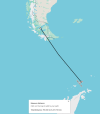
According to the story I read, he was flying from Punta Arenas, Chile to King George Island, Antarctica.

luvflyin
Touchdown! Greaser!
- Joined
- May 8, 2015
- Messages
- 17,447
- Location
- Santa Barbara, CA
- Display Name
- Luvflyin
- Home Airfield
- KVUO
How overweight? That’s something you must have considered in maybe have had the need to do in your travels.He would have landed massively overweight if he was fueled for a return flight to Antarctica.
Katamarino
Pattern Altitude
- Joined
- Dec 14, 2011
- Messages
- 2,232
- Location
- YPJT
- Display Name
- Katamarino
- Home Airfield
- Jandakot YPJT
At takeoff I was about 625lbs over max landing weight. That's about 20% of MTOW.How overweight? That’s something you must have considered in maybe have had the need to do in your travels.

Kritchlow
Final Approach
- Joined
- Dec 2, 2014
- Messages
- 7,958
- Display Name
- Kritchlow
We had the same issue in our companies water training.You may not be able to get into the raft. In 2001, I flew the Cayman Caravan from Key West to Grand Cayman. As part of the survival briefing, the organizers inflated a raft in the motel pool in Key West. More than half of the people could not climb into the raft, and this was in a pool with no waves or swells. They just weren't strong enough.
Maybe adrenalin would make the difference.
I did USAF Sea Survival School in Biscayne Bay, and was able to get into a one-man raft after parasailing out over the water. But I was in my early 20s and a lot stronger back then.
That said, those who were able to get into the raft were able to pull up those who were not.
Everyone eventually got into the raft.

Spinka
Pre-takeoff checklist
- Joined
- Jul 10, 2020
- Messages
- 202
- Display Name
- Spinka
How overweight? That’s something you must have considered in maybe have had the need to do in your travels.
If there is one thing I wouldn't worry about in an endeavour like that, it's landing overweight with a C182. As long as you make a normal touchdown there will be no harm whatsoever.

Charlie Golf
En-Route
But the number of clicks, likes, and comments would be epic!Holy cow. Big brass ones. 700 miles over water in a single engine aircraft, in the most inhospitable climate on earth. Ditching would be certain death.
I can't even work up the nerve to fly 50 miles to the Bahamas.


- Joined
- Jun 7, 2008
- Messages
- 16,742
- Location
- DXO124009
- Display Name
- Light and Sporty Guy
- Home Airfield
- ONZ
BTDTThe 4th is only a couple days away.
Turns out that the flare burns long enough to hit the ground before it burns out.