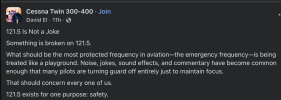
Something is broken on 121.5.
What should be the most protected frequency in aviation—the emergency frequency—is being treated like a playground. Noise, jokes, sound effects, and commentary have become common enough that many pilots are turning guard off entirely just to maintain focus.
That should concern every one of us.
121.5 exists for one purpose: safety.
It is monitored by the FAA, NORAD, and pilots across the system. It is there for the moment when something goes wrong.
Every unnecessary transmission increases the chance that a real distress call is missed, stepped on, or delayed.
This isn’t funny. It isn’t harmless. It’s reckless.
If the pilot sitting next to you is participating in this behavior, say something—to them, and if necessary, to their employer. Silence enables it.
And responding to it over the air only makes it worse.
The fix is simple: discipline.
Don’t engage.
Don’t add to it.
Use guard only when it matters.
Because one day, it might matter to you.
This must stop.