
You are using an out of date browser. It may not display this or other websites correctly.
You should upgrade or use an alternative browser.
You should upgrade or use an alternative browser.
What's your typical taxi speed? (GA)
- Thread starter AV8R_87
- Start date


Arrow II POH says my VT speed for taxi is ~20kts when there's nothing directly in front of me that could be a problemGot into a discussion about how fast small GA planes should taxi.
What's your typical straight line taxi speed?

MauleSkinner
Touchdown! Greaser!
Rougher = faster to stay further away from the bumps?Depends on how rough the taxiway is.

Zeldman
Touchdown! Greaser!
If the mains come off the ground while taxying, you may be going too fast...
I was taught, and I taught, taxi with heels on the floor, toes off brakes, hand always on the throttle(s) and at a speed so able to stop if something suddenly runs in front of the plane. Speed may vary according to conditions. A little faster on dry surface, slower on packed snow and ice.
I was taught, and I taught, taxi with heels on the floor, toes off brakes, hand always on the throttle(s) and at a speed so able to stop if something suddenly runs in front of the plane. Speed may vary according to conditions. A little faster on dry surface, slower on packed snow and ice.

- Joined
- Mar 2, 2005
- Messages
- 16,628
- Location
- Southeast Tennessee
- Display Name
- This page intentionally left blank
My primary CFI told me to never taxi faster than a cow can run. Truth!

Anything below Vr.
I got used to taxiing a little faster when doing my two mile taxis at IAD (longer than that going from the Landmark FBO all the way down to the Udvar-Hazy center which is about five-six miles).
I got used to taxiing a little faster when doing my two mile taxis at IAD (longer than that going from the Landmark FBO all the way down to the Udvar-Hazy center which is about five-six miles).

midwestpa24
Final Approach
Depends, am I paying or getting paid?

Gary Ward
En-Route
- Joined
- Jan 16, 2020
- Messages
- 3,639
- Location
- Lawrenceburg, Indiana
- Display Name
- Challenger1
- Home Airfield
- I67
My airline retired CFII asked me to slow down my taxi speeds several times at a small airport when I was instrument training with him. He said taxi at about a fast walk in a 172.
I drove my standards check airmen friend crazy because how how slow I was taxing when he started flying with me for fun.
So now I taxi a little faster especially when he is with me.
But then he got on me for taxing too fast at the turn off when I was flying a 182 or his Arrow II.
So like said above it depends on what your taxing and where.

SixPapaCharlie
May the force be with you
- Joined
- Aug 8, 2013
- Messages
- 17,547
- Display Name
- First Officer 6PC
I will acknowledge that I taxi a lot faster than I probably should. It's a habit I'm working on correcting.

- Joined
- Feb 22, 2005
- Messages
- 5,952
- Location
- New York City
- Display Name
- Skip Miller
- Home Airfield
- HPN
The old adage that said you should taxi no faster than a man could walk was coined in the early age of aviation when the planes had no brakes. You needed wing walkers for your brakes and for your steering. Not nice to leave your steering gear in the dust!
Long time members may remember Eamon Mackenzie, a former POAer who went pro and reporting a ground route (in Houston) that was measured in miles. He used to taxi that route with the throttle detents in “flight idle” as he came in at the end of a night flight. If he put flaps in, he would have taken off. He got some static from the ground controllers but no official discouragements.
That was a long time ago, I remember the story, but not the plane type.
-Skip

Dana
Final Approach
But the tailwheel is OK?If the mains come off the ground while taxying, you may be going too fast...
Back in my Primary training I was taught to taxi as fast as a brisk WALK, not a jog. I've heard the same thing from multiple CFI(I)s over the years and overheard it a few times with CFIs prepping their Private Candidates for the Checkride... 

Ed Haywood
Final Approach
The old adage that said you should taxi no faster than a man could walk was coined in the early age of aviation when the planes had no brakes. You needed wing walkers for your brakes and for your steering.
And most planes were taildraggers with poor forward visibility on the ground.
MauleSkinner
Touchdown! Greaser!
Depends whether I’m following a Southwest or or somebody else.
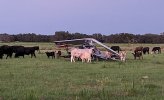
If I see a cow charging towards me, I will definitely taxi faster than it.My primary CFI told me to never taxi faster than a cow can run. Truth!
Ed Haywood
Final Approach
If I see a cow charging towards me, I will definitely taxi faster than it.
Watch out, they are faster than they look.
Last edited:
Zeldman
Touchdown! Greaser!
When I was growing up in Texas, we called those FMC's.Watch out, they are faster than they look.
View attachment 145298
(Fast Mean Cows)

Plano Pilot
Cleared for Takeoff
Years ago, I flew with a chief pilot that always taxied fast. It saved our ass one day at KDAL. An American Eagle Jetstream 31 botched a single engine landing and ended up on the taxiway behind us as we were on our way to 13L. If I had been taxiing that day, there is a good chance we would have been hit.
According to the GPS I have hit over 40K on a long taxi.
According to the GPS I have hit over 40K on a long taxi.

I taxied behind a pilot years ago who was doing 5 knots (gps ground speed) on a mile long taxi. Thats silly slow.


- Joined
- Jun 7, 2008
- Messages
- 2,261
- Display Name
- Andrew, CFI-I
Got into a discussion about how fast small GA planes should taxi.
What's your typical straight line taxi speed?
When driving, if I can take an exit, let the car slow naturally to a rolling pace, and only touch the brakes in the final second before stopping, then I am doing well. I see other cars whose brake lights flash like an ambulence - and I remind myself never to become that person. I carry the same thought to taxiing an airplane: if I can make the necessary turns and get all the way to tiedown with minimal or no use of brakes, then I am doing well. If I have to use brakes, that means I have misjudged something.

- Joined
- Jun 7, 2008
- Messages
- 16,742
- Location
- DXO124009
- Display Name
- Light and Sporty Guy
- Home Airfield
- ONZ
That's why you taxi fast enough to get the tail up.And most planes were taildraggers with poor forward visibility on the ground.

ateamer
En-Route
- Joined
- Dec 19, 2007
- Messages
- 2,982
- Location
- Port St. Lucie, FL
- Display Name
- ateamer
- Home Airfield
- FD88
It depends. At a small airport with narrow taxiways or lots of opportunities for someone to pop out from between buildings or multiple ramp accesses, a walking pace. Going a mile on a 50 foot wide taxiway with unlimited visibility, no approaching cross traffic? Vr-5. Well, more like 20-25 knots.
Gary Ward
En-Route
- Joined
- Jan 16, 2020
- Messages
- 3,639
- Location
- Lawrenceburg, Indiana
- Display Name
- Challenger1
- Home Airfield
- I67
My sw captain friend showed me that it is possible to taxi all the way to the hangar and stop the plane with no brakes. Only applied once we are stopped. He flys 170 some people around and wants it smooth for them.When driving, if I can take an exit, let the car slow naturally to a rolling pace, and only touch the brakes in the final second before stopping, then I am doing well. I see other cars whose brake lights flash like an ambulence - and I remind myself never to become that person. I carry the same thought to taxiing an airplane: if I can make the necessary turns and get all the way to tiedown with minimal or no use of brakes, then I am doing well. If I have to use brakes, that means I have misjudged something.
I drive my car the same way with as little brake as possible. Use tow haul in my truck going down hills even if I am not towing or hauling. Saves tires also.
10-12Got into a discussion about how fast small GA planes should taxi.
What's your typical straight line taxi speed?

bonefishpete
Cleared for Takeoff
- Joined
- Nov 10, 2024
- Messages
- 1,362
- Display Name
- Bonefishpete
Last month my BFR in a schools 172 I got admonished for taxing too fast. I don't taxi fast. Must be a student pilot thing. Now a buddy I knew he would taxi near rotate speed it looked.

NoHeat
Final Approach
Jogging speed is what I was told by an instructor, who was a pilot for a regional airline. I think it’s about right for daytime with a taxiway that’s straight, wide and dry. But slower for other conditions.
So you’re taxing at around 4 knots?Jogging speed is what I was told by an instructor, who was a pilot for a regional airline. I think it’s about right for daytime with a taxiway that’s straight, wide and dry. But slower for other conditions.

MooneyDriver78
En-Route
- Joined
- Aug 13, 2013
- Messages
- 4,928
- Display Name
- Tom
- Home Airfield
- KSUA
So you’re taxing at around 4 knots?
I hate those guys and pilots who pull up to the hold short line to do their run up.
I’m around 20 if conditions are good.

- Joined
- Jun 13, 2008
- Messages
- 9,173
- Location
- Marietta, GA
- Display Name
- Drake the Outlaw
- Home Airfield
- Cartersville, GA
15-20 knots in the RV-10, 12ish in the RV-6.
Brad W
En-Route
I've always figured that this was the basis for that adage....and I reckon it's pointless now days. Besides, I'll be that it's a very small fraction of pilots that can properly judge walking speed. (without GPS anyway). Walking speed is painfully slow, and when sitting in a vehicle, car or plane or any other vehicle, especially one that you routinely go fast in, it's really hard to judge when you hit that speed. A motorcycle might be a little easier because of the perspective and lack of stability.The old adage that said you should taxi no faster than a man could walk was coined in the early age of aviation when the planes had no brakes. You needed wing walkers for your brakes and for your steering. Not nice to leave your steering gear in the dust!

texasclouds
En-Route
- Joined
- Aug 23, 2018
- Messages
- 4,361
- Location
- Bryan, Texas
- Display Name
- Mark
- Home Airfield
- Coulter Airfield CFD
oh no, not getting me today mr FAA man

luvflyin
Touchdown! Greaser!
- Joined
- May 8, 2015
- Messages
- 17,447
- Location
- Santa Barbara, CA
- Display Name
- Luvflyin
- Home Airfield
- KVUO
Do you mean in numbers, like 10 MPH? I don’t know. I do what feels safe.Got into a discussion about how fast small GA planes should taxi.
What's your typical straight line taxi speed?
Ed Haywood
Final Approach
Do you mean in numbers, like 10 MPH? I don’t know. I do what feels safe.
My ASI doesn't even start indicating until 40 mph, so I'm not sure how I would know.
Last edited:
SixPapaCharlie
May the force be with you
- Joined
- Aug 8, 2013
- Messages
- 17,547
- Display Name
- First Officer 6PC
SWA has entered the chat
I hole heartedly agree! I actually had an instructor tell me that doing your run up and set radios at the hold short was ok. Face palmI hate those guys and pilots who pull up to the hold short line to do their run up.
I’m around 20 if conditions are good.