What's In Your Wallet?

Ventucky Red

En-Route
PoA Supporter
Joined
Jan 9, 2013
Messages
2,595
Display Name
Jon
Home Airfield
KCMA
I’m approaching retirement, and after years focusing on growth in my 401(k), I’m now thinking about how to reduce risk exposure without giving up all potential for reasonable returns. I’m exploring options to shift part of my mutual fund holdings into more conservative, higher-yield alternatives.

I’m not seeking specific financial advice, more so just interested in hearing from others who’ve gone through this stage. How did you handle the timing of your reallocation? Did you gradually move into safer investments, or make a more defined shift as retirement drew closer? I want to approach this stage thoughtfully keeping my portfolio balanced between safety and steady growth. I’d appreciate any insights or lessons learned from others who’ve made similar transitions into low-volatility, income-focused investments.

Thanks in advance for those willing to share your experiences and helping me (and likely others) navigate this important step toward a more secure retirement.

I can't believe the I am actually using the "R" word
 
I am nearing that break point; I expect/hope to partially retire in a year and fully retire in 2-3yrs. I currently have about 50% equities with about 1/3 in dividend paying stocks, between 205-30% precious metals and the balance in commercial light industrial NNN lease real estate. I also have a significant potential for stock in the company I partly own to greatly appreciate (2.5-4x current value) at the end of this year then either repeat again or go IPO in another 5-6 years. The multiple I get later this year will determine the risk I will tolerate going in to retirement. I still don't have enough data on post retirement income to decide.
 
I'm not far behind you. Right now I'm focusing on expense projection.

I heard an interesting strategy the other day. 3 years expenses in cash, the rest in a total stock market fund. Plan on 4-5% withdrawal rate. <10% market declines, continue to sell equities, leave cash alone. >10% & <20% decline, split paying bills by equity sales and cash. >20% decline, pay pills with cash and ride out the recovery. In banner years, replenish cash, and if it's topped, splurge on something. The person recommending this recognizes some, maybe most, cannot stomach this, in which case he recommends throwing a total bond market index fund into the mix. I have no idea what I'll do.
 
I retired in July of 2024. I've shifted some of my holdings into more income-focused securities - some CDs and bonds, but mostly high dividend stocks and funds. For example, MO, NNN, JPST, VCIT, EPRT, and - cautiously - SLVO and GLDI. Those last two have been paying utterly insane dividends, but I am always prepared for them to tank. I have trailing stop orders on them to limit any loss if they do, but when they're paying several percent per month in dividends... **shrug** I'll take a little risk there.

My overall strategy right now is to take full advantage of the current tailwinds to collect as much in dividends as possible, while being prepared to shift when things start to turn bad - as we all should know they eventually will. That's where the fixed income stuff comes in; I try to keep at least a couple years' worth of expenses in fixed income bonds and CDs.

I'm also prepared to adjust our spending in the event of a severe or extended downturn. I was introduced to the "guardrails" approach a while back, and it seems to make a lot of sense - certainly more than a fixed percentage.

There's a CFP that does some decent YouTube videos, Kevin Lum (@foundryfinancial). He will give you limited time access (90 days, I think) to RightCapital so you can do some of your own planning. I found it to be an incredibly useful tool for things like stress testing and trying out various scenarios and plans. It especially helped me to understand the impact of RMDs; simple changes in how you take money our during retirement can cost or save you well into the six or even seven figures in taxes over the remainder of your life. I feel a lot better about our situation and long term prospects than I did a couple years ago.

I just wish I could go back in time and dump a lot more into Roth accounts when I could... and max out our HSA rom the beginning.
 
Technically I retired in 5/23. I was still getting payroll income. A lot of decisions will depend on the comfort ratio of your post work income to outflow. If you are 1.5:1 income to outflow, probably want to stay quite conservative with some mutual funds, and round out with tax free bonds, or similar. If your income to outflow is more like 8:1, find a high yield tech fund and let it ride. I'm currently in one of the Vanguard things that is VXXXX, focused on all tech like NVDIA, AVGO, GOOG, APPL, etc. Very happy right now, but if the AI bubble bursts, I'm gonna get hit.
 
I just wish I could go back in time and dump a lot more into Roth accounts when I could...
That was one of the wisest advice my FP gave me. All of my precious metals are held in Roth accounts which avoids the 'collectibles' tax and about 40% of my securities are in Roth accounts. It stung when I did the conversions but I am grateful now.
 
I got a little more conservative over the years by using one of the retirement year funds for about 20-25% of my 401k and IRAs. I also shifted other 401k and IRA allocations in a more conservative direction, but never got to beyond 30% bonds/cash. It wasn’t all at once either.

As I’m understanding how my retirement income vs living expenses are actually going over the last 20 months, I’m a little less conservative now than I was, because I don’t need it as fast and as badly as I thought I would. I’ll be 59.5 in about 7 months. I’m working part time as a graduate TA now, working on my PhD in retirement. If you retire-retire for reals, your mileage may vary.
 
How did you handle the timing of your reallocation? Did you gradually move into safer investments, or make a more defined shift as retirement drew closer?
I found that strategy and associated risk largely depended on one’s financial/retire goals and projected expenses over time. For example, when I retired, I was still on the low-end goal wise, so I needed to maintain a more aggressive investment position after retirement to meet those goals and my anticipated expenses. So I rolled my 100% equity-based 401K into 2 separate rollover IRAs each with 90% equity holdings. Fast forward 12 years and having recently met my financial goals, plus hit Medicare age and pay off my mortgage next year, I will be restructuring my investments but still hold an equity-based majority as I work toward my next set of financial goals when I hit RMD age. So, from what I experienced, the timing and speed of those financial reallocations tends to be driven by the bigger picture and where it takes you which has been known to change once you cross over to the dark side. Good luck!
 
My last day working was in Nov 2020, and I received my last company paycheck in Feb 2021. I'll share my approach, as it seems to work okay for us, but it's not necessarily the right way for you or anyone else.

I began gradually sliding my 401k investments into a less aggressive posture in the last few years I worked, basically trying to remove some of the volatility. Upon retiring, I rolled it into an IRA. Since retirement, I've moved a sizeable portion from the conventional IRA over to a Roth, paying a 1-time tax hit to avoid future taxes and reduce RMDs.

One thing to watch out for - the moves into the Roth are treated as income tax-wise, which means it also impacts the calculation for Medicare IRMAA. I'm not on Medicare until June, but SWMBO is on it and we've had to endure IRMAA charges. That should go away next year.

Basically, what my CFP and I have tried to do is set a comfortable earnings target, then try to achieve that target with minimal volatility. We're aggressive on some of the stock investments, particularly in the Roth since I'd like to have larger earnings there (tax free) than in the conventional IRA account, which is invested more conservatively. Altogether, at the moment I'm a little less than 50% in managed stock funds. To ease the stock bumps, we use some lower (but still decent) earning fixed yield investments like longer-term CDs (set up in a CD ladder), 30-year treasury bonds (4.75% rate at the moment), and mutual funds. There's also a smattering of alternatives, like hedge funds, commodities, gold, even a little real estate.

In total, we've been doing a bit better than our target without any wild swings.

Personally, I like having a regular "paycheck" coming in, just like when I was working. It's easier for me to guage our monthly spending that way. I have the investment accounts set up to move a fixed amount into my checking on the 15th of every month, like a regular paycheck, regardless of the earnings that month. I have an advantage in that I have a pension from Lockheed that's providing an almost equal amount on the 1st of every month, so I'm not having to pull as much from investments. My wife is taking SS now but I won't start for 5 more years. Anyway, my point is that those sources are putting regular, predictable deposits into our checking account throughout the month.

We're debt-free (Hallelujah!), so we can turn our monthly burn rate up or down some as needed.

When we want to make a large purchase, like the truck we bought a few days ago, or to go on a major trip, I'll pull the money from one of the non-IRA accounts. They're earning well enough to absorb such expenses, and I don't get a tax penalty that way.

I don't know that there aren't better approaches, but this seems to work for us. We're doing the things we want, taking some nice trips, I have my plane and Barb has her Thoroughbred, we're giving lots of time and money to charities, making plans to spoil our new grandbaby, etc., and life is good. Our nest egg has grown about 60% since I started this path 5 years ago, beyond what we've been pulling out, so I have no complaints. My objective wasn't to become a billionaire.


NOW THE IMPORTANT PART

Don't look at retirement as a purely mathematical exercise. The numbers matter, sure, but they aren't the objective. Spend some time thinking about what really brings joy and fulfillment into your life and how you can achieve that. Happiness can be had for much less money than you think! Once you realize that, a lot of the pre-retirement stress will disappear.
 
So, from what I experienced, the timing and speed of those financial reallocations tends to be driven by the bigger picture and where it takes you which has been known to change once you cross over to the dark side. Good luck!
This. there are so many choices becuase there are so many "right" answers, depending on your situation and your goals. It's difficult to find one answer to anything that's "right" for everyone, though I have on occasion seen or heard something that I'd bet is wrong for anyone. Even that's rare, though... I even found the edge case where taking a 401(k) loan was a good idea. That's a challenge!
 
Did someone say - boat?
side_view.jpg
We lika da fish, swim, eat, drink, sleep and shoot skeet. A few years of aggressive tech investments floating.
 
This discussion is very timely for me
I go into trophy husband mode next week!!!!

about a week ago I watched this video that says the first 5 years is where a lot of folks fail. Made me think that I really should have started to stabilize my investments before now.

I reckon I'm in a bit of a different situation though, because while I'm no longer contributing to my accounts, we're also not flipping a switch to go from savings to spending mode. I'm not planning to draw from my accounts, and she will be contributing to hers for a few more years.
 
I believe the video above further reiterates that any retirement plan is specific to the person and their personal scenario. For example, people still retired from late 2007 through 2010 yet made it through those first 5 years without failure. I think fully understanding one's own financial situation and using every available tool to assess that understanding, like a Monte Carlo simulation or similar type calculator, will still provide the better guidance than following any type of generic guidance regardless of source.

For me, talking to people who did retire through the 2008 crash about their plans provided the final approach to my retire plan in 2014. Interestingly, in the years I've been retired, the retire plans I have seen "fail" were not financial related but related more to the "retire to something vs retire from something" angle. And ironically this also happened in the same first 5-year period. Personally, I think the benchmark to any "successful" retirement is the day you question yourself how did you ever have enough free time for a job?
 
Don’t think I could handle being retired, part time MAYBE.
 
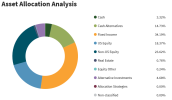
FYI, just to supplement my earlier post, here's how my portfolio is presently allocated. I have some holdings in a couple of growth funds outside this allocation, bringing the total stock allocation to roughly 45%.

1771606469189.png​


about a week ago I watched this video that says the first 5 years is where a lot of folks fail. Made me think that I really should have started to stabilize my investments before now.

Excellent video. IMHO, the two most important points were about establishing an income floor and adjusting spending to accomodate downturns. A couple of related thoughts:

- She didn't mention it (unless I missed it), but that income floor can also include fixed return investments like a CD ladder or an annuity (and I don't particularly like annuities). Establish your floor before or at retirement. Also know options, like when you can start taking SS and how much it will be. I'm fortunate in that my pension has already given me a comfortable floor, and I can augment it with SS if I need to. If I'm able to wait until age 70 to start SS, my pension plus my SS plus SWMBO's SS create a floor that covers at least 90% of my spending, providing lots of safety for my investment portfolio.

- One of the big keys to being able to adjust spending is to become debt free. You can ratchet up or down your food bill, your travel, your hobbies, your gift expenditures, etc., but mortages and car payments have to be met, regardless of investment losses. If at all possible, clear your debts before retiring.
 
Last edited:
I'm not far behind you. Right now I'm focusing on expense projection.

I heard an interesting strategy the other day. 3 years expenses in cash, the rest in a total stock market fund. Plan on 4-5% withdrawal rate. <10% market declines, continue to sell equities, leave cash alone. >10% & <20% decline, split paying bills by equity sales and cash. >20% decline, pay pills with cash and ride out the recovery. In banner years, replenish cash, and if it's topped, splurge on something. The person recommending this recognizes some, maybe most, cannot stomach this, in which case he recommends throwing a total bond market index fund into the mix. I have no idea what I'll do.
Bucket strategy. That's a fairly commonly recommended strategy in the Boglehead world.
 
We're not yet that close to retirement (5-10 years, depending), but I've gone down a lot of rabbit holes over the last year or two just to get an idea of where our bullseye is.

For responsible content look at Rob Berger, Erin (linked above), The Money Guys, and the Bogleheads channel to get good strategies. They all do pretty deep dives on different strategies financially and often point out the fact that money is indeed just a tool and you should have a plan for it (e.g. retire _to_ something or spend it on something of value).
 
retire _to_ something

:yeahthat:

Suggestion - start getting involved in those "retire to" things now, at whatever level you can manage, while retirement is still a few years away. Don't just think, "Yeah, I'll jump into that after I retire." You'll find it's easy to let things slide. Start doing some of it ahead of time, whether it's a hobby or a charity or a business or whatever. Once you find yourself getting deeply involved and you don't have time to go to work anymore, you'll know it's time to retire.
 
- One of the big keys to being able to adjust spending is to become debt free. You can ratchet up or down your food bill, your travel, your hobbies, your gift expenditures, etc., but mortages and car payments have to be met, regardless of investment losses. If at all possible, clear your debts before retiring.
Totally agree with you on car payments. I think I have to buy at least one more car before I die. Which I hate since I'm not a car guy and they are 100% utility purchases for me. But I figure I've got 25 to 30 years left kicking around this planet and my existing cars a already 10 and 13 years old. Hopefully I can keep them till they are 20 or more and then figure out options.

I have a 4.8% mortgage, so I think the advice to try and pay it off makes some sense. And it looks like the average 30 year being issued today is a bit over 6%, so that's almost a no-brainer to not want to retire with.

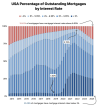
But as of last year 25% of outstanding mortgages were at less than 3%. For those folks I bet it makes a lot more sense to take the money they would have put into retiring the mortgage into investments.

1771621985914.png
 
For those folks I bet it makes a lot more sense to take the money they would have put into retiring the mortgage into investments.

Possibly pre-retirement, but personally I disagree post-retirement. Just my humble (and oft wrong) opinion, of course.

After retirement, your objective is no longer saving for retirement / maximizing return; it's preserving your savings-derived income for 30+ years. There will be market downturns, and they're easier to ride out if your don't have to crack a large mortgage nut every month. A downturn while you're still working is more manageable, and at worst it might mean waiting another year or two to retire. But the game changes once you walk away from that paycheck.

YMMV, but it's worked well for us.
 
How do you fit in the flight attendant second wife and bonus kids??

This is known as the "retirement wife," typically about 30 years younger than the retiree, and she often continues working unless the retiree is a VP or CEO. Used to be a very common situation in our business.
 
Suggestion - start getting involved in those "retire to" things now, at whatever level you can manage, while retirement is still a few years away. Don't just think, "Yeah, I'll jump into that after I retire."
Thats only provided you still want to do those things after you retire. I followed the same path pre-retire by making a list of things I wanted to do and, in some cases, buying the required supporting equipment, etc. to make it happen once retired. Twelve years later and I only followed one item on that list with that equipment still in the original box. Once I retired, I discovered paths that I did not "see" pre-retire which led to other paths and so on. For some its does work that way, but for others I found its like opening a whole new adventure or rediscovering that old adventure from your youth you had forgotten about. Retirement, the gift that keeps on giving.

But as of last year 25% of outstanding mortgages were at less than 3%. For those folks I bet it makes a lot more sense to take the money they would have put into retiring the mortgage into investments.
I think it still depends on the specific situation. I kept a 5% mortgage as my investments were way ahead of that figure, which when I do pay off the mortgage next year those additional investment earnings will cover that payoff. However, this was probably the most discussed topic in my pre-retire discussions with others, where I found keeping a mortgage, or even 2 mortgages, post-retirement was not as rare as I had thought it to be. Again, its whatever works for that person(s) in the big picture.

After retirement, your objective is no longer saving for retirement / maximizing return; it's preserving your savings-derived income for 30+ years.
Maybe not directly "saving" for retirement, but I found a post-retirement investment plan is just as important as a pre-retire plan, if that is the path one wishes to take. Once I hit my initial retire goal and left, then hit my 2nd retire goal 11 years later, it felt like I left something on the table unfinished to just stop there and coast to the end. So, I set another financial goal for when I reach RMD age and it kind of revitalized things looking forward. And again, its more common than I thought to keep an ongoing post-retire investment strategy with no additional outside earnings.
 
Possibly pre-retirement, but personally I disagree post-retirement. Just my humble (and oft wrong) opinion, of course.
Nah, there is no wrong opinion. You are more conservative than I'll probably be, but that's fine.

The average return on a dow fund for the past 30 years has been nearly 10%. Hiccups and all. If 30 years is the planning horizon, then paying off a 3% mortgage would be leaving a lot of money on the table. Is there a level where you would say it's worth it to leave the money in the market and ride out the dips? What if the mortgage is 1.5%? Or .5%? or 0%?
 
I think it still depends on the specific situation. I kept a 5% mortgage as my investments were way ahead of that figure, which when I do pay off the mortgage next year those additional investment earnings will cover that payoff. However, this was probably the most discussed topic in my pre-retire discussions with others, where I found keeping a mortgage, or even 2 mortgages, post-retirement was not as rare as I had thought it to be. Again, its whatever works for that person(s) in the big picture.
Yep, I'm more on your side of the ledger. When I said paying off a 4.8% mortgage "makes some sense", that was a polite was of saying, "there isn't a likely scenario where 172 will be paying of his 4.8% before he retires". I'll be saving more and/or leaving more money in investments.
 
Back
Top