
I wouldn't blame it on the feds. Any aftermarket parts need to meet the OEM design criteria. Kind of hard to do that if the OEM won't share that data with you. And the market is too small to go through the effort of reverse engineering it.There's no competition for any of this, courtesy of the Feds.

You are using an out of date browser. It may not display this or other websites correctly.
You should upgrade or use an alternative browser.
You should upgrade or use an alternative browser.
What in The actual ****, Hartzell?
- Thread starter Jim K
- Start date

aterry1067
Line Up and Wait
- Joined
- Nov 4, 2020
- Messages
- 901
- Display Name
- Alpha_Delta_Tango
- Home Airfield
- KGEU
That's not what venture capitalists do. You are confusing your bogeymen.
Venture capitalists, private equity, call it whatever your hearts desire. I know of not a single business started from a passion for the product, that was then bought by a multi-million/billion dollar company that then produced a superior product under their new owners, beholden only to shareholders. The whole point is to make profit, which doesn’t align with quality and customer value.
Lindberg
Final Approach
Are you aware of any non-profits commercially making aircraft parts?Venture capitalists, private equity, call it whatever your hearts desire. I know of not a single business started from a passion for the product, that was then bought by a multi-million/billion dollar company that then produced a superior product under their new owners, beholden only to shareholders. The whole point is to make profit, which doesn’t align with quality and customer value.

Chip Sylverne
Final Approach
- Joined
- Jun 17, 2006
- Messages
- 6,133
- Display Name
- Quit with the negative waves, man.
- Home Airfield
- DMW
I wouldn't blame it on the feds. Any aftermarket parts need to meet the OEM design criteria. Kind of hard to do that if the OEM won't share that data with you. And the market is too small to go through the effort of reverse engineering it.
With the toys available today, reverse engineering many things isn't a particularly lengthy or expensive proposition. Getting a PMA for the sake of a small run of parts though...

DaleB
Final Approach
Venture capitalists, private equity, call it whatever your hearts desire. I know of not a single business started from a passion for the product, that was then bought by a multi-million/billion dollar company that then produced a superior product under their new owners, beholden only to shareholders. The whole point is to make profit, which doesn’t align with quality and customer value.
There are, and have been plenty of companies that provide quality and customer value while making a profit. they often don't stay that way indefinitely. Founders retire or die, poor mergers and acquisitions happen, internal strife, whatever. Healthy, growing companies that are well run by people with a passion for the product don't get acquired by private equity. Companies that are in trouble, struggling with poor management do.

NordicDave
En-Route
- Joined
- Oct 31, 2015
- Messages
- 2,737
- Location
- Monterey County
- Display Name
- NordicDave
- Home Airfield
- KWVI
When PE does these buy outs they know price elasticity is near infinite. Want to keep your $100K -$500K little plane flying and worth anything... Buy our part cuz UR stuck!
Private Equity ruins everything.


They know elasticity is 0! Perfectly inelastic. Can't let the plane rot on the ramp...When PE does these buy outs they know price elasticity is near infinite. Want to keep your $100K -$500K little plane flying and worth anything... Buy our part cuz UR stuck!
It's like pharmaceuticals. Buy the company. Double the price for your meds (or 20x if it's Thiola) and see how much it impacts demand.
In some circles you'll be considered a brilliant, shrewd businessman, and in others you'll be considered the ******** devil!

flyingcheesehead
Taxi to Parking
- Joined
- Feb 23, 2005
- Messages
- 28,184
- Location
- UQACY, WI
- Display Name
- iMooniac
- Home Airfield
- KUES/KMKE
Ugh. Yeah, this was one of the most expensive parts of our last annual. Almost $1900 for one mag.Yeah I’m coming to the same conclusion. Had to do my 500 hour mag inspection/overhaul, and got quoted $2200 for the work. So looked at new Slick mags as an alternative and that would have cost nearly $4000. Pretty sure that price has more than doubled in the last six years.

I've yet to actually see that happen... But if it did, what would they do next? Oh yeah, ruin it anyway.Except for when it saves things from previous mismanagement.
Because "they" just isn't very big, and it's getting smaller every year."Build it and they will come" doesn't seem to work that well in certified GA.

Let me get this straight: a product that sells in the automotive market for $20, the identical product as "certified" by government for aviation use, and likewise mandated by that same government that a "certified" copy be used, sells for $500.
And there are those of you who blame "private equity"?
If I had a dollar for everytime capitalism was blamed for government-caused problems, I'd be as rich as a famous documentary filmmaker known for waering a baseball cap.
And there are those of you who blame "private equity"?
If I had a dollar for everytime capitalism was blamed for government-caused problems, I'd be as rich as a famous documentary filmmaker known for waering a baseball cap.
Let me try to straighten things a bit.Let me get this straight: a product that sells in the automotive market for $20, the identical product as "certified" by government for aviation use, and likewise mandated by that same government that a "certified" copy be used, sells for $500.
And there are those of you who blame "private equity"?
Gov says "you must have better traceability and documentation to put it on something that flies". That probay adds around $50, depending on sales volume.
Then I have to account for being sued because the pilot crashed and died after running out of fuel, even if the alternator brushes I sold him obviously have nothing to do with the crash. I add $30 more to the price to account for that.
Add $20 as a profit margin, because I'm not running a charity.
But that only adds up to $120. Blame the gov for $80 of that.
The remainder up to $500, though? Blame someone else, not the gov.
"Increasing shareholder value"

I don't think the people running Hartzell now are thinking that hard about it. I think they're trying to run a printer model. Who's more captured than certified airplane owners? Certified airplane owners who already bought your overpriced alternator and 500 hours later are looking at buying another one, or paying about a third of that to replace the brushes. Thankfully I have the original 1970 Chrysler unit and not a proprietary "Plane Power", so there's alternatives.
I guess my gripe is that one of the things I love about GA is that there's so many people in it just because they love it. Those people are fun to deal with. They get old and sell their business that they've invested their whole life in because that was their retirement plan. God bless them. Then the effing MBA's come in. They're worse than the lawyers and the government put together. Apologies to any MBA's present...I'm sure you're fine
PE can do good things. Like vultures. Kinda gross, but a necessary part of the ecosystem. They can also bankrupt companies for no reason other than that they figured out a creative way to squeeze some money out of them. https://www.nbcnews.com/business/consumer/private-equity-rolled-red-lobster-rcna153397
I fear that this is where Hartzell is headed, and they are "too big to fail" in the piston GA space. They bought so much before they sold out that it's impossible to not do business with them. I'm waiting on a $170 2"x7" heating pad from Tanis (A Hartzell Brand!) right now. My plane has Acorn (A Hartzell Brand!) mufflers on it. They were reasonable (at $500ea x3) last time I needed a set...what about next time? I have a Hartzell propeller. I've been wanting that MT composite anyway I guess.
Last edited:
Don’t expect a huge cost savings. We needed a new Macauley during our OH last year, the original prop had finally been dressed beyond limits. A simple fixed pitch prop on the most common engine/airframe combo ran $8K.… I've been wanting that MT composite anyway I guess.
Given that sample size of three major prop mfgs, I’ve accepted there is no economy of scale that can be found in GA; everything is bespoke.
Even Rotax isn’t immune. A 916is is $50+k. At least they’re in stock and shipping. A 912 is $19K for 80hp or $22K for 100hp.
Oh there's no savings at all. The MT was about $6K MORE expensive last time I looked and with way worse parts support. It is 20 pounds lighter though, and I bet next time I look, the price and support will be about the same.Don’t expect a huge cost savings. We needed a new Macauley during our OH last year, the original prop had finally been dressed beyond limits. A simple fixed pitch prop on the most common engine/airframe combo ran $8K.
Given that sample size of three major prop mfgs, I’ve accepted there is no economy of scale that can be found in GA; everything is bespoke.
Even Rotax isn’t immune. A 916is is $50+k. At least they’re in stock and shipping. A 912 is $19K for 80hp or $22K for 100hp.
aterry1067
Line Up and Wait
- Joined
- Nov 4, 2020
- Messages
- 901
- Display Name
- Alpha_Delta_Tango
- Home Airfield
- KGEU
There are, and have been plenty of companies that provide quality and customer value while making a profit. they often don't stay that way indefinitely. Founders retire or die, poor mergers and acquisitions happen, internal strife, whatever. Healthy, growing companies that are well run by people with a passion for the product don't get acquired by private equity. Companies that are in trouble, struggling with poor management do.
Thanks. I agree, except to add that many of these small successful companies are also sold when the owner just doesn’t feel like doing it anymore and some PE firm has the biggest offer. For example, Whirlwind.
Last I checked there are no FAA regulations that limit competition on aircrafts parts. But I can direct you to several regulations and guidance docs that permit you to legally "compete" on parts production for your aircraft. Where I find the lack of “competition” stems from is fewer A&Ps/shops are willing to provide those competitive alternatives.There's no competition for any of this, courtesy of the Feds. Even patents expire eventually.
There are also no regs that allow the FAA to fix prices which are really set by the market. For example, there are PMA parts that retail pennies on the dollar what the original OEMs charge for the same part. So if the FAA actually “set” prices why aren’t the PMA prices closer to the OEM prices? You'll find the actual annual market size for a number of parts is very small with some counted in single digits. So the prices are affixed accordingly.
As to the Australian produced horn, if it has a CASA PMA there are aviation agreements with the US that allow their use on N-reg aircraft. But just to add, in general, you’ll find more people bring their aircraft mods and parts to the US for FAA certification process as it is more flexible and easier than their national process. There are even US-based companies that specialize in this service to overseas clients.
Perhaps specifically list what FAA changes are needed to get those parts costs and availability at levels you believe are acceptable?

- Joined
- Aug 9, 2022
- Messages
- 1,171
- Location
- Surrounded by Civil War ghosts
- Display Name
- Probably AI
- Home Airfield
- KHWY
To what extent do you think this is influenced by A&P concerns regarding liability? Regarding things like owner-produced parts, I've wondered if they would be more commonly used (in lieu of unobtanium OEM parts) if there was some law change to explicitly state that liability for any such installed part rests exclusively with the aircraft owner. Seems like having an A&P risk their ticket via the sign-off is perhaps a stumbling block to owner-produced parts getting more traction.Last I checked there are no FAA regulations that limit competition on aircrafts parts. But I can direct you to several regulations and guidance docs that permit you to legally "compete" on parts production for your aircraft. Where I find the lack of “competition” stems from is fewer A&Ps/shops are willing to provide those competitive alternatives.
Lindberg
Final Approach
Alternatives will be used whenever the total cost is perceived to be lower. If people are paying $500 for a "$20 part," it isn't actually a $20 part.To what extent do you think this is influenced by A&P concerns regarding liability? Regarding things like owner-produced parts, I've wondered if they would be more commonly used (in lieu of unobtanium OEM parts) if there was some law change to explicitly state that liability for any such installed part rests exclusively with the aircraft owner. Seems like having an A&P risk their ticket via the sign-off is perhaps a stumbling block to owner-produced parts getting more traction.
Lindberg
Final Approach
I toured the warehouse of a large aviation parts retailer and was absolutely gobsmacked by the amount they have invested--in terms of inventory, storage, and logistics--in parts that probably get called for close to never. A lot of what we are paying for is for many of these low-demand parts being available on request, or at all. For reasons that should be obvious, much that cost has to be amortized over the entire inventory.You'll find the actual annual market size for a number of parts is very small with some counted in single digits.

ElPaso Pilot
En-Route
- Joined
- May 26, 2006
- Messages
- 2,568
- Display Name
- ElPaso Pilot
Except that dead cylinder is still functioning as an air compressor, pumping away.Didn't experience a plug failure, either, but I've had two coil on plug modules go bad (one on each car) in a combined 250000 miles driven. At the average speeds I got in my driving, that's a failure every 4000 drive hours or so, but the actual components and vehicles had significantly more time than that. Probably double. But infant mortality is a thing, and the consequences in the air could be serious, so I still like the idea of a second plug and ignition coil for each cylinder.
Now, if variable pitch/constant speed props were more affordable in the experimental space, I wouldn't care. Loss of a cylinder in a 4-cyl application would mean you could still get 75% power, as long as the prop can be adjusted for that 75% to be obtained at redline RPM.
I’d think the loss from one cylinder down on four is 40% or more, not 25%.
Not really. Throttle is wide open at that point, so minimum pumping losses. You compress air on the compression stroke, but a majority of the energy gets reased on the expansion stroke. It's more of a slightly lossy air spring. There are some losses, but you're probably at 70% power, not 60%.Except that dead cylinder is still functioning as an air compressor, pumping away.
That's why Diesel trucks have jake brakes, to release that air at the end of the compression stroke. Otherwise they'd get no engine braking.
On a gasoline engine, engine braking comes from pumping losses against the closed throttle plate, not from compression.

Dan Thomas
Touchdown! Greaser!
- Joined
- Jun 16, 2008
- Messages
- 12,389
- Display Name
- Dan Thomas
Nope. More like this:Now, if variable pitch/constant speed props were more affordable in the experimental space, I wouldn't care. Loss of a cylinder in a 4-cyl application would mean you could still get 75% power, as long as the prop can be adjusted for that 75% to be obtained at redline RPM.
Exactly. We had a 150 that broke an exhaust valve, and the power dropped enough that all the instructor and student could get was a flatter glide to the airport. Couldn't maintain altitude even at full throttle; 75% power will allow a level cruise when all four are firing.Except that dead cylinder is still functioning as an air compressor, pumping away.
I’d think the loss from one cylinder down on four is 40% or more, not 25%.
Break an intake valve, and the sparkplugs still sometimes ignite whatever air/fuel mix that gets to them, and the flame travels back out the open intake port and sets off the whole induction system. Now we're down to almost no power.
Experience counts for a lot more than your imagined scenario.

Ed Haywood
Final Approach
Do some research before jumping to MT. They are popular in the aerobatic community, but are known for failing seals around 300 hours. Could be that issue is unique to the forces involved in acro.
Dan Thomas
Touchdown! Greaser!
- Joined
- Jun 16, 2008
- Messages
- 12,389
- Display Name
- Dan Thomas
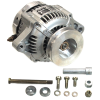
A 70-amp, 12-volt Plane Power alternator:Thankfully I have the original 1970 Chrysler unit and not a proprietary "Plane Power", so there's alternatives.
A 140-amp, 12V Nippondenso alternator (Japanese):
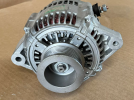
I don't believe for one minute that Plane Power makes their own alternators. Why would they, when there are thousands of suitable alternator designs available from Mitsubishi, Nippondenso, Bosch, Valeo, and many others? After all, the typical alternator on a Cessna is made by Ford, on a Piper it's a Motorola (Chrysler).
I would also wonder if a "70-amp" Plane Power alternator is just a derated 90-amp Denso like I have on my Hyundai. 70 amps sounds good to the owner of an airplane that has a 60-amp alternator on it, and that 60-amp alternator was plenty big enough to handle the power needs of the airplane it was on. FAR 23. Power needs have actually fallen with the advent of LED lighting and digitized radios, though a glass panel needs more.
Not really. When a part is produced under 21.9(a)(5), the mechanic doesn’t approve or sign-off any portion of production process as its falls under the authorization given solely to the an aircraft owner or operator. So when a mechanic is given an approved owner produced part for installation, he assumes the same liability as he would for installing a PMA or original OEM part.Seems like having an A&P risk their ticket via the sign-off is perhaps a stumbling block to owner-produced parts getting more traction.
Where a mechanic can assume more liability is if the owner part is not properly produced, ie., install an un-approved part, or the mechanic fabricates a part under 21.9(6) for consumption in a repair or alteration. However, regardless the process no person can ever remove all liability given how the tort laws use a “standard of care” to define all actions even though one may follow all the existing rules 100% of the time.
I think the biggest problem with owner parts at the Part 91 level is simply the lack of knowledge or misunderstanding of the OPP rules and requirements. Owners and operators at the 135 and 121 levels use owner parts on a regular basis to support their aircraft under the same 21.9(a)(5) rule. Its how I learned the process. In the end its more streamlined than a PMA or TSO route with the hardest part finding or developing the approved data for the part.
Definitely. Another cost is OEMs do not produce a lot of the sub-assembly parts so any vendors they use must also be monitored/audited as part of their overall Production Certificate. And when you throw in vendor re-tooling costs or minimum order requirements an OEM may have to order 10 units to get the 1 unit they sell once every 10 years. So it tends to be a bit more complex especially when the entire Part 91 recreational TC aircraft market consists of only about 35,000 total aircraft give or take.For reasons that should be obvious, much that cost has to be amortized over the entire inventory.
The fixed pitch prop on the 150 won't allow the engine to turn at redline RPM while producing 70% power.Exactly. We had a 150 that broke an exhaust valve, and the power dropped enough that all the instructor and student could get was a flatter glide to the airport. Couldn't maintain altitude even at full throttle; 75% power will allow a level cruise when all four are firing.
That's why you'd need a variable pitch prop to make that scenario work, which is what I stated above.
Dan Thomas
Touchdown! Greaser!
- Joined
- Jun 16, 2008
- Messages
- 12,389
- Display Name
- Dan Thomas
With the more likely 50% power with a dead cylinder, the constant-speed prop STILL wouldn't let the engine reach redline.The fixed pitch prop on the 150 won't allow the engine to turn at redline RPM while producing 70% power.
That's why you'd need a variable pitch prop to make that scenario work, which is what I stated above.
How do you drop to 50% power with just one dead cylinder? ISA conditions. Ignore the prop for now.With the more likely 50% power with a dead cylinder,

Rcmutz
Pattern Altitude
Jim K…. I walked from Hartzall and their pricing AND core charge for a new starter. I went to B&C. About the same price, but can be OH’d. Not so for the SkyTec (now Hartzall owned company) starter.
Depends on which power % he is talking about. Theoretically a single cylinder loss on a 4 cylinder plane would allow you to get 75% power. But the excess power needed for climb is definitely cut by 50% on most planes.
And the 75% is probably not likely depending on what caused it to quit.
And the 75% is probably not likely depending on what caused it to quit.
Chip Sylverne
Final Approach
- Joined
- Jun 17, 2006
- Messages
- 6,133
- Display Name
- Quit with the negative waves, man.
- Home Airfield
- DMW
Last I checked there are no FAA regulations that limit competition on aircrafts parts. But I can direct you to several regulations and guidance docs that permit you to legally "compete" on parts production for your aircraft. Where I find the lack of “competition” stems from is fewer A&Ps/shops are willing to provide those competitive alternatives.
There are also no regs that allow the FAA to fix prices which are really set by the market. For example, there are PMA parts that retail pennies on the dollar what the original OEMs charge for the same part. So if the FAA actually “set” prices why aren’t the PMA prices closer to the OEM prices? You'll find the actual annual market size for a number of parts is very small with some counted in single digits. So the prices are affixed accordingly.
As to the Australian produced horn, if it has a CASA PMA there are aviation agreements with the US that allow their use on N-reg aircraft. But just to add, in general, you’ll find more people bring their aircraft mods and parts to the US for FAA certification process as it is more flexible and easier than their national process. There are even US-based companies that specialize in this service to overseas clients.
Perhaps specifically list what FAA changes are needed to get those parts costs and availability at levels you believe are acceptable?
So what you are saying is there are no regulatory barriers to entry in manufacturing aircraft parts and avionics markets?
You are deluding yourself.

- Joined
- Jun 13, 2008
- Messages
- 9,173
- Location
- Marietta, GA
- Display Name
- Drake the Outlaw
- Home Airfield
- Cartersville, GA
If you can't get power, you can't get a fixed pitch prop to peak RPM (ie. horsepower). So now you're at 75% (theoretically) of what the engine will produce at a couple hundred RPM under peak. On my O-320, the data plate says (if I recall correctly) that 200 RPM costs you 10 hp. So now you're 75% of a 150 HP engine, minus whatever the pumping losses are from the dead cylinder. In other words, you're not dealing with a 3 cylinder 120 hp/2700 rpm engine, you're dealing with what's probably a 100-110 hp engine.Depends on which power % he is talking about. Theoretically a single cylinder loss on a 4 cylinder plane would allow you to get 75% power. But the excess power needed for climb is definitely cut by 50% on most planes.
And the 75% is probably not likely depending on what caused it to quit.
Exactly. And aircraft OEMS and vendors prove that on a regular basis. Where there is a viable market, OEMs design and build new aircraft and engines, vendors design and build new aviation equipment, and the FAA certifies those products and articles. Plenty of recent examples on how this has worked for years.So what you are saying is there are no regulatory barriers to entry in manufacturing aircraft parts and avionics markets?
Perhaps post some specific regulatory barriers that are preventing whatever issues you find are lacking?
Dan Thomas
Touchdown! Greaser!
- Joined
- Jun 16, 2008
- Messages
- 12,389
- Display Name
- Dan Thomas
As another poster pointed out, a bunch of energy is wasted in pumping that dead piston. It's not free energy doing that.How do you drop to 50% power with just one dead cylinder? ISA conditions. Ignore the prop for now.
From Aircraft Systems for Pilots," by Dale DeRemer, PH.D., the college-level textbook for aircraft systems courses, gives us figures on thermal efficiency for the aircraft reciprocating engine:
Of the total heat produced, 15 to 20% is removed by cooling (heat radiated from cylinder head fins and oil cooler); 5 to 10% is utilized in overcoming friction of moving parts, most of which produces heat that is carried away by the lubricating oil; and 40 to 45% is lost through the exhaust.
The remaining heat energy drives the engine, and it's not great, typically around 25 to 35%. We lose a quarter of that with a four-banger's dead cylinder, and expend some of the rest in pushing the dead stuff back and forth and in pumping air in and out of it.
When I was instructing we had to demonstrate a partial power loss after takeoff. The drill was to reduce the throttle to get a 100-RPM drop, and that was enough, in a 172, to cut the climb rate by about half. It's serious stuff. And it's due to the nonlinear loss of thrust when you lose RPM. The propeller is at its most efficient when it is near redline RPM, and we can see that if we're on the ground and throttle up to half of redline; the airplane will taxi fast but it will never lift off. At half of that we're at idle and the airplane won't even move much at all.
When we lose even that much power (100 RPM), we have to either drop the nose to maintain Vy, such as it may be. If we keep the nose up we increase the AoA because the power isn't there to keep the airspeed at that attitude, and drag goes up. If we have a constant-speed prop we might get the same RPM, but at a lower pitch setting, which reduces airspeed and you still have to drop the nose. You lose climb rate anyway.
Dan Thomas
Touchdown! Greaser!
- Joined
- Jun 16, 2008
- Messages
- 12,389
- Display Name
- Dan Thomas
Yes, but that doesn't tell the whole story. From Lycoming's O-320 Operator's manual:On my O-320, the data plate says (if I recall correctly) that 200 RPM costs you 10 hp. So now you're 75% of a 150 HP engine, minus whatever the pumping losses are from the dead cylinder.
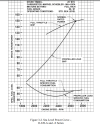
A 200-RPM fall drops the HP to around 140 HP from 150, but the propeller loading goes down to about 118 HP. We lose a lot of thrust and performance suffers badly.
If we're flying a fixed-pitch prop, we aren't even at redline in the climb. The only time we'll ever see redline is in level flight at full throttle. So if we lose 200 RPM off a climb RPM of about 2400, we go from about 134 HP to 125, and propeller BHP falls from 105 to 80.
https://www.lycoming.com/sites/default/files/attachments/O-320%20Operator%20Manual%2060297-30.pdf
Good data, but...
The throttle is wide-open, so minimal pumping losses. What you compress on the compression stroke pushes the piston back on the "power" stroke, minus some piston ring leakage losses.
You still have the valvetrain losses, and the friction losses, but those are not huge. I can see a 5% or so loss there, maybe even 10%, but 25% is not a realistic number.
The engine could probably develop 65-70% power on three cylinders, not enough to climb at any reasonable rate, but enough to maintain altitude at best glide speed.
The problem, as clearly shown in your graphs, is the propeller. Which was my point all this time - the only way to get something useful out of an engine with a dead cylinder is to have a variable pitch prop that could reduce its pitch enough to allow redline rpm on three cylinders.
Define that bunch.a bunch of energy is wasted in pumping that dead piston.
The throttle is wide-open, so minimal pumping losses. What you compress on the compression stroke pushes the piston back on the "power" stroke, minus some piston ring leakage losses.
You still have the valvetrain losses, and the friction losses, but those are not huge. I can see a 5% or so loss there, maybe even 10%, but 25% is not a realistic number.
The engine could probably develop 65-70% power on three cylinders, not enough to climb at any reasonable rate, but enough to maintain altitude at best glide speed.
The problem, as clearly shown in your graphs, is the propeller. Which was my point all this time - the only way to get something useful out of an engine with a dead cylinder is to have a variable pitch prop that could reduce its pitch enough to allow redline rpm on three cylinders.
How rough would an engine with a dead hole run? Best case scenario?
Actually, now that i think about it, what's the best case scenario? Anything i can think of that would result in a dead cylinder would also cause a wildly rough engine that i think anyone is going to close the throttle on.
Actually, now that i think about it, what's the best case scenario? Anything i can think of that would result in a dead cylinder would also cause a wildly rough engine that i think anyone is going to close the throttle on.
When I lost a cylinder on an O-200 things were pretty shaky, but I could read the panel.How rough would an engine with a dead hole run? Best case scenario?
I agree that first reaction is to close the throttle, but then the "got to make it to a good landing spot" instinct kicks in and you open it again.
What caused that? I was thinking about what could cause a cylinder to stop running, and everything i could come up with was either very unlikely or on a spectrum somewhere from fairly catastrophic to very catastrophic.When I lost a cylinder on an O-200 things were pretty shaky, but I could read the panel.
I agree that first reaction is to close the throttle, but then the "got to make it to a good landing spot" instinct kicks in and you open it again.
I guess I did see a guy who bent a pushrod and didn't even know it, but it happened on final, so he was already at very low power.
User error. Night time, after doing the mag checks I didn't turn the key all the way to both. Poor cockpit lighting in that plane made it hard to see the mag switch. Took off on one mag, after an hour or so one plug fouled up and the cylinder went cold.What caused that?
Good thing that it happened in the pattern on downwind.
flyingcheesehead
Taxi to Parking
- Joined
- Feb 23, 2005
- Messages
- 28,184
- Location
- UQACY, WI
- Display Name
- iMooniac
- Home Airfield
- KUES/KMKE
Yes.Let me get this straight: a product that sells in the automotive market for $20, the identical product as "certified" by government for aviation use, and likewise mandated by that same government that a "certified" copy be used, sells for $500.
And there are those of you who blame "private equity"?
Because what happens is that you have a company that's selling that product for $500 which, while it sucks, isn't a deal killer. Then, PE comes in and buys the company and says "Hey, we have a captive audience, so F those guys! Let's add another zero!" And then the product is $5000 and the person sells the airplane, probably at a big loss, and quits flying, making the market ever smaller.