Want to make the most of my time before training, advice needed.

alwaysmoving777

Filing Flight Plan
Joined
Apr 6, 2026
Messages
6
Display Name
alwaysmovin777
Hey everyone, looking for some advice and figured this would be a great place to ask.

I took a discovery flight a little while back and have been hooked ever since. Got my First Class medical taken care of, which made things feel a lot more real. I am currently finishing up my last year of school down in Florida and will be graduating this Fall with a B.S. in Finance. Come January I will be moving back up North, living with family, and fully committing to flight training. The ultimate goal is to make a career out of this.

I already found a flying club up North that seemed like a great fit after doing some research. The club has a number of CFIs that I have heard good things about, amazing rates compared to where I am in Florida, charge per tach hour, and enough availability to fly 3 to 5 times a week as the weather allows. I reached out to one of the CFIs there and plan on doing another discovery flight with them this summer when I visit.

With all of that said, I have some free time right now and want to make the most of it before working towards my private pilot certificate. So, for all that are working towards a career or already have one in this field, what would you all recommend I be doing at this stage to set myself up. Study materials, books, YouTube channels, anything really. I want to show up as prepared as possible when the time comes. Thank you all in advance.
 
Get the written out of the way. Sporty’s Study Buddy has all the test questions & will create an endless supply of practice tests. You will have to demonstrate practical knowledge on an oral test for your private later in your training, but just get the written test out of the way, even if you don’t understand everything yet. Read the airplane flying handbook. Get a good grounding in weather. You might as well get a ForeFlight subscription & really master the program, since you seem destined for the heavy metal.

Keep in mind that there are time limits attached to passing the written, so plan accordingly & pace it out properly.

NEVER give your money in a lump sum to any flight school forvxxx number of hours. Keep it PAYGO. There are plenty of stories here to prove the wisdom in this. Also, if you finance, don’t use the school’s finance co. The school gets the cash up front, & you get payments even if the school goes under.
 
Read the Airplane Flying Handbook and Pilot's Handbook of Aeronautical Knowledge. Read some of the publications referenced in those two. Take your written when you think you're within 2 years of finishing your training. Read "Stick and Rudder."
 
Last edited:
Thank you for the advice so far everyone. Seems like I shall start working towards that written and get some reading done.
 
Read the Airplane Flying Handbook and Pilot's Handbook of Aeronautical Knowledge. Read some of the publications referenced in those two. Take your written when you think you're within 2 years of finishing your training. Read "Stick and Rudder."
I've seen a lot of comments about "Stick and Rudder", going to order it on amazon. I know the Airplane Flying Handbook and PHAK are available for free on FAA website. Not sure if it matters much but any particular order you would recommend reading the three you listed?
 
Hey everyone, looking for some advice and figured this would be a great place to ask.

I took a discovery flight a little while back and have been hooked ever since. Got my First Class medical taken care of, which made things feel a lot more real. I am currently finishing up my last year of school down in Florida and will be graduating this Fall with a B.S. in Finance. Come January I will be moving back up North, living with family, and fully committing to flight training. The ultimate goal is to make a career out of this.

I already found a flying club up North that seemed like a great fit after doing some research. The club has a number of CFIs that I have heard good things about, amazing rates compared to where I am in Florida, charge per tach hour, and enough availability to fly 3 to 5 times a week as the weather allows. I reached out to one of the CFIs there and plan on doing another discovery flight with them this summer when I visit.

With all of that said, I have some free time right now and want to make the most of it before working towards my private pilot certificate. So, for all that are working towards a career or already have one in this field, what would you all recommend I be doing at this stage to set myself up. Study materials, books, YouTube channels, anything really. I want to show up as prepared as possible when the time comes. Thank you all in advance.
You have invested several years and a lot of money for a finance degree. I would stay in finance, become super successful and fly any airplane you want.

The path from discovery flight to an airline flight deck is going to take a lot more time and money than you are anticipating. And that doesn’t account for the income you will lose with this decision.
 
Last edited:
If you have a computer get Microsoft Flight Sim or X-Plane. They aren't going to teach you how to hand fly an actual airplane but you can learn all about things like the Garmin G1000 or 430/530, various autopilot functions, instrument approaches and landings. Much cheaper fiddling and experimenting with knobs and buttons at your desk than in the air paying rental and instructor fees. When you get to the more technical aspects in your training you can be ahead of the game.
 
You have invested several years and a lot of money for a finance degree. I would stay in finance, become super successful and fly any airplane you want.

The path from a discovery flight to an airline flight deck is going to take a lot more time and money than you are anticipating.
Grateful to have a scholarship. It has cost me a little over two years, however I am still 20 and have the time and money saved to give something I enjoyed a shot.
 
I've seen a lot of comments about "Stick and Rudder", going to order it on amazon. I know the Airplane Flying Handbook and PHAK are available for free on FAA website. Not sure if it matters much but any particular order you would recommend reading the three you listed?
I don't know if order matters a whole lot, but the PHAK is broader and now general knowledge, so you might start there.
 
Grateful to have a scholarship. It has cost me a little over two years, however I am still 20 and have the time and money saved to give something I enjoyed a shot.
2/3rds of the folks chasing your dream will never make it. Hopefully that statistic sobers you a bit and you investigate further than a discovery flight before embarking on this journey.
 
- Spend as much time as you can on POA absorbing our great wisdom.
- PM @SixPapaCharlie and learn about his journey to an airline gig.
- Join EAA and Wings; there are lots of free webinars you can attend.
- Start studying weather.
- Listen to LiveATC and get a feel for ATC comms.
- Get your medical. (Beware: if you have anything dicey, like maybe a childhood diagnosis of ADHD, this can get complicated. Spend a while perusing the medical subforum first and learn the hazards.)
- Rob a bank. Maybe two.
 
Get a copy of Richard Bach's A Gift of Wings. It's a collection of articles about flying, some silly, some dated, but all fun, and one ("Paradise is a Personal Thing") is about why he didn't become an airline pilot.

Stick and Rudder is dated, too, but also worth reading.
 
I think avoid the simulator, too easy to get bad habits and not learn feel.
I think avoid the books other than official source material from FAA, unless for interest and general reading.
I'd scrap the 2nd discovery flight. Just take some lessons. Even now in FL, find the cheapest rental price. Cessna 150 or 152 a good place to start.
A few lessons now will make the book learning more real.
 
I agree with the comments about getting your head in the game with reading texts such as the Airplane Flying Handbook. And if you are a n audio/visual learner a good ground school program like Gold Seal can really help.

But I am not a huge fan of the current "get the knowledge test out of the way" thing. The problem I see is that it often ends up being a memorize for the test exercise with very little learning taking place. Most learn (as oppose to memorize) in context. And if getting it out of the way means cramming, there's not that much long-term value to it. OTOH, if you are using a ground school whose purpose is learning, not cramming, and you have that material available for review later, and you happen to feel comfortable enough to take the test, that's different.
 
If the long term plan is to go the pro pilot route, I’d wrap my head around what that really takes from a knowledge, experience, cost, and networking position. Nothing says you can’t perform to Commercial standards on your initial solo. That’s different from saying you have to perform to Commercial standards for heading/alt/airspeed targets in able to solo.

While a club can be cost efficient, you should develop a realistic budget and plan how to get to there from here now. Debt for flight training is not a sound investment practice. Underestimating the cost of flight training isn’t a sound strategy, either.
Thank you for the reply. A spreadsheet to track expected expenses is something I have been working on this week, factoring in flight hours, instructor fees, exam fees, etc. Trying to be realistic as possible so I've given myself some wiggle room and padded the numbers accordingly.
 
I got my PPL and my degree at about the same time. My degree was in engineering, so I had disposable income right from the start and kept flying for fun. Engineers have high starting salaries, but not a lot of advancement opportunities. At one point in my late 20s/early 30s I got my commercial and instrument ratings and started looking for a way to transition from professional engineer to professional pilot. At the time, entry level flying jobs were paying about half of what I was earning as an engineer. I stayed with engineering and kept flying for fun. Over the years I've owned 5 different planes ranging from my current Maule to a Pitts S2A, a Grumman Traveler, a Mooney M20E and a 182. When I was competing in IAC aerobatic contests, a lot of my competitors were professional pilots and many of them hated their jobs. They were away from home too much, they suffered constant jet lag from long trips and multiple airlines were actually going belly-up back then so a lot of pilots lost all their seniority when they went to work for other airlines. Enjoying flying isn't enough to make flying a happy career. You have to enjoy the life of a professional pilot, and that is something altogether different. I still smile each time I get in my plane and marvel at the magic carpet it is for me. I know a lot of professional pilots that have come to hate their careers, but can't afford to change due to family obligations. So, get a license and a bunch of ratings if you enjoy flying, but take a long and sober look at the life of a professional pilot before you tie your life to that career. For me, I fly when I want, where I want and can change my mind 1/2 way to my destination and go someplace else instead. Professional pilots don't have that luxury. Enjoying flying and enjoying the life of a professional pilot are not always the same thing.
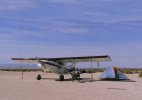
High-Sierra-Campsite2small.jpeg
 
I got my PPL and my degree at about the same time. My degree was in engineering, so I had disposable income right from the start and kept flying for fun. Engineers have high starting salaries, but not a lot of advancement opportunities. At one point in my late 20s/early 30s I got my commercial and instrument ratings and started looking for a way to transition from professional engineer to professional pilot. At the time, entry level flying jobs were paying about half of what I was earning as an engineer. I stayed with engineering and kept flying for fun. Over the years I've owned 5 different planes ranging from my current Maule to a Pitts S2A, a Grumman Traveler, a Mooney M20E and a 182. When I was competing in IAC aerobatic contests, a lot of my competitors were professional pilots and many of them hated their jobs. They were away from home too much, they suffered constant jet lag from long trips and multiple airlines were actually going belly-up back then so a lot of pilots lost all their seniority when they went to work for other airlines. Enjoying flying isn't enough to make flying a happy career. You have to enjoy the life of a professional pilot, and that is something altogether different. I still smile each time I get in my plane and marvel at the magic carpet it is for me. I know a lot of professional pilots that have come to hate their careers, but can't afford to change due to family obligations. So, get a license and a bunch of ratings if you enjoy flying, but take a long and sober look at the life of a professional pilot before you tie your life to that career. For me, I fly when I want, where I want and can change my mind 1/2 way to my destination and go someplace else instead. Professional pilots don't have that luxury. Enjoying flying and enjoying the life of a professional pilot are not always the same thing.
View attachment 151334
Thank you for sharing your story Flyhound. That's a really valuable perspective and not something I had considered deeply before. I will definitely keep the things you mentioned in mind while I find my way down this path. It sounds like things worked out exactly how they were meant to. Amazing picture by the way :)
 
The idea of a thing and the reality of a thing are not always congruent.

It's a worthwhile exercise to find people who are in your prospective field and ask them what they hate about it, just a reality check. Back when I was a medical student, an old and very senior attending physician once told me that when it came to choosing a specialty, the actual hands-on job was only 10%. The other 90% was whom you were doing it with, where you were doing it, what kind of hours, and whether it was something you could tolerate doing day-after-day, month-after-month, and year-after-year. Choose, he advised me, on the 90%, not the 10%. It was good advice.
 
Engineers have high starting salaries, but not a lot of advancement opportunities.

Really? Really?!


Engineers are more likely to become millionaires, or even billionaires, than any other profession. They head major corporations. (At my old company, Lockheed Martin, both the CEO and COO are engineers, as of course is the CTO.) They become entrepeneurs. They invent life-changing technology, and start entirely new industries. Engineers explore from the bottom of the ocean to the reaches of outerspace. Of the 12 people who walked on the moon, 11 were engineers. Of the 4 people currently on their way back from the moon, 4 are engineers.

The opportunities for engineers are virtually boundless. Frankly, it's hard to imagine any profession with fewer limits than engineering.
 
I think this is a key statement in your post, though. In order to make large advancements, they have to become something other than an engineer.

Not really. They remain engineers. Entrepreneurship is just another aspect of the profession. As I moved further into management, I never ceased being an engineer. If a physician opens a clinic, did he stop being a physician?
 
Not really. They remain engineers. Entrepreneurship is just another aspect of the profession. As I moved further into management, I never ceased being an engineer. If a physician opens a clinic, did he stop being a physician?
It’s not that they stop being engineers, it’s that you have to become something else as well. Entrepenourship, management, astronaut, etc, aren’t engineering disciplines.
 
It’s not that they stop being engineers, it’s that you have to become something else as well. Entrepenourship, management, astronaut, etc, aren’t engineering disciplines.

How's that different from a physician becoming a clinic owner, a chief surgeon, etc.? Or a lawyer becoming a firm partner, a judge, a congress rat, etc.? "Advancement" by its very nature means becoming something tomorrow that you're not today. To say that engineering has no advancement opportunities seems silly to me. Using your criteria, no profession has any better advancement opportunities.
 
How's that different from a physician becoming a clinic owner, a chief surgeon, etc.? Or a lawyer becoming a firm partner, a judge, a congress rat, etc.? "Advancement" by its very nature means becoming something tomorrow that you're not today. To say that engineering has no advancement opportunities seems silly to me. Using your criteria, no profession has any better advancement opportunities.
It isn’t any different, and it’s the primary reason I never “advanced”. I yam what I yam, and that’s all what I yam. Any management position takes me away from what I want to do.

I’m not saying it’s a bad thing, but it takes one away from engineering (or whatever) for other duties.
 
I’m not saying it’s a bad thing, but it takes one away from engineering (or whatever) for other duties.

I understand what you're saying, I just think your definition of what constitutes "engineering" is a bit narrow.

Just because one is no longer sitting at a tube making drawings or sitting at a lab bench debugging a circuit card, does not mean one is no longer doing engineering.

When I was a department head, a chief engineer, and even when managing other chief engineers, I was still practicing engineering. My duties made me responsible for the technical performance of our designs, responsible for the standards of practice my engineers adhered to, responsible for approving tests, shipments, etc., responsible for failure investigations, and so on. I was still required to exercise engineering judgement and to have a thorough understanding of the technologies involved.

In fact, when I was running the chief engineer department, I used to regularly tell my folks, "We can't afford to waste 'good.' You're still technical experts, and I expect your expertise to be available when needed." I would often have chief engineers serve as subject matter experts for design reviews, mentoring, failure investigations, whatever, on top of their regular duties.

They remained engineers, their performance was evaluated against other engineers, they reported to the engineering organization. In fact, at our place, the management chains for engineering and other organizations don't converge until you reach the CEO (who is himself an engineer).


Any management position takes me away from what I want to do.

Good for you! Nothing at all wrong with that. But your personal choice does not mean that engineering has limited opportunities for advancement.
 
I understand what you're saying, I just think your definition of what constitutes "engineering" is a bit narrow.

Since this is an aviation board, let’s look at “pilot.” A pilot flies airplanes. A Chief Pilot still flies airplanes, but he also does finances and mediates disputes and negotiates with the FAA and ensures pilots are doing pilot stuff. He does a lot of stuff that isn’t “pilot,” but still requires pilot knowledge.

Maybe some people still consider all that “pilot”-ing, but the things I specifically mentioned require skill sets that I don’t (or didn’t-I don’t “pilot” anymore) have as a pilot. And quite frankly, neither did several of the Chief Pilots I’ve worked with over the years.

We're getting waaaay off the thread topic, but IMHO "pilot" has a much narrower definition and applies to the manipulation of an aircraft's controls. "Piloting" might be more analogous to "drawing" for an engineer. The overall engineering profession is much broader than that, however.

Engineering is by its nature highly collaborative, requiring many activities from different disciplines and specialties, and is by necessity a wide-ranging activity. I agree that finances and negotiation and so forth aren't piloting. OTOH, tasks such as cost estimating, project planning, scheduling, manpower estimating, contract review and negotiating, specification writing, and on and on, in the context of an engineering project, are all within the scope of engineering.

To take this back to the original comment about advancement opportunities, though, consider that there isn't much of a path from pilot to the C-suite at Lockheed Martin, for example, while there is a pretty good path for an engineer. Engineers have outstanding opportunities for advancement, as professions go.
I guess we disagree on the definition of “become.”
 
Back
Top