luvflyin
Touchdown! Greaser!
- Joined
- May 8, 2015
- Messages
- 17,444
- Location
- Santa Barbara, CA
- Display Name
- Luvflyin
- Home Airfield
- KVUO
Oh. What’s the ‘cycle’ when names usually get changed. I haven’t seen one of these in quite awhile?It received an abbreviated amendment (the C in 10C) by Permanent NOTAM. Name changes cannot be done by NOTAM.
More substantive amendment to the procedure - numbered rather than lettered. In this one, the name would change if and when it goes to Amendment 11.Oh. What’s the ‘cycle’ when names usually get changed. I haven’t seen one of these in quite awhile?
Better yet, RADIAL/DIST.Is there a reason to even care if the title is outdated?
Changing VOR/DME approaches to VOR with a note added seems really dumb. VOR/DIST seems like a better title.
Why DIST?Is there a reason to even care if the title is outdated?
Changing VOR/DME approaches to VOR with a note added seems really dumb. VOR/DIST seems like a better title.
I'm waiting for that one too. I have a guess, but let's see.Why DIST?
I’m thinkin’ it’s an RNAV can substitute thangI'm waiting for that one too. I have a guess, but let's see.
That's my guess too, in which case I disagree with using DIST.I’m thinkin’ it’s an RNAV can substitute thang
Agreed. Biggest problem is getting pilots to read the single box.Overall, I like the FAA's decision to move equipment requirements out of the three different places it appeared before and into a single box
It was worse before. Plan View to get from the enroute environment. Notes for approach segments other than the FAC. Title, needed for the FAC. Who memorized that, except maybe for the checkride? You might have a confusing mess, with a Plan View with "ADF Required" and Notes with "ADF OR DME Required" on the same chart. What? Maybe ADF isn't really required? And it might not have made any difference anyway since the location within the chart was mostly informational. Operationally, "required" meant "required" to use the approach, wherever it happened to be located.Agreed. Biggest problem is getting pilots to read the single box.
To quickly identify the approach requires an approved distance source without referencing other portions of the chart in the event of GPS outage or RNAV failure. We in an era with far too many unneeded notes in the IAPs.I'm waiting for that one too. I have a guess, but let's see.
Everything you need to know about what you need is on the Planview and Missed Approach Procedure. No need for fancy names and notes. Just number the Approaches. Like proceed direct [fix] Cleared for a number six.It was worse before. Plan View to get from the enroute environment. Notes for approach segments other than the FAC. Title, needed for the FAC. Who memorized that, except maybe for the checkride? You might have a confusing mess, with a Plan View with "ADF Required" and Notes with "ADF OR DME Required" on the same chart. What? Maybe ADF isn't really required? And it might not have made any difference anyway since the location within the chart was mostly informational. Operationally, "required" meant "required" to use the approach, wherever it happened to be located.
I guess. What’s the other approved distance source during the GPS outage?To quickly identify the approach requires an approved distance source without referencing other portions of the chart in the event of GPS outage or RNAV failure. We in an era with far too many unneeded notes in the IAPs.
We “should.” We “could.” The question is whether most of us “would.”As messy as the notes were (and still are in some cases), it is also true that they are but an aid to the pilot. You should be able to look at the chart yourself and determine what kinda of navigational equipment is required for each segment. For example, if you see a fix that you need to identify but it only shows a DME value and no other means to identify it, then clearly you need DME. The notes just make (or attempt to make) this a lot simpler for the pilot.
DME or RADAR.I guess. What’s the other approved distance source during the GPS outage?
Sometimes RADAR can. There would have to be Radar Fixes established though. Radar coverage and a DME Fix, intersection or Navaid being there is not enough. It has to be TERP’d out and flight checked to become a Radar Fix.DME or RADAR.
If RADAR is an approved substitute, the TERPS'd chart will say so. Will it be used anyway in a pinch if it's above the controller's MVA or MIA? Sure, but even that is not always the case.DME or RADAR.
Sure it will, but why does the pilot have to search the chart to determine if distance is required for a VOR approach? I think there is a better way to ID a distance requirement out to the pilot. Then in the plan and profile view continue to show the options and eliminate the note.If RADAR is an approved substitute, the TERPS'd chart will say so. Will it be used anyway in a pinch if it's above the controller's MVA or MIA? Sure, but even that is not always the case.
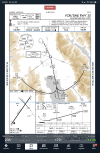
Edit: Turns out @luvflyin's approach is a good example. GUBKE is a DME-Based step down fix to cross at 7200 MSL. Salt Lake Centers MIA is 700' higher.
The question was what were the other approved means. While the number of published radar fixes has declined dramatically over the last 15 years with RNAV, it is an approved means when published.Sometimes RADAR can. There would have to be Radar Fixes established though. Radar coverage and a DME Fix, intersection or Navaid being there is not enough. It has to be TERP’d out and flight checked to become a Radar Fix.
I guess we'll have to disagree. I just don't see having to "search" an equipment requirements box in the briefing section of an approach chart for "DME OR RADAR REQUIRED" as a problem and I don't see how removing the specific type of navaid required makes it better. Of all the errors I see instrument pilots make, not understanding the equipment required for the approach is pretty low on the list and the biggest issue I see there is the FAA's constant changing of terminology.Sure it will, but why does the pilot have to search the chart to determine if distance is required for a VOR approach? I think there is a better way to ID a distance requirement out to the pilot. Then in the plan and profile view continue to show the options and eliminate the note.
Well this put it this way, you didn’t have to read a note when they were VOR/DME approaches, now you do with VOR. Some require DME, some don’t. There was now reason to have changed from the previous format.I guess we'll have to disagree. I just don't see having to "search" an equipment requirements box in the briefing section of an approach chart for "DME OR RADAR REQUIRED" as a problem and I don't see how removing the specific type of navaid required makes it better. Of all the errors I see instrument pilots make, not understanding the equipment required for the approach is pretty low on the list and the biggest issue I see there is the FAA's constant changing of terminology.
Perhaps. You may well be right. But since you still had to read the notes for gotchas and other types of equipment requirements anyway, I just don't see the problem that you see,Well this put it this way, you didn’t have to read a note when they were VOR/DME approaches, now you do with VOR. Some require DME, some don’t. There was now reason to have changed from the previous format.
When converting a noun into a verb, all bets are off.Shouldn't "TERPS'd" actually be written as "TERPSed"?