
You are using an out of date browser. It may not display this or other websites correctly.
You should upgrade or use an alternative browser.
You should upgrade or use an alternative browser.
UV light for oil leak detection
- Thread starter tsts4
- Start date

- Joined
- Jun 13, 2008
- Messages
- 9,173
- Location
- Marietta, GA
- Display Name
- Drake the Outlaw
- Home Airfield
- Cartersville, GA
I tried it and wasn't successful. Ultimately, basic sleuthing was how I found mine (RV-6).Anyone ever used a UV flashlight to detect an oil leak? If so is there a specific UV wavelength that works best? The oil in question is Philips 20W-50 X/C if that matters.
What are you seeing and what area of the engine/engine compartment is wet with oil?

tsts4
En-Route
That’s just it — there’s no real drips that I can find consistently , but I’m getting oil streaks out of the nose gear leg fairing and from the back of the cowl. That make me believe it’s coming from somewhere on the accessory section. There’s no significant loss volume wise, and I would go as far to say it’s not measurable but it’s annoying.
- Joined
- Jun 13, 2008
- Messages
- 9,173
- Location
- Marietta, GA
- Display Name
- Drake the Outlaw
- Home Airfield
- Cartersville, GA
Messy oil change? Drip from the drain plug or the screen?That’s just it — there’s no real drips that I can find consistently , but I’m getting oil streaks out of the nose gear leg fairing and from the back of the cowl. That make me believe it’s coming from somewhere on the accessory section. There’s no significant loss volume wise, and I would go as far to say it’s not measurable but it’s annoying.
tsts4
En-Route
Not that I can tell, but it’s coming from someplace. There’s been a few suspects but nothing definitive that shows up consistently because there’s no big drips or lines present when I remove the cowl. And yet the streaks keep appearing and even those aren’t consistent-sometimes light, sometimes heavier.
Yes. The UV lights I found worked the best were the ones used for fluorescent dye inspections as they were always the most handy for me. Don't recall the wavelength but I'm sure you can find it. Its also best to start with a clean area and to check it in a dark environment like a closed hangar.Anyone ever used a UV flashlight to detect an oil leak? If so is there a specific UV wavelength that works best?

Gary Ward
En-Route
- Joined
- Jan 16, 2020
- Messages
- 3,639
- Location
- Lawrenceburg, Indiana
- Display Name
- Challenger1
- Home Airfield
- I67
From my experience with UV /black light leak detectors, is a dye must be added first to the fluid . So it is not a magic tool that will find your oil leak in any engine without dye added ahead of time.
I found if you couldnt manage the ambient light especially sunlight it would wash out the UV signature. Synthetic oil additives glow brighter than conventional oil additives so light control was paramount. Wasnt a fan of the dyes.From my experience with UV /black light leak detectors, is a dye must be added first to the fluid . So it is not a magic tool that will find your oil leak in any engine without dye added ahead of time.
Brad W
En-Route
I recently bought this one for finding cat pee
I have an old streamlight light that threw a very dim UV beam and was hoping this would be better
Expensive...but I'm happy. It'll light up a dried pee puddle across a room with bright sunlight coming in through the windows
I used it to light up a scorpion the other day. That was amazingly bright.
I have an old streamlight light that threw a very dim UV beam and was hoping this would be better
Expensive...but I'm happy. It'll light up a dried pee puddle across a room with bright sunlight coming in through the windows
I used it to light up a scorpion the other day. That was amazingly bright.

Daleandee
Final Approach
- Joined
- Mar 4, 2020
- Messages
- 8,354
- Display Name
- Dale Andee
Going in a different direction ... clean the engine and then baby powder the area in question. Shorts runs between inspections can sometimes reveal a leak.
I had a slight leak in an oil cooler years ago that was tough to find ...
I had a slight leak in an oil cooler years ago that was tough to find ...

SixPapaCharlie
May the force be with you
- Joined
- Aug 8, 2013
- Messages
- 17,547
- Display Name
- First Officer 6PC
What engine?
From my experience with UV /black light leak detectors, is a dye must be added first to the fluid...
This. I’ll have to look up the dye we used to find trace the leak in our engine a year and a half ago.
It may have been this one.
https://www.aircraftspruce.com/catalog/topages/aerobrite16oz.php Aero-Brite Universal Green Leak Detection Dye - 16 Oz | Aircraft Spruce

tsts4
En-Route
IO-540What engine?
- Joined
- Jun 13, 2008
- Messages
- 9,173
- Location
- Marietta, GA
- Display Name
- Drake the Outlaw
- Home Airfield
- Cartersville, GA
Leakoming.What engine?
SixPapaCharlie
May the force be with you
- Joined
- Aug 8, 2013
- Messages
- 17,547
- Display Name
- First Officer 6PC
IO-540
I chased a leak in my 540 for a year. Did the dye test and everything else.
Ended up tightening the worm gear clamps on the oil return lines and it hasn't lost a drop since.
You probably already have pressure clamps but if you happen to have the old hose style clamps, give it a try.
Hopefully you have a simple (free) issue like I did.
Here is a good article about this:

IO-540 Cylinder Oil Return Lines - Worm Gear VS Constant Pressure Band Clamp - Tim's RV-10 Adventures
After cranking down on the worm gear hose clamps every time I have the cowl off to stop drips from coming out of the oil return lines I decided there must be a better method. Putting an 8mm socket on...
 n7zk.com

Silvaire
En-Route
- Joined
- Oct 10, 2012
- Messages
- 4,799
- Display Name
- Silvaire
Not sure what wavelength but if you buy the dye kit it comes with the light. It works and you don't have to clean the engine, the light will only show the dye, not the old messy oil that's already there. As noted, get it in a dark hangar or do it at night (even better)

Pinecone
Final Approach
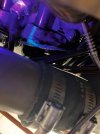
This. I have a leak that we thought was a rocker cover. Finally put in UV dye, ran it for 2 minutes, and 30 seconds later found it was a push rod tube leaking.From my experience with UV /black light leak detectors, is a dye must be added first to the fluid . So it is not a magic tool that will find your oil leak in any engine without dye added ahead of time.
Attachments
Albany Tom
Final Approach
- Joined
- Jul 23, 2021
- Messages
- 5,703
- Display Name
- Albany Tom
I used it, not on an airplane but a riding lawn mower. I think the dye I used was a GM product. Waited until dusk, put it in, and it was easy to find the leak. The dyed oil lit up brightly where it was leaking while the old oil pooled everywhere did not glow much at all, if any. Worked great. Bought the stuff on Amazon.

- Joined
- Dec 5, 2010
- Messages
- 6,581
- Display Name
- GeorgeC
PSA: protect your eyes.
"Duh, I won't look directly at the beam!", you say. Doesn't matter.
Years ago, I got a cheap 390nm UV flashlight. Good for charging up glow in the dark stuff but not much else.
More recently, I got a 365nm. Very effective at finding cat pee. Even short, indirect exposures are also effective at causing a headache.
If you wear glasses, try shining the UV through them and at a wall to see how much they block. Wear sunglasses if you need to.
Last edited:

Ed Haywood
Final Approach
Ended up tightening the worm gear clamps on the oil return lines and it hasn't lost a drop since.
As an aside, it's a good habit to replace those hoses every 5 years or so. They get a lot of heat from being so close to the cylinders, so the rubber hardens faster.