Upcoming AD for many more PA-28 and PA-36 wing spars. 100 anomalies and 6 cracked wings found

The actual work is measured in days/weeks if you have the right set up which they do. Backlog and part lead times is what causes the months. If it took years no one could make any money at it.
That's what I mean; I figured the backlog and parts would make it more than a year. Seems crazy that it takes less time to get a wing spar replaced than an engine overhauled.

I was talking to my local shop about it a couple weeks ago. The flight school they take care of will have 3 grounded planes if it goes through as written. They were trying to decide if they wanted to tackle it themselves or not, and if they could even get the parts.
 
I do not think they would life limit the airframe given the choice.

Sure they would have. 60 years later they are still flying which takes away from selling new ones.


Add in the liability and parts support, and it doesn’t make sense to keep supporting these aged out airframes.
 
Sure they would have. 60 years later they are still flying which takes away from selling new ones.


Add in the liability and parts support, and it doesn’t make sense to keep supporting these aged out airframes.
The cost of new aircraft is what is preventing selling new airplanes.
 
It may be preventing some, but there are people who can afford them.
Not in the Cherokee/172 class. New ones of both are available, but to a first order only flight schools buy them. So if today a good used Cherokee costs 75-150k, their banishment will not lead to a host of 500k Warriors being sold. Some, yes, but not enough to sustain the GA ecosystem at all IMHO.
 
Not in the Cherokee/172 class. New ones of both are available, but to a first order only flight schools buy them. So if today a good used Cherokee costs 75-150k, their banishment will not lead to a host of 500k Warriors being sold. Some, yes, but not enough to sustain the GA ecosystem at all IMHO.

I know an individual that bought a new 172 not that long ago. I'll let him know. :rolleyes:
 
But there aren't many that can afford that amount of capital.
I guess it depends on how you define "many". If you look over the past 10 years those "many" private aircraft buyers have shelled out a pretty good sized chuck of change on new single, piston aircraft. There will always be a fair number of people who buy new regardless of the perceived market.
 
I guess it depends on how you define "many". If you look over the past 10 years those "many" private aircraft buyers have shelled out a pretty good sized chuck of change on new single, piston aircraft. There will always be a fair number of people who buy new regardless of the perceived market.
Textron sells about a dozen Barons a year now, how many did they sell in the 1970's?
 
In 1977 or so GA aircraft production was about over 17,000 aircraft. It was similarly high for a couple years on either side of that year, then quickly decreased. Something like 15,000 Cherokees have been built; if one assumes 7000 are still flying, that's where the bulk of the fleet is. If they were x-out, there aren't 7000 people who are going to pay 500k for a new one, not to mention the supply chain couldn't even support building that number in any reasonable time frame.
 
Textron sells about a dozen Barons a year now, how many did they sell in the 1970's?
Zero comparison to todays market. The Part 91 recreation market imploded on itself between 1980 and 1985 for various reasons but more specifically due to civil liability costs went through the roof. It wasn’t until congress passed GARA in the 90s that Cessna (Textron) even started producing those 1722, 182s, and 206s. So you need to start around 2000 to compare your Baron numbers, but the big winner since then has been Cirrus but they had help from NASA’s AGATE program to bring it to market.

if one assumes 7000 are still flying, that's where the bulk of the fleet is. If they were x-out, there aren't 7000 people who are going to pay 500k for a new one, not to mention the supply chain couldn't even support building that number in any reasonable time frame.
How big do you think the current Part 91 recreational aircraft market is today?
 
Zero comparison to todays market. The Part 91 recreation market imploded on itself between 1980 and 1985 for various reasons but more specifically due to civil liability costs went through the roof. It wasn’t until congress passed GARA in the 90s that Cessna (Textron) even started producing those 1722, 182s, and 206s. So you need to start around 2000 to compare your Baron numbers, but the big winner since then has been Cirrus but they had help from NASA’s AGATE program to bring it to market.


How big do you think the current Part 91 recreational aircraft market is today?
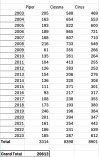
Between 1100 and 1900 per year. Alternatively stated, since 2002, there have been about the same number of piston GA aircraft sold as there were just in one year in the late 1970s. Here are the data for the big three, including exotics like Malibi and Columbias. Data from GAMA.
GA Sales.jpg
 
Between 1100 and 1900 per year.
By market, I meant how many current Part 91 recreational aircraft owners are there. New units per year tends to not to mean much unless you compare it to all the potential buyers.
 
By market, I meant how many current Part 91 recreational aircraft owners are there. New units per year tends to not to mean much unless you compare it to all the potential buyers.
About 200k registered aircraft in US. A very gestalt number is about 1/2 actually fly. 600k pilots including PVT, COM, and ATP.
 
About 200k registered aircraft in US. A very gestalt number is about 1/2 actually fly. 600k pilots including PVT, COM, and ATP.
The key word is recreational. So if you follow the general numbers most industry people use, there are approx. 205,000 general aviation aircraft in the US... or about 212,000 if you include Part 121 aircraft. Of those GA aircraft numbers about 65% are used for commercial purposes so we're down to 72,000 aircraft. Subtract about 28,000 for E/AB and 7,000 for LSA and you get to about 37,000 aircraft. Now reduce that number by another 7,000 or so for private helicopters, gliders, etc. and you're at about 30,000 TC'd aircraft used for private or recreational purposes. In the big picture, the recreational aircraft market is not that big and is the reason few OEMs spend the money to expand in it.
 
Any pictures of the crack? Morbid curiosity and disbelief is getting the best of me.
I haven’t even contacted the insurance company, I never gave it a thought. I will call them and ask, at least change the insurance to none movement until this get sorted.
 
Any pictures of the crack? Morbid curiosity and disbelief is getting the best of me.
I didn’t get any pictures, I wish I had but my started think of calling junk yards and anyone who might have one.
 
The actual work is measured in days/weeks if you have the right set up which they do. Backlog and part lead times is what causes the months. If it took years no one could make any money at it.
Exactly, they are just busy and have to deal with all the work they have on top of this now they are neck deep is backlog work. Another local here has offer to help by doing the spar replacement and I going to schedule it for January if possible. So I have options is just expensive options.
But again I am glad I found out, I have flown with my wife and kids and thank God nothing happened, maybe nothing could have happen for years after all it’s one out 6 holes but who knows, I just in the mind set of trying to figure out an fix and I am glad I am in a partnership.

Did you remove the wing and perform the fluorescent penetrant inspection to confirm the existence of a crack per Piper's Service Bulletin # 1412?
 
they did the eddy current inspection twice
As an FYI, with the wing removed, it would not be a bad idea to double check the eddy current result with a fluorescent penetrant check. Given the amount of work to repair, I would want to be doubly sure it is a true crack.

Believe I got the Service Bulletin number wrong. Think it should be SB 1372.
SB 1372 and SB 1412 are the separate bulletins to check the spar holes based on whether the aircraft falls under a calculated service hour requirement or not. Same difference on the separate ADs being proposed.
 
The key word is recreational. So if you follow the general numbers most industry people use, there are approx. 205,000 general aviation aircraft in the US... or about 212,000 if you include Part 121 aircraft. Of those GA aircraft numbers about 65% are used for commercial purposes so we're down to 72,000 aircraft. Subtract about 28,000 for E/AB and 7,000 for LSA and you get to about 37,000 aircraft. Now reduce that number by another 7,000 or so for private helicopters, gliders, etc. and you're at about 30,000 TC'd aircraft used for private or recreational purposes. In the big picture, the recreational aircraft market is not that big and is the reason few OEMs spend the money to expand in it.
Hmm, estimates in the Mooney world is about 7,000 airplanes still registered, IIRC. Not many used in commercial service.
 
Hmm, estimates in the Mooney world is about 7,000 airplanes still registered, IIRC. Not many used in commercial service.
Having been around airports for many decades, I'd say about 1/2 of registered aircraft actually fly. Suspect not that different for Mooneys - know of several offhand that haven't flown in years or fly 5 hours between annuals. Registration, airworthiness, and utilization are three different things.
 
AITAH for wondering if this will make my 172 worth more? Glad I passed on that Lance I was considering...


Someone had to say it?
 
As an FYI, with the wing removed, it would not be a bad idea to double check the eddy current result with a fluorescent penetrant check. Given the amount of work to repair, I would want to be doubly sure it is a true crack.


SB 1372 and SB 1412 are the separate bulletins to check the spar holes based on whether the aircraft falls under a calculated service hour requirement or not. Same difference on the separate ADs being proposed.
Thank you and I will run this with my IA
 
I was also impressed by their described statistical analysis. Some may recall that I did some ad-hoc analysis of this issue a few months back, but based on their reply I am satisfied that Piper worked with the right experts to perform a high-quality analysis of failure rates. That the FAA ignored this analysis and picked numbers based on a single sample doesn't surprise me at all given the sins in the SAIB.
That’s standard operating procedure for the FAA. I spent four years locked in a grueling battle with them over an fake Airworthiness Directive targeting Robinson R22 main rotor blades. I submitted a mountain of rigorous engineering analysis proving their directive was built on flawed assumptions, not sound physics. They ignored every bit of it. I escalated to the Congressional Aviation Subcommittee, my senator, my representative, and legal counsel.

The entire fleet-wide mandate stemmed from a single catastrophic blade thrown in Australia on an aircraft utilized for severe-duty cattle mustering. Those Outback operators routinely beat the hell out of those birds operating far outside design envelopes and subjecting components to extreme, fatigue loads. They even bend the pitch links which should never happen. If the FAA had checked these birds used for mustering, they would have found localized grim/hub cracking tied to abuse, not a fleet-wide design defect.

Instead, they forced thousands of owners to scrap perfectly airworthy components. I personally had to toss two pristine blade sets. To make matters worse, they imposed a dual retirement threshold: 2,200 hours or 12 years calendar time. A brand-new blade sitting sealed in its factory crate for 12 years with zero fatigue cycles becomes illegal scrap overnight. Insane!

I caught them red-handed in a major misrepresentation. When I demanded the underlying failure analysis, the FAA claimed the NTSB conducted the testing. I filed a FOIA request. Two years later, the NTSB responded in writing stating they had no record or involvement whatsoever. At the time, the FAA didn't employ a single dedicated rotorcraft engineer on staff to evaluate blade dynamics. Yet they wiped out fleet value overnight, handing Robinson an estimated $28 million windfall in replacement sales. I still have three file boxes packed with engineering data documenting the entire debacle it’s a textbook case of regulatory over reach. The FAA is just another example of out of control government agencies.
 
As much as I like Cherokees and I don't like ADs, this one is for real. Work hardening of the main spar until it becomes brittle. I don't like one-size-fits all ADs, though I don't see another way to do it. Get the inspections done, you don't necessarily know what your airplane did in the past.
 
As much as I like Cherokees and I don't like ADs, this one is for real. Work hardening of the main spar until it becomes brittle. I don't like one-size-fits all ADs, though I don't see another way to do it. Get the inspections done, you don't necessarily know what your airplane did in the past.
I have a PA-28 with a good recent inspection, but I still monitor the issue naturally. Looking in to this a bit, there does seem to be some infrastructure being built up to remediate the problem with Cherokees that require it. Hopefully this may lower the cost somewhat, or at least offer better availability of repair expertise. The repair will be expensive, but probably less that of an engine overhaul (if that's any consolation to those afflicted). With a repaired spar, a more valuable and desirable aircraft will result in the end however, something to keep in mind.
 
The group 2 airplanes on the proposed AD finalization (and still not finalized, two years later.... some emergency) got rekt'd. The market hasn't priced it in because the AD is not approved yet, but it will be in time. The group 1 ones got "spared" relatively speaking, in terms of the severity of frequency, which is what is injurious about the proposal (aka the inspection inducing the very MIF damage the directed inspection seeks to identify and condemn in the first place). They even admit it in the text of the preamble (unreal), and tell the public in very short terms: we don't care, eat [the opportunity cost] it.

I'll soften my stance on the future AD and say, for the time being: if the AD is finalized as proposed... the group 1 planes are manageable. The group 2 impositions are beyond my tolerance level for moral hazard.
 
Back
Top