The view of farming from above

455 Bravo Uniform

Final Approach
Joined
Aug 18, 2015
Messages
6,958
Location
KLAF
Display Name
455 Bravo Uniform
Home Airfield
KLAF
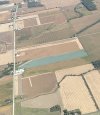
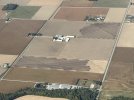
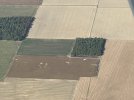
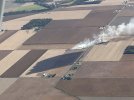
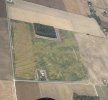
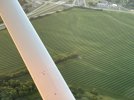
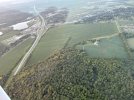
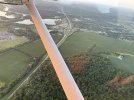
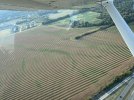
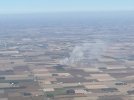
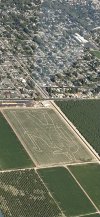
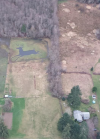
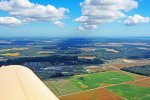
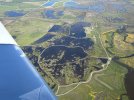
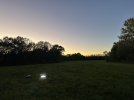
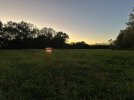
I often take pics that ultimately never get seen by anyone. I guess they have no purpose except to capture something I thought interesting or unknown. Here are a few from this year’s harvest that I found “different”.

IMG_9178.jpegIMG_9141.jpegIMG_9140.jpegIMG_9136.jpegIMG_9128.jpeg
 
Contour farming is neat to see from the air.

Also, central pivot irrigation.
 
That reminds me, there's a corn maze just north of me I need to see.
 
So what’s that odd green stuff in the first picture? Looks like hydroseed.
 
Love it, share more! I got my start in aviation photography taking photos of farmland and/or just about anything I found interesting. My photo platform was a powered parachute, so I had plenty of time to look around at 25 mph!

Some of my favorites things about flying early or late are shadows. People who don't fly have no idea what they're missing!
3868522919_5d2fe5ea5e_c.jpg

3958925968_0728a2da5c_c.jpg
 
Nice pictures.
I fly over this field all summer long. Not sure what to make of it?
Is it corn and beans in one field?

IMG_5677.jpegIMG_5676.jpegIMG_5675.jpegIMG_5844.jpeg
 
We haven't had rain for 10 days or so until yesterday. I talk to farmers this time of year because they buy LP gas to dry crops. They have been working around the clock harvesting beans for last 2 weeks. This morning since it was raining was the first day they could sleep in a little this morning.
Last Friday night I flew a XC up to northern Ohio. I saw countless combines running from miles away because it was so dry and they were making lot's of dust. I was thinking it was a lot work and many hours in those combines. Didn't think to take any pictures.
 
What’s odd/interesting in my 2nd pic above is why they harvest diagonally. Is that for better “capture” by the combine??

Pic 3 above is maybe drought or sandy soil? Or was it too wet during the spring in those spots? The color looks sandy from above.

Pic 4 above was a huge plume of smoke. On purpose? You can see the prior burnt areas. Here it is for scale:
IMG_9132.jpeg

Pic 5 above - no clue.
 
The big one up off of US12 between Richmond and Antioch? We used to go to that one when we lived in Barrington.
Richardson's farm in Spring Grove. Never actually been there in person. I live in Wauconda. You'd think I would have gone.
 
Pic 4 above was a huge plume of smoke. On purpose? You can see the prior burnt areas. Here it is for scale:
Burning off fields is a thing but at least around here right now it's awfully dry to do that safely. It's not uncommon for poorly maintained equipment to catch on fire during harvesting either.
 
You combine soybeans on the bias because they are nearly always planted in straight rows (7.5", 15" or 30", most often). The bean head cuts the soybean with a cycle bar, lots of sickle sections about 2.5" wide on a bar that rapidly slides back and forth. If you go down the row straight, you wear some sickle sections all the time and others very seldom. If you combine on the bias, you use each sickle section about evenly. Plus, if you combine in a straight line and get off a little, you leave a section of the bean row and have to go back and get it if you want to stay on the row. A small mistake on the bias is easier to deal with. Yes, many combines now run on auto-steer with GPS, but not all of them use RTK GPS, which is sub-inch accurate, so they can be off 4-6 inches or even more on WAAS and that's easily enough to miss a section of the row.
Yes, many do combine straight but around here more run on the bias.
 
Corn and beans are good landing areas after they're cut, but before hand, they are almost certainly going to flip most planes on it's back. If forced to choose between the two standing crops, I'd choose corn and with the row, then try to come in as slow as possible and then stall it before the wheels hit so it would drop in. Just my uneducated opinion.
 
There are a few trial cases of people planting alternating widths of corn and soybeans, but the trials I've heard about don't make up for the extra mangement issues. Some herbicides are mutually antagonistic, for example.
 
There's an interesting patchwork field where they are likely planting many replications of different seed varieties for test purposes. Almost certainly by a seed company.
 
Corn and beans are good landing areas after they're cut, but before hand, they are almost certainly going to flip most planes on it's back. If forced to choose between the two standing crops, I'd choose corn and with the row, then try to come in as slow as possible and then stall it before the wheels hit so it would drop in. Just my uneducated opinion.
Totally disagree about corn stubble being a good landing area. Those corn stalks are like rows of knives sticking out of the ground, ready to go through your sidewall.
 
Man, must be nice to have so many emergency landing areas. Around here it’s trees and/or hills.
I am lucky to do most of my flying over the Delmarva Peninsula, about half of which is flat farm fields. That's the Atlantic Ocean in the distance in my photo. This is about 10 miles south of Delaware Coastal Airport (GED), which is my preferred airport.
Looking-Down-over-Delmarva-studio-web.jpg
 
Totally disagree about corn stubble being a good landing area. Those corn stalks are like rows of knives sticking out of the ground, ready to go through your sidewall.
I know a guy who landed his minimax in a picked part of a cornfield to talk to and deliver lunch to the guy in the combine… a corn stalk speared through the elevator…
 
Totally disagree about corn stubble being a good landing area. Those corn stalks are like rows of knives sticking out of the ground, ready to go through your sidewall.
You make a good point.
In recent years, both corn and soybeans have incorporated GMO features that make the stems/stalks healthier and thus harder. Many farmers use fungicides which also make the plant healthier. The stalks can be hard on farm equipment tires, as well, especially new, soft ones. Old, hard tires handle crop stubble better in my experience.
I'll backpeddle on stalks being a good landing area. Better than standing, yes, but not desireable.
My preferances are a newly mown but baled hay field, then I'll consider a water way or buffer strip if it's mown and one can inspect it before committing. Too often, a waterway can have ruts that don't show.

 
You make a good point.
In recent years, both corn and soybeans have incorporated GMO features that make the stems/stalks healthier and thus harder. Many farmers use fungicides which also make the plant healthier. The stalks can be hard on farm equipment tires, as well, especially new, soft ones. Old, hard tires handle crop stubble better in my experience.
I'll backpeddle on stalks being a good landing area. Better than standing, yes, but not desireable.
My preferances are a newly mown but baled hay field, then I'll consider a water way or buffer strip if it's mown and one can inspect it before committing. Too often, a waterway can have ruts that don't show.
Yeah, my tractor has industrial tires on it, which are harder rubber than ag tires, and there are still a couple spots where corn stalks have taken bits off the tread.

And 1000% yes on hay fields. I fly out of one on my farm. Newly mown is great for taking off, but for landing I've gone into grass four feet tall without a problem.

Speaking of my hay field, I just finished making a vasi out of junk I had laying around the garage...

1760018300948.jpeg1760018334652.jpeg
 
I often take pics that ultimately never get seen by anyone. I guess they have no purpose except to capture something I thought interesting or unknown. Here are a few from this year’s harvest that I found “different”.
It was so neat to go back and fly over the fields I worked as a kid. What took 15 minutes to cross with a tractor passed by in 30 seconds.
 
There's a member of either this forum, or the other one that I visit. Every year he uses his drone to record the wheat harvest at the family farm.

I looked, but couldn't see a 2025 video yet, here's 2024.

 
Cool! How u did dat?
I very vaguely remember reading or hearing about homemade vasi with plywood during private ground.

But I could be making that up

Being based at an airport with an inop tri color vasi....I am intrigued
 
Corn and beans are good landing areas after they're cut, but before hand, they are almost certainly going to flip most planes on it's back.

My experience with Soybean says otherwise. Landed with the furrows, zero damage.
 
But you have conventional gear, designed for farm fields.

Most planes have those radical new tricycle things, and they stumble easily.
 
But you have conventional gear, designed for farm fields.

Most planes have those radical new tricycle things, and they stumble easily.

Fair point. But Super Decathlons have a lot of weight on the front, and are quite vulnerable to nosing over. I have seen several do it on pavement.

I can't promise anyone else will have the same result, but it was the softest landing of my pilot career. Pretty sure the 8 foot corn on 3 sides would not have been so pleasant.

And other than some green stains on the wheel pants and gear legs, and some brown stains on the seat, there was zero damage.
 
Saw a 450hp Stearman miss a turn onto the runway and take off through 3' beans and it was pretty interesting to watch as he took big chunck of beans out with the axle.
BTW, if we are landing in row crops, the chances are we are not primarily interested in the welfare of the airplane other than as it protects us in the landing, so if corn stubble is the best option, I will certainly take it and figure the airplane already belongs to the insurance company, anyway.
I used to tell my kids, "never go in the ditch to miss a deer" and I would never pass up the chance to land in a corn stubble field if my only worry was puncturing a couple of tires.
 
Back
Top