The State of Alaska vs a bush pilot and a 6-pack of beer

Status
Not open for further replies.
It would be hilarious if scotus found that localities had the freedom to create their own goofy laws, but that they only applied to residents, not transients, and that any fine to residents would be limited to $5 plus the loss of the contraband items.

Speeders around the country would rejoice.
 
The funny thing is, Alaska is thought about as where one goes to escape civilization and excessive rules. Maybe the idea of a ‘dry village’ is outdated, punitive.

I just don’t think it’s right to confiscate an airplane over the beer onboard. What about a dispensary in the village? That seems to be a thing now, less likely to be groused about.

I think AK has ‘constitutional carry’ with firearms, but no beer?? Yeah, I understand ‘own nation’ type of laws.
Good thoughts.

I have some thought that the 21st Amendment should have precluded this sort of draconian action, but I guess SCOTUS will decide whether or not this is the case.
 
The funny thing is, Alaska is thought about as where one goes to escape civilization and excessive rules. Maybe the idea of a ‘dry village’ is outdated, punitive.
I've long believed that the government had no right to tell people what they can put in their bodies, but I also understand where they're coming from. Areas with high Native American populations have always had problems with alcohol ever since the white man introduced it to them; they don't have the thousands of years that Europeans have in learning to deal with it, and in genetically weeding out the most susceptible.

Civil forfeiture, OTOH, is another matter... an evil that encourages a kleptocratic government.
 
The dispensary idea is a good one.

Alcoholic Eskimo goes out to the liquor store, blows his entire earnings on their products, and consumes it.

His wife has no supper for him, he beats her thoroughly, and goes to bed.

His wife collects all his 30-06 cartridges, loads his rifle, and goes to the dispensary, and fires every cartridge through the front, navel high, and a foot apart.

Returning home, she carefully drains the last drops from the empty containers, and when the local law arrives, tells them she was drunk when the bear attacked her, and she drove it away with the rifle fire.

No problem, we all know drunks see see strange things, and act accordingly. The law departs, after determining that she did indeed expend every round he possessed, and is now harmless.

Since the dispensary is not in the village, no check is made to see if they have a problem. That is up to the Alaska State troopers, whenever they might hear there was a problem.

I have personally known alcoholics that did the first part of the above, their wimpy wives went to the other kind of dispensary to get bandaged up. One of them had one too many courts martials, his last sent him to Leavenworth.
 
The funny thing is, Alaska is thought about as where one goes to escape civilization and excessive rules. Maybe the idea of a ‘dry village’ is outdated, punitive.

I just don’t think it’s right to confiscate an airplane over the beer onboard. What about a dispensary in the village? That seems to be a thing now, less likely to be groused about.

I think AK has ‘constitutional carry’ with firearms, but no beer?? Yeah, I understand ‘own nation’ type of laws.

The fact that the State of Alaska is subcontracted (at no charge to them?) at the request of a Sovereign nation to handle law enforcement investigations and Judicial prosecutions is (IMO) out of bounds.

It seems the citizens of Alaska and possibly the US Government Treasury may somehow be subsidizing the entire indigenous population at the will of laws, policies and customs established by a Sovereign entity, then lobbied to State politicians to help "babysit" a population with their own special problems, blamed on all the people that allegedly created the problem, and now are forced to pay for it.

When state agencies prosecute citizens, jail offenders, and confiscate their property on behalf of policies and laws developed by citizens of an indigenous nation (outside the geographic boundaries of the Sovereign) are allowed, I would hope American Citizens are also not forced to pay and suffer the consequences for it. But somehow in this upside down world we all live, I'd bet we pay for all of it, like it or not.
 
This is not run away government arbitrarily confiscating citizen's assets. As we sometimes say, these rules were written in blood.

I was born in Alaska a long time ago. Got my pilots license there at 17. Worked as a charter and heavy cargo pilot for a while, flying to many native villages.

There are hundreds of these villages scattered across the state. They are only accessible by air, snowmobiles/cat trains in winter or boat (if on the coast or on the Yukon). Originally, they were self-sufficient hunting/fishing/subsistence communities, in place for thousands of years. Since the U.S. bought Alaska and especially since Alaska's oil boom windfall in the 70's, things have changed a lot. We built airfields, diesel power plants, schools, water/sewer systems, in all of these places. Airplanes come and go all the time, hauling diesel for the generators, food and supplies, basketball teams, etc., etc.

Most Alaska native village residents are subsistence hunters. They learn very young. Every home has plenty of firearms. The villages mostly have tiny populations and small budgets. Zero professional law enforcement. Also, as previously discussed, most natives are extremely susceptible to alcohol abuse. It has been quite common for inebriated locals to become angry and start shooting other locals. Imagine living in a town of 150 people when one of your neighbors gets wasted and walks down the street blasting anyone who gets in his way. No police to help. So.... the *dry* village policies began. And these policies have been somewhat effective in limiting the carnage.

The fines and aircraft forfeitures are draconian for a reason. Many people in the villages will pay a lot for alcohol. It is an attractive and addictive substance to them. Smuggling happens all the time because it is profitable. I was often offered money to stow booze among my cargo and deliver it to the bush. An acquaintance of mine lost a Cessna 185 doing that. It is an unfortunate side effect that I can't fly through a village enroute to a fishing expedition hauling some booze for the campfire. If that was allowed, smugglers would use it as a loophole. Again, the flying community in Alaska is fully aware of the rules.
 
Genetics and economic factors are part of it
Genetics no. Economics yes.

Native Americans do not possess any genetic differences when it comes to not being able to deal with alcohol. The old "fire water" stories are all myths and they could potentially drink anyone under the table and get up the next morning and run a 10K. Now the economic issues, that is not only with many Native Americans, is a big issue with alcoholism throughout the country and world.
Interesting. I always assumed the genetic cause was real. But all I based this assumption on was the large proportion of inebriated Alaska natives that I would see on the streets in Anchorage and Fairbanks. And, more recently, Native Americans in Gallup, N.M. Economics or other factors could certainly be the cause.
 
The fines and aircraft forfeitures are draconian for a reason.

Sorry, but those reasons do not trump the US Constitution. The USC is the supreme law of the United States, and the 8th amendment explicitly prohibits draconian punishment.

Eighth Amendment​

Excessive bail shall not be required, nor excessive fines imposed, nor cruel and unusual punishments inflicted.​

If the local villages or the state feel they must solve this problem, they must find another method that does not conflict with the USC.

Frankly, if (as you say)...
Every home has plenty of firearms.
then when this happens...
Imagine living in a town of 150 people when one of your neighbors gets wasted and walks down the street blasting anyone who gets in his way.
...I don't understand why one or more of the drunk's well-armed neighbors don't shoot him in defense of self and others. Do that a few times and I'd bet this sort of crap will soon stop, for Darwinian reasons if nothing else.
 
NIH did a study of genetic factors which determined how our bodies process alcohol. These genes presence in combination can produce a person who will get passing out drunk, or antisocial drunk, and how long thy will remain drunk.

Studies of adopted twins show that environment is a strong indicator, children copy their parents, but adopted children are less likely to become problem drinkers if their biological parents were not.

The prevalence of these genes is greater in native Americans, lower 48 and Alaska, as well as Irish Americans.

Without the availability of alcohol, there is no problem, they are ordinary hard working people.
 
Interesting. I always assumed the genetic cause was real. But all I based this assumption on was the large proportion of inebriated Alaska natives that I would see on the streets in Anchorage and Fairbanks. And, more recently, Native Americans in Gallup, N.M.

Nowadays walk down designated zombi streets found in many large cities and you'll discover a horror show of inebriated and drugged people. Local governments are often supplying clean needles and allowing the illegal distribution of alcohol, fentanyl, and other dangerous substances to be openly used with no investigations or prosecutions of suppliers.

Considering the amount of sadness, resignation and despair with people who willingly drink and drug themselves to the point of losing control of their senses and bodily functions, Alaska's indigenous peoples' issues with alcoholism and violence seem almost manageable compared to big cities. Too bad the villages can't afford their own law enforcement solutions that are more local and responsive to handle violent drunks with guns living in a long dark, cold environment.

Seems the State of Alaska is well-funded and could come up with a better solution if this problem was a higher priority than it is now. Punishing everyone for the bad behavior of a few is an expensive, and likely ineffective unconstitutional solution.
 
Seems the State of Alaska is well-funded and could come up with a better solution
In a recent discussion with someone they were saying how AK actually does not have all that much money. They are heavily dependent on Federal money and oil money, BUT... They are required by law (Fed?) to give huge amounts to the residents each year. So from what I was just told, they really don't have all that much in the coffers to create many long term projects of any kind.

Anyone from AK, do enlighten me if I got it wrong.
 
In a recent discussion with someone they were saying how AK actually does not have all that much money. They are heavily dependent on Federal money and oil money, BUT... They are required by law (Fed?) to give huge amounts to the residents each year. So from what I was just told, they really don't have all that much in the coffers to create many long term projects of any kind.

Alaska has a very high percentage of government employees which I'd suspect gobble up much of the funds available for additional projects to improve public safety, which Constitutionally is the among the highest priority duty of government.

Alaska must provide a lot of government services to the people who reside up there. I wonder how many of these services are being dedicated to protecting the lives of their citizens keeping them safe from drunks murdering their fellow citizens?

The following is the answer to a question posed to AI with the answer based upon 2022 statistics. I'd be relatively confident that going into 2027 that this 25.5 percent ratio is likely to tilt in the direction towards an even higher ratio of government jobs to private sector jobs:

"As of late 2022, government employees comprised approximately 25.5% of all jobs in Alaska, making it the highest share of any U.S. state. This means that for every 100 workers in the state, roughly 25 to 26 were employed by the government sector, while the remaining 74 to 75 were in the private sector.
In total, the government sector supplied 78,600 jobs out of the state’s 309,600 total jobs at the end of 2022. The breakdown of these government roles was:
  • Local Government: ~41,800 employees (including tribal and school districts)
  • State Government: ~21,900 employees
  • Federal Government: ~14,900 employees (excluding uniformed military)
This concentration is driven by Alaska’s vast geography and small population, which require significant public infrastructure and management services, with local government alone acting as the state’s single largest employer."

We know the above ratio leaves an adequate amount government employees available to investigate, prosecute, fine and seize assets outside the geographic boundaries of sovereign nations. Some of the problem may be related to how multiple layers of existing levels of government prioritize available funds (per politics?) to non-public safety government functions.
 
This concentration is driven by Alaska’s vast geography and small population, which require significant public infrastructure and management services, with local government alone acting as the state’s single largest employer."
Perhaps for some context to that statement you should look into what percentage of land in AK is publicly owned. While it may appear "crystal clear" to you living in PA, things are a bit different in the lower 48 vs AK.
 
In a recent discussion with someone they were saying how AK actually does not have all that much money. They are heavily dependent on Federal money and oil money, BUT... They are required by law (Fed?) to give huge amounts to the residents each year. So from what I was just told, they really don't have all that much in the coffers to create many long term projects of any kind.

Anyone from AK, do enlighten me if I got it wrong.
Alaska is much different than any other state in lots of ways. For example, less than 1% of land is privately owned. The rest is owned by the federal govt. (>60%), state govt. (>25%), and various Alaska Native corporations( these lands were granted to Alaska native groups as a settlement in 1971). The road system provides access to just a small fraction of the land in the state and the communities therein.

A massive oil resource was discovered on the the Arctic Ocean coast in the late 60's, which resulted in a large diameter pipeline to southcentral Alaska and a 500 mile gravel road from the existing road system near Fairbanks to Prudhoe Bay. The Prudhoe Bay oilfield sits on State of Alaska lands which are leased to various oil companies for oil exploration and production. The lease sales in the 1970's provided billions of dollars to state coffers and this windfall was followed by a steady flow of royalty oil money. The state's royalty share was 12 to 15% of all oil produced. The state's general funds budget expanded from ~$20 mil/year in the late 60's to $300-500 mil in the late 70's. Oil production increased steadily until the early 90's; we were producing 2 million barrels of crude per day for several years. Production has steadily declined since then. The pipeline is flowing around 500k bbl/day now. In addition to the lease and royalty monies, thousands of high paying jobs were created. (Full disclosure- I am an engineer who has spent many years working on the Prudhoe Bay automation systems. I was working a project there a few weeks ago.)

As you might imagine, the state bureaucracy exploded in size. We had more money than our politicians could hope to spend. This is when the villages received lots of capital improvements they never had -> airfields, power generation, water/wastewater treatment, schools, etc. Of course, cities on the road system caught the windfall also, school districts, the University system, public works, all transformed. I lived through this as a young man. Luckily, we had a common sense republican governor at the time, Jay Hammond. He decided that we needed to capture some of the windfall for future generations, since oil is a finite resource. He (and others) started the Alaska Permanent Fund with lease and royalty revenues. The current balance is ~$90 billion. It was designed so that 50% of the income from the fund would be distributed to Alaska residents each year and the other 50% would grow the fund. These "dividends" vary with fund performance - they have been more than $3000 and less than $1000. Paid every year to every man, woman and child resident.

Meanwhile, oil revenues have declined, state budgets keep expanding (it is ~$15 billion this year), and the dividend (as you might predict) is a sacred cow. I no longer live in Alaska, but my siblings do and they tell me the state has very serious revenue problems. Like many other states...
 
Perhaps for some context to that statement you should look into what percentage of land in AK is publicly owned. While it may appear "crystal clear" to you living in PA, things are a bit different in the lower 48 vs AK.

I do need some context on this, so please have a little patience. I don't yet understand why Alaska, with all its natural resources and low population, can be that much much different than rural mountanous low population states found in the lower 48.

Because 99% of the land in Alaska is owned by the public, how much development and/or maintenance (or whatever) is required more than Nevada (80% public), or Idaho (62% public)? Both of these states having a much lower percentage of government jobs.

Is the high percentage of government workers in Alaska due to the fact it provides a comfortable living wage with benefits to to support a heathy middle class... compared to citizens who don't work at a high-paying energy or fisheries related job, and therefore having a tough time making ends meet (requiring various forms of government assistance for their economic survival)?
 
I don't yet understand why Alaska, with all its natural resources and low population, can be that much much different than rural mountanous low population states found in the lower 48.
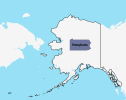
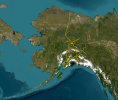
Size, scale, and density. Below is some visual context, but 52% more people live in just Philadelphia than in entire state of AK. And outside the yellow road lines below, everything must be flown in. Imagine when you were in school sports you had to fly to all your away games? This should give you a bit more context on why it is so much different than anywhere in the lower 48.

1790632011688.png

1790632052293.png
 
Size, scale, and density. Below is some visual context, but 52% more people live in just Philadelphia than in entire state of AK. And outside the yellow road lines below, everything must be flown in. Imagine when you were in school sports you had to fly to all your away games? This should give you a bit more context on why it is so much different than anywhere in the lower 48.

I understand the size, distance and population differences. What I don't understand is why nearly half the population works for the government. And with such a small amount of citizens, even those that are located far far away from the small population centers seem to require almost one government worker for every two people.

We all know how expensive it is to fly people and supplies big distances, but the airports are already built. Do the hundreds of indigenous people living in the hundreds of small remote towns just pay higher prices for everything flown in with their own money? Or does it come out the state budget?

The US Census reports in 2025 there were 737,270 people reported to be living in Alaska. The total state budget (not counting any federal or local spending in Alaska) is 15.63 billion dollars budgeted for 2027. That works out to approximately $21,200 dollars for every man, woman and child. Please correct me if I'm wrong... An Alaskan family of three's share of the 15.63 billion is a whopping $63,600 dollars per family. And I bet they pay taxes and fees to cover more of a share of it then they should be.

I know it's a big state with lots of natural resources to help support government. I live in a little over-taxed state, minus most natural resources, having millions of needy people. Yet, I still don't understand how these large distances create a need for such a high amount of government employees. And the need to spend maybe billions(?) in transportation, management and infrastructure costs, but apparently not enough funding remaining to spend on protecting the lives of citizens from drunks with guns.

Seizing private property to help support this big, but poor state? For me, something just doesn't add up. YMMV
 
What I don't understand is why nearly half the population works for the government
I believe the data states 1 in 4, ie., 25%, work in the government which includes the federal side as well. So how many people do you believe it should take to manage and maintain the state and federal infrastructure and services in Alaska?

Do the hundreds of indigenous all people living in the hundreds of small remote towns just pay higher prices for everything flown in with their own money?
FTFY. Mostly yes. But the federal EAS program does subsidize various air routes throughout the state just as it does in other lower 48 states. For example, gas this past summer was $12.95 per gallon at the last resupply flight.

Seizing private property to help support this big, but poor state?
Yet property is seized in the lower 48 as well for similar offences. So why is this different? I know nothing on the OP incident but have seen other incidents in the past that ended in a similar fashion with aircraft where it was seized to include in the lower 48.
 
Seizing private property to help support this big, but poor state? For me, something just doesn't add up. YMMV
My kids' great uncle, who is a patriotic, red-blooded Navy veteran, had $7000 cash stolen from him by police in a small town here in Texas because they claimed it was obvious he was going to use it for drugs - when in fact he was planning to buy a car... he's never gotten it back. Theft is theft no matter who does the stealing.
 
Yet property is seized in the lower 48 as well for similar offences. So why is this different? I know nothing on the OP incident but have seen other incidents in the past that ended in a similar fashion with aircraft where it was seized to include in the lower 48.
Yes, and those civil forfeitures are often overturned when they get to a judge.
 
My kids' great uncle, who is a patriotic, red-blooded Navy veteran, had $7000 cash stolen from him by police in a small town here in Texas because they claimed it was obvious he was going to use it for drugs - when in fact he was planning to buy a car... he's never gotten it back. Theft is theft no matter who does the stealing.
As a retired law enforcement officer, it is my firm belief that asset forfeiture is useless. It does absolutely zero to deter drug dealers. It’s also been so abused that it should just be repealed. Or at least restricted to not occur unless it is proven beyond a reasonable doubt that the assets are direct proceeds of a specific felony for which the defendant has been convicted.
 
In the 80’s most South Florida airports had confiscated aircraft parked on them from drug smuggling. Some people consider Alcohol a drug.
 
As a retired law enforcement officer, it is my firm belief that asset forfeiture is useless. It does absolutely zero to deter drug dealers. It’s also been so abused that it should just be repealed. Or at least restricted to not occur unless it is proven beyond a reasonable doubt that the assets are direct proceeds of a specific felony for which the defendant has been convicted.
Yeah, "worse than useless" because, as you point out, it doesn't effectively deter criminal activity *and* is wildly unpopular which turns the general public against the police.
 
Yes, and those civil forfeitures are often overturned when they get to a judge.
Yet I still get inquires to perform pre-buys on seizure aircraft that do make it through the legal system. But as to the abuse of such systems, name one that has never abused by either the user or enforcer and what percentage difference is between those two groups is that abuse? If only we had a similar system for hangar fairies...
 
So how many people do you believe it should take to manage and maintain the state and federal infrastructure and services in Alaska?
Using my aging state (old people & old expensive to maintain infrastructure) as a comparison, I ran some of Pennsylvania's numbers. The difference between Alaska and Pennsylvania is shocking, even to me.

It seems that mountains, valleys, and little towns and cities are very expensive, and needy of support by government.

Total population of Pennsylvania 13,073,016 people, versus Alaska's 737,200

Total government employees located in Pennsylvania (local, state and federal) currently represent 12.2 % of the total workforce, compared to Alaska's (2022 numbers) of 25.5%. Unless there have been layoffs of government workers in Alaska with a corresponding reduction in force in the last four years, 50 percent may still be a stretch, but by now it's probably up in the 30 something percentage range, and climbing, per "we don't have enough money to run this state".

The cost per person of Pennsylvania's state government budget is $3,886 per person (man, woman & child). Compared to a whopping $21,200 per person in Alaska.

So far nobody has come up with any plausible reasons of why there's such a huge difference, except, "we're so big", "our fuel costs are higher up here", or "you guys in the lower 48 don't understand". Which is not readily explainable by the math, but instead (IMO) are packaged sound bites that keep citizens who don't work for the government from asking any deeper questions, like: WTH are we getting in return for our money, and who exactly is working for who?

 
Using my aging state (old people & old expensive to maintain infrastructure) as a comparison, I ran some of Pennsylvania's numbers. The difference between Alaska and Pennsylvania is shocking, even to me.

It seems that mountains, valleys, and little towns and cities are very expensive, and needy of support by government.

Total population of Pennsylvania 13,073,016 people, versus Alaska's 737,200

Total government employees located in Pennsylvania (local, state and federal) currently represent 12.2 % of the total workforce, compared to Alaska's (2022 numbers) of 25.5%. Unless there have been layoffs of government workers in Alaska with a corresponding reduction in force in the last four years, 50 percent may still be a stretch, but by now it's probably up in the 30 something percentage range, and climbing, per "we don't have enough money to run this state".

The cost per person of Pennsylvania's state government budget is $3,886 per person (man, woman & child). Compared to a whopping $21,200 per person in Alaska.

So far nobody has come up with any plausible reasons of why there's such a huge difference, except, "we're so big", "our fuel costs are higher up here", or "you guys in the lower 48 don't understand". Which is not readily explainable by the math, but instead (IMO) are packaged sound bites that keep citizens who don't work for the government from asking any deeper questions, like: WTH are we getting in return for our money, and who exactly is working for who?
 
Thanks for the Alaskan State government explanation of why their budget in 2017 is much higher per capitia than those in the lower 48.

However, the document you linked was presented in 2017 when the total budget was 10.1 Billion. Nine years later, the current budget is 15.6 Billion, far exceeding the rate of inflation.

Upon a quick read it mentions higher transportation, education, and regulatory monitoring / enforcement costs due to the extensive size of Alaska, and the need for fishery and energy regulators to travel long distances in order to enforce it all.

Also referenced were budgeting adjustments and realignment of sources of income that made their 2017 budget look worse than it really is.

Appears the cost of seizing private property to cover costs of finding, prosecuting and punishing law-breakers probably doesn't cover much of overall cost to accomplish that function.
 
That is a comprehensive and factual answer to the differences in Alaska spending per resident.

I have made 2 trips to Alaska, and landed at 5 "dry" and 4 wet airports. The dry were mostly graded level gravel, all the wet ones simply a dock on a river bank, or lake. Regrading those primitive runways in the spring, following frost heaves, is not an option. The population around one of those airports dwindled, and the airport simply abandoned, since it has access to a gravel road.

I was there in June and September, and both times, there was snow heavy enough to need plowing, Where else is that a normal cost?

Unfortunately, most of the white people in the government are union, and expensive, the natives have hunting and fishing occupations, producing modest incomes and no healthcare or retirements.

I do not know why the high inflation has occurred, but I would hate to live in the villages, and especially if it was a chronic alcohol related crime one.
 
He decided that we needed to capture some of the windfall for future generations, since oil is a finite resource. He (and others) started the Alaska Permanent Fund with lease and royalty revenues. The current balance is ~$90 billion. It was designed so that 50% of the income from the fund would be distributed to Alaska residents each year and the other 50% would grow the fund. These "dividends" vary with fund performance - they have been more than $3000 and less than $1000. Paid every year to every man, woman and child resident.
A $3000 per person per year dividend out of 50% of the 90 Billion dollar energy lease and royalty fund equals an investment return of just under 5% per annum.

Allowing Alaska citizens to share in the proceeds generated by the continuous sale of finite natural resources with citizens that inhabit a state 99% owned by the government (state and federal workers that make the deals with private industry), is a great feature!

I hope these dividends are income tax free, and go to every man, woman and child without any restrictions.
 
So far nobody has come up with any plausible reasons of why there's such a huge difference, except, "we're so big", "our fuel costs are higher up here", or "you guys in the lower 48 don't understand".
Except the report linked above points to those exact issues as to why the Alaska cost per capita is so high. And when one removes those and other unique costs applicable only to Alaska, ie., not in the lower 48, the cost per capita drops to within "7.2% of the US average" capita cost at $5591.54 per person. Regardless, back to the OP topic, asset seizure typically is used to deter criminal activity vs balance a state budget, which in this case the whole purpose of that law was to reduce the body count coming out of villages after alcohol was flown in. And to also point out its the villages themselves that decide whether alcohol is permitted and not the state.
 
I've long believed that the government had no right to tell people what they can put in their bodies, but I also understand where they're coming from. Areas with high Native American populations have always had problems with alcohol ever since the white man introduced it to them; they don't have the thousands of years that Europeans have in learning to deal with it, and in genetically weeding out the most susceptible.

Civil forfeiture, OTOH, is another matter... an evil that encourages a kleptocratic government.
Except this case isn’t about putting anything you want in your body. It’s about transporting illegal cargo.
 
Thanks for the Alaskan State government explanation of why their budget in 2017 is much higher per capitia than those in the lower 48.
You're welcome. Seemed to answer a lot of the questions you had about why alaska costs so much more and I didn't see anything in any of those reasons to suggest that they would have changed much since that report was issued.
 
A $3000 per person per year dividend out of 50% of the 90 Billion dollar energy lease and royalty fund equals an investment return of just under 5% per annum.

Allowing Alaska citizens to share in the proceeds generated by the continuous sale of finite natural resources with citizens that inhabit a state 99% owned by the government (state and federal workers that make the deals with private industry), is a great feature!

I hope these dividends are income tax free, and go to every man, woman and child without any restrictions.
The checks go to every man, woman and child that meet the residency requirements. Recipients pay federal income tax on the dividends. Alaska has no state income tax. A $3000 payout is very rare (probably will never happen again). Around $1000 is pretty common.
 
Status
Not open for further replies.
Back
Top