The Quintessential Comanche 250/260 Thread

Is there a quintessential Comanche thread (where one could see any & all info about the model?)

I don't know about a thread, but I speak pretty good Comanche. There are a number of articles on Comanches at www.piperflyer.org. There is the Airworthy Comanche forum on Delphi, and a very active group on FB: Piper Comanche.
 
Ask away. I can tell you everything you probably want to know about the 250. If I can't, I probably know someone who can.
 
3 major ADs. All very expensive.
2 can be eliminated.

Parts are getting harder to come by.

Fast and hauls though. Roomy as hell inside too.
 
Here are a few of the common ones....

AD 77-13-12 Replaced Bungee cords Part B (due next 500 hrs or 3yrs)
AD 2017-16-01 Ameri-King ELT by inspection & functional check per para (g) (due next 12 mos),
AD 94-13-10 Stabilizer Torque Tube (due next 100 hrs),
AD 75-12-06 Fin Forward Spar (due next 100 hrs),
AD 68-05-01 Exhaust Mufflers (due next 100 hrs),
AD 76-07-12 Bendix Ignition Switch (due next 100 hrs)
 
Most ADs are simple to comply with or, in most airframes have been eliminated via a permanent solution already. The expensive ones many Comanches still have to go through are:

Stab horn AD: Every 5 years. Expensive but can be eliminated via the even more expensive Aussie horn.

Gear AD: Every 1,000 hours the gear has to come apart, each part measured, side brackets NDT’d and put back together.

The gear AD are two separate ADs but most take care of them at the same time.

The bungee AD is every three years (or 500 hours) but easy to do and not expensive. I change mine every two years. Some owners do that one every year.
 
Here are a few of the common ones....

AD 77-13-12 Replaced Bungee cords Part B (due next 500 hrs or 3yrs)
AD 2017-16-01 Ameri-King ELT by inspection & functional check per para (g) (due next 12 mos),
AD 94-13-10 Stabilizer Torque Tube (due next 100 hrs),
AD 75-12-06 Fin Forward Spar (due next 100 hrs),
AD 68-05-01 Exhaust Mufflers (due next 100 hrs),
AD 76-07-12 Bendix Ignition Switch (due next 100 hrs)

Those are simple and cheap. If you have a 260 with duals, muffler is n/a. The horn is simple and cheap but every 5 years, or expensive and one and done, your choice.
The 1000 hr gear AD is spendy to very spendy, depending on what needs replacing.
Cracked gear trunions are ridiculous.
You may need fuel bladders, depending on age.

I love mine for many, many reasons, bone simple O-540 A1D5 not the least of which.

Kristin is a Comanche guru, talk to her.
 
Mind briefing, briefly?
TY
Gear, Elevator, and Prop.
If it has a 3 blade prop, the AD has been addressed as I understand it.
The gear is 1000 hrs but expensive.

The elevator horn perplexes me. If I understand there isn't a record of one failing in flight (I think).
I have heard that inspecting it is what actually causes the cracks.
I have also heard rumors that this one might be going away.

It can be eliminated via the Aussie horn which is what I will likely do.
If it fails in flight I hear you will die though so if there is a risk of an inflight failure, I am scared of it.

The bungees get a lot of discussion. They are so cheap, I just do them at every annual. Its like 60 bucks and takes 20 minutes.
I am not sure why there is so much hub bub about them.
I hear people talk about them a lot when you say "Comanche".

Here's the rub.
Lets say you need new conduits for your gear or you want the Aussie horn.
The Comanche community is periodically putting notes out there stating "We are ordering a batch of conduits, put your name on the list if you want a set, we expect them to arrive in Q2"
Then you start mulling over if you need them now or in Q3 and do I have 3k to spend on them or should I just get them and put them on the shelf in case I need them because there won't be any available until they announce the next bulk order.

There is a fantastic company called webco (Google webco aircraft) and they sell Comanche parts that are needed more frequently and they work on them.
I need to do a break conversion on mine and Webco used to sell a partial conversion for $2400. I called them last week and they said someone bought the company that they got the parts from so now it is $4500

Just educate yourself on what the pain points are, and the cost to address them and spend the money up front to get one that has them addressed. They are great planes but I am going through these things now and they are expensive bot more than that, they take a lot of time.
 
….more than that, they take a lot of time.
Diminishing parts supply and subsequently, diminishing “expert” shops are the things on the “con” list for me as we look for our next plane.

Unfortunately, those two apply to a lot of certificated planes, which is why I keep circling back to RV-10 or Sling TSI.

Price wise, to get a Comanche 250 that’s similarly equipped as how I would build either the cost turns into a wash as to which to purchase.
 
Comanches are great airplanes. They are strong, fast, and roomy. Like any vintage, complex aircraft, they have their peculiarities. A great way to have financial heartburn is to get some comments about AD's, and then charge off and buy one without getting some very knowledgeable assistance. Most mechanics don't know Comanches, but because they are familiar with Pipers, expect to be able to figure it out. Generally doesn't work as Vero Beach Pipers, read Cherokee derivatives, have little in common with the Pipers designed and built in Lock Haven. The Comanche landing gear system is a one off, and few mechanics have the experience to really assess the condition or to properly maintain them. People that buy Comanches love them and tend to hang on to them forever.
 
Did the 260 ever come with a turbo engine?
I am looking at one that the registry says "TIO-540 SER" but the airplane is NA.
Maybe TIO does not always mean turbo -unlike what I am reading about it?
(The tcds 1A15 does not even list a TIO-540 btw)

Also, if the year is 1967, is there any possible way for someone to refer to it as a C model??

Thanks
 
Last edited:
Did the 260 ever come with a turbo engine?
I am looking at one that the registry says "TIO-540 SER" but the airplane is NA.
Maybe TIO does not always mean turbo -unlike what I am reading about it?
(The tcds 1A15 does not even list a TIO-540 btw)

Also, if the year is 1967, is there any possible way for someone to refer to it as a C model??

Thanks
The FAA has half the fleet as turbos, but Piper only made about 25 260TC's and there are another handful that were modified by STC to have turbos. No Comanche ever had a Lycoming designated TIO engine.
 
All I know about commanches is that they have a p51 wing. Like the mooney. And al mooney was 5'17".
:rofl:

Well, since you brought it up... As legend has it, Al Mooney was flying across the country in his nice new M20 when some weather got in his way, so he diverted to a convenient nearby airport... Lock Haven, PA, home of Piper Aircraft. Well, ol' Bill Piper was all too happy to put his buddy Al's plane in a hangar overnight, and while Bill wined and dined Al, he had a team of 8 or so engineers crawling all over Al's speedy little bird, taking measurements and observations all night. From that, the PA24 Comanche was born.

That said, Piper did some things really well with the Comanche that make it better than the Mooney in some ways. First of all, the useful load is better and the cabin is bigger. The tradeoff is a little bit of the Mooney speed and efficiency, but it gives you a more versatile airplane.

Unfortunately, like the Mooney, the Comanche was labor-intensive to build, and with the Vero Beach factory cranking out easy-to-build PA28s and PA30s like mad, the arrival of Hurricane Agnes in Lock Haven in 1972 made for a convenient excuse to stop production on one of the best planes Piper ever made. :(

Is there a quintessential Comanche thread (where one could see any & all info about the model?)
Let's make this one!

The Comanche 180 was the original, and quickly followed by the Comanche 250. The 250 was replaced by the 260 in 1965, and there were "B" and "C" models of the 260 as well. I believe the B added the third side window and the C added the more modern 6-pack panel, though I'm sure there were other things those are the most obvious. There were also some Comanche 400s built, using the IO-720 8-cylinder engine, but there are challenges to cooling that many cylinders with air so they didn't sell a lot of them. And, of course, there were the PA30 and PA39 Twin Comanches as well.

Did the 260 ever come with a turbo engine?
I am looking at one that the registry says "TIO-540 SER" but the airplane is NA.
Maybe TIO does not always mean turbo -unlike what I am reading about it?
(The tcds 1A15 does not even list a TIO-540 btw)
The Turbo Comanches (single and twin) are turbonormalized, and have a regular engine with an STCed Rajay turbo system bolted on. On the single, you can tell it's a turbo thanks to the presence of a fourth lever on the throttle quadrant - If you want more manifold pressure than you can get at full throttle, you start pushing in the "second throttle" which is your wastegate control to boost further. @Av Shiloh has a very nice Turbo Comanche.

I wouldn't read too much into what the registry says. I've seen a LOT of mistakes in the registry. What matters is what's in the aircraft logs.
Also, if the year is 1967, is there any possible way for someone to refer to it as a C model??
67 would be a B model if it's a 260.
 
Bang for the buck the best four-seater around, IMHO. 250/260’s get 150-155kts @13-15gph all day long. The FI 1966 and later models 12-14gph. If there’s going to regularly be single pilot or two people operations look seriously at the 180.

They are not as fast as a Debonair (maybe 5 knots slower) but carries more than both the Deb and 182. Plus, it costs several thousands less than both. It is a true four place aircraft and handles gross operations without complaint. Weight and balance issues are mostly non-existent. Load and go.

Handles grass well and the wing loves high altitude operations. The wing design thrives at 9500-13500. Handles turbulence better than my buddies R182 retract Cessna and mine is faster even though he’d never admit it. The Comanche is a true traveling aircraft.

Just like every plane, it has ADs. Most have the Aussie tail terminating that AD. The prop AD is terminated with 3-blades. The 1000hr gear AD is about 30-40hrs of shop time with a Comanche expert shop (less if the gear has been maintained correctly), about 5 of these specialty shops scattered around the country. You don’t want a non-expert shop doing this gear AD. A lot of the 180’s and 250’s have had dual exhaust installed terminating the muffler AD (there’s an STC available to purchase dual exhaust), doesn’t apply to the 260’s as they had factory dual exhaust.

If you want one, 100% pay @Kristin to review the logbooks BEFORE you even bother to go look at one. I looked at 7 Comanches and had her review two sets of logs before I purchased one. I had her fly down in her PA-30 from MSP area to Kansas twice to do a pre-purchase inspections. I eventually ended up with the 2nd one, 5725P. Her knowledge of these birds saved me from what would have been a nightmare on a Comanche I really wanted to purchase.

The Comanche FB group is a wealth of information, use the search function. The Delphi Comanche forum is not a social gathering spot but is great for technical discussions.

Set up an account at Webco, call them and tell them what you need. You don’t even need to tell them the part #, they are gurus.


Any specific questions tag me and I’ll try to help.

From a personal and mechanical viewpoint, I think the 1961 model was the perfect Comanche. 90 gallons of fuel giving you great range, manual flaps, simplicity, high useful load. Close second would be the 65 model with FI. Some say they are the fastest model, albeit may 2-4mph difference between all the models except the shark cowl'd 70-72 model C's which are probably equal the 65.

With all Comanches with a pilot or pilot/passenger up front, throw 60-80lbs of weight in the baggage compartment and she'll haul butt in level flight and it'll help with the flare in landing.


1741001198223.jpeg
 
Last edited:
Did the 260 ever come with a turbo engine?
I am looking at one that the registry says "TIO-540 SER" but the airplane is NA.
Maybe TIO does not always mean turbo -unlike what I am reading about it?
(The tcds 1A15 does not even list a TIO-540 btw)

Also, if the year is 1967, is there any possible way for someone to refer to it as a C model??

Thanks
1) yes, but they are extrememly rare.
2) I would rely on 1960's registries with a grain of skepticism.
3) TIO universally means turbo fuel injected regarding Lycomings as far as I know.
4) a 1967 model can only be considered a "B" model. 1966-1968 were B models, with three side windows and individual bucket rear seats that carried through end of production in 72. Some B models and C models had options for seat cushions in the baggage area with foot wells under the middle seat rows to make the Comanche a six-seater. It wasn't, and should never be used as such unless it's extremely small children for short hops.

C models had minor differences and not too many made, throttle quadrant different, cowl nose different, stretched I think 3-5" with a spacer on the prop hub...

As the assembly line and model years didn't always line up, there are exceptions. Such as some 1965's were normally aspirated as well as other oddities. I think there are some 66 "B" models that aren't fuel injected.

The 69-72 factory turbo models are super rare.
 
One consideration when considering a Comanche, is whether to go for a B or C model or go for an earlier model. The biggest change there was that the interior was reconfigured from a rear bench seat and an enclosed baggage compartment, to one with open baggage area and individual rear seats that can be removed by the pilot, giving much more flexibility in loading. When I was looking for a Twin Comanche (same basic interior as the singles) I didn't look at anything older than a B model as I have dogs and the ability to remove the rear seats for the loading flexibility was key.
 
One consideration when considering a Comanche, is whether to go for a B or C model or go for an earlier model. The biggest change there was that the interior was reconfigured from a rear bench seat and an enclosed baggage compartment, to one with open baggage area and individual rear seats that can be removed by the pilot, giving much more flexibility in loading. When I was looking for a Twin Comanche (same basic interior as the singles) I didn't look at anything older than a B model as I have dogs and the ability to remove the rear seats for the loading flexibility was key.
Another consideration on the early models, the first 2 or 3 years the Comanches came with Johnson bar flaps and hand brakes only. After 1960 or 1961, electric flaps and toe brakes were introduced.
 
:rofl:

Well, since you brought it up... As legend has it, Al Mooney was flying across the country in his nice new M20 when some weather got in his way, so he diverted to a convenient nearby airport... Lock Haven, PA, home of Piper Aircraft. Well, ol' Bill Piper was all too happy to put his buddy Al's plane in a hangar overnight, and while Bill wined and dined Al, he had a team of 8 or so engineers crawling all over Al's speedy little bird, taking measurements and observations all night. From that, the PA24 Comanche was born.

That said, Piper did some things really well with the Comanche that make it better than the Mooney in some ways. First of all, the useful load is better and the cabin is bigger. The tradeoff is a little bit of the Mooney speed and efficiency, but it gives you a more versatile airplane.

Unfortunately, like the Mooney, the Comanche was labor-intensive to build, and with the Vero Beach factory cranking out easy-to-build PA28s and PA30s like mad, the arrival of Hurricane Agnes in Lock Haven in 1972 made for a convenient excuse to stop production on one of the best planes Piper ever made. :(


Let's make this one!

The Comanche 180 was the original, and quickly followed by the Comanche 250. The 250 was replaced by the 260 in 1965, and there were "B" and "C" models of the 260 as well. I believe the B added the third side window and the C added the more modern 6-pack panel, though I'm sure there were other things those are the most obvious. There were also some Comanche 400s built, using the IO-720 8-cylinder engine, but there are challenges to cooling that many cylinders with air so they didn't sell a lot of them. And, of course, there were the PA30 and PA39 Twin Comanches as well.


The Turbo Comanches (single and twin) are turbonormalized, and have a regular engine with an STCed Rajay turbo system bolted on. On the single, you can tell it's a turbo thanks to the presence of a fourth lever on the throttle quadrant - If you want more manifold pressure than you can get at full throttle, you start pushing in the "second throttle" which is your wastegate control to boost further. @Av Shiloh has a very nice Turbo Comanche.

I wouldn't read too much into what the registry says. I've seen a LOT of mistakes in the registry. What matters is what's in the aircraft logs.

67 would be a B model if it's a 260.
If you're talking about his cross country trip I actually have the newspaper from way back then!
 
Couple thoughts:

My biggest mistake in aviation was selling my 260C

When Kristin talks, listen.

Webco is a maintenance shop in KS that is full of Comanche expertise. Get them on speed dial.

The landings are a little different, but are really not too bad. Just learn to control your speed.

The Comanche type club(s?) used to be great but are in a bit of a melt down now (not gonna elaborate). FB for social/pilot stuff and the Delphi forum for tech stuff.

They are like Bonanzas, but better. <ducks>
 
If you're talking about his cross country trip I actually have the newspaper from way back then!
It would be interesting to hear about the trip, though the degree to which the Mooney inspired the Comanche is WAY overblown.
 
My biggest mistake in aviation was selling my 260C

I hear ya. I have a 250 and like every pilot, every now and then I see something bigger or faster and think "hmm, should I?" but I hear so many people saying the same thing, their biggest regret having been selling their Comanche and honestly, I really don't think there is anything "better" in its class.

When Kristin talks, listen.

I heard lots of good things about her. I hope I get to connect in person some day - hopefully not due to an issue I need to get fixed though lol.

Webco is a maintenance shop in KS that is full of Comanche expertise. Get them on speed dial.

100%. They did my 1,000 hour gear AD as well as installed my Aussie horn to get rid of that AD. They also knocked out some other minor ADs - all within a week and while expensive, they didn't charge a penny over the estimate they gave me and helped my IA when he worked on my annual and conformity inspection to import the plane from Canada to the U.S. last summer.

The landings are a little different, but are really not too bad. Just learn to control your speed.

Some days I grease the plane onto the runway, I don't even notice when I hit the ground and I think landing that plane is the easiest plane I've ever landed. Other days I land the plane. Let's just keep it at that. (It's not glorious is all I can add to that.)

The Comanche type club(s?) used to be great but are in a bit of a melt down now (not gonna elaborate). FB for social/pilot stuff and the Delphi forum for tech stuff.

No idea. The only place I'm a member of is POA.

They are like Bonanzas, but better. <ducks>

Never flew a Bonanza but I believe it. I had a broker come up to me once trying to sell me a Bonanza he had at the time. I looked at him and asked "but why would I want to downgrade from my Comanche?" He didn't think I was funny, but I sure did.
 
Couple thoughts:

My biggest mistake in aviation was selling my 260C

When Kristin talks, listen.

Webco is a maintenance shop in KS that is full of Comanche expertise. Get them on speed dial.

The landings are a little different, but are really not too bad. Just learn to control your speed.

The Comanche type club(s?) used to be great but are in a bit of a melt down now (not gonna elaborate). FB for social/pilot stuff and the Delphi forum for tech stuff.

They are like Bonanzas, but better. <ducks>
Webco is more than a shop, it is one of our primary parts suppliers. They had numerous PMA's for parts. Generally, parts are not too difficult, but there are a few things that have us running off to the salvage yard to source. The key to owning a Comanche is to get knowledgeable advice and the purchase and use a recognized Comanche shop for landing gear AD compliance which comes along every 1, 000 hours.
 
It would be interesting to hear about the trip, though the degree to which the Mooney inspired the Comanche is WAY overblown.
Hey, saying it was inspired by the Mooney is a compliment. And they're both fantastic airplanes. If I didn't have a Mooney I'd have a Twin Comanche.
 
Actually I am in the hospital trying to recover from a procedure so as soon as I'm out I will take a picture of the newspaper and post it here!!
I have a lot of stuff from my grandfather paper is I'm proud of him and all of it!
 
Wise posts!

We service and maintain Comanches here in the West Coast. Comanches are awesome birds.
I was a Mooney pilot for many years before getting into the business. Mooneys are efficient and economical; Comanches trade a little more horsepower, gas consumption for more width - preferrable when some of us get a little wider.

WEBCO is the bomb - Anthony there is a joy to work with and have virtually any part you need.

The AD was unfortunate and uninformed; a number of Comanche's came from the factory with the thicker / twin Comanche horns. I have one in my shop now that has one. It is what it is.

We tend to replace the bolts to the close tolerance bolts to buy the owner another 500hrs before inspection. 1000 hours to inspect the horn isn't as onerous as other aircraft we service.

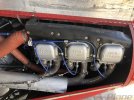
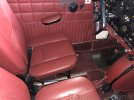
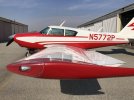
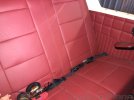
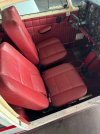
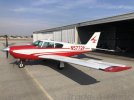
Here are some pictures of one of ours - "The Creampuff." It hasn't been painted in a long time, but the white lettering on the instrument panel looks new. It has a 430W, a PMA8000, and a Garmin 335. We will probably be selling it one of these days. We just reset all the AD's on it back to 0.
 

Attachments

  • image4.JPEG
    image4.JPEG
    62.8 KB · Views: 17
  • IMG_0633.JPG
    IMG_0633.JPG
    249.4 KB · Views: 21
  • IMG_0634.JPG
    IMG_0634.JPG
    280.6 KB · Views: 16
  • IMG_0636.JPG
    IMG_0636.JPG
    233.5 KB · Views: 17
  • IMG_0638.JPG
    IMG_0638.JPG
    187.5 KB · Views: 19
  • IMG_0639.JPG
    IMG_0639.JPG
    255.6 KB · Views: 16
  • IMG_0640.JPG
    IMG_0640.JPG
    125.8 KB · Views: 16
Wise posts!

We service and maintain Comanches here in the West Coast. Comanches are awesome birds.
I was a Mooney pilot for many years before getting into the business. Mooneys are efficient and economical; Comanches trade a little more horsepower, gas consumption for more width - preferrable when some of us get a little wider.

WEBCO is the bomb - Anthony there is a joy to work with and have virtually any part you need.

The AD was unfortunate and uninformed; a number of Comanche's came from the factory with the thicker / twin Comanche horns. I have one in my shop now that has one. It is what it is.

We tend to replace the bolts to the close tolerance bolts to buy the owner another 500hrs before inspection. 1000 hours to inspect the horn isn't as onerous as other aircraft we service.

Here are some pictures of one of ours - "The Creampuff." It hasn't been painted in a long time, but the white lettering on the instrument panel looks new. It has a 430W, a PMA8000, and a Garmin 335. We will probably be selling it one of these days. We just reset all the AD's on it back to 0.
Which AD are you referring to where you gain a higher (1,000 hr?) inspection interval using close tolerance bolts?
 
Here are some pictures of one of ours - "The Creampuff." It hasn't been painted in a long time, but the white lettering on the instrument panel looks new. It has a 430W, a PMA8000, and a Garmin 335. We will probably be selling it one of these days. We just reset all the AD's on it back to 0.
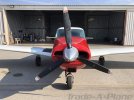
Oooh, that's a purty bird.
 
The way I heard the story was the Piper guys took the Mooney apart in that hangar to see how it was built, but put the tail feathers on backwards when they reassembled it.

After owning and maintaining / modifying my 250 for the last 5 years - I love it. I fly it off a grass strip, it climbs like a homesick angel at 1400 FPM, cruises like a scalded dawg at 162 kts burning 12 gph, goes a long ways on 90 gallons, and lands on short runways going 70 mph over the fence. Big guys fit well, plenty of baggage room. Lycoming power! They were zinc chromated at the factory so corrosion isn’t an issue like it is with Vero Beach built planes. The factory hates us like red headed step children and don’t like to acknowledge that we exist. We call them Comanches, not Pipers.

An updated Comanche is one of the best bargains in aviation. Popular upgrades are Dual exhaust, prop, panel/avionics, there are several digital autopilots available, speed mods, upgraded gear and brakes, and more.
 
Back
Top