
The only thing worse than falling out of the sky is falling out of the sky on fire.The downside of doing it wrong seems like it could be severe. And flammable.

The only thing worse than falling out of the sky is falling out of the sky on fire.The downside of doing it wrong seems like it could be severe. And flammable.
This. I'd leave the disassembly of the original up to your mechanic so he can see how the old one was installed. Might be the difference between using the STC install or via a simple PMA replacement.But IMO you waded into non-owner territory when you changed parts.

This. I'd leave the disassembly of the original up to your mechanic so he can see how the old one was installed


JK. All I did was take the bowl off and screw it back on. All the other stuff I left in place.

It's an STC'd gascolator. Not an OM item, unless the US has some provision for that. Canada sure doesn't.If you check Part 43 Appx A(c) I think you will find you can perform that task under prevent mx.
Yup.Dan or Bell have probably installed them; I am sure they can elaborate. But IMO you waded into non-owner territory when you changed parts.
He will need a 90° fitting to replace the 45° one that's on the old bowl, and a short 1/4" NPT extension to get the sump valve to the cowl opening.Your existing 45 degree NPT fitting and drain valve should screw right into the bottom of the new bowl. You'll have to play with the rotation of the fitting and the bowl to get it to line up on the hole in your cowling.
Oh boy. Sounds like another trip to Aircraft Spruce is in order tomorrow...It's an STC'd gascolator. Not an OM item, unless the US has some provision for that. Canada sure doesn't.
Yup.
He will need a 90° fitting to replace the 45° one that's on the old bowl, and a short 1/4" NPT extension to get the sump valve to the cowl opening.
Doesn't matter. Once it gets installed its a legal part of the aircraft. No different than say an STC'd external oil filter which falls under prevent mx. And just to note, Steve's got PMA approval for the gascolater based on the STC AML so in a number of installs its considered a replacement part to the OEM part vs an alteration.It's an STC'd gascolator. Not an OM item, unless the US has some provision for that. Canada sure doesn't.
Quick question... In the instructions it says we need to submit a 337 at step 11 (if I read it correctly). That's their instructions, idk how authoritative they are. But if they say a 337 is necessary, isn't that only doable by an A&P?Doesn't matter. Once it gets installed its a legal part of the aircraft. No different than say an STC'd external oil filter which falls under prevent mx. And just to note, Steve's got PMA approval for the gascolater based on the STC AML so in a number of installs its considered a replacement part to the OEM part vs an alteration.
That's their instructions, idk how authoritative they are.
But if they say a 337 is necessary, isn't that only doable by an A&P?
It's amazing how much I DON'T know about this... But thanks for the clarification!100% authoritative if you install under STC, since they are the STC holder.
A&P can do the work, but 337 for STC alteration must be signed by an IA.
Bell said Steve's has PMA approval for some aircraft types. Dig deeper and see if your aircraft is one of them. If that is the case, no 337 or IA required, just an A&P log entry.
Almost… With an STC, the installation instructions are part of the STC’s approved data package. Full stop. But simply because it is a STC does not always equate the installation is considered a major alteration which is the regulatory trigger for a 337 and not the STC instructions. For example, there are a number of STC installations that are considered minor alterations which do not require recording it on a 337 with some STCs even noting that in the data package.100% authoritative if you install under STC, since they are the STC holder.
I bought a small engine for something and in the warranty info it said to check engine oil every 8 hours. So Kohler wants me to get out of bed and check the oil in the middle of the night or else the warranty is void?Actually, it turns out I'm supposed to do this every 90 days...
(Never knew that.. Not in the POH. But it's in my service manual)
View attachment 144935
Though I'm guessing I'm not permitted under preventative mx to remove and reinstall a new unit...

What happens when it’s 100% plugged??Super easy and definitely owner PM. On the one pictured here, just shut off the fuel upstream of the gascolator, then loosen the thumbscrew at the bottom and flip the bail out of the way, and bowl comes right off. Reverse to reinstall.
My A&P buddy showed me a gascolator filter screen the other day that was 80% plugged with some kind of deposit. It had probably been decades since it was checked.
What happens when it’s 100% plugged??
Is there a torque requirement or safety wire? I know some of those use a marker on the line, to show if it’s moved?
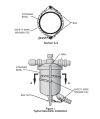

You’re preaching to the choir…Fuel strainers (gascolators) are among the most-neglected yet important items on the airplane. I can't count the times I have had to fight one apart because it hadn't been opened in a very long time.
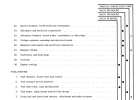
Cessna's inspection checklist for the 172 is typical of all their checklists:
View attachment 144986
Look at items 1 and 2 in the fuel system section. The strainer, drain valve and control are to get a visual inspection and valve test every 50 hours. Item 2 calls for an inspection of the screen and bowl, which cannot be done unless the bowl is removed and the screen taken out and cleaned. I have found fuzzies from rags or something on the screen, and severe pitting in the bowl from water that was not drained off. Those pits eventually turn into pinholes and you lose fuel.
The "control" mentioned in item 1 refers to the remote instrument panel-mounted pull-to-drain that old 172s used to have. They disappeared sometimes in the 1960s. If one stuck when you pulled it in flight you'd be in big trouble.
FAR 43 Appendix D does not specifically mention cleaning the fuel strainer, which is perhaps why it gets ignored. But the Appendix also says this:
All systems - for improper installation, poor general condition, defects, and insecure attachment.
I think that's intended to be a catch-all for stuff not explicitly mentioned.
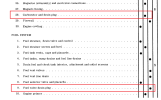
What else does that 172 inspection checklist mention?
View attachment 144988
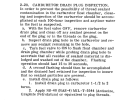
The carburetor drain plug is another ignored item:
View attachment 144987
And the fuel valve (selector) drain plug? I have never encountered one that has been removed since the airplane was built, and it's a 200-hour item. Usually I had to drain the tanks, and take the selector valve out, take it apart, and warm it up some to get the plug loose. I'd find nasty crud piled up in there, waiting to break loose and head for the strainer. I put quick-drains in instead of the plugs. Students were shown to sump that spot along with the gascolator and tanks during preflight. It's the lowest point in the whole system and water accumulates there.
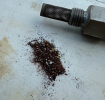
Another ignored place is the carburetor fuel inlet strainer. It's the last-chance filter. Some checklists mention it. Fuel injection systems have a similar screen in the fuel servo. This is a carb inlet strainer, from another thread:
View attachment 144989
The debris is trapped inside that screen. Fill it up and guess what happens? That amount and size of contaminants tells me that the gascolator has a broken or missing screen in it.
Yup, but I do it in the hope that some aircraft owners will ask their mechanics if they have been cleaning and inspecting their fuel filters...You’re preaching to the choir…
I appreciate your posts even if they do scare me from time to time. And they make me wonder if John Madden was an aircraft mechanic in a former life.Yup, but I do it in the hope that some aircraft owners will ask their mechanics if they have been cleaning and inspecting their fuel filters...
@Dan ThomasHe will need a 90° fitting to replace the 45° one that's on the old bowl, and a short 1/4" NPT extension to get the sump valve to the cowl opening.
