
Your position of head snob is safe.A sport CFI on the basic level is a private pilot instructing. If you are operating a flight school today, 75% of the brand spanking new CFI-As are neither very good pilots or good instructors. Here are some issues a school employing sport CFIs face.
1. Any time you employ less experienced CFIs, you are going to experience increased maintenance costs. Tires, engine damage, fender benders, undetected maintenance issues,
2. More liability with less experienced and qualified CFIs. We haven’t heard from insurance world yet and you will.
3, One of the issues with employees in any company is proper supervision. A flight school is going to have to better supervise these CFIs, just like a company does any time they hire less experienced and less trained employees.
4. Employee morale and dissatisfaction. Some on this forum tell me the CFIs at a school should submit to a customer interview process. If that’s occurring, the customer is going to gravitate away from the sport CFIs and the company isn’t going to allow the sport CFI to instruct in many of their aircraft the FAA says they are quailed to teach in, but the sport CFI certainly is going to believe he should be getting the same consideration as the CFI-A. If both sport and As are employed in the same setting, the sports will be treated as children of a lesser god. And if the company thinks the As should be helping or supervising the sports, that isn’t going fly either.

You are using an out of date browser. It may not display this or other websites correctly.
You should upgrade or use an alternative browser.
You should upgrade or use an alternative browser.
Sport Pilot CFI Under Mosaic
- Thread starter Pilot99B
- Start date

billsgs126
Line Up and Wait
As I read the regs. Sport Pilots do not require seven hours of instruction that Private Pilots require (3 night, 3 instrument, 1 cross country). A SP must have 15 vs 20 hours of instruction and 20 vs 40 total hours. I suppose that means they could have two additional hours of instruction pertinent to SP eligible aircraft.Your position of head snob is safe.

Half Fast
Touchdown! Greaser!
- Joined
- May 7, 2016
- Messages
- 21,190
- Location
- Central Florida
- Display Name
- Half Fast
- Home Airfield
- KGIF
As I read the regs. Sport Pilots do not require seven hours of instruction that Private Pilots require (3 night, 3 instrument, 1 cross country). A SP must have 15 vs 20 hours of instruction and 20 vs 40 total hours. I suppose that means they could have two additional hours of instruction pertinent to SP eligible aircraft.
There’s no hours minimum for instruments, but instrument training is required for SPs prior to solo XC. I think I had 2.
It was a bit silly when I went back for PP. I had to fly an additional dual XC to satisfy PP requirements, even though I was already qualified as a SP to fly the same XC solo.
MauleSkinner
Touchdown! Greaser!
Dual cross country requirements also occur in instrument and commercial training when the pilot would be qualified as PIC, too, so it’s not that silly.It was a bit silly when I went back for PP. I had to fly an additional dual XC to satisfy PP requirements, even though I was already qualified as a SP to fly the same XC solo.

Dana
Final Approach
Right, presumably the SP-to-PP candidate would be learning additional navigation skills not required for SP on that dual XC.Dual cross country requirements also occur in instrument and commercial training when the pilot would be qualified as PIC, too, so it’s not that silly.
Half Fast
Touchdown! Greaser!
- Joined
- May 7, 2016
- Messages
- 21,190
- Location
- Central Florida
- Display Name
- Half Fast
- Home Airfield
- KGIF
Right, presumably the SP-to-PP candidate would be learning additional navigation skills not required for SP on that dual XC.
And what would those skills be? As a SP, I was legal to fly a plane coast-to-coast and to the Bahamas. I did PP in the same LSA I used for SP. Same skills, same equipment.
MauleSkinner
Touchdown! Greaser!
More likely honing navigation skills.Right, presumably the SP-to-PP candidate would be learning additional navigation skills not required for SP on that dual XC.
Half Fast
Touchdown! Greaser!
- Joined
- May 7, 2016
- Messages
- 21,190
- Location
- Central Florida
- Display Name
- Half Fast
- Home Airfield
- KGIF
More likely honing navigation skills.
Why would a PP need better navigation skills than a SP? It's not like a SP has XC distance limitations.
MauleSkinner
Touchdown! Greaser!
Because it’s a higher-level certificate which implies more proficiency.Why would a PP need better navigation skills than a SP? It's not like a SP has XC distance limitations.
Why would an ATP need to be trained on flying ILSs every year?
Last edited:
Half Fast
Touchdown! Greaser!
- Joined
- May 7, 2016
- Messages
- 21,190
- Location
- Central Florida
- Display Name
- Half Fast
- Home Airfield
- KGIF
Because it’s a higher-level certificate which implies more proficiency.
Why would an ATP need to be trained on flying ILSs every year?
What is the additional navigation proficiency that a PP must demonstrate beyond that of a SP?
MauleSkinner
Touchdown! Greaser!
Lack of decrease in proficiency, probably.What is the additional navigation proficiency that a PP must demonstrate beyond that of a SP?
Suppose someone already has their commercial and instrument. Is there any incentive to get CFI-S instead of CFI-A?You may see more high time private pilots obtaining a CFI-SP certificate, for example, since they don't have to deal with getting their commercial and instrument rating first.
MauleSkinner
Touchdown! Greaser!
Only if you don’t want to give instruction beyond the Sport Pilot level.Suppose someone already has their commercial and instrument. Is there any incentive to get CFI-S instead of CFI-A?
OK, that's the limitation. What's the benefit?Only if you don’t want to give instruction beyond the Sport Pilot level.
MauleSkinner
Touchdown! Greaser!
If you don’t want to give instruction beyond the Sport Pilot level, you don’t have to, and nobody will argue about it.OK, that's the limitation. What's the benefit?
billsgs126
Line Up and Wait
FTFYIf you don’t want to give instruction beyond the Sport Pilot level, youdon'thave tocan’t, and nobody will argue about it.

MauleSkinner
Touchdown! Greaser!
Either way, it’s kind of like having a drink so you don’t have to fly a last-minute trip.FTFY
Dana
Final Approach
If you anyway have commercial and instrument, you might as well go for CFI-A, there's no downside.OK, that's the limitation. What's the benefit?
billsgs126
Line Up and Wait
Does my Stuka qualify for MOUSAIC?
Clip4
Touchdown! Greaser!
Sure, if studying twice and spending an additional $1,000 for practical and written tests is logical to the person. And if they believe they are going that route, getting a medical before LS training.And in the case of @Dana ’s FBO, it sounds like students might end up with a better training process if the started off with a Sport Pilot certificate working with the stable instructors, and then upgrading to Private and beyond with the time builders.
billsgs126
Line Up and Wait
The second cost for the tests is real, but down the road. I doubt that most would find it hard to get a Third Class . . . again down the road. But there is no need to "study twice". SP standards are lower for two reasons. Fewer subjects are covered, and the cross country is less demanding.Sure, if studying twice and spending an additional $1,000 for practical and written tests is logical to the person. And if they believe they are going that route, getting a medical before LS training.
No reason you cannot do the cross country to the higher standard . . . that's what two hours depending on the aircraft? Then all one needs down the road is dual instruction for what . . . night and instrument? Which were not covered under Sport.
Half Fast
Touchdown! Greaser!
- Joined
- May 7, 2016
- Messages
- 21,190
- Location
- Central Florida
- Display Name
- Half Fast
- Home Airfield
- KGIF
Which were not covered under Sport.
I’ve mentioned this before, but instrument training is covered under SP. There isn’t a minimum number of hours, but training is required prior to solo.
Also, the standards are the same or greater. That’s why SP training hours can count toward PP.
Clip4
Touchdown! Greaser!
Pilots lose knowledge over time. They have to study the material again and add additional material.The second cost for the tests is real, but down the road. I doubt that most would find it hard to get a Third Class . . . again down the road. But there is no need to "study twice". SP standards are lower for two reasons. Fewer subjects are covered, and the cross country is less demanding.
No reason you cannot do the cross country to the higher standard . . . that's what two hours depending on the aircraft? Then all one needs down the road is dual instruction for what . . . night and instrument? Which were not covered under Sport
billsgs126
Line Up and Wait
I guess, if you just get the card and don't use it. I've just never been in that boat.Pilots lose knowledge over time. They have to study the material again and add additional material.
billsgs126
Line Up and Wait
Private has a specific requirement that Sport does not have. Of course, one could do the requirement . . .I’ve mentioned this before, but instrument training is covered under SP. There isn’t a minimum number of hours, but training is required prior to solo.
Also, the standards are the same or greater. That’s why SP training hours can count toward PP.
Unless I am mistaken, under the current rules, SP training (from a CFI-S) only counts towards PP if you get the SP cert.
Half Fast
Touchdown! Greaser!
- Joined
- May 7, 2016
- Messages
- 21,190
- Location
- Central Florida
- Display Name
- Half Fast
- Home Airfield
- KGIF
Private has a specific requirement that Sport does not have. Of course, one could do the requirement . . .
Unless I am mistaken, under the current rules, SP training (from a CFI-S) only counts towards PP if you get the SP cert.
Yep, have to get the ticket, but the SP training counts for PP. If the standards weren’t the same or higher that wouldn’t work.
My instrument training time that was required for SP counted toward PP.
Despite having a commercial the incentive in my case is the risk of a likely medical denial and closing the door to flying forever. Only way to be an instructor for me.Suppose someone already has their commercial and instrument. Is there any incentive to get CFI-S instead of CFI-A?
MauleSkinner
Touchdown! Greaser!
Seems like better training would be worth more money.Sure, if studying twice and spending an additional $1,000 for practical and written tests is logical to the person.
And as you stated,
Pilots lose knowledge over time. They have to study the material again and add additional material.
Last edited:
Half Fast
Touchdown! Greaser!
- Joined
- May 7, 2016
- Messages
- 21,190
- Location
- Central Florida
- Display Name
- Half Fast
- Home Airfield
- KGIF
Despite having a commercial the incentive in my case is the risk of a likely medical denial and closing the door to flying forever. Only way to be an instructor for me.
Can’t you use Basic Med?

Stevel
Line Up and Wait
You may have done this, but there is not, and never has there been, such a requirement.My instrument training time that was required for SP counted toward PP.
Half Fast
Touchdown! Greaser!
- Joined
- May 7, 2016
- Messages
- 21,190
- Location
- Central Florida
- Display Name
- Half Fast
- Home Airfield
- KGIF
You may have done this, but there is not, and never has there been, such a requirement.
Wrong.
It's required for all students (including SP students) prior to solo XC. The only exception is if the LSA you're flying is slower than 87 knots.
Refer to CFR 61.93(e)12.
Control and maneuvering solely by reference to flight instruments, including straight and level flight, turns, descents, climbs, use of radio aids, and ATC directives. For student pilots seeking a sport pilot certificate, the provisions of this paragraph only apply when receiving training for cross-country flight in an airplane that has a VH greater than 87 knots CAS.
MauleSkinner
Touchdown! Greaser!
But it’s a long way from “never”.<87kts is hardly an exception in the SP universe.
Half Fast
Touchdown! Greaser!
- Joined
- May 7, 2016
- Messages
- 21,190
- Location
- Central Florida
- Display Name
- Half Fast
- Home Airfield
- KGIF
<87kts is hardly an exception in the SP universe.
In the SP universe, if you fly a modern LSA it's going to exceed 87 knots. The Tecnam high wings I trained in all went well over that, and so do Cessna 162s, Tecnam Astores, Piper Sport Cruisers, Jabirus, Vashon Rangers, etc., etc. To be slower, you'd have to be in something like a Cub or an Ercoupe.
Regardless, your statement that "...there is not, and never has there been, such a requirement" is obviously incorrect. SP training in a modern LSA airplane must include instrument training.
Stevel
Line Up and Wait
MOSAIC may change things, but training in the modern LSAs wasn't where most Sport Pilots were made.In the SP universe, if you fly a modern LSA it's going to exceed 87 knots. The Tecnam high wings I trained in all went well over that, and so do Cessna 162s, Tecnam Astores, Piper Sport Cruisers, Jabirus, Vashon Rangers, etc., etc. To be slower, you'd have to be in something like a Cub or an Ercoupe.
Regardless, your statement that "...there is not, and never has there been, such a requirement" is obviously incorrect. SP training in a modern LSA airplane must include instrument training.
You are correct that the requirement exists and is relevant (increasingly so) in today's environment.
Half Fast
Touchdown! Greaser!
- Joined
- May 7, 2016
- Messages
- 21,190
- Location
- Central Florida
- Display Name
- Half Fast
- Home Airfield
- KGIF
...but training in the modern LSAs wasn't where most Sport Pilots were made.
Really? First Landings in Apopka, FL, has trained something like 1 in 5 of all SPs in the US and they exclusively use modern LSAs (Tecnams when I trained there). There's another SP training facility in the northeast that uses all modern LSAs, too, though I can't recall the name right now. A school I'm familiar with in Jax uses a Skycatcher. EAA's "Sport Pilot Academy" uses RV-12s. Paul Hamilton's "Sport Aviation Center" trains students in Slings. Sebring Aviation trains SP students in RV-12s and Tecnam P-92s.
I suspect more SP training happens in modern LSAs than you might think.
Did you train as a SP? Have you flown many LSAs? I get the impression, and perhaps I'm wrong, that you're not very familiar with the SP community, aircraft, and training. My apologies if I'm mistaken.
Half Fast
Touchdown! Greaser!
- Joined
- May 7, 2016
- Messages
- 21,190
- Location
- Central Florida
- Display Name
- Half Fast
- Home Airfield
- KGIF
I got my SP in 2008 when most SPs were former Ultralight pilots. I guess I've missed the evolution away from that.
Ah, got it. So I presume you never received any instrument training, true? Are you now flying something that requires it?
When SP began, the FAA was trying to get some control over "heavy" ultralights. For a long time, the FAA thought most LSAs looked like this
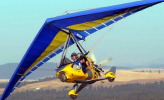
when in reality most LSAs very soon looked like this
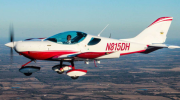
thanks in large part to European imports. MOSAIC is about to open the door to more imports, and to the increase in max weight and speed limitations of many existing ones.
Stevel
Line Up and Wait
Correct.But it’s a long way from “never”.