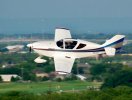
Should I (not) buy a Glasair I or II with no mechanical skills?

DMD3.

Line Up and Wait
Joined
Nov 8, 2014
Messages
592
Display Name
DMD3.
Home Airfield
KABY
When it comes to minor routine maintenance such as oil changes, light bulb or tire replacements, etc., I would be willing to learn to do this to save $$$$, as that’s one of main benefits of experimental aircraft ownership. But when it comes to big repairs, I’d have to pay a pro, as I don’t possess the knowledge for that kind of maintenance. And if I’m being brutally honest, I don’t really want to. I just want to get into an aircraft and fly; spending countless hours with the airplane taken apart attempting to fix something is NOT my idea of fun. The only issue is, would most A&P’s be willing to work on a Glasair airframe? I understand there are suppliers out there for parts, but will it be a challenge finding someone to work on the airplane?

Another question: is the retractable landing gear system on Glasairs pretty affordable to maintain or can it be expensive like many certified aircraft? When it comes to Lancairs, many claim it’s not that bad (insurance is a different beast).
 
Personally, I'd find an A&P to work with before I purchased the airplane. The key is to having a resource to do that work. No sense buying an aircraft you have trouble supporting.

As far as the gear system goes, Glasair made the FT models, which had fixed tricycle gear. I'd look for one of those and avoid the challenge of dealing with the retract system and parts availability on a discontinued aircraft.
 
When it comes to minor routine maintenance such as oil changes, light bulb or tire replacements, etc., I would be willing to learn to do this to save $$$$, as that’s one of main benefits of experimental aircraft ownership.

The things you mentioned can be done by an owner or pilot on certificated aircraft as preventative maintenance. No need for it to be experimental.
 
Have you sat in much less flown in a Glasair I or II? That’s step one before getting into how to maintain one, which admittedly is a big proposition especially for an airframe that no longer has any factory support. I concur with Kyle 100% in that the FT version might be the better path especially from an insurance standpoint.

If you are looking to outsource the maintenance then the benefit of E-AB diminishes considerably.
 
Have you sat in much less flown in a Glasair I or II? That’s step one before getting into how to maintain one, which admittedly is a big proposition especially for an airframe that no longer has any factory support. I concur with Kyle 100% in that the FT version might be the better path especially from an insurance standpoint.

I’ve definitely considered the FT, as they’re reportedly cruise only 10-12 kts slower than the RGs.
 
I’ve definitely considered the FT, as they’re reportedly cruise only 10-12 kts slower than the RGs.
It’s been a minute, but I think the Glasair gear system was pretty straightforward IIRC. However, I don’t think the insurance plus the extra maintenance makes the juice worth the squeeze. Those airframes, like the 2-seat Lancairs, are pretty small and the I don’t think the seats are adjustable which is why I recommend getting a familiarization flight to see if it’s truly something that is comfortable for you and meets your mission requirements.
 
Have you sat in much less flown in a Glasair I or II? That’s step one before getting into how to maintain one, which admittedly is a big proposition especially for an airframe that no longer has any factory support. I concur with Kyle 100% in that the FT version might be the better path especially from an insurance standpoint.

If you are looking to outsource the maintenance then the benefit of E-AB diminishes considerably.

It’s the performance more than anything. What certified aircraft aircraft will cruise 180 kts with 180 hp? Also experimental parts tend to be cheaper than for certified, even if you’re paying someone to install them (though this may not be the case on a Glasair).
 
IMHO (I know I wasn't asked) I'd look at maybe an RV-8 with 180 HP & CS prop. If you can tolerate tandem seating you'd get very close to the same performance, a bit more comfort in the cabin, much better circle of support, no gear retracts, and repairs on the airframe would be less expensive. :dunno:
 
It’s the performance more than anything. What certified aircraft aircraft will cruise 180 kts with 180 hp? Also experimental parts tend to be cheaper than for certified, even if you’re paying someone to install them (though this may not be the case on a Glasair).
Well if the Glasair checks all the boxes and you come up with a way to maintain it, sure. The cheaper parts thing is a bit of red herring to be honest. Some things are cheaper but many are the same no matter what’s the aircraft’s certification, but the real savings is in doing the work yourself discounting opportunity cost of course. This is my experience in maintaining my RV-10 for 11 years now.
 
IMHO (I know I wasn't asked) I'd look at maybe an RV-8 with 180 HP & CS prop. If you can tolerate tandem seating you'd get very close to the same performance, a bit more comfort in the cabin, much better circle of support, no gear retracts, and repairs on the airframe would be less expensive. :dunno:
I’ll echo this plus add in 6s and 7s (I’m omitting 14s as they command premium prices) which have similar performance but with side-by-side seating. The real plus is the chances of finding a willing A&P are greater. Of course with the new MOSAIC changes, as a non-builder you can go take the maintenance course, get the OPLIMs amended through your local FSDO and skip the A&P altogether (although I understand that’s maybe not an option you want to pursue).
 
Personally, I'd find an A&P to work with before I purchased the airplane. The key is to having a resource to do that work. No sense buying an aircraft you have trouble supporting.

This! I know that some shops don’t want anything to do with E/AB aircraft that they don’t know anything about. Especially considering that many shops have plenty of work on airplanes that have service manuals.

IMHO, step one is find out what your shop of choice would be comfortable working on. Then go from there.
 
Personally, I'd find an A&P to work with before I purchased the airplane. The key is to having a resource to do that work. No sense buying an aircraft you have trouble supporting.
:yeahthat:
Some A&Ps won't work on experimentals at all. Many will work on common types (ex. RV). Some won't touch composites or other uncommon materials.

No doubt there's a Glasair association or forum or Faceplant group somewhere, that's where you'll get the best advice and support.
 
I used to have an RV7 that I didn't build. I found that it was hard to get a mechanic to work on it -- not because it was experimental, but because they didn't have any experience with the type. It would be the same thing if I owned something like a Funk.

. . . spending countless hours with the airplane taken apart attempting to fix something is NOT my idea of fun.
This was EXACTLY my experience with the RV-7. It's such a simple airplane, but there was always something to fiddle with -- a fairing was loose, a fuel drain leaked, a fuel gauge stopped working, replace the AP servos, a niggling oil leak. . . .on and on. And all of it my problem to deal with.
The only issue is, would most A&P’s be willing to work on a Glasair airframe? I understand there are suppliers out there for parts, but will it be a challenge finding someone to work on the airplane?
Like I said, it was a problem with the RV even though they're a dime a dozen. I imagine the Glasair's composite construction might add to the challenge. Maybe not, unless you break something. Then you need a boat shop or a Cirrus ($$$) guy.

You might find a mechanic who's excited about the idea. Call around. My E-AB experience has been that there are a couple of good guys on the field, maybe with an A&P or maybe not, who are good about helping diagnose problems and available for things like putting the cowling on (always seems to be a 2-man job). There's probably an A&P (IA not needed) who'll come for the Condition Inspection with a flashlight and a can of LPS-2 to look in the holes after you've removed the inspection plates. Maybe someone will loan you jacks and a compression tester. At least where I live, I wouldn't count on throwing the keys to a shop and saying "call me when it's done."
 
I've got some Glasair time, and the first thing you need to worry about is YOU - being a good pilot, staying ahead of the airplane, and handling an airplane that requires better energy management in the pattern. Also, try to stay away from car engines.
 
Just sold my 1FT last October. I’ve only done oil changes so I wouldn’t exactly say I’m mechanically inclined. 18 years and 5 different shops and not a one of them were hesitant to work on it. Parts availability will be your issue since they really only support the G3 and the newer high wings. Not much of an issue though because most of the stuff can be fabricated if you have a good mech. Haven’t heard of any problems with the retracts. Pretty reliable from what I’ve heard. Tight fit if you’re anything over 5’8. Fun, light on the controls and aerobatic.

IMG_1075.jpeg
 
What’s your aviation background?

Teaching someone to change a bulb isn’t really a issue as much as a low experience pilot in a plane like that operations wise
 
I've got some Glasair time, and the first thing you need to worry about is YOU - being a good pilot, staying ahead of the airplane, and handling an airplane that requires better energy management in the pattern. Also, try to stay away from car engines.

Maybe I could have one of those turbo Viking engines mounted. Should work well on a Lancair or Glasair airframe (until it doesn’t). ☠️
 
I’ll echo this plus add in 6s and 7s (I’m omitting 14s as they command premium prices) which have similar performance but with side-by-side seating. The real plus is the chances of finding a willing A&P are greater. Of course with the new MOSAIC changes, as a non-builder you can go take the maintenance course, get the OPLIMs amended through your local FSDO and skip the A&P altogether (although I understand that’s maybe not an option you want to pursue).

Would the maintenance course teach me everything I need to know to be able to fix it myself if I couldn’t find an A&P? The problem is not legality, it’s me not knowing how to fix something.
 
Would the maintenance course teach me everything I need to know to be able to fix it myself if I couldn’t find an A&P? The problem is not legality, it’s me not knowing how to fix something.
No
 
Would the maintenance course teach me everything I need to know to be able to fix it myself if I couldn’t find an A&P? The problem is not legality, it’s me not knowing how to fix something.
No of course not, but you could outsource anything you felt was out of your depth. But if you’re somewhat mechanically inclined it would cover a lot of bases for a non-builder and you could ease into it on your plane. Most maintenance is an actually pretty easy with the right knowledge and a bit of OJT. But it’s not for everyone and the course isn’t a panacea, it’s just an option.
 
I have a 1994 glasair 2rg with a Lycoming io-320. TT 450 hrs on airframe and engine. I picked it up 2 years ago. Plane sat for greater than 10 years and maintenance and upkeep have been minor. I fly 200 mph on 7gals/hr. I had not flown in 10 years and completed a BFR while completing pre-buy and fixing squawks on plane. I use it to commute to work. Conditional Inspections are around $1500 a year. I pay $400 a year liability and don't pay for comprehensive. I just broke a shaft on my gear actuator and replacement shaft is $150 plus an hour or two of labor. Make sure you do a good pre-buy to identify issues that need to be corrected so your are not surprised your first year of two. I have a regular A&P/CFI that had not worked on experimentals. He often points out issues that would not be found on a certified plane but he seems to enjoy the latitude to correct issues under the experimental rules. Parts and avionics have a significant discount from their certified equivalents.
 
Back
Top