Sad

Tom-D

Taxi to Parking
Joined
Feb 23, 2005
Messages
34,740
Display Name
Tom-D
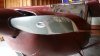
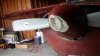
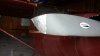
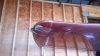
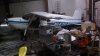
I took these today of one of my customers 170-B

He was landing in winds beyond his abilities, ground loop it and nosed it up. no body hurt. but its a sad circumstance.

we have an island airport where when the winds are higher 10-15k the wind will burble around the end of the island and will be blowing in opposite directions at both ends of the runway.
 

Attachments

  • 20140329_101623.jpg
    20140329_101623.jpg
    304.2 KB · Views: 265
  • 20140329_101629.jpg
    20140329_101629.jpg
    331.5 KB · Views: 234
  • 20140329_101636.jpg
    20140329_101636.jpg
    275.5 KB · Views: 205
  • 20140329_101651.jpg
    20140329_101651.jpg
    325.5 KB · Views: 241
That's not sad, it's happy. Some pilot made a bad decision and lived to learn. Bet he never does that again! If I insured him I'd lower his rates.
 
That's not sad, it's happy. Some pilot made a bad decision and lived to learn. Bet he never does that again! If I insured him I'd lower his rates.

He's not a happy pilot, the insurance company totaled it
 
Always sad to see these events. Had something similar by me...
 

Attachments

  • image.jpg
    image.jpg
    1.1 MB · Views: 209
Bent props and a dinged wing tip totaled the plane??? Sheesh.

It's a numbers thing, you set the hull value too low to save money on rates, they set the number of what they will pay at 75% of that, if it costs more than that, they total it, and sell the hulk. get back what they can.

the hulk in this case is a 55 C170-B 180 horse, should sell around 20k.

he bought it cheap, with high timed engine flew it a few years and now will get his money back to go hunting again.
 
We just had a customer off road his piper Cherokee at Santa Barbra and hit a few raised lights with his prop. He flew it back to Camarillo and begged us to just put a prop in it, told him it's not going to happen, it's a tear down. He said please don't, the 182 gear up is still fresh on his insurance companies mind. He is turning out to be a great customer.
 
We just had a customer off road his piper Cherokee at Santa Barbra and hit a few raised lights with his prop. He flew it back to Camarillo and begged us to just put a prop in it, told him it's not going to happen, it's a tear down. He said please don't, the 182 gear up is still fresh on his insurance companies mind. He is turning out to be a great customer.

Why do you believe it is a tear down, That is not what the Lycoming AD says.
 
If you look at the prop it needs it. The FAA agrees as they found the plane and inspected it. Just looked at the repair order, FAA said to comply with SB 533B and do a tear down. With the recent actions of the FAA suspending IA's tickets on the field our owner said we will comply.
 
Last edited:
If you look at the prop it needs it. The FAA agrees as they found the plane and inspected it. Just looked at the repair order, FAA said to comply with SB 533B and do a tear down. With the recent actions of the FAA suspending IA's tickets on the field our owner said we will comply.

you need to read and understand the AD 2004-10-14.

that is what is required, a total engine tear down is not required, the prop is a whole different issue.
 
Like I said, we will comply with what the FAA said to do. As the owner said we will pick our fights and this is not one he wants to fight. Right or wrong the insurance company has agreed.
 
Like I said, we will comply with what the FAA said to do. As the owner said we will pick our fights and this is not one he wants to fight. Right or wrong the insurance company has agreed.

Remember the insurance company will pro-rate the costs upon the hours on the engine. and will not pay for the parts that are not damaged by the incident.
 
We just had a customer off road his piper Cherokee at Santa Barbra and hit a few raised lights with his prop. He flew it back to Camarillo and begged us to just put a prop in it, told him it's not going to happen, it's a tear down. He said please don't, the 182 gear up is still fresh on his insurance companies mind. He is turning out to be a great customer.

Does this guy really need to be in control of an aircraft?:rolleyes2:
 
That is sad, hope he is ok.:(
He's OK a bit shaken, and in doubt of his abilities, but he's OK. Just going thru the mental beating of himself.

Anacortes, winds came up while he was out, 180 @ 15G25. that's when the winds will come up the east and west sides of the island and rejoin at the airport.

I'm sure you recognize who's aircraft it was.
 
He's not a happy pilot, the insurance company totaled it

I don't know much about these things, so please bear with me.

How much will the insurance company pay him for his totaled aircraft?

How much do you think the insurance company would sell the totaled hulk for?

How much would it cost to make the totaled hulk legally airworthy once again?

Would the pilot have been given enough money to do all of those things, or how much more would it cost?


-John
 
I'm sure you recognize who's aircraft it was.

I sure hope it's not the one you just rebuilt. Oh, wait, you said he bought it cheap. Nothing cheap about your work of art. OK, I don't know who it was. Glad he's OK. Airplanes can be replaced, pilots not so much.
 
If you look at the prop it needs it. The FAA agrees as they found the plane and inspected it. Just looked at the repair order, FAA said to comply with SB 533B and do a tear down. With the recent actions of the FAA suspending IA's tickets on the field our owner said we will comply.

He is correct in stating that technically it is not required:

http://rgl.faa.gov/Regulatory_and_Guidance_Library/rgAD.nsf/0/9fa5e5f8683a0a4686256e9b004bc295/$FILE/041014.pdf

"Compliance

(e) Compliance with this AD is required as indicated before further flight if the engine experiences a propeller strike after the effective date of this AD, as defined in paragraphs (i) and (j) of this AD.

(f) Inspect, and if necessary repair, the crankshaft counter bored recess, the alignment dowel, the bolt hole threads, and the crankshaft gear for wear, galling, corrosion, and fretting in accordance with steps 1 through 5 of Lycoming Mandatory Service Bulletin (MSB) No. 475C, dated January 30,
2003.

(g) Remove the existing gear retaining bolt and lockplate from service, and install a new bolt and lockplate, in accordance with steps 6 and 7 of Lycoming MSB No. 475C, dated


Prohibition of Retaining Bolt and Lockplate

(h) Do not install the gear retaining bolt and lockplate that were removed in paragraph (g) of this AD, into any engine."

Here is the SB referenced in the AD:

http://www.lycoming.com/Portals/0/t...Gear Modification and Assembly Procedures.pdf

Now having written that there is also this from the FAA:

http://www.cessna.org/documents/public_info/saib/saib-ne-06-32r1.pdf

Note this says it is recommended only, not mandatory. It does however state:

"Recommendations

We recommend that in the event of a propeller strike, as defined in AD 2004-10-14, you comply with both AD 2004-10-14 (replacement of the crankshaft gear bolt and installation in accordance with Lycoming MSB 475C) and Lycoming MSB 533A (disassembly and inspection of the rotating parts)."

MSB 533A:

http://www.lycoming.com/Portals/0/t...oppage, Propeller-Rotor Strike or Loss....pdf


Since this is a recommendation from the FAA I would question the possible liability a mechanic would face for not following the FAA recommendation. No certification action, but possible legal liability. I am not a lawyer, so I really don't know.

As an former airplane owner, however, I did look for prop strikes and compliance with these recommendations when purchasing an airplane. If these and other recommendations were not followed (such as replacing/overhauling the prop governor after a prop strike), I would walk away from the airplane. In addition any time a prop had less time than the engine it raised a flag I did more digging to make sure there was not a prop strike that was not recorded.
 
He is correct in stating that technically it is not required:

Since this is a recommendation from the FAA I would question the possible liability a mechanic would face for not following the FAA recommendation. No certification action, but possible legal liability. I am not a lawyer, so I really don't know.

I would question the term "tear it down" used by the FAA inspector, because it is a big involved job of pulling all the Accessories on the accessory case and then pull the accessory case itself. comply with the gear and bolt as required, then reassemble the whole thing.

As an former airplane owner, however, I did look for prop strikes and compliance with these recommendations when purchasing an airplane. If these and other recommendations were not followed (such as replacing/overhauling the prop governor after a prop strike), I would walk away from the airplane. In addition any time a prop had less time than the engine it raised a flag I did more digging to make sure there was not a prop strike that was not recorded.

Wouldn't R&R of the prop plus the entry in the engine/airframe log that says the AD was complied with all at the same time tell ya some thing?

If Lycoming believes a complete tear down is not necessary why would the FAA have a problem with it?

OBTW, you are aware that the engine in this case is a fixed pitch, that does not have a governor.
 
Last edited:
Wouldn't R&R of the prop plus the entry in the engine/airframe log that says the AD was complied with all at the same time tell ya some thing?

If Lycoming believes a complete tear down is not necessary why would the FAA have a problem with it?

OBTW, you are aware that the engine in this case is a fixed pitch, that does not have a governor.

Not necessarily. I have seen aircraft where props were overhauled yet no mention was made of AD compliance. I know it's a shock- people were hiding aircraft damage. That NEVER happens.

I don't remember writing that the airplane you were discussing had a constant speed prop. Please cite for me.
 
This is a fixed pitch prop. As far as the owner of the shop is concerned the FAA said to do the tear down inspection, that is what will be done. If the plane owner wants to go someplace else he is welcome. I was not there for the Feds inspection but I do know they want it inspected by tear down. We can argue all we want here, if it stays at this shop the Feds win, the engine will come out.
 
Not necessarily. I have seen aircraft where props were overhauled yet no mention was made of AD compliance. I know it's a shock- people were hiding aircraft damage. That NEVER happens.

I don't remember writing that the airplane you were discussing had a constant speed prop. Please cite for me.

Props get changed or overhauled for a lot of reasons, but married with the AD compliance, raises a big flag for me.
 
I don't know much about these things, so please bear with me.

How much will the insurance company pay him for his totaled aircraft?

What ever he had it insured for.

How much do you think the insurance company would sell the totaled hulk for?

They do a sealed bib sale and take the highest bidder, usually the project will go for 50% of the flying price.

How much would it cost to make the totaled hulk legally airworthy once again?

What ever the repairs costs, you will get a signed bill of sale from the last registered owner, you register the aircraft in your name, plus the logs, when it is repaired you can legally fly it.

Would the pilot have been given enough money to do all of those things, or how much more would it cost?
-John

As soon as the sealed bid sale is complete you are the legal owner, the guy who owned it last, (had the accident) will get a check to go shopping, they are out of the loop as far as who owns and repairs the aircraft.

Unless they decide to buy it back. they do have first choice it they do decide to keep it, the check will be determined by phone conference with the insurance adjuster.

I could have taken a check for 35k for the 24 and repaired it, and kept it. but we talked it over and decided to take the full amount, grab the money and run. After all we were trying to sell it for 5 less than the insured amount.
 
He's not a happy pilot, the insurance company totaled it

Of course they did. Now how much can he get and keep it? IOW what was it insured for? Will he get enough to repair it? No need to quote actual dollars. But just wondering if he could take the payoff less salvage, keep it, and have enough to repair it.

nevermind, been answered.
 
Last edited:
nevermind, been answered.

Do not confuse my statement on my F-24 with the 170 that was mentioned in the first post.

I didn't think it was any of my business to ask the numbers on the 170.
 
Props get changed or overhauled for a lot of reasons, but married with the AD compliance, raises a big flag for me.

I understand that and often there is a very good explanation. It does, however, warrant more investigation. Again, I have seen evidence of a prop strike (firewall damage not repaired for example), but no entry in a log book.
You are acting as if there are no dishonest airplane owners or mechanics out there. I have probably seen more shenanigans with "no damage history" than I have with people hiding problems with houses for sale.
 
This is a fixed pitch prop. As far as the owner of the shop is concerned the FAA said to do the tear down inspection, that is what will be done. If the plane owner wants to go someplace else he is welcome. I was not there for the Feds inspection but I do know they want it inspected by tear down. We can argue all we want here, if it stays at this shop the Feds win, the engine will come out.

Again, I know that. I used the prop governor as an example. Another example applicable to this airplane is having the mags overhauled/replaced per SB. Again, not required but I won't be buying the airplane if not done.
 
Wouldn't R&R of the prop plus the entry in the engine/airframe log that says the AD was complied with all at the same time tell ya some thing?

If Lycoming believes a complete tear down is not necessary why would the FAA have a problem with it?

OBTW, you are aware that the engine in this case is a fixed pitch, that does not have a governor.

Serious question as a non-mechanic. How is SB 533B not a tear down? Again, I know it is an SB and not addressed in the AD and therefore not mandatory, but the recommendation from the FAA is to follow this SB. The steps sure sound like a tear down to this non-mechanic.

http://www.lycoming.com/Portals/0/t...oppage, Propeller-Rotor Strike or Loss....pdf
Your FAA guy gave you the wrong SB.

The required inspection is the AD and it sites this MSB

You must use Lycoming MSB No. 475C, dated January 30, 2003, to perform the inspections and repairs required by this AD.

The FAA can recommend, they can not dictate over and above the requirements of the AD.

The minimum required maintenance thus the least money spent is compliance with the AD, not a complete tear down, My call would be based upon the engine times, and other conditions of the engine. Does the crankshaft dial out as within limits? No tear it down, you will anyway to replace the crank. If it has no other problems I'd go with the AD compliance.
Did you even read what I wrote? You are quoting things I did not write.
First I started off by writing in my very first post that you were correct, that the tear down is NOT mandatory. I never wrote that it was. I reiterated AGAIN in later posts that this was the case.
Second I said nothing about "an FAA guy giving me an SB." I quoted an FAA Special Airworthiness Information Bulletin which I mentioned is NOT mandatory.
Third, I quoted the AD and SB 475C when I agreed with you.

I then went on to quote the FAA Special Airworthiness Information Bulletin that recommended following SB 533B. Again, recommended meaning it was NOT mandatory. Do you understand not mandatory??
You responded, "If Lycoming believes a complete tear down is not necessary why would the FAA have a problem with it?"

I then asked you how SB 533B (which I know is NOT mandatory- got that?), which is a Lycoming SB (which is NOT mandatory if I did not say that), is not a tear down inspection.
Now I understand that this SB is not part of the AD and is therefore NOT mandatory, but since it is recommended by the FAA to follow it and if it is put out by Lycoming how can you say Lycoming does not believe a complete tear down is necessary? Although not mandatory if I did not mention that.

So my question again is how is this non-mandatory SB from Lycoming not a tear down? I am only curious as, though it is NOT mandatory (if I did not mention that), it IS recommended by the FAA that you follow this Lycoming SB. And again, my point in providing the link was to show:
A. Why I thought a mechanic might be put in a liability bind by not following the FAA's and Lycomings recommendation (not mandatory).
B. Why I would walk away from an airplane for sale where the FAA's recommendation on maintenance -again, not mandatory if I did not say that- was not followed.

But again, my question is how the non-mandatory, not required but recommended SB 533 is not a tear down?

 
Last edited:
Did you even read what I wrote? You are quoting things I did not write.
First I started off by writing in my very first post that you were correct, that the tear down is NOT mandatory. I never wrote that it was. I reiterated AGAIN in later posts that this was the case.
Second I said nothing about "an FAA guy giving me an SB." I quoted an FAA Special Airworthiness Information Bulletin which I mentioned is NOT mandatory.
Third, I quoted the AD and SB 475C when I agreed with you.

I then went on to quote the FAA Special Airworthiness Information Bulletin that recommended following SB 533B. Again, recommended meaning it was NOT mandatory. Do you understand not mandatory??
You responded, "If Lycoming believes a complete tear down is not necessary why would the FAA have a problem with it?"

I then asked you how SB 533B (which I know is NOT mandatory- got that?), which is a Lycoming SB (which is NOT mandatory if I did not say that), is not a tear down inspection.
Now I understand that this SB is not part of the AD and is therefore NOT mandatory, but since it is recommended by the FAA to follow it and if it is put out by Lycoming how can you say Lycoming does not believe a complete tear down is necessary? Although not mandatory if I did not mention that.

So my question again is how is this non-mandatory SB from Lycoming not a tear down? I am only curious as, though it is NOT mandatory (if I did not mention that), it IS recommended by the FAA that you follow this Lycoming SB. And again, my point in providing the link was to show:
A. Why I thought a mechanic might be put in a liability bind by not following the FAA's and Lycomings recommendation (not mandatory).
B. Why I would walk away from an airplane for sale where the FAA's recommendation on maintenance -again, not mandatory if I did not say that- was not followed.

But again, my question is how the non-mandatory, not required but recommended SB 533 is not a tear down?

Don't get up set, you missed the point, that SB does not apply. The AD is the requirement. and it gives you the method of compliance.

The FAA guy was wrong when they recommended you comply with it.
 
Last edited:
Don't get up set, you missed the point, that SB does not apply. The AD is the requirement. and it gives you the method of compliance.

The FAA guy was wrong when they recommended you comply with it.

I KNOW the SBs are not mandatory. I wrote that from the get go. The reason I mentioned the FAA memo is that it opens up mechanics to potential liability. You may disagree about the recommendation, but I would think in a liability lawsuit a jury would possibly not see it that way. While written by an individual the bulletin has the FAA stamp on it and probably most non-pilot laymen would give it more credence than your opinion.
I want to reiterate that I don't think you are wrong in just following the AD and I wrote that in my initial post. You still, however, have not answered my question. Doesn't this SB call for a tear down? Again, I know it is not part of the AD and therefore not required, but you wrote that Lycoming did not recommend a tear down, yet this SB from Lycoming seems to this non-mechanic to outline a tear down.


:popcorn::popcorn::popcorn::popcorn:
 
I KNOW the SBs are not mandatory. I wrote that from the get go. The reason I mentioned the FAA memo is that it opens up mechanics to potential liability. You may disagree about the recommendation, but I would think in a liability lawsuit a jury would possibly not see it that way. While written by an individual the bulletin has the FAA stamp on it and probably most non-pilot laymen would give it more credence than your opinion.
I want to reiterate that I don't think you are wrong in just following the AD and I wrote that in my initial post. You still, however, have not answered my question. Doesn't this SB call for a tear down? Again, I know it is not part of the AD and therefore not required, but you wrote that Lycoming did not recommend a tear down, yet this SB from Lycoming seems to this non-mechanic to outline a tear down.

The only relation that SB has to this issue is the fact it was used as a reference to write the description of a prop strike in the AD. The SB used to comply with the AD is a newer one and removes the teardown requirement of the engine. Prior to the issuance of the AD all Lycoming had was that SB as guidance and few were complying with it.

As far as liability, you are always responsible for your actions and the lawyers will do as they please every time but that has no bearing on the maintenance requirements discussed here. I do not believe the FAA or NTSB will hold any mechanic responsible when they do what was required, simple because they do not require us to go beyond the FAR rule requirements.
 
I KNOW the SBs are not mandatory. I wrote that from the get go. The reason I mentioned the FAA memo is that it opens up mechanics to potential liability. You may disagree about the recommendation, but I would think in a liability lawsuit a jury would possibly not see it that way. While written by an individual the bulletin has the FAA stamp on it and probably most non-pilot laymen would give it more credence than your opinion.
I want to reiterate that I don't think you are wrong in just following the AD and I wrote that in my initial post. You still, however, have not answered my question. Doesn't this SB call for a tear down? Again, I know it is not part of the AD and therefore not required, but you wrote that Lycoming did not recommend a tear down, yet this SB from Lycoming seems to this non-mechanic to outline a tear down.
They will always recommend tearing it down, because that is a CYA thing for them but they can not require it.
 
Back
Top