rpm-dependent oil pressure?

GeorgeC

Administrator
Management Council Member
Joined
Dec 5, 2010
Messages
6,581
Display Name
GeorgeC
For as long as I've owned my plane, the oil pressure has always gone straight to 50psi after startup and stayed there.

I was doing a post-mx checkout flight today (including an oil change) and immediately noticed that it went to 45 instead of 50.

It read 50 in flight. After I landed, it went back down to 45. I stopped, held the brakes, ran it up to about 2000 rpm, and I could see the oil pressure ramping back up.

Everything is in the green with margin, no fluctuations. I don't know whether or not to be concerned, or what might have caused such a change in behavior. Can air get in the line to the gauge and cause the reading to be spongy?

O200A in a C140A, analog gauges.
 
Last edited:
IIRC the oil pressure limits are 30 to 60 psi at cruise, 10 psi at idle. I wouldn't worry about it.
 
I happened to be looking at old data and reading POA with my bad eye, this was easy to pull up.
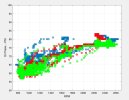
Here's 3 flights, Lyc O320D (160Hp), RV-4. All three flights were on relatively cold days, similar wx, similar flight profiles.
Oil pressure trends.jpg

Nauga,
with more logs than a lumberjack
 
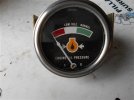
Most engines make less oil pressure at low speed, like idle vs operating speed. It is normal. Old tractor oil pressure gauges had a red, white, green display with white marked Idle. Everything is good.
 

Attachments

  • L003472-4T.jpg
    L003472-4T.jpg
    20.7 KB · Views: 13
Sometimes I think the worst “upgrade” to my plane was a digital engine monitor. I never paid much attention to the oil pressure while taxiing with old analog gauge but now I get a low pressure warning now. If I bring the throttle up to keep it from flashing, I have to ride the brakes to keep from taxiing too fast. Wish it could be programmed to not alarm when on the ground. But the advantages outweigh the disadvantages of the analog system
 
Coming at this from an automotive and marine engineering background the first thing I'd think is the oil filter bypass valve (if equipped) is set to a different pressure.
The oil was just changed, something is probably different in the new filter.

As mentioned, 45 psi is still good, but something has definitely changed.
 
Sometimes I think the worst “upgrade” to my plane was a digital engine monitor. I never paid much attention to the oil pressure while taxiing with old analog gauge but now I get a low pressure warning now. If I bring the throttle up to keep it from flashing, I have to ride the brakes to keep from taxiing too fast. I wish it could be programmed to not alarm when on the ground but they go by the posted range in the POH. But the advantages outweigh the disadvantages of the analog system
 
I was doing a post-mx checkout flight today (including an oil change) and immediately noticed that it went to 45 instead of 50.

It read 50 in flight. After I landed, it went back down to 45. I stopped, held the brakes, ran it up to about 2000 rpm, and I could see the oil pressure ramping back up.
This suggests a small bit of debris stuck in the pressure relief valve. It might clear itself. If it gets worse, a mechanic could remove it and check it out.

Air in the line to the gauge will not affect the reading other that to delay the rise a little. The air gets compressed by the oil and the pressure throughout the system is all the same when the pressure is steady.
Coming at this from an automotive and marine engineering background the first thing I'd think is the oil filter bypass valve (if equipped) is set to a different pressure.
The oil was just changed, something is probably different in the new filter.
There is no separate oil filter bypass valve in these things. Some spin-on filters will allow bypass if the filter gets totally clogged, but this event happened right after an oil change, and a clogged filter is unlikely. A lot of O-200s have nothing more than a screen; no filter at all such as automobiles use.
 
Sometimes I think the worst “upgrade” to my plane was a digital engine monitor. I never paid much attention to the oil pressure while taxiing with old analog gauge but now I get a low pressure warning now.
I can see the differences in oil pressure with the small analog OEM gauges in my 1980 C-172. Even in flight, at low RPM (below 2000) it reads a bit lower than at high RPM. If the fancy digital gauge is alarming on the ground, there may be a way to stop the alarm below a certain threshold RPM, or (even better) make the alarm threshold PSI vary with RPM. It's all software, so it's certainly possible if the manufacturer wants to do it.
 
To be clear, my oil pressure is based on POH values. I have a green zone which is normal in cruise. I have a yellow zone and a red zone. I also have lights that flash if the yellow or red is depicted. Before, I would be just above idle to taxi around and the old analog would still read green. Now it reads in the yellow with the yellow light flashing. It’s still normal, just annoying
 
Glass displays should all be programmable on oil pressure notifications and ranges. At least I have not come across any that were preprogrammed and the values could not be changed to match the engine parameters specified in its spec sheet.
 
This suggests a small bit of debris stuck in the pressure relief valve. It might clear itself. If it gets worse, a mechanic could remove it and check it out.

Air in the line to the gauge will not affect the reading other that to delay the rise a little. The air gets compressed by the oil and the pressure throughout the system is all the same when the pressure is steady.
Thanks, I'll keep an eye on it.

Does viscosity matter? During the preflight, I only measured 4 qts on the dipstick, when my engine's happy place is around 5. I added 8oz camguard, half a quart of oil, and maybe 6-8oz MMO.
 
For as long as I've owned my plane, the oil pressure has always gone straight to 50psi after startup and stayed there.

I was doing a post-mx checkout flight today (including an oil change) and immediately noticed that it went to 45 instead of 50.

It read 50 in flight. After I landed, it went back down to 45. I stopped, held the brakes, ran it up to about 2000 rpm, and I could see the oil pressure ramping back up.

Everything is in the green with margin, no fluctuations. I don't know whether or not to be concerned, or what might have caused such a change in behavior. Can air get in the line to the gauge and cause the reading to be spongy?

O200A in a C140A, analog gauges.

Please educate me on this if I am wrong. Oil pump is driven by the engine, so an oil pressure reading that stays fixed at 50psi strikes me as more odd than something that varies with power and temperature. I always assumed that cold temperatures will produce higher oil pressures (due to higher viscosity) and lower RPM's will produce lower pressures (slower pump speeds). Is there an internal oil pressure regulator that attempts to maintain a constant pressure?
 
Please educate me on this if I am wrong. Oil pump is driven by the engine, so an oil pressure reading that stays fixed at 50psi strikes me as more odd than something that varies with power and temperature. I always assumed that cold temperatures will produce higher oil pressures (due to higher viscosity) and lower RPM's will produce lower pressures (slower pump speeds). Is there an internal oil pressure regulator that attempts to maintain a constant pressure?
I was wondering if something was "wrong" before and now it's reading "better", but I don't know what that something might be.
 
... Is there an internal oil pressure regulator that attempts to maintain a constant pressure?
Yes
This is the relief valve. People sometimes add extra washers to adjust the pressure
Yes the relief valve "regulates" oil pressure, but it doesn't maintain constant pressure. When the oil pressure increases to a certain limit, that pressure triggers a bypass in the relief valve, returning oil to the crankcase. So it prevents the oil pressure from exceeding that limit, but it doesn't affect the oil pressure below that limit, where the oil pressure still varies with factors like temperature and engine RPM.

I always considered the variance in oil pressure with engine RPM a "feature" not a "bug". As RPM roughly represents the forces and speeds at which metal parts interact in the engine, the higher the engine revs, the more oil pressure you want. Up to a certain limit, of course.
 
Does viscosity matter? During the preflight, I only measured 4 qts on the dipstick, when my engine's happy place is around 5. I added 8oz camguard, half a quart of oil, and maybe 6-8oz MMO.
Is that concoction something you've done before? That's a lot of Camguard for a one quart top off and the MMO will thin out the oil quite a bit. That alone could explain the pressure drop. How long did you fly it? I'd expect the MMO to burn off and that might move up your idle pressure. Not sure of the impact of that much Camguard. Did the existing oil have Camguard as well or was it pure oil you were adding the Camguard to?
 
That's a lot of Camguard for a one quart top off
...
Did the existing oil have Camguard as well or was it pure oil you were adding the Camguard to?
1.6 oz of camguard per quart times five quarts is 8oz (conveniently, half a bottle).
One hopes that, after an oil change, it was pure oil. Who knows, maybe it was prison oil strained through a sock.
It's entirely possible that small amounts of MMO will not result in permanent engine damage.
Homeopathy, phrenology, and humorism are all back in style; one wonders if there is is a traditional Chinese herbalist remedy for stuck valves.
 
1.6 oz of camguard per quart times five quarts is 8oz (conveniently, half a bottle).
One hopes that, after an oil change, it was pure oil. Who knows, maybe it was prison oil strained through a sock.

Homeopathy, phrenology, and humorism are all back in style; one wonders if there is is a traditional Chinese herbalist remedy for stuck valves.
Not asking the quality of the oil, just whether or not there was already Camguard in it. Still think the MMO might account for your lower oil pressure.
 
I've found that temperature makes a difference (especially for single weights) more than anything else.
 
On my AEIO-360 with inverted oil system, pressure starts to drop and temperature starts to rise when quantity drops below 5.5 quarts.
 
On my AEIO-360 with inverted oil system, pressure starts to drop and temperature starts to rise when quantity drops below 5.5 quarts.
When I was towing gliders I could use oil temp to determine when to add a quart. Only time I noticed a pressure drop was as it was dropping rapidly to zero during a tow.
 
For as long as I've owned my plane, the oil pressure has always gone straight to 50psi after startup and stayed there.

I was doing a post-mx checkout flight today (including an oil change) and immediately noticed that it went to 45 instead of 50.

It read 50 in flight. After I landed, it went back down to 45. I stopped, held the brakes, ran it up to about 2000 rpm, and I could see the oil pressure ramping back up.

Everything is in the green with margin, no fluctuations. I don't know whether or not to be concerned, or what might have caused such a change in behavior. Can air get in the line to the gauge and cause the reading to be spongy?

O200A in a C140A, analog gauges.
Ever since purchasing our plane oil pressure has followed RPM and I've wondered if it is correct but nobody has given me a solid answer. I've got an O-235-C1 with a Casper Labs spin on filter and at idle I'm usually around 55-60 and 85-95 at full throttle depending on temperature, but usually holds steady around 80 in cruise. Both mechanics that have seen it say it's nothing to worry about as it is never in the red but from what I've read, this is indicative of the wrong adapter plate being used. I emailed Lycoming tech support but haven't heard anything back and I feel like finding an email for Casper Labs is damn near impossible. I could pull the oil filter adapter but if I do that it'll be during annual or when I expect the plane to be down for at least a week in case I need to order the part.
 
... I've got an O-235-C1 with a Casper Labs spin on filter and at idle I'm usually around 55-60 and 85-95 at full throttle depending on temperature, but usually holds steady around 80 in cruise. ...
That sounds about right, maybe a bit high? The Lycoming charts I've seen say the normal operating oil pressure should be 60-90 PSI and 25 when idling. Higher on cold starts of course.
 
This suggests a small bit of debris stuck in the pressure relief valve. It might clear itself.
I don't want to hijack this thread, but I started to post a very similar situation. I have my oil and filter changed often (25 hours), I wasn't to concerned when my mechanic wasn't able to get to it before a recent flight so I took off for a 1 hour flight. But 5 minutes off the runway the JPI 700 started flashing 38psi. It never did this before and even though it is in the "normal" range, it was different and changing so I turned around and landed. Before landing it went up to 42 and back to 38 then on final it went back to 53, where is almost always is except during taxi when it might drop into the 40s. All this time the factory gauge was reading high normal (around 60+) A few days later I did a short ground run and Oil pressure was fine on both JPI and factory gauge. Next day we flew for about a half hour and all was fine. I was wondering if it could have been a piece of debris that cleared itself, but I don't know enough to state that as true.
 
... But 5 minutes off the runway the JPI 700 started flashing 38psi. It never did this before and even though it is in the "normal" range, it was different and changing so I turned around and landed. Before landing it went up to 42 and back to 38 then on final it went back to 53, where is almost always is except during taxi when it might drop into the 40s. All this time the factory gauge was reading high normal (around 60+) ...
If the factory gauge was reading 60+ the entire time, it sounds like the JPI 700 has a sensing problem. Perhaps an impaired ground connection?
 
If the factory gauge was reading 60+ the entire time, it sounds like the JPI 700 has a sensing problem. Perhaps an impaired ground connection?
Like I said, I am not really knowledgeable to diagnose this. Does the factory sensor and the JPI sensor share a port? The factory gauge was showing slightly higher than usual.If the sensors are in different places could something cause one to show low pressure and the other to show higher pressure? If I have to put a few hundred into repairing the ancient JPI 700, I might use this as an excuse to upgrade the whole monitor. But unless there is a problem, I'd prefer to wait a few months and do it at annual.
 
Like I said, I am not really knowledgeable to diagnose this. Does the factory sensor and the JPI sensor share a port? The factory gauge was showing slightly higher than usual.If the sensors are in different places could something cause one to show low pressure and the other to show higher pressure? If I have to put a few hundred into repairing the ancient JPI 700, I might use this as an excuse to upgrade the whole monitor. But unless there is a problem, I'd prefer to wait a few months and do it at annual.
Electronic digital gauges rely on sensors that can be more sensitive to electric grounding than the old OEM gauges. One problem I've read about is applying threadlock when installing the sensor, which impairs the ground and makes it read unreliably. That's just one example; this applies more generally to anything that changes the resistance, like a connector that develops corrosion over time. Of course I can't know what's happening in your case, I'm just sharing the general observation that when 2 different sensors disagree, one of them could be wrong, or both of them could be wrong, and there isn't necessarily anything wrong with the engine.
 
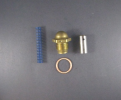
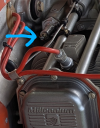
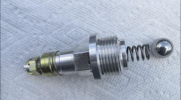
FYSA: you can adjust your max oil pressure at the pressure relief valve. Should not be necessary after engine break in, but it is easy to do. On a newer Lycoming, it looks like this, and is located behind the right rear cylinder. Newer valves have an adjustment screw, while older ones use washer shims. For the newer ones, turn the screw CW to increase, CCW to decrease. Full turn is 5 to 10 PSI change.

Screenshot_20251008-101321.png

Newer valves look like this inside:

Screenshot_20251008-102203.png

The steel ball is about the size of a large marble. It sits in a concave seat machined into the case. When the pressure is higher than the spring tension, the ball moves away from the seat and lets oil escape the circuit back to the sump. It does nothing for low pressure, but will prevent pressure above whatever limit it is set for.

So, while you should see fluctuations below the max pressure with temperature and rpm, at normal operating speed and temperature the pressure should rise to its set point and stay within 1 or 2 PSI.

If a particle gets lodged between the ball and seat, it will allow oil to escape at lower pressure, preventing the system from reaching its set pressure.

IMO the valve is designed in a way that makes it hard to stay jammed. Small particles should get flushed out with natural fluctuations in pressure. Larger carbon chunks should get caught be the suction screen (that nobody checks) or get crushed by the spring when the engine stops and pressure is zero. If you have non-carbon chunks large enough to stay lodged in the valve, you have bigger problems.

If you are worried about it being clogged in flight, go to full throttle and max RPM for a few moments. That might be enough to press the ball out and dislodge the particle. If on the ground, shut it down, restart, and run up to normal operating temperature and cruise RPM.

If that doesn't work, it's easy enough to disassemble and clean. Just snip the safety wire and unscrew the large housing (don't monkey with the adjustment screw). Put your hand or a rag under the opening to catch the ball. You will be shocked at how clean the ball is. Wipe the ball and seat with a clean cloth and visually inspect. To reassemble, just put it back in the same way it came off. Use a new MS35769-31 crush gasket, turn the number of degrees specified in the engine parts manual, and safety wire.

If you are like me and take a broad view of owner PM, it is an easy DIY.
 
Last edited:
Does the factory sensor and the JPI sensor share a port?

If properly installed, yes. On a Lycoming, the pressure sensor port is at the upper right of the accessory case on the back of the engine. A small hose will run from that port to the firewall, and from there via fittings and tubing to one or more senders or gauges.

If you don't know your system well enough, you should pull the cowl off and trace the routing so you understand it. That could be helpful knowledge if you have indication issues or a leak.

Temperature is different. Primary gets measured at the rear of the engine, but there is an alternate port on the front of the case, since you can't share a temperature port.
 
Back
Top