
You are using an out of date browser. It may not display this or other websites correctly.
You should upgrade or use an alternative browser.
You should upgrade or use an alternative browser.
Plane missing, Andros Island Bahamas
- Thread starter mryan75
- Start date


ahmad
Line Up and Wait
Ugh this is terrible. It almost looks like he was IFR but could not fly IFR. I hate it for his family.

Kenny Phillips
Final Approach
- Joined
- Jul 29, 2018
- Messages
- 6,572
- Display Name
- Kenny Phillips
ASEL/AMEL/Instrument rated, which we know doesn't mean he was proficient, or that the airplane was 100% functional.Ugh this is terrible. It almost looks like he was IFR but could not fly IFR. I hate it for his family.
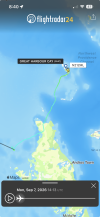
Less than an hour to the US mainland, but the plane didn't exactly make a beeline; in fact, it has that telltale signature we all hate to see.

edo2000
Pre-takeoff checklist
Apparently one body has been located. Sad.

 www.foxnews.com
4 family members flying from Bahamas to Florida in small plane go missing, with Coast Guard joining search
Four Florida family members remain missing on Tuesday after their plane vanished while traveling home from the Bahamas over Labor Day weekend.

FlightmechH3
Line Up and Wait
- Joined
- Dec 30, 2021
- Messages
- 527
- Display Name
- FlightmechH3
80yo pilot? Wow
bonefishpete
Cleared for Takeoff
- Joined
- Nov 10, 2024
- Messages
- 1,361
- Display Name
- Bonefishpete
Miami — Four bodies were found Tuesday after a small plane carrying members of a Miami family went missing off the Bahamas, authorities in the Bahamas said Tuesday.
Kenny Phillips
Final Approach
- Joined
- Jul 29, 2018
- Messages
- 6,572
- Display Name
- Kenny Phillips
I come from a family whose bodies fail long before their minds. But I've also seen the opposite (and am seeing that in several people not far from my seven decades.)80yo pilot? Wow
So at first glance, I don't worry so much about the age. But maybe I can question the decision making (I made a bad one last week, luckily it came to nothing, and "lesson learned") as the weather wasn't what I'd want for an hour over open water.
davela
Pre-Flight
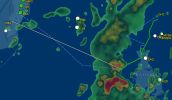
I'm not sure being 80 has anything to do with this accident (speaking as a aging pilot myself - LOL). It appears from the ADS-B data that he attemped to weave his way between some convective cells, probably still developing ones as this was late morning. He obviously failed, but this was not a good idea to start with. The reason pilots do this sort of thing is because they often get away with it and then learn to disregard long-standing safety protocols. They get away with it, until one day they don't.

Bacho
Line Up and Wait
I read that other family members recovered the first body. 
bonefishpete
Cleared for Takeoff
- Joined
- Nov 10, 2024
- Messages
- 1,361
- Display Name
- Bonefishpete
I'm not sure being 80 has anything to do with this accident (speaking as a aging pilot myself - LOL). It appears from the ADS-B data that he attemped to weave his way between some convective cells, probably still developing ones as this was late morning. He obviously failed, but this was not a good idea to start with. The reason pilots do this sort of thing is because they often get away with it and then learn to disregard long-standing safety protocols. They get away with it, until one day they don't.
Flying thunderstorms you have to be on your A game on the gauges.
I'm younger and not up to that.

Recently I canceled a trip and drove instead (long, miserable drive) because the forecast called for a good amount of thunderstorms in the area. I wasn't going to try to dodge pop-ups with 15-30 minute old NEXRAD data. I hear they didn't even had that.Flying thunderstorms you have to be on your A game on the gauges.
All I can see is the weather snapshot on flightaware. I would've waited it out.

hindsight2020
Final Approach
Ironically, open water is about the one place where you'd be well suited to scud run the living crap out of that situation, and live. Chop the throttles, trim for an airspeed below Va, forget the world screaming and crumbling around you, and just focus on wings level. You'll come out the bottom with plenty of VMC to breathe, change your underwear, weave around the shafts, and get your crap together. No need to die just to save face. Scud running is a legitimate emergency option here. The ideal would have been turn around, of course.
Condolences to the surviving family and friends. That's rough, the g-kids were young adults in their prime, that's a lot of potential cut short. It's also wild to read about how family members succeeded at body recovery, in purportedly inclement enough weather to stall Bahamas Police and the US Coast Guard from doing so. That also highlights just how imprudent it must have been for that flight to attempt the push-through at the time they did.
It's a hobby fam, it can wait. VFR is more fun anyways.
Did I miss something where someone specifically knew they did not have PFDs? I would venture that anyone that flies to the Bahamas, or frequently just over the ocean, is going to have PFDs and very likely a raft. There's a good chance they were even wearing them for that length of a flight.I’d guess that this suggests they survived a ditching,; without any flotation, how long can you tread water? My sympathy and condolences to all those related.
I have them for short hops to islands where I'm never out of glide range to the shoreline. But it is not worth it not to have them.
- Joined
- May 15, 2020
- Messages
- 7,765
- Display Name
- Ernie
- Home Airfield
- C81
Fly though trash weather or chill in the Bahamas.Ironically, open water is about the one place where you'd be well suited to scud run the living crap out of that situation, and live. Chop the throttles, trim for an airspeed below Va, forget the world screaming and crumbling around you, and just focus on wings level. You'll come out the bottom with plenty of VMC to breathe, change your underwear, weave around the shafts, and get your crap together. No need to die just to save face. Scud running is a legitimate emergency option here. The ideal would have been turn around, of course.
Condolences to the surviving family and friends. That's rough, the g-kids were young adults in their prime, that's a lot of potential cut short. It's also wild to read about how family members succeeded at body recovery, in purportedly inclement enough weather to stall Bahamas Police and the US Coast Guard from doing so. That also highlights just how imprudent it must have been for that flight to attempt the push-through at the time they did.
It's a hobby fam, it can wait. VFR is more fun anyways.
That shouldn't be a tough decision.

davela
Pre-Flight
I'm not sure what you mean by "flying thunderstorms" and gauges. I hope you don't mean to imply that flying IFR into an environment with known embedded thunderstorms is a acceptable if one is "A game" on the gauges - at least in most GA aircraft with most GA pilots at the controls (yours truly included).Flying thunderstorms you have to be on your A game on the gauges.
I'm younger and not up to that
Tarheelpilot
Final Approach
- Joined
- Dec 5, 2010
- Messages
- 8,190
- Location
- North Carolina once again.
- Display Name
- Tarheelpilot
- Home Airfield
- Not sure anymore
There are two things I hope are true for me at 80. I’m healthy enough to fly and smart enough not to fly single pilot IFR.80yo pilot? Wow

One of the skydive pilots I flew with used to follow that logic occasionally in the non-ifr jump planes. Fly out over the Great Salt Lake, setup a circling descent, break out just above the water, and cruise in to Tooele, easy. Worked pretty well till he broke out upside down in a Kingair.Ironically, open water is about the one place where you'd be well suited to scud run the living crap out of that situation, and live. Chop the throttles, trim for an airspeed below Va, forget the world screaming and crumbling around you, and just focus on wings level. You'll come out the bottom with plenty of VMC to breathe,
bonefishpete
Cleared for Takeoff
- Joined
- Nov 10, 2024
- Messages
- 1,361
- Display Name
- Bonefishpete
Numerous aircraft flew through that area that day just not into that thunderstorm.Convective Sigments are a daily occurrence in the summer time in Florida.I'm not sure what you mean by "flying thunderstorms" and gauges. I hope you don't mean to imply that flying IFR into an environment with known embedded thunderstorms is a acceptable if one is "A game" on the gauges - at least in most GA aircraft with most GA pilots at the controls (yours truly included).

k9medic
Cleared for Takeoff
- Joined
- Sep 27, 2018
- Messages
- 1,075
- Display Name
- ATP-H, CMEL, CSEL, CFI/CFII Airplanes and Helicopters
- Home Airfield
- At an LZ near you
I am back and forth all the time. We have life preservers but we do not wear them in the twin when crossing.
That said, I have made the crossing at 17500' and also at 500' depending on the weather. When it's crap weather, I have always flown below the clouds and around the rain.
That said, I have made the crossing at 17500' and also at 500' depending on the weather. When it's crap weather, I have always flown below the clouds and around the rain.

flyingcheesehead
Taxi to Parking
- Joined
- Feb 23, 2005
- Messages
- 28,184
- Location
- UQACY, WI
- Display Name
- iMooniac
- Home Airfield
- KUES/KMKE
I'm in a Bahamas Flying group on Facebook, and someone recently made a very interesting post there showing that the options are absolutely terrible:Recently I canceled a trip and drove instead (long, miserable drive) because the forecast called for a good amount of thunderstorms in the area. I wasn't going to try to dodge pop-ups with 15-30 minute old NEXRAD data. I hear they didn't even had that.
1) ADS-B (TIS-B FIS) doesn't reach very far off the Florida shore - 60-100 miles depending on altitude.
2) XM WX has signal, but only carries CONUS-based radar, the Bahamas radar stations are not included so there's a big hole there too.
3) Even Starlink is problematic: Unless you have the $1000/mo World plan, they cut off your connectivity 12nm offshore.
4) All that's left is onboard weather equipment, of which us little guys have very little most of the time. We're back to the ancient Stormscope days!
Those thunderstorms happen pretty much every day down there. Unless you're wheels up very early, tomorrow is practically gonna be just like today.Fly though trash weather or chill in the Bahamas.
That shouldn't be a tough decision.
FlightmechH3
Line Up and Wait
- Joined
- Dec 30, 2021
- Messages
- 527
- Display Name
- FlightmechH3
About 4pm everyday it seemed like.I'm in a Bahamas Flying group on Facebook, and someone recently made a very interesting post there showing that the options are absolutely terrible:
1) ADS-B (TIS-B FIS) doesn't reach very far off the Florida shore - 60-100 miles depending on altitude.
2) XM WX has signal, but only carries CONUS-based radar, the Bahamas radar stations are not included so there's a big hole there too.
3) Even Starlink is problematic: Unless you have the $1000/mo World plan, they cut off your connectivity 12nm offshore.
4) All that's left is onboard weather equipment, of which us little guys have very little most of the time. We're back to the ancient Stormscope days!
Those thunderstorms happen pretty much every day down there. Unless you're wheels up very early, tomorrow is practically gonna be just like today.

Ed Haywood
Final Approach
I’d guess that this suggests they survived a ditching,; without any flotation, how long can you tread water?
At least several hours in warm salt water, if you are physically healthy and a strong swimmer. Longer if you have training.
But I doubt they survived impact.
I just got back from two weeks in the islands and I’ve spent a lot of time down there. Maybe one day in two weeks is truly bad thunderstorms. You get buildups daily but that’s late in the day. Regardless, he absolutely did not have to take off.I'm in a Bahamas Flying group on Facebook, and someone recently made a very interesting post there showing that the options are absolutely terrible:
1) ADS-B (TIS-B FIS) doesn't reach very far off the Florida shore - 60-100 miles depending on altitude.
2) XM WX has signal, but only carries CONUS-based radar, the Bahamas radar stations are not included so there's a big hole there too.
3) Even Starlink is problematic: Unless you have the $1000/mo World plan, they cut off your connectivity 12nm offshore.
4) All that's left is onboard weather equipment, of which us little guys have very little most of the time. We're back to the ancient Stormscope days!
Those thunderstorms happen pretty much every day down there. Unless you're wheels up very early, tomorrow is practically gonna be just like today.

- Joined
- Oct 16, 2019
- Messages
- 8,863
- Location
- Atlanta / Marietta
- Display Name
- Vintage Snazzy (so my adult children say)
- Home Airfield
- KPUJ
I come from a family whose bodies fail long before their minds. But I've also seen the opposite (and am seeing that in several people not far from my seven decades.)
So at first glance, I don't worry so much about the age. But maybe I can question the decision making (I made a bad one last week, luckily it came to nothing, and "lesson learned") as the weather wasn't what I'd want for an hour over open water.
Then again, this might not have been age related, but just "bad decision" related. JKF Jr. was no where this age and yet he did the same thing.
MauleSkinner
Touchdown! Greaser!
5. The Mk1 eyeball. 1 look out the window is worth a thousand radar sweeps. Stay visual.I'm in a Bahamas Flying group on Facebook, and someone recently made a very interesting post there showing that the options are absolutely terrible:
1) ADS-B (TIS-B FIS) doesn't reach very far off the Florida shore - 60-100 miles depending on altitude.
2) XM WX has signal, but only carries CONUS-based radar, the Bahamas radar stations are not included so there's a big hole there too.
3) Even Starlink is problematic: Unless you have the $1000/mo World plan, they cut off your connectivity 12nm offshore.
4) All that's left is onboard weather equipment, of which us little guys have very little most of the time. We're back to the ancient Stormscope days!
bonefishpete
Cleared for Takeoff
- Joined
- Nov 10, 2024
- Messages
- 1,361
- Display Name
- Bonefishpete
There’s an Aztec charter operator here that flies to the bahamas frequently. This summer I’ve seen him come back at 1500’ - 2000’ the whole way numerous times.5. The Mk1 eyeball. 1 look out the window is worth a thousand radar sweeps. Stay visual.

StraightnLevel
Cleared for Takeoff
- Joined
- Dec 8, 2023
- Messages
- 1,161
- Location
- Houston & SE Wisconsin
- Display Name
- StraightnLevel
- Home Airfield
- T41, KETB
Thanks for putting it in these terms. That's a great way to think about the situation when you end up thereIronically, open water is about the one place where you'd be well suited to scud run the living crap out of that situation, and live. Chop the throttles, trim for an airspeed below Va, forget the world screaming and crumbling around you, and just focus on wings level. You'll come out the bottom with plenty of VMC to breathe, change your underwear, weave around the shafts, and get your crap together. No need to die just to save face.