Pitot Static tubing and fittings

Ace66

Pre-Flight
Joined
Mar 8, 2019
Messages
40
Display Name
Ace66
I had a new panel put in on my certified 180 and the avionics shop used these new fittings for the pitot/static tubing. You just push the tubing into the fitting and it locks in place. You can easily remove it by pushing in on a ring on the fitting (blue in the pic). No B nuts. I couldn't find this on Aircraft Spruce and they said I could buy it on Amazon. Huh? I did find it on Stein Air but they say its not certified. Does anyone know the story behind these? Can these be used in certified aircraft? Are they reliable?

Thanks!
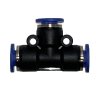
1742353160638.jpeg


uAvionix also uses those style of quick-connect fittings.
 
When I had my avionics upgraded two years ago he re-plumbed my pitot-static system with those. Since then, after having a leak in our RO water system in the house (and the subsequent $35K damage, partly covered by insurance), I’ve learned about LLDPE tubing and its fittings. Pretty sure it’s the exact same stuff. John Guest seems to be the go-to name for tubing and fittings.

Is it certified? Dunno. But John Guest seems to be the best name.

Not sure that helps in the least.
 
You will find a lot of complaints about the push-to-connect style fittings. Try the Nylo-seal or Poly-flo fittings for a more positive lock on the tubing.
 
I redid my (experimental) pitot-static system some years ago using push-on fittings from McMaster-Carr: https://www.mcmaster.com/catalog/131/240/5111K528

No complaints here; no issues, and the only time it's failed a pitot-static test (FAA-sanctioned or otherwise) is when I missed one connection in the wing root.
I learned on installation that it's important to get a good 90 deg cut on the tubing ends but beyond that they are dead-simple to install.
I've had no end of problems with Nylo-seal stuff in a variety of applications.

Nauga,
and that Selecter song
 
Push-in fittings like that are the standard in industrial pneumatic systems up to 150 psi or so. As @nauga said you can get them from McMaster or many other industrial suppliers. I personally would avoid Amazon unless it's from a known manufacturer like Clippard, Legris or SMC. They come in just about any configuration or size you'd want, and in brass or plastic.
 
I had a new panel put in on my certified 180 and the avionics shop used these new fittings for the pitot/static tubing. You just push the tubing into the fitting and it locks in place. You can easily remove it by pushing in on a ring on the fitting (blue in the pic). No B nuts. I couldn't find this on Aircraft Spruce and they said I could buy it on Amazon. Huh? I did find it on Stein Air but they say its not certified. Does anyone know the story behind these? Can these be used in certified aircraft? Are they reliable?

Thanks!

View attachment 139149


They use a similar push to lock fittings only in brass on big trucks for more than 20 years. Not a big deal if they leak a little because the truck is always making air while it runs. When new they hold air pretty well over night but after a short amount of time they start to leak down over night.
I have a LP bulk plant that use push to lock fittings on the emergency shut down that is powered by nitrogen. After about 10 years they started leaking. Can't have them leaking because if we lose all of our nitrogen gas then you can't use the bulk plant.
I recently replaced them with poly flow fittings which are more expensive but do grip the hose better and don't leak as easy.
40 years ago we used poly lock fittings on industrial air systems, so nothing new.
Probably don't want to use brass fittings in a aircraft because of the weight.
 
Last edited:
Can these be used in certified aircraft? Are they reliable?
These items are considered standard parts so no specific FAA approval required. However, there is a requirement standard parts used on TC'd aircraft must be produced to a known industry or govt standard. And it falls to the installer whether they meet those requirements.

As to reliability, while they have their place, as mentioned, installation technique and product mfg tend to affect their reliability the most. Personally, I dont use them and instead use Swagelok nylon products for those requirements.
 
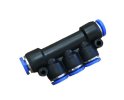
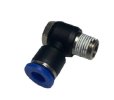
I had the nylo-seal fittings. Kept chasing leaks. Switched to the push lock from Stein Air. Very nice! They also have a manifold style fitting with multiple taps, plugs if you need to easily plug a fitting and banjo style fittings for tight spaces.
 

Attachments

  • IMG_0383.jpeg
    IMG_0383.jpeg
    80.7 KB · Views: 5
  • IMG_0384.jpeg
    IMG_0384.jpeg
    41.3 KB · Views: 5
If you ask repair stations that do 91.411/413 checks, many of them will tell you they see constant leaks from the push-on systems. Nylo-seal/Polyflo is really the "right" way to do it, and that stuff isn't hard to work with at all. I've never understood the appeal of the push-on fittings, as they're not a meaningful time saver.
 
Back
Top