Piper corrosion on the forward wing spar attachments?

Princesspilot206

Pre-takeoff checklist
PoA Supporter
Joined
Oct 18, 2023
Messages
171
Display Name
Princesspilot
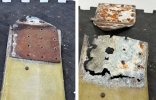
The FAA is investigating reports of corrosion on the forward wing spar attachments of Piper PA-28, PA-32, PA-34, and PA-44 airplanes following multiple discoveries of severe corrosion in a fleet of Piper airplanes. The corrosion was found by following the recommended inspection in Special Airworthiness Information Bulletin (SAIB) AIR-21-10 in a location that has been found to be difficult to access and assess the extent of the corrosion.

FAA’s East Certification Branch (ECB) recently issued an Airworthiness Concern Sheet (ACS) to highlight this concern and included photographs of the severe corrosion. The FAA is recommending operators of these aircraft inspect this area, per Piper Service Bulletin No. 1400A, and provide information including descriptions, photos, serial numbers, time in service and feedback on any difficulty completing inspection instructions.

How concerned should I be as an active PA-28 flier?
 
They’re fine. The PA-28 and offspring is one of the most-produced aircraft in the world, still being built.

What are the details on this fleet that has corrosion?
 
I looked at that Piper SB. Does not look good in there. If I had one, I might be worried.
 
Hard to say. I had my shop do the inspection this annual on my -32. My plane has zero corrosion, zero history of corrosion, and has never lived near the ocean. The steel plate had surface rust on it, which would suggest it wasn't really corrosion protected by the factory. Following the letter of the service bulletin we're supposed to then pull the wings. There did not appear to be any corrosion on the aluminum, so we treated the area as best we could in situ as we felt that pulling the wings off was a larger risk then the possibility of hidden corrosion.

We also replaced one of the rear spar attach points (unrelated) as the bolt hole had gotten worn beyond tolerance. That one is more out in the open, and there was water between the steel plate and aluminum spar. No corrosion though beyond surface rust on the steel.

It's certainly a potential issue, and both attach points need to be inspected regularly. That said, I know of a warrior in Florida that was flying with it's front wing spars completely detached before it was discovered at annual, so I think the chances of it killing you are low, but not zero. Shaking the wings of a piper while watching the wing/fuselage joint is a good preflight practice.
 
Last edited:
Hard to say. I had my shop do the inspection this annual on my -32. My plane has zero corrosion, zero history of corrosion, and had never lived near the ocean. The steel plate had surface rust on it, which would suggest it wasn't really corrosion protected by the factory. Following the letter of the service bulletin we're supposed to then pull the wings. There did not appear to be any corrosion on the aluminum, so we treated the area as best we could in situ as we felt that pulling the wings off was a larger risk then the possibility of hidden corrosion.

We also replaced one of the rear spar attach points (unrelated) as the bolt hole had gotten worn beyond tolerance. That one is more out in the open, and there was water between the steel plate and aluminum spar. No corrosion though beyond surface rust on the steel.

It's certainly a potential issue, and both attach points need to be inspected regularly. That said, I know of a warrior in Florida that was flying with it's front wing spars completely detached before it was discovered at annual, so I think the chances of it killing you are low, but not zero. Shaking the wings of a piper while watching the wing/fuselage joint is a good preflight practice.
Did you shake the wings and notice anything out of the ordinary for your rear spar attach points?
 
The FAA is investigating reports of corrosion on the forward wing spar attachments of Piper PA-28, PA-32, PA-34, and PA-44 airplanes following multiple discoveries of severe corrosion in a fleet of Piper airplanes. The corrosion was found by following the recommended inspection in Special Airworthiness Information Bulletin (SAIB) AIR-21-10 in a location that has been found to be difficult to access and assess the extent of the corrosion.

FAA’s East Certification Branch (ECB) recently issued an Airworthiness Concern Sheet (ACS) to highlight this concern and included photographs of the severe corrosion. The FAA is recommending operators of these aircraft inspect this area, per Piper Service Bulletin No. 1400A, and provide information including descriptions, photos, serial numbers, time in service and feedback on any difficulty completing inspection instructions.

How concerned should I be as an active PA-28 flier?
My level of concern would be in proportion to my 1400a results.
What were your results?
 
Did you shake the wings and notice anything out of the ordinary for your rear spar attach points?
This is one of those "do as I say, not as i do" situations.

When I flew club planes, I always did, as they were all over 10k hours and who knows what the last guy did. I'll admit that my preflights with my plane are usually more of a "gas,oil,tires" kind of process. My IA found it, because he checks that point as a matter of course at every annual, because he has found that the bolt there tends to get loose over time on the flight school fleet.

The wing shake maneuver was suggested to me by the cfi/ flight club president who taught at the aforementioned school. He claimed to have caught a loose spar attach in an archer doing that.
 
On a Florida based plane very. Not that the wing would fall off but the inspection could ground the aircraft.

Piper I believe never envisioned at the time their 50-60 year old airframes would still be flying.

Also never believe sales ads that say “Always Hangered” on 50 year old planes that have had numerous owners in numerous states.
 
The FAA is investigating reports of corrosion on the forward wing spar attachments of Piper PA-28, PA-32, PA-34, and PA-44 airplanes following multiple discoveries of severe corrosion in a fleet of Piper airplanes. The corrosion was found by following the recommended inspection in Special Airworthiness Information Bulletin (SAIB) AIR-21-10 in a location that has been found to be difficult to access and assess the extent of the corrosion.

FAA’s East Certification Branch (ECB) recently issued an Airworthiness Concern Sheet (ACS) to highlight this concern and included photographs of the severe corrosion. The FAA is recommending operators of these aircraft inspect this area, per Piper Service Bulletin No. 1400A, and provide information including descriptions, photos, serial numbers, time in service and feedback on any difficulty completing inspection instructions.

How concerned should I be as an active PA-28 flier?
How concerned? VERY!

In order to inspect this the fuel tanks MUST BE REMOVED! I have a freind who routinely buys aircraft and sells parts like these wings. He made me promise to NEVER buy one of these aircraft without removing both of the fuel tanks.

If there is corrosion, you will be shopping for a replacement wing.
 
This is one of those "do as I say, not as i do" situations.

When I flew club planes, I always did, as they were all over 10k hours and who knows what the last guy did. I'll admit that my preflights with my plane are usually more of a "gas,oil,tires" kind of process. My IA found it, because he checks that point as a matter of course at every annual, because he has found that the bolt there tends to get loose over time on the flight school fleet.

The wing shake maneuver was suggested to me by the cfi/ flight club president who taught at the aforementioned school. He claimed to have caught a loose spar attach in an archer doing that.
Same with my pre flights. I'll occasionally rock the stabilator. I did rock the wings on my 180 before I sold it as it had some damage and repair history to the right wing and forward attach fitting.
 
How concerned? VERY!

In order to inspect this the fuel tanks MUST BE REMOVED! I have a freind who routinely buys aircraft and sells parts like these wings. He made me promise to NEVER buy one of these aircraft without removing both of the fuel tanks.

If there is corrosion, you will be shopping for a replacement wing.
You're thinking of SB-1006, which covers corrosion on the main spar behind the fuel tanks ,and is another real issue, particularly in coastal airplane. This new one pertains to the front spar attach point.

Pipers have three points where the wings attach to the fuselage. The main spar, which cracks, the rear spar, which gets loose, and the front spar which apparently now corrodes. Yay 50 year old airplanes!

The front spar is fairly short and I would think be a doable job to replace, but it would involve removing the wings to do it. The inspection is a bit of a pain with removing the interior, but not as bad as the fuel tanks.
 
Suggest a peek at Airframe Components ( former Williams) vids on their site. Early forward attach fittings were aluminum ( at least till 1977) and sometime later are steel.

One Archer tried to move a hangar with a wing tip. Minor damage to plastic tip. The Front Spar hole tore completely out . ( in Bearing) it made several flights between cause and discovery. You could move the wing!
 
Sometimes a really nice aircraft can have a bad spot.

In this case manufacturing is a least partly to blame.

Mice, leaking door and window seals and defective Battery Boxes are also

culprits.

Some are preventable.
 
I won’t fly in them… The whole PA28 family and 32’s are junk… The design is just flawed and it’s showing. Piper should have stuck with taildraggers :) other than the Navajo… What a beast.
 
I don’t disagree about deferred maintenance, regardless it’s still not the best attachment design and it doesn’t change the fact that their flight qualities to me just aren’t there for me lol. That’s just personal preference though.
 
I don’t disagree about deferred maintenance, regardless it’s still not the best attachment design and it doesn’t change the fact that their flight qualities to me just aren’t there for me lol. That’s just personal preference though.
Stable and docile are terrible flight qualities
 
Stable and docile are terrible flight


As a potential PA-28 buyer that recently became aware of this SB (that Piper labels as mandatory), how is a deal with a seller supposed to happen? I would expect that asking for this SB to be complied with as a term of the sale will get the “not an AD, so no” response. So the choice would be to roll the dice and hope not to get burned eventually, or just say no to low wing Pipers covered by this SB.
 
how is a deal with a seller supposed to happen?
Is this your first aircraft to purchase?
There are several paths to take which the seller may or may not want to agree to. But not all SBs should be considered a death-knell, but rather used as guides to review your specific aircraft and based on the review what action you can take next with the seller.
Make sense?
 
As a potential PA-28 buyer that recently became aware of this SB (that Piper labels as mandatory), how is a deal with a seller supposed to happen? I would expect that asking for this SB to be complied with as a term of the sale will get the “not an AD, so no” response. So the choice would be to roll the dice and hope not to get burned eventually, or just say no to low wing Pipers covered by this SB.
First things first... Do you have an ia lined up? Certain mechanics have tricks or tools to make certain inspections less invasive and more surgical. Others are by the book.

Your best bet is to stop by your prospective a&p. Bring donuts. Check out his shop. Does he have any pipers he's working on. Feel him out, ask a couple questions but don't spend all day. Ask if hed be willing to do a prebuy or how he'd comply with sb1006 or if he'd even comply.

Remember, while sb's may not be mandatory for you. They may be mandatory for others operating the same aircraft.

Pulling a fuel tank isn't that big of a deal.
 
Is this your first aircraft to purchase?
There are several paths to take which the seller may or may not want to agree to. But not all SBs should be considered a death-knell, but rather used as guides to review your specific aircraft and based on the review what action you can take next with the seller.
Make sense?
It is. Already had to walk away from a PA-28 purchase recently after the pre-buy inspection didn’t go well. Seems as though the owner had been using a mechanic that told him what he wanted to hear, not what he needed to hear. A couple of friends of mine that are PA-28 owners completely agreed with my decision to cut my loss right at what I paid the maintenance shop for the inspection. That wasn’t an insignificant amount of money, but losing it was far better than the alternative. So now I find out about SB 1400B in the wake of the collapsed deal. Even if I try again and an owner is willing to allow that inspection to be done, I’m not interested in paying to have it done for him. I just paid for an owner to have a badly needed reality check. Try and find any PA-28 for sale that says in the sales ad “1400B inspection done.” You won’t find one. At this point as a buyer, it’s time to look at other options or (probably a better choice) get out of the game entirely and forget about it.
 
1400b is really not a big deal. It could be checked on a prebuy in 5min. Borescope the front side through the air vent and the back through the access panel. Experienced piper guys have been looking at the forward and rear spar attachments forever.

Sb1006 is actually more of an issue, and worth looking through the logbooks for compliance. If it's never been done, you can make a pretty educated guess by looking at the rest of the spar and internal wing structure. I had to pull the tanks off my 76 a couple years ago due to leaks, so obviously we did 1006 while we were in there. It had never been done in the 50 years previous. There were a couple of spots that we cleaned and treated. Another 20 years and they might have actually been a problem. My plane has always lived inside, never on the coast, and is generally pretty clean.

No one is going to let you pull a fuel tank on a prebuy, but you can see a LOT with modern borescopes.
 
As a potential PA-28 buyer that recently became aware of this SB (that Piper labels as mandatory), how is a deal with a seller supposed to happen? I would expect that asking for this SB to be complied with as a term of the sale will get the “not an AD, so no” response. So the choice would be to roll the dice and hope not to get burned eventually, or just say no to low wing Pipers covered by this SB.
Or the buyer preform the inspection and pay for it? Money well spent I say.

Whatever you do I suggest a pre pre buy inspection and if passes then a full blown annual inspection to follow.

Been burned on just pre buys. After all these 50 year old airframes are nothing but antiques now.
 
Last edited:
Thanks for the information Jim K. It would be nice if more owners took care of their airplanes as well as you do. I find it odd that insurance companies don’t make things more difficult for owners that choose to pass on these inspections. It seems as if the strategy is to eventually dump the airplane on a buyer that isn’t aware of anything beyond the ADs.
 
Last edited:
Or the buyer preform the inspection and pay for it? Money well spent I say.
Understood. I’m already out $2,400 from a recent failed purchase attempt. Along with all the time put into getting to that point. That’s chump change compared to what I would have been up against with a poorly done pre-buy inspection. Now that owner has his reality check, at my expense. Needless to say, I am not very motivated now to go pay for an inspection that an owner has chosen to take a pass on. They can stay on the hunt for an ignorant buyer I suppose.
 
Understood. I’m already out $2,400 from a recent failed purchase attempt. Along with all the time put into getting to that point. That’s chump change compared to what I would have been up against with a poorly done pre-buy inspection. Now that owner has his reality check, at my expense. Needless to say, I am not very motivated now to go pay for an inspection that an owner has chosen to take a pass on. They can stay on the hunt for an ignorant buyer I suppose.
Probably money well spent. I would avoid these models if spent any time in Florida.
Hanger or no hanger.
 
Perhaps if you haven't done so yet, line up your own mechanic before you purchase your 1st aircraft. This will give you someone in corner so to speak to assist in your purchase and know up front what that specific aircraft will present to maintain it. Its something I've recommended to 1st time buyers for many years with great results.

So now I find out about SB 1400B in the wake of the collapsed deal.
I believe there are 5 or 6 Piper SBs on this model series that pertain to the spar either for corrosion or mechanical defects. If factory bulletins are important to you, then perhaps discuss with your mechanic all the bulletins currently applicable to this series.

Even if I try again and an owner is willing to allow that inspection to be done, I’m not interested in paying to have it done for him.
And you shouldn't. But you can use it as a negotiating point and develop an agreement on the purchase price to include its compliance as a condition of sale.

At this point as a buyer, it’s time to look at other options or (probably a better choice) get out of the game entirely and forget about it.
Or educate yourself on the particular model you are interested in, get detailed input on what SBs are important and which ones are not, and make informed inquiries on these aircraft. It can be a rewarding process that can allow you to end up with a great aircraft to enjoy.
 
Just do the inspection. With luck it'll be a one time thing (takes a while for alclad to corrode without an accelerant) and it will give you peace of mind. If you find corrosion, well forewarned is forearmed. I'd rather be out the ca$h and know than unknowingly be flying a deathtrap.
 
Last edited:
No one is going to let you pull a fuel tank on a prebuy, but you can see a LOT with modern borescopes.
I'd probably be OK with pulling a tank for a prebuy. Its really not that invasive as long as all the screws come out. I pulled one on my 180 to diagnose a sender issue. So I knew what the spar looked like, and I replaced all the screws so those wouldnt be an issue. But I'd still try and convince the use of a scope.

Remove spar bolts for eddy current? Thats a big NOPE.
 
Back
Top