Oshkosh Air Traffic

I guess I’m confused. Say visibility was 1.5 miles, how does increasing spacing to 2 miles help with trailing another plane? If I was .5 miles in trail, I could see the other plane. At 2 I couldn’t. Or are they just following what they do at a regular airport when visibility gets bad?
 
Add:
I guess I’m confused. Say visibility was 1.5 miles, how does increasing spacing to 2 miles help with trailing another plane? If I was .5 miles in trail, I could see the other plane. At 2 I couldn’t. Or are they just following what they do at a regular airport when visibility gets bad?
If (when) it was 1.5 miles the field was closed. It’s Class E at arrival altitudes from Ripon on in.
 
Flying the Fisk VFR approach isn’t rocket surgery. But not hearing the ATIS update changing to 2 miles at the stupid far distant endeavor bridge entry point created the giant mess. Fisk was never intended to support that many planes with 2 mile separation. Sending folks back into the queue just exacerbated the problem.
 
yeah, well ok it' not the rock that I see as silly I suppose.
It's the amount of frequency congestion that accompanies it.
At 1/2 mile spacing, airplanes pass Fisk every 20 seconds. It takes half that time to call out an airplane, watch for a wing rock, and issue instructions. Frequency congestion is only a problem if the approach is pooch-screwed causing irate pilots to do stupid things.

"Yellow low wing approaching Fisk, give me a wing rock"... <1,2,3>... "OK, nice rock. Turn due East on the access road and switch to tower on 126.6". 10 seconds.
 
Curious, what was the pilot skill level pertaining to all those arrivals?

Young pilot on traffic overload, big time, now getting yelled at on a freq not for air to air use. Are they still flying the airplane? Airspeed/altitude deviations say probably not much.

Road rage is a thing, how many pilots had a different version during all of this?

Skill level was brought by someone already, who like me can decide the risk or not; is worth it.

Thinking a new pilot can figure out arrival times by still using a thing called flight planning, fresh in their minds from ground school and with actual flight practice to test their planning. Is there a reason why the rest of can't use the same method?

Enough is enough.

What friend here, could be the one, who we wish something had been done to save?

Mike
I think the biggest challenge for Airventure arrival pilots is pressure and ego. Pressure for a spot landing, likely the last time this was an issue was an initial PPL check ride. Ego being “I”m a pilot”. Pilot stuff is hard when precision is required, just ask anyone who’s attempted an Instrument Rating.

Airventure FISK arrivals is probably the epitome of the warning about aviation being less forgiving than the seas. The procedure isn’t the problem, the pilots are.

From a dude unwilling to arrive at Airventure without an IFR slot so he can avoid the idiots in the conga line
 
The NOTAM says if you are unable to maintain separation with the aircraft in front of you, break off and return to the starting point. My question is, in the 38 year history of the Fisk arrival, has any pilot actually done this? :)
 
The NOTAM says if you are unable to maintain separation with the aircraft in front of you, break off and return to the starting point. My question is, in the 38 year history of the Fisk arrival, has any pilot actually done this? :)
I just put the RV in hover mode and create the space. Screw everyone else. ;-)
 
now you have ATC actually calling out an instruction to DO a wing rock, followed by a short pause while the rocks happen, then it's a rather long affirmation that it was a good rock, welcome to oshkosh
It’s a little (lot) more than that. It’s followed by directions to the runway the controller is assigning as well as the frequency for that runway plus any instructions re other aircraft to follow, etc. It’s not so they can greet them.

Don’t underestimate how many in the conga line haven’t read the NOTAM or picked up the ATIS.

Again, pay a visit to the controller trailer sometime
 
yeah, well ok it' not the rock that I see as silly I suppose.
It's the amount of frequency congestion that accompanies it.


exactly!
but instead reducing the chatter it's adding to it!!

a "double-click" confirmation,
or a "wilco"
or a quick readback.... would normally be less freq time than what they have now!
it adds a whole bunch of needless syllables on freq!

Granted, it should be a smart way to silently confirm....even better than the double-click which ties up the freq for maybe 3/4 of a second...

But
now you have ATC actually calling out an instruction to DO a wing rock, followed by a short pause while the rocks happen, then it's a rather long affirmation that it was a good rock, welcome to oshkosh....etc.... yipeee

Maybe I'm all wrong, but I imagine that the original intention went more like this.....
ATC: "red and white high wing half-mile South of fisk, continue straight along the tracks to gravel pit, landing 27, monitor tower freq."​
then the pilot of red and white high wing silently does the rock, the controller sees that his message has been received and that it will be complied with​
and then the controller moves onto the next in line​
​
or​
​
ATC: " purple low wing with wig-wags, you're too close. Turn back to Green Lake and try again..."​
pilot silently rocks wings in acknowledgement, then makes the turn.....​
As someone who has flown the procedure mulitple times, the wing rock confirmation is simplistic and not the issue you're making it out to be or a major contibuting factor, IMO, to the issues that plauge the arrival when the conditions aren't nominal. When busy, ATC keeps the chatter to a minimum and the wing rock is a great way for ATC to quickly determine that the aircraft they are speacking to is the one actually in receipt of instructions. The comm issue, when it happens, is usally from some idiot pilot who either hasn't read,doesn't understand, or decides to blatanly disreard the NOTAM's (errr NOTICE) arrival proceduure and recites a War & Peace dissertation on what they what they should do to get into Osh.
 
At 1/2 mile spacing, airplanes pass Fisk every 20 seconds. It takes half that time to call out an airplane, watch for a wing rock, and issue instructions. Frequency congestion is only a problem if the approach is pooch-screwed causing irate pilots to do stupid things.

"Yellow low wing approaching Fisk, give me a wing rock"... <1,2,3>... "OK, nice rock. Turn due East on the access road and switch to tower on 126.6". 10 seconds.
Anyone who has ever taught a classroom full of people knows you teach to the level of the dumbest student! In this case, telling you which tower frequency to turn to... that's for the dumbest pilot who didn't read and print out the NOTAM. I don't need you to tell me which frequency because I'm actually prepared, but this idiot who just did a 360 in front of me for spacing does.

On an early morning approach, where I was the only one in the area, the Fisk controller was chatting with me and then told me to run right for runway 36. I told him not until he told me to rock my wings! He laughed and said, "Fair enough, rock your wings!" It's tradition, not going to change.

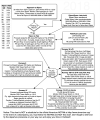
This is what my NOTAM looks like. I highlight the important parts and print them for our local pilots.
Screenshot 2026-08-11 at 8.20.18 AM.png
 
I also think people wanting to stick religiously to the 1/2 mile per the NOTAM as if it’s a contract forget that the Fisk isn’t a stand-alone thing: it’s a part of a bigger process. It’s basically the entry into the Class D, where up to three runways are being used for landings. If only one is being used for whatever reason, the flow needs to be slowed. And if there’s a go-around, something needs to give (a go-around for the only runway operating with a plane every 20 seconds would be a mess).

I may be mistaken but once you’re past the Fisk and in the Delta, you’re gonna land; I don’t think they kick you back to the conga line if you go around, etc., so they need to manage you no matter what.

The Fisk isn’t the only arrival to OSH. There are IFRs, Warbirds, show planes (Boeing, etc.), and stuff I’m not thinking of.

Arrivals aren’t the only activity. There are VFR departures, IFR departures, Trimotor rides, etc.

Bottom line, whatever “fix” is proposed needs to do so in a big context.
 
If I’m reading this correctly, you’re expecting ATC to verify which red and white Cessna 172 is on the approved list and which is not? ATC would never agree to that.
 
I also think people wanting to stick religiously to the 1/2 mile per the NOTAM as if it’s a contract forget that the Fisk isn’t a stand-alone thing: it’s a part of a bigger process. It’s basically the entry into the Class D, where up to three runways are being used for landings. If only one is being used for whatever reason, the flow needs to be slowed. And if there’s a go-around, something needs to give (a go-around for the only runway operating with a plane every 20 seconds would be a mess).

I may be mistaken but once you’re past the Fisk and in the Delta, you’re gonna land; I don’t think they kick you back to the conga line if you go around, etc., so they need to manage you no matter what.

The Fisk isn’t the only arrival to OSH. There are IFRs, Warbirds, show planes (Boeing, etc.), and stuff I’m not thinking of.

Arrivals aren’t the only activity. There are VFR departures, IFR departures, Trimotor rides, etc.

Bottom line, whatever “fix” is proposed needs to do so in a big context.
I've had to go around twice -- once on my own and once directed by the tower. In both instances, I was immediately placed back into a downwind for a subsequent landing. No muss no fuss. As for the other arrivals (IFR, warbird, etc), all the merging/sequencing is done by the tower. So the issues being discussed in this and many other threads are really specific to the VFR arrival from one of the transition points to Fisk. IMO, beyond Fisk, other than idiots landing against traffic, or taking off on a taxiway, ATC has it under control and the procedure works as advertised.
 
Last edited:
As for the other arrivals (IFR, warbird, etc), all the merging/sequencing is done by the tower.
One caveat: I've overheard the coordination between the Towers and Fisk, where some non-Fisk-arrival activity noted by the Tower results in go-arounds at the Fisk to temporarily stop/create a break in the flow.
 
He who lives by the (NOTAM) rules dies by the rules.
Not when the rules are there to keep people alive. :rolleyes:

Sounds like you have way more expertise than the FAA peeps who have been doing this for 38 years and who might know a thing or two that we don’t realize.
Nobody at the FAA has been doing this for 38 years. We're on about the third generation of controllers since the procedure came about.

Also, controllers are only allowed to do OSH a certain number of times (I forget what it is, something like 8), and each team has a very OSH-experienced controller, a few less-experienced veterans, and at least one rookie.

I've never been a controller, but I have flown the procedure around 40 times... And I'd certainly like to participate in making it better.

Add: the controllers have responsibility for the lives of the people they’re managing. Us SGOTIs yelling at clouds (and smoke) don’t. If someone wants to be constructive, get off of these forums and talk to the FAA (PM me if you want - I can probably give you contact info).
If you know who's in charge of the procedure for next year as well as anyone involved in reviewing what happened this year, I'd love to participate in a way that will actually help.

yeah, well ok it' not the rock that I see as silly I suppose.
It's the amount of frequency congestion that accompanies it.

But now you have ATC actually calling out an instruction to DO a wing rock, followed by a short pause while the rocks happen, then it's a rather long affirmation that it was a good rock, welcome to oshkosh....etc.... yipeee

Maybe I'm all wrong, but I imagine that the original intention went more like this.....
ATC: "red and white high wing half-mile South of fisk, continue straight along the tracks to gravel pit, landing 27, monitor tower freq."​
then the pilot of red and white high wing silently does the rock, the controller sees that his message has been received and that it will be complied with​
and then the controller moves onto the next in line​
​
or​
​
ATC: " purple low wing with wig-wags, you're too close. Turn back to Green Lake and try again..."​
pilot silently rocks wings in acknowledgement, then makes the turn.....​
You're right - But when they have 2-3 aircraft showing up at Fisk at once, they don't go through all that. It'll be "Red and white high wing, continue up the tracks for 27, purple low wing with wig-wags, right turn for 36, twin at 2300 break it off."

When there's two miles in trail, they have plenty of extra time, and there's a reason they add all of the extra comms including the "good rock, welcome to Oshkosh" etc... And I didn't know this until recently, but they're actually instructed to do that. OSH is already a high-stress environment for everyone, and they say all of that extra stuff when they have time so as to reduce the stress level on the pilots and "lower the temperature of the room".

The NOTAM says if you are unable to maintain separation with the aircraft in front of you, break off and return to the starting point. My question is, in the 38 year history of the Fisk arrival, has any pilot actually done this? :)
Absolutely... Back when the procedure started at Ripon. Now, people might do so early on, but if they've been in line since the bridge, hell no. This is something that needs to be addressed in the current version of the procedure.

Don’t underestimate how many in the conga line haven’t read the NOTAM or picked up the ATIS.
I think you meant "overestimate". But I would say that the number of people who haven't read the NOTAM is fairly low, it's just that those who haven't read it at all royally mess things up for everyone else.

As far as picking up the ATIS, it sounds like a lot of people had trouble receiving it this year, especially farther out before starting at the bridge. They should probably add a couple of transmitters well south and west of OSH so they're closer to the people receiving the ATIS.

This is what my NOTAM looks like. I highlight the important parts and print them for our local pilots.
View attachment 154131
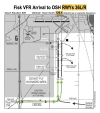
Here's mine, though this version isn't current (doesn't have the longer procedure, and the 18R via E-W Road approach has been discontinued):

Screenshot 2026-08-11 at 1.39.11 PM.png

Everything you need on one page, *if* you've read the NOTAM first.

I also think people wanting to stick religiously to the 1/2 mile per the NOTAM as if it’s a contract forget that the Fisk isn’t a stand-alone thing: it’s a part of a bigger process. It’s basically the entry into the Class D, where up to three runways are being used for landings. If only one is being used for whatever reason, the flow needs to be slowed. And if there’s a go-around, something needs to give (a go-around for the only runway operating with a plane every 20 seconds would be a mess).
You're missing the fact that there is some randomization at work here, and there aren't airplanes exactly a half mile apart all day long most of the time. In addition, a single runway can accept a lot more traffic than Fisk can send in, even at 1/2 mile spacing.

The Fisk isn’t the only arrival to OSH. There are IFRs, Warbirds, show planes (Boeing, etc.), and stuff I’m not thinking of.

Arrivals aren’t the only activity. There are VFR departures, IFR departures, Trimotor rides, etc.
But all of those use different airspace than FISK. They only conflict on the runways themselves.
 
Not when the rules are there to keep people alive. :rolleyes:


Nobody at the FAA has been doing this for 38 years. We're on about the third generation of controllers since the procedure came about.

Also, controllers are only allowed to do OSH a certain number of times (I forget what it is, something like 8), and each team has a very OSH-experienced controller, a few less-experienced veterans, and at least one rookie.

I've never been a controller, but I have flown the procedure around 40 times... And I'd certainly like to participate in making it better.


If you know who's in charge of the procedure for next year as well as anyone involved in reviewing what happened this year, I'd love to participate in a way that will actually help.


You're right - But when they have 2-3 aircraft showing up at Fisk at once, they don't go through all that. It'll be "Red and white high wing, continue up the tracks for 27, purple low wing with wig-wags, right turn for 36, twin at 2300 break it off."

When there's two miles in trail, they have plenty of extra time, and there's a reason they add all of the extra comms including the "good rock, welcome to Oshkosh" etc... And I didn't know this until recently, but they're actually instructed to do that. OSH is already a high-stress environment for everyone, and they say all of that extra stuff when they have time so as to reduce the stress level on the pilots and "lower the temperature of the room".


Absolutely... Back when the procedure started at Ripon. Now, people might do so early on, but if they've been in line since the bridge, hell no. This is something that needs to be addressed in the current version of the procedure.


I think you meant "overestimate". But I would say that the number of people who haven't read the NOTAM is fairly low, it's just that those who haven't read it at all royally mess things up for everyone else.

As far as picking up the ATIS, it sounds like a lot of people had trouble receiving it this year, especially farther out before starting at the bridge. They should probably add a couple of transmitters well south and west of OSH so they're closer to the people receiving the ATIS.


Here's mine, though this version isn't current (doesn't have the longer procedure, and the 18R via E-W Road approach has been discontinued):

View attachment 154139

Everything you need on one page, *if* you've read the NOTAM first.


You're missing the fact that there is some randomization at work here, and there aren't airplanes exactly a half mile apart all day long most of the time. In addition, a single runway can accept a lot more traffic than Fisk can send in, even at 1/2 mile spacing.


But all of those use different airspace than FISK. They only conflict on the runways themselves.

I give up. You win.
 
I give up. You win.
I'm curious. What's your experience? Have you flown into Oshkosh? Are you a controller? Have you filled that role at Oshkosh? I'm trying to understand/place your point of view. I can't tell any of that from your posts.
 
I'm curious. What's your experience? Have you flown into Oshkosh? Are you a controller? Have you filled that role at Oshkosh? I'm trying to understand/place your point of view. I can't tell any of that from your posts.
Never been a controller. Have done the Fisk a few times, including after having come in and then going out a day or two later to do some formation flying with friends (returning as a 4-ship was fun). Have flown into OSH every year since 2009 except Sloshkosh in 2010 and NotKOSH in 2020 (although a few of us did fly into OSH and have lunch at the Clay Pit).

I’m part of an arrival group and work with our FAA liaison a little and have learned a bit from that. Plus I’ve been to the Fisk trailer at least twice.

I’m absolutely not an expert on the arrival or its issues. I also work to understand the big picture, which may not be a universal approach in this thread.
 
I may be mistaken but once you’re past the Fisk and in the Delta, you’re gonna land; I don’t think they kick you back to the conga line if you go around, etc., so they need to manage you no matter what.

The Fisk isn’t the only arrival to OSH. There are IFRs, Warbirds, show planes (Boeing, etc.), and stuff I’m not thinking of.

Arrivals aren’t the only activity. There are VFR departures, IFR departures, Trimotor rides, etc.

Bottom line, whatever “fix” is proposed needs to do so in a big context.
Yep, lots of stuff going on.

IFR arrivals are nearly always sent on long finals to 27 and worked into the flow (though I was sent to 9 once).
Warbirds come in on roughly a 45 to 36R.
Anything large (military transport/cargo, airliners for honor flights, etc...) require shutting down 18/36 entirely (and getting taxiing airplanes out of the paved ditch) for the approach of these.
The ultralight runway is nearly always in operation and there is a transition for those flying into that.
Pioneer is running helicopter rides and sometimes other operations.
The Trimotors (there are two "big ford" and "little ford") taxi to P3 and are cleared directly from the tower to takeoff at that intersection. They do some circuits about 2000AGL and then are worked back into the landing flow.
There are other demonstrations (vintage and homebuilt reviews, etc.) that supplant 18/36 use as well. They typically depart on 36 loop back and do a low pass on 36 and then recover either on 36 or 27.
There are some other unpublished transitions, such as the Prison, that are used by photo planes and other people who know what they're doing.

These are all the ones that I've either flown or are involved in (Nothing like having the wing of the trimotor passing over your head while you're working the P3 intersection).

I arrive pre-NOTAM, but I often fly during the week to give rides to voluneers (depart, holding up my MVFR sign, go out climb up to 5000' or so, come back over the field to see the show and the trimotors doing their loops), then if the person I am flying is a pilot and has never done the RIPON procedure, I'll show that to them. Otherwise, I head to Fond Du Lac and do the warbird approach in.
 
Back
Top