Next chapter in my flying journey - Conquest 441

James_Dean

Pattern Altitude
Joined
Mar 31, 2005
Messages
2,171
Location
Iowa
Display Name
Eggman
Home Airfield
SPW
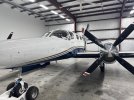
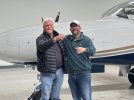
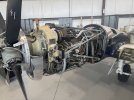
After a bit of a hiatus I finally got a plane back in the hangar. First few flights over the last few days while we were trying to get the closing done and then the flight back to my home base yesterday. The plane and I fell in like long lost old friends. I've got a few things to sort out, but it was a pretty clean process. Managing the Garretts is certainly different than the Pratts in the 425. This is my first plane with a digital autopilot and that is a nice upgrade. Most importantly SWMBO is very happy and ready to spend less time on the airlines.


441G_2.jpg441G.jpgGot the keys.jpg
 
After a bit of a hiatus I finally got a plane back in the hangar. First few flights over the last few days while we were trying to get the closing done and then the flight back to my home base yesterday. The plane and I fell in like long lost old friends. I've got a few things to sort out, but it was a pretty clean process. Managing the Garretts is certainly different than the Pratts in the 425. This is my first plane with a digital autopilot and that is a nice upgrade. Most importantly SWMBO is very happy and ready to spend less time on the airlines.


View attachment 146699View attachment 146700View attachment 146701
Congrats! And wow, looks nice :cool:
 
Gorgeous plane! Congrats!
 
I just ate some eggs to help pay for that plane!

Please take good care of it, it is part mine. Equally important, enjoy it, or my money is wasted.

Eggs are a very regular part of my food groups, so more money coming your way, weekly. :):)
 
Sweet ride.

I'll go make an omelete to do my part.
 
I'm curious. Obviously there was a big enough difference between the 425 and 441 to justify the upgrade? Was the difference big enough to make training in the new airplane difficult, or was it an easy transition? Other than having to walk the props after landing...
 
isn't jerry wagner the ambassador of the cezzna 4xx series?
Well, I'm on year 14 of twin cessna ownership and almost 9 of those in a 400 series, and I do not recall Jerry reaching out. I do prefer to keep all my approach maneuvers at <30 degrees of bank and 7 degrees of pitch so maybe I'm not his type.
 
I'm curious. Obviously there was a big enough difference between the 425 and 441 to justify the upgrade? Was the difference big enough to make training in the new airplane difficult, or was it an easy transition? Other than having to walk the props after landing...
I stole my answer from the light jets thread. Sorry for those who already saw it.

I sold the 425 a few years ago due to some outside issues that were family related. My kids are now 23, 21, 19, 17, and 15 and the 425 was ok when the 8 year old could sit on the "potty" seat and they all weighed a little less. A regular mission was from Iowa to Phoenix and we always had to stop going west and were even started to get limited coming back east. I also have regular missions that take me to Washington, Oregon, Arizona and Georgia. The wife and I are also wanting to spend more time in the Bahamas a few times a year. I will also have several missions that are <250 miles which kills the ops cost ops on the jets.


The 441 with the -10s has a useful load of over 800 lbs with full fuel which is 475 gallons. With RVSM you can be at FL320 burning <70gph and pushing 300ktas so the range is epic and with 10 in the cabin with bags you can still go a long ways. I can't imagine bumping up against the 2500 lbs zfw. There are certainly some quirks with the airframe to be aware of as you mentioned.

Bottom line, I want to be able to take myself and the wife 1500 miles and 8 of the family 1000 miles. I did the week at Simcom and the transition wasn't an issue at all. Quite a few systems differences though. Very different fuel systems, garretts vs. pratts, split vs. fowler flaps, electric vs. hydraulic flaps, etc.
 
Congratulations! This will be a wonderful airplane for you, I'm sure. The 441 was just one of the best airplanes Cessna ever built.
 
Congratulations!! There isn’t a perfect airplane, but a 441 is pretty close. I regret trading mine for a Citation in 1999. I liked my 425 as well, when I retired I couldn’t justify keeping it. For speed, useful load and fuel efficiency, they are hard to beat.
 
Bottom line, I want to be able to take myself and the wife 1500 miles and 8 of the family 1000 miles.
That is indeed epic range. Good thing they adjusted the engines for jet fuel. (What’s the story on that particular placard?)

Is it as much bigger than the 425 in person as it looks in pictures?
 
You can see in that picture that we were doing 304 ktas on 500 pph at FL280 and didn't have the power all the way up. We weren't really pushing it, but got to that altitude in under 15 minutes with a few minutes leveled off at 14k. I'm going to like this. :)
 
That is indeed epic range. Good thing they adjusted the engines for jet fuel. (What’s the story on that particular placard?)

Is it as much bigger than the 425 in person as it looks in pictures?

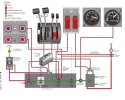
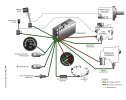
I'm not an expert, but the fuel computers are a one off for this airframe that Cessna did. They take inputs from the power levers, condition levers, RPM sensors, OAT, ITT, and exhaust temps and calculate a "single red line" to help the pilot manage engine power and theoretically limit engine temp exceedance. Supposedly you can just firewall the throttles and the computers will protect the engines although I'm told nobody does that in practice. These computers are one of the "gotchas" with this airframe as there are about 10 shops left that have real expertise in setting them and there is really only one place left that does overhauls on them. You can still legally operate the plane without them, but it is a little higher workload. My understanding is the shop that still does the overhauls is in Australia and plan on $20k - $30k if you need one. So, I believe that is the reason for the placard as there plane can run on other fuels such as 100LL, but you have to have the computers recalibrated.

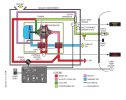
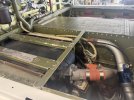
The 441 is, IIRC, four feet longer, five feet longer wingspan, and about 8" taller. Inside you definitely notice more width in the cabin, but the cockpit feels about the same. I'm really hopeful that SWMBO and the kids appreciate the difference in the climate control system in the 441 vs. the 425. The 441 has a system that is more like the jets with a bleed air driven air cycle machine. The 425 takes bleed air and runs it through an air to air cooler and then directly to the cabin. The air conditioning is a freon system that is marginal and when you're up in the flight levels there is an electric heating element to supplement the bleed air heat. You'd sweat your ass off in Phoenix and pax were always cold at FL250. The ACM takes bleed air, runs it through a air to air cooler, through a turbine(also driven by bleed air) to compress it again, another air to air cooler, then through an expansion valve to remove the moisture and cool it. Then that dry and cold air gets mixed with hot bleed air to go to the cabin. Got that? It is another bit of magic that seems to work, but, again, is another $30k to overhaul when needed. Seems like they go for about 4000 - 5000 hours and mine was just done in 2023. IMG_0729.jpegIMG_0730.jpegIMG_0731.jpegIMG_4579.jpegIMG_4577.jpeg
 
Whatever book those schematics are out of, I wish every plane had one. Did the insurance cut you loose after simulator school based on your 425 time or were there more hoops to jump through?
 
I'm not an expert, but the fuel computers are a one off for this airframe that Cessna did. They take inputs from the power levers, condition levers, RPM sensors, OAT, ITT, and exhaust temps and calculate a "single red line" to help the pilot manage engine power and theoretically limit engine temp exceedance. Supposedly you can just firewall the throttles and the computers will protect the engines although I'm told nobody does that in practice. These computers are one of the "gotchas" with this airframe as there are about 10 shops left that have real expertise in setting them and there is really only one place left that does overhauls on them. You can still legally operate the plane without them, but it is a little higher workload. My understanding is the shop that still does the overhauls is in Australia and plan on $20k - $30k if you need one. So, I believe that is the reason for the placard as there plane can run on other fuels such as 100LL, but you have to have the computers recalibrated.

The 441 is, IIRC, four feet longer, five feet longer wingspan, and about 8" taller. Inside you definitely notice more width in the cabin, but the cockpit feels about the same. I'm really hopeful that SWMBO and the kids appreciate the difference in the climate control system in the 441 vs. the 425. The 441 has a system that is more like the jets with a bleed air driven air cycle machine. The 425 takes bleed air and runs it through an air to air cooler and then directly to the cabin. The air conditioning is a freon system that is marginal and when you're up in the flight levels there is an electric heating element to supplement the bleed air heat. You'd sweat your ass off in Phoenix and pax were always cold at FL250. The ACM takes bleed air, runs it through a air to air cooler, through a turbine(also driven by bleed air) to compress it again, another air to air cooler, then through an expansion valve to remove the moisture and cool it. Then that dry and cold air gets mixed with hot bleed air to go to the cabin. Got that? It is another bit of magic that seems to work, but, again, is another $30k to overhaul when needed. Seems like they go for about 4000 - 5000 hours and mine was just done in 2023. View attachment 146714View attachment 146715View attachment 146716View attachment 146717View attachment 146718

ACMs are awesome. The MU2 had one. Simple, elegant, and extremely effective. While it wasn’t “freeze your balls off on a summer day in Phoenix” good, it was still very nice at both cooling and heating, and the heating kept me warm on very cold winter days. It was one of my favorite features of the plane, especially the heating side vs Janitrols which I always hated.

Of course Laurie’s Challenger has a very nice ACM that the APU runs. Keeps the cabin extremely comfortable on the ground whenever I’ve gotten to see the plane, regardless of OAT. Surely the family (and you) will appreciate that.
 
I'm not an expert, but the fuel computers are a one off for this airframe that Cessna did. They take inputs from the power levers, condition levers, RPM sensors, OAT, ITT, and exhaust temps and calculate a "single red line" to help the pilot manage engine power and theoretically limit engine temp exceedance. Supposedly you can just firewall the throttles and the computers will protect the engines although I'm told nobody does that in practice. These computers are one of the "gotchas" with this airframe as there are about 10 shops left that have real expertise in setting them and there is really only one place left that does overhauls on them. You can still legally operate the plane without them, but it is a little higher workload. My understanding is the shop that still does the overhauls is in Australia and plan on $20k - $30k if you need one. So, I believe that is the reason for the placard as there plane can run on other fuels such as 100LL, but you have to have the computers recalibrated.

The 441 is, IIRC, four feet longer, five feet longer wingspan, and about 8" taller. Inside you definitely notice more width in the cabin, but the cockpit feels about the same. I'm really hopeful that SWMBO and the kids appreciate the difference in the climate control system in the 441 vs. the 425. The 441 has a system that is more like the jets with a bleed air driven air cycle machine. The 425 takes bleed air and runs it through an air to air cooler and then directly to the cabin. The air conditioning is a freon system that is marginal and when you're up in the flight levels there is an electric heating element to supplement the bleed air heat. You'd sweat your ass off in Phoenix and pax were always cold at FL250. The ACM takes bleed air, runs it through a air to air cooler, through a turbine(also driven by bleed air) to compress it again, another air to air cooler, then through an expansion valve to remove the moisture and cool it. Then that dry and cold air gets mixed with hot bleed air to go to the cabin. Got that? It is another bit of magic that seems to work, but, again, is another $30k to overhaul when needed. Seems like they go for about 4000 - 5000 hours and mine was just done in 2023. View attachment 146714View attachment 146715View attachment 146716View attachment 146717View attachment 146718


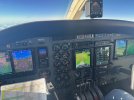
The SA227 that uses the -11 engines also used the red line computer as well.
 
I'm not sure on the 441's limits, and of course you will quickly figure these sorts of things out, but given your long range intents with the plane I'll provide what I did on the MU-2 which is probably similar applicable. Forgive me if I've told you this before, and you probably already know this.

The MU-2F I flew only had the "baby" -1s, and a ceiling of FL250. For the plane, the max L/D was 160 KIAS. Of course, I was generally doing long range flights. My most common "milk run" was Houston to Massachusetts, which was right at the IFR reserves limit provided that no alternate was required. I managed to do Houston to Maine non-stop with some more favorable tailwinds. So, I worked to maximize the range that I could out of it. On the MU-2, you could run as low as 96% RPM (max efficiency) and then 100% RPM was considered lower efficiency but best power.

What I found was the most efficient (i.e. longest range) was to run at 100% RPM, whatever EGT I would run (close to "redline" which on the MU-2 was more complicated), and then go to the highest altitude that would support while maintaining 160. That would be FL230 typically. When I got up to 165 (as fuel burned off) I'd get a step up to FL240 (wrong direction), and then repeat for FL250. I'd then pull back the props to 96% RPM as I burned off more fuel and increased speed, and if I really wanted to maximize it, would then start to pull the power levers back to maintain 160 as I got closer to the destination. I could get as low as 48 GPH combined for 250 KTAS, with a full load of dogs. That would be towards the end of the flight. To help also, I'd file a route that would keep me away from ZDC, who would always give me a reroute adding 100+ nm. By adding about 5 nm to the great circle route I could stay out of their airspace. I'd usually get cleared direct out of Houston, and then had to explain I needed to stay on my filed route.

Basically, running the higher power RPM was better to start out with because it would let me fly higher, which was more efficient for the airframe. When I first started flying the MU2, I tried running 96% more basically as soon as I could (figuring better efficiency), and ultimately found that was less efficient because it would keep me at a lower altitude and climb slower.

This assumed no winds and/or tailwinds further up high, which of course impacted things. Westbound can change the equation some. But, one of my favorite things about turboprops (and the 441) is that it's got a very nice altitude range, so you have lots of room to play with. The fuel penalty isn't as bad as it is on jets for being down low.

Another fun memory was arrivals in icing, since I could push right up to 250 KIAS down low and ice generally wouldn't accumulate at that speed. Then slow down for the ILS, easy to do with the big props.

Ahh, memories. Good times. Thanks for indulging me in revisiting those.
 
Ahh, memories. Good times. Thanks for indulging me in revisiting those.
What ever happened to the MU2? I remember you getting it, then I went MIA from the forum for awhile. Lmk if there’s already a thread on that.
 
Whatever book those schematics are out of, I wish every plane had one. Did the insurance cut you loose after simulator school based on your 425 time or were there more hoops to jump through?

They're out of a training manual from a simulator school. Only stipulation the insurance company had was I had to complete an initial training program at a school on their approved list. 5 days of classroom and simulator work and I was "qualified". I'm still going to fly the first 20-25 hours with a mentor/safety pilot and shoot a bunch of approaches. I'll start with some pretty high personal minimums and then work down over the first year of operation.

I hadn't flown much in the last two years. I did a few hours in a 172 with an instructor, the simulator school counted towards my BFR, and I got an IPC in a different simulator. I was really thrilled with the simulator work. I figured after that much rust had accumulated that my instrument scan and ability to be ahead of the plane was going to be rough. It all came back really fast and Sim school ended with an engine fire at rotation, cross tie buss failure, and an inverter failure. I had no lights, no avionics except a com, and all I had left was the compass, artifical horizion, and airspeed indicator. That led to an engine out PAR approach to 500-2 without flaps and doing the emergency gear extension on short final. We "survived". I have to admit that my shirt very plainly showed that I was working for it and putting my deodorant to the test.
 
What ever happened to the MU2? I remember you getting it, then I went MIA from the forum for awhile. Lmk if there’s already a thread on that.

About 5 years ago I decided to shut down Cloud Nine. This required that I dissolve all the assets of the non-profit, of which the MU-2 was one. I owned the Aztec which was the first plane the organization used, but the 310 was then donated and after that, the 414 and MU-2 were owned by the non-profit, not by me.

Even if I had owned the MU-2, it would've been difficult to justify keeping without a mission to keep it going. Our personal travel needs wouldn't justify it, and it's not cheap to own, albeit extremely economical for what it is and what it's capable of.

So are you going to use the proceeds from unloading the race car to buy a plane, like I did?
:biggrin:
 
  • Haha
Reactions: Ted
They're out of a training manual from a simulator school. Only stipulation the insurance company had was I had to complete an initial training program at a school on their approved list. 5 days of classroom and simulator work and I was "qualified". I'm still going to fly the first 20-25 hours with a mentor/safety pilot and shoot a bunch of approaches. I'll start with some pretty high personal minimums and then work down over the first year of operation.

I hadn't flown much in the last two years. I did a few hours in a 172 with an instructor, the simulator school counted towards my BFR, and I got an IPC in a different simulator. I was really thrilled with the simulator work. I figured after that much rust had accumulated that my instrument scan and ability to be ahead of the plane was going to be rough. It all came back really fast and Sim school ended with an engine fire at rotation, cross tie buss failure, and an inverter failure. I had no lights, no avionics except a com, and all I had left was the compass, artifical horizion, and airspeed indicator. That led to an engine out PAR approach to 500-2 without flaps and doing the emergency gear extension on short final. We "survived". I have to admit that my shirt very plainly showed that I was working for it and putting my deodorant to the test.
They didn’t throw in a design max crosswind component and under heavy icing conditions with severe ground shear?!! (I kid), but I would actually abdicate for including the loss of airspeed indicator in a safe training environment..

That airplane looks NICE!!, I can’t help but think.. a corporate logo on the side, a weekly or biweekly regional route, say stops in Iowa, Ohio, Colorado, Utah, Washington with a hired pilot, it would make for a nice little private “regional airline” or more appropriately a write off expense for its purchase/maintenance/storage. If you could happen to find a company that currently has high value personel flying commercial on that route fairly frequently and could also justify the need for rapid response capability (say avian influenza, industrial scale chemical leaks, full automation system network crashes…) and contract with them to essentially cover the costs outside of private usage.. that would be an angle I would personally look into…

And you would do this Part 91?
 
Yes, if the cost offsets for the corporation were anywhere close to covering a significant portion of the expenses and could potentially lead to carrying paid passengers and expanding/diversification into custom tailored air routes. There is also a very large incentive from a Human Resources perspective to improve employee retention for a company that agrees to do it when their frequently traveling workers are being flow in a nicely equipped “private charter” instead of commercial. A person who is flown in a “private aircraft flight” for their work is more likely to not even look at working for other companies. I know of an industrial scale sanitary stainless steel welding company based in Seattle that flys its crews in a company owned aircraft and have had many informal talks with many of its workers and it sale manager over more than a decade, and it has always been a point they have expressed as one of the reasons they work for the company. (Going from fly in a corporate airplane to commercial.. while trivial has an very large subconscious trigger effect of “going backwards).
 
After a bit of a hiatus I finally got a plane back in the hangar. First few flights over the last few days while we were trying to get the closing done and then the flight back to my home base yesterday. The plane and I fell in like long lost old friends. I've got a few things to sort out, but it was a pretty clean process. Managing the Garretts is certainly different than the Pratts in the 425. This is my first plane with a digital autopilot and that is a nice upgrade. Most importantly SWMBO is very happy and ready to spend less time on the airlines.


View attachment 146699View attachment 146700View attachment 146701
it looks nice. Congrats!
 
Yes, if the cost offsets for the corporation were anywhere close to covering a significant portion of the expenses and could potentially lead to carrying paid passengers and expanding/diversification into custom tailored air routes. There is also a very large incentive from a Human Resources perspective to improve employee retention for a company that agrees to do it when their frequently traveling workers are being flow in a nicely equipped “private charter” instead of commercial. A person who is flown in a “private aircraft flight” for their work is more likely to not even look at working for other companies. I know of an industrial scale sanitary stainless steel welding company based in Seattle that flys its crews in a company owned aircraft and have had many informal talks with many of its workers and it sale manager over more than a decade, and it has always been a point they have expressed as one of the reasons they work for the company. (Going from fly in a corporate airplane to commercial.. while trivial has an very large subconscious trigger effect of “going backwards).

See 14 CFR Part 119.

Now back to admiring the C441. ;)
 
Back
Top