NBC Media Helicopter Down Los Angeles

FPK1

Line Up and Wait
Joined
Apr 21, 2021
Messages
912
Location
Orange County, CA
Display Name
FPK1
Home Airfield
KFUL
Well could be a few things. You can hear the engine rev high and then the audio (beeping for overspeed). That’s followed by a rotor droop audio (steady tone). So could have been a FADEC fail and went high. With that slight right yaw, could have been a high speed shaft fail or o believe they call it a “secondary shaft” @Bell206 on the Astar? Or an overspeed without a FADEC fail.

At any rate, they were coming down in a vertical auto and at that altitude, not much you can do. I’d say they’re no more than 500 ft so well in the avoid range (HV dead man’s curve)for what appears to be zero airspeed. Just not the place to be for engine or even tail rotor failures…RIP.
 
Last edited:
Looks to be N358TV, an AS-350. Last ADS-B data point showed a descent rate of just under 4,700 fpm. About 15 seconds from start of rapid descent to last data point.
 
Unconfirmed pilot and reporter
013842f0ec08dbf855d7d45da1375f24.jpg
 
With that slight right yaw, could have been a high speed shaft fail or o believe they call it a “secondary shaft” @Bell206 on the Astar? Or an overspeed without a FADEC fail.
Per the database its a B2 so no FADEC. Maybe a high side gov failure from the sound. Which if a stock B2 the throttle is a separate lever on floor next to collective. So would require moving hand off collective to reduce overspeed. Definitely a handful in that situation. It sounded like he got his RPMs back for a moment, but given there was one fatal on the ground wonder if he saw them and attempted to evade, losing his rotor speed again but a bit too high. Dense urban areas worse than mountain areas in my book. No place to go.
 
Surely seems to be more than just a flameout. I thought that at first, but when the horn sounds again for the second time I’m curious as to what creates the extra noise and shaking, or is the shaking just highly decaying rotor rpm?
 
At the time of the accident, VNY, which is about 5 nm ESE of the accident location, was reporting wind 170/8, altimeter 29.88. VNY FE is 802 ft.

From ADS-B data, N358TV had just crossed the Metrolink rail line heading south. Just prior to emergency, GS was 6 kts; altitude 1,760 MSL. Using VNY FE, that’s about 960 AGL.
 
Per the database it’s a B2 so no FADEC. Maybe a high side gov failure from the sound. Which if a stock B2 the throttle is a separate lever on floor next to collective. So would require moving hand off collective to reduce overspeed. Definitely a handful in that situation. It sounded like he got his RPMs back for a moment, but given there was one fatal on the ground wonder if he saw them and attempted to evade, losing his rotor speed again but a bit too high. Dense urban areas worse than mountain areas in my book. No place to go.
I believe the original B2 had non crashworthy tanks? Of course it could have the STC done though.
 
Surely seems to be more than just a flameout. I thought that at first, but when the horn sounds again for the second time I’m curious as to what creates the extra noise and shaking, or is the shaking just highly decaying rotor rpm?
Yeah 4,700 FPM vertically is going to be a rough ride. I’ve done vertical autos in the sim and once you droop it so bad you’re counting blades, she’s violent. Just getting the nose down and getting a little airspeed can make a huge difference in a successful auto from a high OGE hover.

Can’t tell if he got any engine power back but if he got into settling with power, that’s also a rough ride. I do that in the sim as well and the whole thing shakes.
 
Can’t tell if he got any engine power back but if he got into settling with power, that’s also a rough ride. I do that in the sim as well and the whole thing shakes.
Having done a little bit of work with helicopters doing aerial photography work, the whole settling with power deal, especially seeing that they appeared to be in a near hover in the video footage, probably wouldn't help a mechanical failure if I understand it correctly. I hate hovering at altitude and prefer the pilot keep some forward speed just in case.
 
And no alitutude for autorotation.
It's sad when circumstances preclude a pilot's or a crew's ability to fight back. One likes to think that possibility will be afforded to us, but often fate decrees otherwise.

RIP
 
Having done a little bit of work with helicopters doing aerial photography work, the whole settling with power deal, especially seeing that they appeared to be in a near hover in the video footage, probably wouldn't help a mechanical failure if I understand it correctly. I hate hovering at altitude and prefer the pilot keep some forward speed just in case.
Well depends on the mechanical failure. Technically if it were an engine failure, VRS wouldn’t occur because it requires some power applied. But I’ve also read differing opinions on that in that it can occur briefly just prior to rapid rotor decay.

The big thing in this is as you said, high hover in the shaded HV diagram isn’t the place to be. Even if that were some kind of station policy I wouldn’t follow that. Unless I was above 1,000 ft, I’d always have some kind of forward speed in a SE helicopter. Obviously there are some ops (sling loads, power line maint) that require to be in that area but this ain’t one of them.
 
I've read about zero speed auto rotations, can someone comment about that?
Well I take it you know what an autorotation is? In this case, the aircraft is hovering and has has some sort of power interruption. Personally I’m leaning towards engine gear box / output shaft (goes to xmsn) failure. With a power interruption, your only option is to autorotate. In this case, instead of coming down at say 60 kts at a nice 1,800 FPM ROD, they came down vertically and 4,700 FPM. In a vertical auto with zero airspeed, you’ll get extremely high rpm but crazy decent rates (3,000-7,000) depending on helicopter. Unfortunately the increase in rpm is no match for the inertia of coming straight down. From an IGE hover you can pull off a successful auto but from several hundred feet OGE, odds are slim. Rotor decay is rapid and it’ll have little effect in arresting the descent rate. In the case in question, in appears he got the collective down because the low rotor audio (steady tone) went away. Unfortunately down low you can hear it returning and still probably 100 ft up. That’s because he’s drooped the rotor again because that collective is up in his arm pit. Once you run out of rotor Nr, she’s in free fall.
 
I believe the original B2 had non crashworthy tanks? Of course it could have the STC done though.
Factory B2s had the standard fuel tanks. But technically your 407 fuel system only has a partial ELOS for the Part 27 fuel system crashworthiness. If you really look at the numbers and specific failure causes, theres a lot more going on than the fuel tank breaches and instantly catches fire. And with pressure fuel systems, having a crashworthy fuel tank doesn't mean you won't catch fire, unfortunately.

Can’t tell if he got any engine power back
Look at the blades. They were not driven when it hit. And given he got his RPM back when the horn went off, I think what he saw below caused him to react too early, whether that was the people or Connex's below him. I think if he had a throttle on the collective, even a B3, he wouldn't have lost those initial seconds dealing with the overspeed. Regardless, have known a few long-liners who had the donkey die on top of 200' lines and get it down to fly another day. So its doable.

And to note, there is some discussion that this B2 had a Super D conversion which puts a Lycoming 101 in it.
 
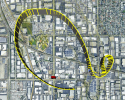
They had been doing several wide, clockwise orbits around the scene at around 60 knots. About two minutes prior to the crash, they broke out of that and did a narrow counterclockwise 360° turn at around 20 knots. Around 90 seconds later is when the video above picks up with the audible engine changes and rotor speed warning, leading to the descent. In a longer video, you can hear the reporter mention that the camera angle worked better, possibly in conjunction with that maneuver.

That’s not to imply a correlation with the presumed mechanical failure, but it might explain why their airspeed was pretty low.
 
It's sad when circumstances preclude a pilot's or a crew's ability to fight back.
Know little about helicopter operations, except there are combinations of altitude and forward speed that preclude safe recovery.

It's one thing if you're required to fly in those critical zones while trying to rescue someone; it's another when you are one of "N" news helicopters trying to get exciting footage for the six o'clock news. Seems to me that this is *exactly* where a drone should be deployed, instead.

Ron Wanttaja
 
In this case, instead of coming down at say 60 kts at a nice 1,800 FPM ROD, they came down vertically and 4,700 FPM.
The data in my post #5 may have been misleading. In that post, I provided a single data point at the end of flight showing the instantaneous descent rate of just under 4,700 fpm. However, that same data point showed a GS of 43 kts.

From the time of the onset of the emergency until crash, the aircraft traveled about 920 ft east to west. During that excursion, speed built rapidly as did the descent rate with GS peaking at 47 kts.

Curious why the aircraft rapidly deviated from its pre-emergency southerly track to the post-emergency westerly track.
Ok, I was just going by the video. Doesn’t look like he got much forward speed prior to impact. If he was indicating in the 40s, 4,700 FPM wouldn’t make sense if in a stable auto. But, if he pulled collective too early or for some reason the freewheeling unit didn’t disengage, that would make sense. Just in a hurt locker to have a failure that low. You’d have to do everything perfect to pull it off.
 
Seems to me that this is *exactly* where a drone should be deployed, instead.
Except there's no single answer to this. While the numbers of news helicopters has declined in the past 10 years, current drones do not have the physical capabilities to replace the helicopters in mature dense urban markets. Plus the FAA currently does not allow drone ops over certain high density urban areas. Its the same reason why large city police forces still use helicopter based ops vs all drone. But one day I think that will change as the VTOL/UAV technology matures.

Curious why the aircraft rapidly deviated from its pre-emergency southerly track to the post-emergency westerly track.
A clear place to land?
 
Except there's no single answer to this. While the numbers of news helicopters has declined in the past 10 years, current drones do not have the physical capabilities to replace the helicopters in mature dense urban markets. Plus the FAA currently does not allow drone ops over certain high density urban areas. Its the same reason why large city police forces still use helicopter based ops vs all drone. But one day I think that will change as the VTOL/UAV technology matures.
I agree, but for the cost and liability of ONE single crash, it would probably be worth having say 6-10 docked higher-capability drones (think Walmart-sized) that would have the ability to launch and cover a 5-10 mile radius for static location events. The bigger issue is not the location, but the battery duration, and stuff like a car chase would still make more sense from a helicopter.

The worst thing is that right now the FCC is threatening the best of those dockable drones... which stinks because I'd honestly like to deploy a few of them for our aerial photography business.
 
This is the track of the last four minutes of the flight. The location of the bus accident they were covering is the red icon. The left turn-out maneuver began roughly 1 minute and 50 seconds prior to the accident, or roughly 1 minute and 24 seconds prior to the first change in engine sound:

1789597821927.png

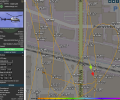
This is a close-up of the accident sequence from ADS-B, showing the time, altitude, and groundspeed stamps. Working backwards from the last ping at 1:55:25Z and the end of the Twitter video above, I used a green arrow to depict the timestamp correlating with the beginning of the video (33 seconds prior, at 1:54:52z), and a red arrow depicting the timestamp correlating with the first change in engine sound, 7 seconds later (1:54:59z), from the same video:

1789597504616.png


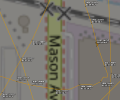
Even closer view so you can see all the timestamps:

1789598123823.png

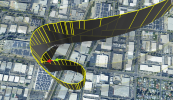
This is an oblique angle (north is to the right) of the same, with the marks from above superimposed.

1789597382342.png
 
I agree, but for the cost and liability of ONE single crash, it would probably be worth having say 6-10 docked higher-capability drones (think Walmart-sized) that would have the ability to launch and cover a 5-10 mile radius for static location events.
Except that could be said for most uses of aviation. But given your average new helicopter flies 4-6 hours daily and covers 100s of square miles in these large dense urban areas, you would need 100s of walmart drones to cover only a small portion of that aerial coverage. And 100s of Part 107 pilots to support them. However, the FAA is working on a proposed Part 108 to expand drone use but currently it does not permit flights over areas like LA which support I believe 3 separate news helicopter ops.
 
Except that could be said for most uses of aviation. But given your average new helicopter flies 4-6 hours daily and covers 100s of square miles in these large dense urban areas, you would need 100s of walmart drones to cover only a small portion of that aerial coverage. And 100s of Part 107 pilots to support them. However, the FAA is working on a proposed Part 108 to expand drone use but currently it does not permit flights over areas like LA which support I believe 3 separate news helicopter ops.
I agree, and that's why our manned aircraft are still very, very viable for aerial photography, but for certain dense areas, it would make sense. A DJI Matrice falling is simply not going to do the kind of damage a helicopter crash can obviously do.
 
Except that could be said for most uses of aviation. But given your average new helicopter flies 4-6 hours daily and covers 100s of square miles in these large dense urban areas, you would need 100s of walmart drones to cover only a small portion of that aerial coverage.
Yes, but: How many of those hundreds of square miles actually appear on the news each day? How much Jet-A is being burned in the hope that somewhere, someone will start a police chase or do some other act worthy of making it on the air?

"We're hovering live over downtown Los Angeles, where five hours ago, a tragedy occurred...."

Understand there are some regulatory hurdles, but one has to wonder if the regulations are causing more issues than they solve. I wonder if the drones could be carried in the helicopters; which land nearby and deploy the drones rather than hovering for hours over a crash at an intersection.

Put a Police helicopter over the scene with a camera operator who provides coverage for anyone who wants it.

The current situation largely came about because of competition; Channel 7 wants to boast that it has a helicopter like Channel 11 does. I doubt the public knowledge is boosted very much. Les Nessman had the right approach.....

Ron Wanttaja
 
A DJI Matrice falling is simply not going to do the kind of damage a helicopter crash can obviously do.
Except to carry the required equipment to operate in those environments those drones would be closer in size to the helicopter than a DJI. Regardless, this discussion has been going on for several years with several lawsuits being filed over the use of drones if you're interested in researching it.

Yes, but: How many of those hundreds of square miles actually appear on the news each day? How much Jet-A is being burned in the hope that somewhere, someone will start a police chase or do some other act worthy of making it on the air?
For the same reason a reporter will wait a whole day outside a courtroom or other location hoping to get the scoop. They've been flying helicopters over LA and other cities to get that scoop for 60+ years, which is why they call themselves aero-journalists. I lost a friend in the mid-air over Phoenix between two news helicopters and have seen both sides to the equation. But so long as you see 100 reporters yelling questions at people to be heard, you'll see helicopters above jockeying for that same scoop. Just ask the crew that scooped OJ's low-speed chase live on air for 22 minutes after being airborne for several hours. And when it was said and done there were 20+ helicopters in the air following also. Definitely a different part of the industry.
 
Know little about helicopter operations, except there are combinations of altitude and forward speed that preclude safe recovery.

It's one thing if you're required to fly in those critical zones while trying to rescue someone; it's another when you are one of "N" news helicopters trying to get exciting footage for the six o'clock news. Seems to me that this is *exactly* where a drone should be deployed, instead.

Ron Wanttaja
While I haven't seen any reports other helicopters were present during yesterday's incident, the July 2007 midair collision between two news helicopters in Phoenix is a tragic example of those pressures you mention.
 
Yes, but: How many of those hundreds of square miles actually appear on the news each day? How much Jet-A is being burned in the hope that somewhere, someone will start a police chase or do some other act worthy of making it on the air?

"We're hovering live over downtown Los Angeles, where five hours ago, a tragedy occurred...."

Understand there are some regulatory hurdles, but one has to wonder if the regulations are causing more issues than they solve. I wonder if the drones could be carried in the helicopters; which land nearby and deploy the drones rather than hovering for hours over a crash at an intersection.

Put a Police helicopter over the scene with a camera operator who provides coverage for anyone who wants it.

The current situation largely came about because of competition; Channel 7 wants to boast that it has a helicopter like Channel 11 does. I doubt the public knowledge is boosted very much. Les Nessman had the right approach.....

Ron Wanttaja
There used to be a News "Chopper" in the hangar across from me. It would generally go out for the morning traffic report and, I assume,
While I haven't seen any reports other helicopters were present during yesterday's incident, the July 2007 midair collision between two news helicopters in Phoenix is a tragic example of those pressures you mention.

I think there were 3 others, two from LA and one from San Diego.
did the same for the evening one, but sat around a lot unless something was happening. I expect that pilot and reporter were on the clock even when not in the air.

These happen rarely. Of course sad, especially knowing that a young lady newly engaged perished, when it happends. But Air Ambulance helos crash and I wouldn't expect anyone to call for them to be out of the airspace.

I do somewhat agree that it might be a good idea to limit how many can be on station and have them pool their feeds.
 
Now that I look at the ADS-B data, they weren’t as low as I thought. I’d say 800 agl? Don’t have a an Astar HV diagram on me but they’re probably out of the avoidance area. Still not optimum in the event of power failures though. You’d have to be Johnny on the spot with getting the collective and nose down to get any acceptable airspeed.
 
The helicopter was just refuled out of Van Nuys and I know that, here in the states, fuel contamination is extremely rare, but I suppose the NTSB won't rule it out.
 
The helicopter was just refuled out of Van Nuys...
ADS-B history shows the accident aircraft departed from Whiteman (WHP) at 0024Z to begin the accident flight. Accident occurred at about 0155Z, giving about 90 minutes in the air at the time of the accident.

I don’t see how the accident aircraft was refueled at Van Nuys (VNY).
 
1789608086755.png

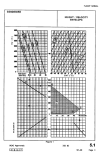
This chart? That's according to the google-fu for the AS350 B3.

In general it looks like at the heaviest 500 ft is zero margin with a pretty steep slope to build fwd speed. 1k AGL would have been way easier to get a survivable glide/autorotation, if I'm reading that chart correctly.

I'm just some casual observer on this one, but OGE in non-CASEVAC life sounds like all hat no cattle affair to me, especially if you ain't getting a DFC out of the deal. I figured with how gucci modern gimbaled/gyro stab cameras are, they could keep scooting around and still get the jist of whatever like and subscribe lookie loo their employer was trying to get.
 
Back
Top