[NA]Hearing Aids

Let'sgoflying!

Touchdown! Greaser!
Joined
Feb 23, 2005
Messages
21,872
Location
west Texas
Display Name
Dave Taylor
Home Airfield
KMRF
I want to learn about hearing aids.
Are the $5000 ones really 20x better than the $250 ones for the average person?
Is the frequency testing, and device fitment essential for good results?
I was exposed to ModernHearing aids and they have a decent sales pitch (normally $500, lately $250). Anyone used them? (I have slight deficiency at this point)

I would be looking at function/comfort/price/aesthetics in that order.
Why would I need to BT to my iphone?
 
My understanding wrt one of the most important purposes of hearing aids is to be able to hear/understand speech. And that means being able to hear the frequencies associated with annunciation. Hearing the difference between Gary and Jerry and Kerry requires being able to hear certain frequencies. Just SAYING EVERYTHING LOUDER doesn't help if only some of important frequencies have been lost (i.e., the hearing loss isn't flat across the spectrum).

so, yeah, testing is necessay. Being able to program/configure the device to the user's hearing is important.
 
1 I have an expensive one, Resound, and they are at least 7 years old and work really well. Have no idea how they compare to less expensive ones. I have no idea how to determine price versus cost. I looked on Consumer Reports and found nothing.

2 I dont wear them while flying - they amplify wind noise and that confuses the Bose headset.

3 I find the BT useful, using Ipad I can do stretching routine or listen to stuff without bugging wife. I think BT is a useful option. Dont use it on my iphone, but ipad defaults to it.

4 I suspect the most important aspect of getting them is the person adjusting proper amplification options.
 
I’ve owned two pair of top of the line hearing aids. The second and current pair being ReSound. Both have excellent sound quality and tune ability (both cost around $6.5k retail but I got a professional discount). My rechargeable ReSound pair seemed to lose effectiveness about 5 years in. I was told that they could get ‘weak’ with battery age. I can’t work effectively without them and decided to buy a pair of $1800 direct to consumer aids branded Jabra SN to wear while the others were being overhauled. They are made by ReSound and look almost identical to my audiologist supplied pair (actually, there are only three players in the market and all Rx aids are made by one of them). I underwent a self administered online hearing test that programmed them. The verdict? I never got the ReSounds repaired. Although the sound quality is a little more ‘tinny’ than the high dollar pair, the cell phone app and bluetooth features are much more functional than the older ReSounds. To get the same function I would have to purchase a new, more current set costing at least $6k. The juice ain’t worth the squeeze, in my opinion.
 
The more expensive ones provide more discrete tuning of the amplification across different frequency bands to match the user's individual hearing loss. The cheap ones are simply tuned to the most common hearing loss pattern.

I've been using Eargos, which are direct to consumer, and am mostly happy with them, once I accepted that they'd need to be replaced once or twice during the warranty period due to diminishing battery life. They're about the most compact aids in existence, no bluetooth. They use a built in hearing test, or Eargo can program them with the results of a professional hearing test.
 
I want to learn about hearing aids.
Are the $5000 ones really 20x better than the $250 ones for the average person?
Is the frequency testing, and device fitment essential for good results?
I was exposed to ModernHearing aids and they have a decent sales pitch (normally $500, lately $250). Anyone used them? (I have slight deficiency at this point)

I would be looking at function/comfort/price/aesthetics in that order.
Why would I need to BT to my iphone?
Never having had hearing aids before, I decided to give the OTC variety a try. Don't remember how I chose them, but I wound up buying a pair of the Nebroo brand.
Most reviews I have seen do not mention them, but I did see one in which they came out on top! Bottom line, they work, and definitely improve the "can't understand
what people are saying" problem. The acid test was being able to converse normally with my wife in a noisy restaurant So I am a satisfied customer. Cost was around $100.

As for the Bluetooth capability (mine do not have it) - if you put the phone to your ear the non-Bluetooth hearing aid will squeal. However, you can always use the speaker,
which works OK in my experience.
YMMV.
Dave
 
Philips, Jabra and Sennheiser at Costco, $1400-1700. The staff aren't audiologists but are licensed hearing specialists. They conduct a very good hearing test and "tune" the hearing aids to you. Come back anytime to "re-tune" and they remind you of a yearly hearing test, all free. I don't wear them flying, the Lightspeed headset works just fine. As a pax, I use my Apple Airpod Pro 2 and turn on the ANR & music. $250 (often on sale) at Costco. I may pick up a pair of the Pro 3 just for the better battery life. The Pro 2s sorta died at hour 3.6 of a 4.5 United flight.
 
I bought my first and so far only pair of aids coming up on 7 years ago this summer.
I have no personal experience with OTC aids except my 84yo mom wears them. I'd say that they help ok, but not as good as "real" ones.

"are the expensive prescription ones 20x better?" My guess is no, but they are probably many multiples better, especially for a new hearing aid wearer.
but
you can get good professionally fitted aids for a lot less than that top number

I've known a few people that have had poor experiences with hearing aids, and I think it's because they haven't gone back to work with the audiologist to get them set-up properly. That's where I suspect even the really good OTC aids will land. Also, the higher end aids are more likely I'd guess, to have better processing of automatic programming features, noise cancellation, sensing and switching between "programs", etc...

my experience
I'd gone to an audiologist for a test 7 years ago now... only a test... just to see where my hearing levels were since it had been several years since I'd had a test at work. I knew I had a little loss but didn't think it was anywhere near needing aids yet. I had no thoughts that I even needed an aid and no plans to buy so I had done no research at all.

She sent me home in a loaner pair. wow.

Since i had done no research at all, I guess you can say it ended up being an impulse buy. I paid about $6,000 for the pair. Then the line models
I learned later that the real cost of the aids is about half that....$3,000
Many audiologists bundle the cost of the aids with baked in service agreements...unlimited visits for adjustment, etc. + damage and loss insurance + loaner sets if they get sent away for repair, etc...
My understanding is that today's top-of-the-line aids will still be in roughly that same ballpark price range.
In hindsight I really wish that I had understood this bundled pricing structure better. For me at the time it was good because it took many visits to the audiolgist to get the setting tweaked as I worked through the long acclimation process. That said, I would have preferred knowing what I know now to pay the $3,000 for the hardware and pay as you go for follow-up visits, etc...

I plan to go to Costco pretty soon to get my next pair of aids. What they sell is a model that's about 1-2 steps down from the current top of the line but priced more like $1600. I reckon that it's still several generations more advanced than my current aids so it should be an improvement
and now that I'm experienced, I know what to expect and don't feel that I need the professional hand-holding quite to the same level that I did before, so worth a shot I suppose
 
Check out this thread.


I now have 2 pair of Pro 3’s, so I can rotate them over the course of the day. Still, only $500 for both, or less on sale. They actually work better than my 7 year old Resounds.

I’d suggest trying them. They’ll give you a window into how hearing aids work by enhancing frequencies you may be deficient in.
 
My Widex (left ear only) is around 5 yrs old now. It works fine enough.

In thread mentioned above, I related my experience with the AirPod Pro 3. They are excellent. I don’t think they work quite as well as a dedicated hearing aid, at least for me, but they are much better at streaming music than an aid.

When put into “hearing aid” mode you can enter the values from your audiogram. The corrections are applied to whatever you stream, so music and podcasts are corrected, that’s really nice. Plus, you get the bonus of a pretty good noise cancellation function.

Definitely worth checking out.
 
(I have slight deficiency at this point)

Likely hearing aids will help you. I have a pair of Oticons which are nice, but with my particular hearing issue don't really help me all that much. Conversation in a restaurant? Forget it. One feature that IS nice--they wirelessly connect to my iphone and the phone audio comes through them. This makes hearing the phone MUCH easier.

I have a sweet spot at about 1500Hz, with steep dropoffs at low and high ends.

Tim
 
I asked Costco about in-the-canal aids, the tech said they only work if you are weak on the lower pitches, not the higher ones.
Never heard that said before; seeking confirmation.
 
I asked Costco about in-the-canal aids, the tech said they only work if you are weak on the lower pitches, not the higher ones.
Never heard that said before; seeking confirmation.
Different styles of aids work better for specific hearing loss. In-canal aids can block outside sounds from getting in so they have to supply nearly everything you hear, BTE, and RIC (what I have for high freq loss) let outside sound in but add to it. The Costco guy might be right.
 
I've been using Resounds for the past eight years, first the Lynx 3D and now the Resound ONE.
While these are listed at around $5000, there are places you can get them cheaper. Costco sells rebranded ones and there are some discount companies (I use and recommend YesHearing.com) that sell them for much less.
 
The frequency response very much depends on the seal. My BTE RIC aids have four or five different dome designs with their various advantages and disadvantages. Of course, where the amplication is required depends on your hearing loss. Further, most aids are specifically designed to work well in the problem area: normal voice frequencies, rather than being overly concerned about fidelity across the spectrum.

A big advantage of the BTE aids is that many of them use multiple mics to enhance directionality when desired and reducing various noise sources such as wind. My current ones have two on each BTE part and one in the canal on the receiver. They also cross feed between the two ears. Things things are quite an impressive amount of compute power in a tiny package (especially when you realize a lot of it is battery).
 
Before I would commit to buying hearing aids, I'd get at least three pure tone audiometric tests, several weeks apart, to establish a baseline for how your hearing is. I've been in a hearing conservation program at work, for over twenty years and we get tested every year. If there is a deviation of more than 10 dB in any tone, then we get retested about 3 weeks later, If the results are again 10 dB or greater different from the previous year's testing, then it get reported as an OSHA event.

Knowing your baseline and which frequencies are affected and by how much can help you decide how much of a hearing aid you actually need, over what the store wants to sell you.
 
I asked Costco about in-the-canal aids, the tech said they only work if you are weak on the lower pitches, not the higher ones.
Never heard that said before; seeking confirmation.
I don't know if that's universally true, but it may be true for the ones they sell.
Different styles of aids work better for specific hearing loss. In-canal aids can block outside sounds from getting in so they have to supply nearly everything you hear, BTE, and RIC (what I have for high freq loss) let outside sound in but add to it. The Costco guy might be right.
The Eargos are CIC (completely in canal), but have what they call "open petals" (like "open domes" but much more open area) and they don't block any outside sound. But Eargo does say that they're only for "mild to moderate" hearing loss.
 
I have an audiologist appointment in a bit over a week. I’ve taken hearing tests before, the tone only tests, and they don’t show a significant hearing loss… but I can’t understand a bloody word anyone says if there is any sort of background noise. I can hear mechanical and electronic noises just fine, but conversations are beyond cryptic. I made it a point to look for an audiologist who doesn’t sell a particular brand of hearing aids, and will make sure to get the complete report and shop around. I understand the value of paying professionals to do what they do that I can’t, but I also understand the screwing that goes on with hearing aids and all medical devices.

So, this will be fun. Who knows? Maybe I’ll find out I can hear fine, and just don’t care what anyone is saying.
 
I have an audiologist appointment in a bit over a week. I’ve taken hearing tests before, the tone only tests, and they don’t show a significant hearing loss… but I can’t understand a bloody word anyone says if there is any sort of background noise.
The test the audiologist gives is far more comprehensive than the simple tone threshold tests the tech in your family practice office does.
 
Both me and my father told our respective audiologists that we were there because our wives told us we can't hear them. They say they get a lot of that.

1779332410572.png
 
I think my hearing loss is still considered moderate, but I struggled with the word recognition portion of the test
Here's something that was posted on the homebuilt airplanes forum recently (thanks @rv7charlie):


"... vowel sounds (aeiou) are quite easy to detect, but they're basically just volume, with minimal communication value. Consonants (rest of the alphabet) are what really define the sound of words, and as we miss consonants more and more, we understand less and less of speech. A quick search turned up this article, which seems to do a pretty good job of explaining what can cause loss of consonants. The biggie that directly applies to us is 'signal to noise', due to the very noisy a/c environment. What's not discussed is our hearing loss factor.

"With noise-induced hearing loss (what most of us have), the 1st thing to go is the 3kHz-6kHz frequency range. It goes before other frequencies due to the coiled shape of our inner ear; the nerve cells that detect those frequencies are a 'straight shot' from the ear canal, so sound energy hits there hardest and basically bounces into other areas with reduced energy for the rest of the hearing spectrum. Those frequencies are where consonants live; for example, without the 'edge' of the 't' sound we just hear the vowel that follows. Going back to the previous paragraph, it should begin to make sense, why 'I can hear you fine, but I can't understand what you're saying'. Because we've lost that upper mid range of our hearing frequencies, we've lost the ability to detect the critical details when listening to speech."

1767629885324.png
 
I should suggest in addition to an audiologist exam, that you might well consider having a full ENT work up. My hearing loss was extremely assymetrical which is unusual for just noise/age related loss. They had me go in for some other tests including an MRI which showed a acoustic neuroma ON THE GOOD SIDE. That we've just been monitoring for years (hasn't changed). They did, however, during a subsequent MRI note a parotid tumor which I've had removed (benign thankfully).
 
I have an expensive set of Signia hearing aids,can’t compare to cheaper sets as this is my first pair. I had a work up by an audiologist,and these were recommended . I don’t wear them when flying ,they are Bluetooth and kill my phone battery if I use them when flying with a noise cancelling headset
 
For certain patterns of hearing loss, the audiologist will refer you for further evaluation, usually along the lines of ENT subspecialty eval and MRI. However, more typical patterns of hearing loss don't require further evaluation.
Virtually everyone, (well, ~75% of us) will have high frequency hearing loss above 8-12k. But, it's not really important for word intelligibility. In fact, in the old days, most phone telecommunications were all bandwidth limited as you could sandwich more conversations on a single line without causing intelligibillity loss.

But the problem isn't exactly just one of decreased hearing in a certain frequency level. It's rather that, as a certain point, you can't correct for the loss in the dynamic range. That is to say, in order to distinguish between a d and a t, you need the dynamic range, so to speak. Amplifying say a particular frequency also amplifies the noise as well. If your ear is 30 dB less sensitive at a given frequency, then yes, you can use a hearing aid with eq, but there are limits to how much eq you can add since, at some point, you'll just be amplifying noise. More sophisticated hearing aids can be directional and use noise cancelling features, but the OTC ones or the semi custom ones that you can get at Costo etc are pretty good.

1-See a good audiologist for a formal exam. Make sure the pattern of loss isn't worrisome (i.e. Ron's acoustic neuroma, or other...)
2-If the hearing loss is modest, I would try the Costco etc $1500 versions. Usually they let you trial them. If they work, why spend $5-8k...?
3-If you're a vet, check with the VA as they have a fairly liberal hearing aid policy, IIRC...I'm not a vet, but literally every patient I've taken care of who is a vet seems to have gotten a free pair from the VA...
 
Hearing aids suck the most important thing is to go to someone who you can trust to take care of you and the hearing aids they supply!
 
I’m biased but it’s worth getting bundled service, from someone with a good reputation, for your first pair. You’ll get priority and help when you need it. The big box stores sometimes won’t give you the time of day. After the first set you should know enough to shop wisely. Many audiologists offer an unbundled plan. As far as the $200 miracles, well, you get what you pay for: consumer grade junk. Would you replace your IFR gear with an iPad? As far as lifespan? Nothing but marketing lasts forever.
 
The issue is whether you are going to need a full ENT workup in addition to the audiology. If you just need the audiology, Costco, or one of the discount audiology places like YesHearing will work just fine. Both are well-versed at performing audiograms, and frankly, the guys at YesHearing did a FAR BETTER job at helping me select my aids than the people associated with my ENT office. On the other hand, TruHearing (which my insurer steered me to), is awful. I told them what I needed but they still routed me to an audiologist who was unprepared to fit me for the ones I wanted.
 
I used TruHearing as part of my BlueCross BlueShield benefits. Normally, they send you to a participating audiologist. In my case, I already had an audiologist office in mind, so I asked TruHearing about them. It was in their network so I requested that place. It worked out: TH providers give you an unbundled price, plus whatever negotiated price they have. I got a pretty thorough exam and a decent brand.
 
…
Why would I need to BT to my iphone?
I finally looked more closely at the OP.

BT to your phone is something that some people like to use, others don’t bother.

Apps: your aids might include an app for adjusting settings. This seems cool, but isn’t very convenient.

Streaming: you can stream music, podcasts, or phone calls to your aids. Music quality doesn’t seem as good as when using dedicated ear buds or AirPods.
 
I have mild/moderate hearing loss and bought the JabraEnhance 700. LOVE these. I had to work with getting the right wire-length and earpiece size, but I have been delighted with them. My father-in-law has very severe hearing loss, but I bought him a pair and took the hearing test for him (he's really poor with technological stuff) and "flunked" it so as to produce a profile for severe hearing loss. Down loaded the profile to his hearing aids, and he is now hearing much better. Not completely, the Jabras are not for severe hearing loss, but at their max power, he is able to follow most conversations.

These cost about $2000 and come with 3 years of free support from a licensed audiologist.
 
I have an expensive set of Resounds - they work OK. I have a $199 pair for emergencies- basically just increases volume. Hearing aids aren’t like glasses - Good for basic conversation and watching TV. I can’t go to loud concerts or loud bars/restaurants. All I hear is noise even with my expensive resounds. And I still have problems with people that have high voices.
 
I may be a low time private pilot with limited ability to contribute to braoder aviation discussions, but I would call myself somewhat of a super user when it comes to hearing aids. I am 49 and have been using various hearing aids for the last 12 years.

In actual fact, my loss of hearing and use of hearing aids is something that held me back from going for my private pilots certificate - I was under the impression that I would not be allowed to fly given that I am esentially deaf without my hearing aids.

A couple of things I have learnt over this time:

1) Number 1 by a long way: "Hearing aids are not a 'fire and forget' solution. It takes a long time and a strong relationship with a trusted audiologist to get them to work right for you. It is so difficult to explain what you are experiencing and it takes time to get it right. Something that is well fitted in an office, can be unbearbale when the dog barks at home or when you are walking down a street. Keep going back - you pay a lot for these things, expect the service and don't be satisifed until you are happy that they are working as you expect them to.
- take notes as you go through your day and explain this to your audiologist at you next appointment. Do your homework and you will see better results.
- mess around with the app and tell your audiologist what works and what does not

2) Yes, the better technology levels are worth it. Especially when you have more severe hearing loss. Get the best you can afford.

3) Read up about "real ear" measurements - In my experience it makes a signficant impact on how well your hearing aids are fitted and perform for you. Ask your audiologist if they do this - not all do. This was probably the single biggest improvement made for me.

4) Watch this guys videos - excellent info on different hearing aids available. https://www.youtube.com/c/doctorcliffaud?sub_confirmation=1

5) Carry a backup pair when you fly.

6) Personally I would not get non-bluetooth hearing aids - phone call clarity alone is worth it.

7) I have used, Oticon, Phonak and Signia. Your mileage may differ, but my Oticon More 1 have been phenominal for me. I absolutly abuse them and they have been going for about 5 years now.

8) Clean them regularly - they are sensitive devices - ear wax gets in there and they need to be properly cleanded at least once a week.

9) Get rechargeable ones.

10) Don't fall for the "You need to get used to them" or "they will not be as good as your hearing before you lost it" - that is BS that frustrates you and will make you not wear them or be satisifed with sub standard service - this is your hearing, your life and your money. Go back again and again and again.

Your quality of life should not be degarded by hearing loss. Mine was for many years and it took a lot of frustration the get it back to where it is today. My hearing loss without hearing aids is severe and with them I lead a perfectly normal life - other than swimming :) - but I am sure that will be resolved in the next few years ....

Hope that helps - I am passionate about this!

 
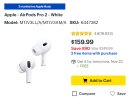
Shortly after I had an appointment with a Beltone audiologist - and ordering an $1800 pair of aids, I decided to try those $159 Apple EarPods. They, indeed, make a fine backup pair (I just have a bit of a problem with them falling out of my ears).

But - I did use the Apple app to "test" my hearing, much as the audiologist did with their fancy sound booth. Surprisingly, the results were nearly identical as far as the hearing loss and frequency distribution.

I will likely continue with Beltone in another year and a half - because our health plan covers up to $2000 for hearing aids every three years - which makes them, effectively, free for me. But the EarPods are a great backup/alternative.
 
Beltone isn't the best manufacturer and has been under fire over time for deceptive marketing.

I'm also a little unusual in that I have an Airlink2 (the bluetooth dongle that allows you to program the hearing aids) and the fitting software. I've even swapped out different receiver models. YesHearing even sent me replacement receivers for free when I broke the wire on one.
 
9) Get rechargeable ones.
agreed with every one of your points, except I wish I couldn't agree to this one.
but I have to agree with it since everyone seems to have stopped providing aids without rechargeable batteries...at least RIC aids
I am absolutley not a fan of rechargeables...not yet anyway, but it's getting closer.
Maybe when they get a full two-days worth of capacity AND the ability to ultra-quick charge to a usable capacity in just a few minutes without a dedicated charger unit.
but not yet.
that said, I understand that most of the newer ones need to be rechargeable now since they are becoming such power hogs with all the high-end processors...so oh well.
 
The audiology report was not surprising as to the start of the roll-off of my hearing, but I was somewhat surprised by the depth of the high-frequency loss. The audiologist who did the test and the ENT I spoke with afterward said I was a good candidate, and they could sell me a pair, and they'd probably be better than the Costco route, but I could try that too. My insurance plan will cover hearing aids provided through their network, at roughly double the cost of Costco's devices, and about 40% less than the place I went. So... I dunno. I've made an appointment with Costco's people, since it's free and of course they prefer their own "technicians" over actual.. you know... doctors, but whatever. I'll try theirs out and see if how they work in the real world.
 
Costco will take your doctor's audiogram. So will companies like TruHearing and YesHearing (I highly recommend the latter).
 
Back
Top