N/A: Any plumbers on here? Question about crack spackle...

FORANE

En-Route
Joined
Mar 7, 2013
Messages
4,457
Location
TN
Display Name
FORANE
Home Airfield
0a9
No, not that type of crack spackle! The pipe dope type of crack spackle...

We found our 2 inch PVC main supply line between the street and the house had developed a leak. Our supply line is about 1/4 mile long and has about a 300 foot elevation rise. I have a couple cutoff valves in the line and was able to isolate the leaking section to a pasture below the house.

Over Christmas we replaced about 650 feet with SDR-9 2 inch pipe. I crimped the ends with a brass crimp to 2 inch female NPT fitting. I screwed a 2 inch PVC threaded to slip fitting into that brass fitting for connection to the existing PVC pipe.

Problem I ran into was the PVC to brass threaded fittings leaking at the threads. I tried Teflon tape first which worked fairly well but leaked a little. Then I tried Rectorseal T plus 2 on the threads but that leaked much worse. Then I tried both but that still leaked. Then I tried Teflon tape plus an old tube of DuPont Teflon which worked.

Problem is I believe the city is pushing over 200 psi at the street and it's hard to get a seal on threaded connections. I tried to buy more DuPont Teflon but have learned that DuPont was sued for pollution related to their Teflon and have since stopped manufacturing the Teflon I used.

Here's what I used:
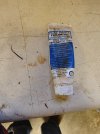
IMG20251227170657.jpg

What are you guys using that works for high psi threaded water connections?

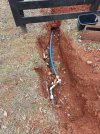
Here's the hill:

IMG20251224124153.jpg
IMG20251224124156.jpg
 
I can't help you (and most people that can are still recovering after last night), but this

sounds like one hell of a medical issue. :rofl:
The interwebs claimed Rectorseal would seal but after applying it liberally, I still had a leak...
 
Teflon tape works pretty well.
Didn't for me on this application. 2/3 of threaded connections at the bottom of the hill (higher psi) leaked and 1/3 at the top of the hill leaked.

Of course there are different brands of Teflon tape. I used what I had in the garage which was likely the cheapest junk money could buy.
 
My plumber also applied PTFE paste to the teflon taped threads, that combo has always served me well.
 
My plumber also applied PTFE paste to the teflon taped threads, that combo has always served me well.
Yeah, that's what ended up working for us. The Rectorseal T plus 2 and the tape didn't work however. The DuPont paste I had worked but I can't get it anymore. Just wondering if there's a well regarded alternative paste now. An Internet search suggested Rectorseal T plus 2 was well regarded but it just didn't work; it didn't want to stick to the brass threads and leaked.
 
Head pressure of water is 44 PSI per 100 feet. In your 300-foot rise that's 132 PSI, so the estimate of around 200 PSI in the system is probably pretty close.
 
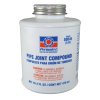
I feel your pain, been there many times around the farm. Best stuff I found is Permatex pipe joint compound. Black, sticky as hell and seals tighter than a frog's butt.
 

Attachments

  • 95019_loc_80045_ppm-tif.jpg
    95019_loc_80045_ppm-tif.jpg
    22.1 KB · Views: 6
No, not that type of crack spackle! The pipe dope type of crack spackle...

We found our 2 inch PVC main supply line between the street and the house had developed a leak. Our supply line is about 1/4 mile long and has about a 300 foot elevation rise. I have a couple cutoff valves in the line and was able to isolate the leaking section to a pasture below the house.

Over Christmas we replaced about 650 feet with SDR-9 2 inch pipe. I crimped the ends with a brass crimp to 2 inch female NPT fitting. I screwed a 2 inch PVC threaded to slip fitting into that brass fitting for connection to the existing PVC pipe.

Problem I ran into was the PVC to brass threaded fittings leaking at the threads. I tried Teflon tape first which worked fairly well but leaked a little. Then I tried Rectorseal T plus 2 on the threads but that leaked much worse. Then I tried both but that still leaked. Then I tried Teflon tape plus an old tube of DuPont Teflon which worked.

Problem is I believe the city is pushing over 200 psi at the street and it's hard to get a seal on threaded connections. I tried to buy more DuPont Teflon but have learned that DuPont was sued for pollution related to their Teflon and have since stopped manufacturing the Teflon I used.

Here's what I used:
View attachment 148592

What are you guys using that works for high psi threaded water connections?

Here's the hill:

View attachment 148593
View attachment 148594
Beautiful property. Sorry you had this problem. You should be good to go for a long time with a new line! Have any pictures of the connections and leaks?
 
Based on what I paid the last time I had to hire a plumber, I'd assume any plumbers on the board are out joyriding in their Gulfstreams today.
 
Permatex is the stuff however if it’s got to come apart you need a torch!
 
Beautiful property. Sorry you had this problem. You should be good to go for a long time with a new line! Have any pictures of the connections and leaks?
Thank you Gary. The house is a log house that's been featured in log homes illustrated magazine.

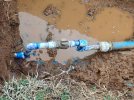
I hesitated posting my connections because they look ugly now. They were straight pipe to pipe through connectors, but after having to redo them a few times after the pipe was largely covered nearby the connection... I ended up putting in an easier to glue U shape so I didn't have to free up now covered pipe. Here's the connections with cutoff valves to help isolate when a leak occurs. You'll notice blue PVC cement on the lower connection because the city's meter cutoff didn't stop all flow. So, I had to glue it with some water running through the pipe. The glue joints all held. It's just the threaded joints that failed.
IMG20251226155122.jpgIMG20251226130834.jpg
 
Didn't for me on this application. 2/3 of threaded connections at the bottom of the hill (higher psi) leaked and 1/3 at the top of the hill leaked.

Of course there are different brands of Teflon tape. I used what I had in the garage which was likely the cheapest junk money could buy.
That is some high pressure. It sounds like your problem may be bad mating between the PCV and brass threads. That's going to be problematic regardless of the sealant material. One solution might be to use threaded SCH 80 threaded connections, vs SCH 40 which looks to be what you are currently using. Metal to plastic transitions can be problematic.
 
Install a critical orfice upstream to reduce pressure (it that's the only tool available....)
 
Install a critical orfice upstream to reduce pressure (it that's the only tool available....)
Does that work with a 300' vertical rise? He needs about 130 PSI at the foot of the hill just to get any water to the top of the hill. Any pressure above that is the pressure his home experiences.
 
You need to put all the male threads into the female fittings….a work bench vice is great for this. So tight you feel like you are going to break the plastic. Bigger stuff 2” plus is much harder to keep from leaking. Love to see the plastic into metal…. I see metal into plastic all the time it’s wrong and a ticking time bomb.


Why not a plastic glued ball valve?
 
I don't know about its use with plastic, but the best pipe sealant I've used is Loctite 577. It is approved for drinking water. Believe it requires the threads to be dry. Found it searching for people trying to get poorly manufactured valves to work at high pressure. It's available from McMaster.
 
Not cheap, but what I would do if I owned that property and did not want to ever deal with it again. Metal pipe it up to the service connection. Ideally sweated fittings on copper or brass tubing, but budget wise probably schedule 40 iron pipe, then make the transition to the material of your choice were the pressure is not so high. That much of pressure head is going to continue to cause problems with any “cheap” solution.
 
You need to put all the male threads into the female fittings….a work bench vice is great for this. So tight you feel like you are going to break the plastic. Bigger stuff 2” plus is much harder to keep from leaking. Love to see the plastic into metal…. I see metal into plastic all the time it’s wrong and a ticking time bomb.


Why not a plastic glued ball valve?
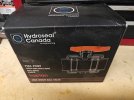
I have some of these:
IMG20260102062814.jpg

I've used the above glued in 2 inch ball valves and not had trouble with them. Actually removed 2 of them where you see 1 inch brass cutoffs when installing the SDR-9. The concern I have had is trust with a compression fitting on it and the valve handle requires a different tool to turn. I have a tool we made but wanted to make all valves the same. I trust the brass cutoffs more (once installed with non-leaking threads).

Yes, I used a vice the first time but once crimped watertight on the SDR-9, I had to use huge adjustable wrenches.
 
Tape for water.

Brass to PVC tends to be problematic
Yes I noticed it's problematic. We asked an old time local plumber friend; he said he always has to use both tape and paste on brass to PVC. Using both is what ultimately worked for us.
 
That much of pressure head is going to continue to cause problems with any “cheap” solution.
Yes, we've messed with the line numerous times in the 25 years or so we've been here. We live in the Appalachian mountains and the city has to push water up hills to serve the community. Between going uphill and having enough pressure to overcome drag pressure loss through pipes, they need very high pressure. The water treatment plant is less than a mile from my house so we see it. I've never installed a pressure gauge on the line but know it's high.
 
No, not that type of crack spackle! The pipe dope type of crack spackle...

We found our 2 inch PVC main supply line between the street and the house had developed a leak. Our supply line is about 1/4 mile long and has about a 300 foot elevation rise. I have a couple cutoff valves in the line and was able to isolate the leaking section to a pasture below the house.

Over Christmas we replaced about 650 feet with SDR-9 2 inch pipe. I crimped the ends with a brass crimp to 2 inch female NPT fitting. I screwed a 2 inch PVC threaded to slip fitting into that brass fitting for connection to the existing PVC pipe.

Problem I ran into was the PVC to brass threaded fittings leaking at the threads. I tried Teflon tape first which worked fairly well but leaked a little. Then I tried Rectorseal T plus 2 on the threads but that leaked much worse. Then I tried both but that still leaked. Then I tried Teflon tape plus an old tube of DuPont Teflon which worked.

Problem is I believe the city is pushing over 200 psi at the street and it's hard to get a seal on threaded connections. I tried to buy more DuPont Teflon but have learned that DuPont was sued for pollution related to their Teflon and have since stopped manufacturing the Teflon I used.

Here's what I used:
View attachment 148592

What are you guys using that works for high psi threaded water connections?

Here's the hill:
View attachment 148593
View attachment 148594
Wrap the whole thing in this stuff
 
Install a critical orfice upstream to reduce pressure (it that's the only tool available....)
An orifice only reduces pressure when there's flow in the pipe. When the downstream valve is off, the pressure is the same on both sides of the orifice.

I've had the best results with Rectorseal #5, which is what finally solved a gas leak in black pipe that defied all attempts to tape the connection. Tape usually works, but you do know that a minimum of 4 wraps of PTFE tape is required, right?
 
I've had the best results with Rectorseal #5, which is what finally solved a gas leak in black pipe that defied all attempts to tape the connection. Tape usually works, but you do know that a minimum of 4 wraps of PTFE tape is required, right?
I read alot of positive reviews about Rectorseal #5, but also it's just for metal to metal I believe. Otherwise I would have chosen it. Edited: just looked it up and pvc is listed but they formulated t plus 2 specific for pvc?
With teflon tape I've read and always done 3 or 4 never more. Not sure where 4 minimum comes from.
 
Back
Top