
overdrive148
En-Route
Hope Texas is ready for me, about to cross the state line! Fiancé is staying in OK for surgery for a few more days so just me. Be gentle, interstates!


That's what's known as southern hospitality!I've been flipped off and yelled at more times in the first 30 mins of me being in Ft Worth than the rest of my life.


Six people left in the world and one of 'em is Bill F*****g Murray.Also the apartment faces the freeway so I got that going for me. Which is nice.


Left lane means nothing to Texans.
Sent from my iPhone using Tapatalk
Hope Texas is ready for me, about to cross the state line! Fiancé is staying in OK for surgery for a few more days so just me. Be gentle, interstates!
The usual explanations are: Slower traffic keep right and Keep right except to pass.
Neither cover yielding to drivers exceeding the posted speed limit.

Can we rely on US laws?Used to be in Germany one could get a ticket for being in the left lane, and if a Ferrari going 150 hit you from behind you were at fault.

Nor in Alabama, and most states. Heard of a local cop pull someone over and issue a ticket for staying in the left in NJ. Locals I worked with said he was a prick though, but it is a state law, as it is in most states. Anyone remember Richard Petty coming up behind someone on I95 in NC and giving that car one of those 'it's just racin' bumps? Loved it!
Not sure I get the "left lane" thing? Does that mean anything like the speed limit doesn't apply in that lane?
I'm sure all the FAR/AIM quote experts here will dig up the motor vehicle code that explains it all.
The usual explanations are: Slower traffic keep right and Keep right except to pass.
Neither cover yielding to drivers exceeding the posted speed limit.
Almost forgot: the fast lane and slow lane both move at the same speed as the rotation of the planet.

And remember you have to have a fiddle in the band.

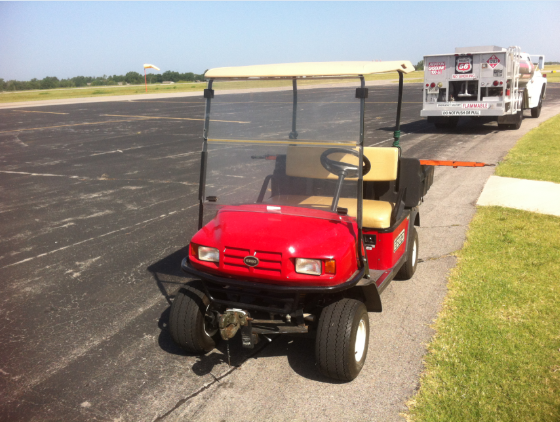
You need to post a pick of the KSNL tug. That thing is the business.

In the "Keep right except to pass" places, I respect that signage. In the "Slower traffic keep right" places I drive the posted speed limit, since that is the maximum speed and I cannot be slower.
There are plenty of LEOs that read this forum. (LEO meaning Law Enforcement Officer) Would be nice to hear from them how they value the "Fast Lane" theory in their enforcement efforts.

I live in Plano and drive in the left lane exceeding the speed limit. My house is not worth $1M, nor are 90% of the houses in Plano.
There's no shortage of ignorant comments in this thread.
Plano is huge. There are rich parts, yes, but also poor parts. Look at Plano east of 75. Low cost housing right there.
East of 75? That's where Costco is! Not to mention Simon's Sushi down my the Fry's Electronics. Good stuff (but you're right, not many McMansions over there)

And as previously requested, provide the motor vehicle code section that is being violated when traveling at the posted speed limit in any lane of a roadway.
If this was an aviation related thread we'd have FAR, AIM, and Advisory citations galore. But in defense of speeding it's all "blah, blah, blah, hurry up, stay out of my way gibberish without code cites.
Heck, I'll do it myself.
This is the Texas code: Is it your contention that 545.051 (b) allows for a "normal speed" greater than the posted speed limit?
SUBCHAPTER B. DRIVING ON RIGHT SIDE OF ROADWAY AND PASSINGSec. 545.051. DRIVING ON RIGHT SIDE OF ROADWAY. (a) An operator on a roadway of sufficient width shall drive on the right half of the roadway, unless:
(1) the operator is passing another vehicle;
(2) an obstruction necessitates moving the vehicle left of the center of the roadway and the operator yields the right-of-way to a vehicle that:
(A) is moving in the proper direction on the unobstructed portion of the roadway; and
(B) is an immediate hazard;
(3) the operator is on a roadway divided into three marked lanes for traffic; or
(4) the operator is on a roadway restricted to one-way traffic.
(b) An operator of a vehicle on a roadway moving more slowly than the normal speed of other vehicles at the time and place under the existing conditions shall drive in the right-hand lane available for vehicles, or as close as practicable to the right-hand curb or edge of the roadway, unless the operator is:
(1) passing another vehicle; or
(2) preparing for a left turn at an intersection or into a private road or driveway.
(c) An operator on a roadway having four or more lanes for moving vehicles and providing for two-way movement of vehicles may not drive left of the center line of the roadway except:
(1) as authorized by an official traffic-control device designating a specified lane to the left side of the center of the roadway for use by a vehicle not otherwise permitted to use the lane;
(2) under the conditions described by Subsection (a)(2); or
(3) in crossing the center line to make a left turn into or out of an alley, private road, or driveway.
Acts 1995, 74th Leg., ch. 165, Sec. 1, eff. Sept. 1, 1995.
No choice but to trust his word for it, he's a pilot after all!I just flew over Plano and it was damned bumpy.
I think because the houses are so tall.
I spoke to the hiring guy at Denton with U.S. Aviation. He said he just filled his two open spots but the other FBO "business air" is looking to hire someone I will dig around and find out who to get your information to. He also said Alliance is looking for people as well and said they are a great place to work if you can get in.

I stick to speed limits and the right lane when I can because I can't afford tickets (especially now) and cops aren't as lenient as those long ago!
Looking forward to seeing the code section that allows "normal speed" to be higher than the posted speed limit. Remember that my contention is and has been that if I am traveling AT the posted speed limit I cannot be impeding traffic moving at the "normal speed" and am therefore not required to yield.
Your interpretation is wrong, as you are placing conditions in the law which are not there (not a terribly uncommon thing for laypersons reading statutes to do).
But try this on for size, if you want to understand why the statute is purposely written without reference to the posted speed limit:
A driver is cruising along, serenely confident he's in the right while in the left (lane), because (as he smugly notes), he is driving at the posted speed limit. From behind, comes another driver, whose passage is rendered impossible or unsafe, because the guy in the left lane is going at a speed which is less than the speed limit - driver two knows this, because he looks at his speedometer and sees that it is indicating a lower speed.
Whose speedometer is correct? It doesn't matter, because they each believes (in complete good faith) that he is correct. Meanwhile, traffic begins to back up, unsafe lane changes and passing on the right occur and (as can and will happen when disorderly traffic ensues) perhaps an accident occurs further back, innocent victims of the guy who thinks it's ok to block the passing lane.
Be real - it is virtually impossible to comply with all laws in any pursuit, whether driving, flying, hunting, whatever. If you've ever been involved in legislative drafting - writing laws (hint: I have) - you'd know that there is a great deal of effort in creating statutory constructs that work, without creating other unintended consequences. You cannot simply "imply in" an additional element (like claiming "normal speed" precludes anything which exceeds the speed limit) because you feel like being Vigilante Cop.
Drivers who refuse to yield right of way to faster traffic, regardless of the speed at which they are traveling, are violating the law, and it is thus in most states (and most certainly so in Texas) - and of greatest concern, they are impeding traffic and creating a hazard - and who wants to do that? It's confounding, really, that there are so many people who think this way, and there has been a great deal of effort placed on trying to dispel this mistaken and misguided belief. In Texas, the state's Department of Transportation is now required to place signs reading "Left lane for passing only" on divided highways, in order to clarify the drivers' obligations in this matter.
Here's a nice survey of the laws of the various states on point - there a few (Alaska, Maryland, Ohio and Puerto Rico) which actually do specify "slower than the speed limit," but most follow the Uniform Vehicle Code construct, which explicitly omits reference to speed limit. http://www.mit.edu/~jfc/right.html
Clinging to the left lane when others want to pass creates greater danger on the road - this is why the laws like the cited one exist - and one can always conjure up a justification for their choice to do so. It will, however, still be a conjured justification, and will not serve as a defense to prosecution. Most importantly, this behavior makes that person a part of the problem by creating greater danger and reducing the effective capacity of the road.


