Lycomings that sit, how long is too long

alaskan9974

Pre-takeoff checklist
Joined
Apr 24, 2017
Messages
234
Location
Alaska
Display Name
alaskan9974
Looking at a plane next week, it sat for about 2 years in a hangar, it was kept up with annuals and apart for being run and oil changes with W100 Aeroshell etc for annuals that’s it. Has a lycoming, got approval from the owner to pull a cylinder or two, to get eyes on the lifters and cam.

What level of pitting is acceptable if any on a lifter for longevity? We saw the lycoming document on lifter conditions but it looked like worse case. Sad part is, it’s a 2017 factory overhaul.

My IA said he’s comfortable with pitting as long as it doesn’t catch the pick. I run mostly continentals and my lycomings don’t go over a week without flying so I have no direct experience with this, or how easily or not they’ll eat the cam and lifters.
 
What level of pitting is acceptable if any on a lifter for longevity? We saw the lycoming document on lifter conditions but it looked like worse case. Sad part is, it’s a 2017 factory overhaul.
When this happened to the O-320 that was in my airplane (original engine that sat around before I owned the airplane), I replaced the engine with an O-360. Why? Replacing the cam means splitting the case, once you do that you might as well overhaul the engine, and once you do that you might as well install a more powerful engine.

As for what level of pitting is acceptable, my opinion is "none". Once it starts it's irreversible and it's only going to get worse not better. I probably could have gotten away with doing nothing, but I do fly over big pointy rocks and large bodies of cold salt water, with family & friends, and I wanted the confidence of knowing everything was tip-top. Being from Alaska you will understand. My suggestion is to adjust the offer price as if the engine is not airworthy.

As for how long is too long, use Camguard and fly at least once per week.
 
I bought a plane with a Lycoming IO-360-C1C6 that was overhauled in 1993 and only flew 250h between 2003 and 2020 when I bought it. With the previous owner it was continuously in-annual, but a couple of those years it had 0 hours on it.

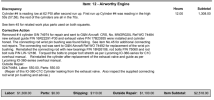
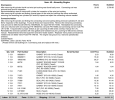
We found the following and addressed it:
1752111472267.png
1752111613694.png

Only instructions I had from my A&P after that repair was: "fly it and I think you should be fine". 5y and 800 hours later, he was right.
The only thing we've done with the engine since is oil change, spark plugs and this flush procedure (IIRC). It's run great. Of course, as with all things mechanical, your mileage may vary, literally.

All that said -- I would not rule out an aircraft/engine just because it sat for a bit. I'd just get things addressed when I buy it and factor that into my purchase price while negotiating accordingly.
I also recommend G&N for any and all engine/mag related stuff.
 
As for what level of pitting is acceptable, my opinion is "none". Once it starts it's irreversible and it's only going to get worse not better.
This. Any pitting is indicative of top end work in the near future. Usually engines of this case will do OK for a little while, but those two years of sitting will start to manifest itself after some time of running it. That pitting will get worse and begin wearing at the cam.
 
I also recommend G&N for any and all engine/mag related stuff.
Yeah they’re good. The last engine in the Archer was a 1997 build by them and it made it almost 28 years. Not bad I’d say.
 
This. Any pitting is indicative of top end work in the near future. Usually engines of this case will do OK for a little while, but those two years of sitting will start to manifest itself after some time of running it. That pitting will get worse and begin wearing at the cam.
Thanks I tried to look for the original service letter we found but no luck, I did see SI 1011N and it does say any spalling or pitting replacement is recommended.

I did buy a 172 that sat for 7 years a few years back, but it had roller lifters so I wasn’t as concerned, and sold it a hundred hours or so later with no issues, but perhaps it was too early to know if there was indeed issues.

The engine was built by lycoming in 2017 with an A suffix so no rollers, when did DLC lifters start getting used by lycoming, I searched and only saw mentions beginning in mid 2018.
 
Need to add to the list "Airplane sitting - how long is too long?". Besides the engine, you'll find lots of other things on the plane that have issues from sitting. Hoses, cables, pulleys, battery, switches, seals, door hinges, etc. etc. etc.

Unless you're getting this for a ridiculously low amount, you're an A&P, and you're parting this out or flipping it, IMHO I'd pass. Are you getting a great price even after factoring in the cost of buying and installing a new engine, and fixing everything else on the plane that has deteriorated from sitting? Even if you are, still factor in 20% more for the unexpected things to fix, and a good amount of time for fixing all of the issues.
 
Just sitting alone may not turn an engine to rust.

There is a Cherokee 140 I met that had sat for 20 some years.

It was on jacks for when; not IF , the nearby river would overflow.

All jugs were pulled ; Cam examined with no sign of rust.

Reassembled with original rings and Valves lapped.

Started this years Annual on it last night.

It’s been 10 years and over 500 hrs with no engine issues.

Mags were done at start and last year.

Sometimes you can get lucky!
 
Looking at a plane next week, it sat for about 2 years in a hangar, it was kept up with annuals and apart for being run and oil changes with W100 Aeroshell etc for annuals that’s it.
What does "being run" mean. If that's a 15 min ground run, that's worse than just sitting. If it was run only to heat up the oil for a change, that might be OK. If it was the run it once a month for 10 or 15 min, that's actually not helpful.

One other thing, where did it sit? High or low humidity, near the ocean or not?

Don't think the sitting by itself is a deal killer, two years is not that long.
 
My 0-320 sat mostly for 10 years before I bought it. It flew about 10 hours in 10 years.
I flew it for 400+ hours and at that point the engine had 1700 hrs on it and 40 years old. It was giving me lower and lower leak down numbers and the #2 lower plug was fowling out after about 40 hrs run time.
So I removed all four cyls and really only found the rings dirty. Cylinders walls looked really good and could still see the cross hatch from honing.
The lifters has corrosion on them from sitting but no spalling. The cam lobes had microscopic pitting that you could only see with magnification. Could not feel them with your nail or pick. Otherwise the cam looked good.
I cleaned up the pistons and rings and put it back together. I flew it for another 100 hours. It ran great, oil usage went from 1qt 4 hours to 1qt to 8-9 hrs. The leakdown numbers improved. The lower #2 plug was still getting coked up at 40-50 hrs but that was manageable.
It would have ran another 500 hrs easy I'd say. Unfortunate I ordered an rebuilt engine from Lycoming and had to swap out my old engine sooner than I would have liked.
24a8309d-e7c1-4c68-9311-0fd16a35aa6c.jpg

a16b32c2-d8fc-4406-b100-b9b221fe8214.jpg

I flew the last 98 hrs on the same oil. I sent the oil out for analysis and the report said all the numbers were within avg range. The high silicon was from the new silicon valve cover gaskets. Same thing happened to my new Lycoming engine that had silicon valve cover gaskets. I didn't use any silicon sealers.
08df6b41-c3a9-45da-bf31-e4ab6ae56493.jpg
 
Last edited:
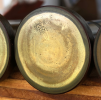
I just took apart an O320E2D that was brand new in 1968, flown randomly for 50 years finally making it to 2000 hours. The worst lifter is this one. Camshaft wasn't any worse.

On the other hand, I looked up service difficulty reports in the FAA database using the lycoming brand camshaft part number of the new camshaft kit I put in this engine and found a report where a brand new camshaft with less than 200 hours on it cracked completly in two.... the crack passed right through one of the letters stamped on it.... like the stamped letter initiated the crack.

1752156316867.png
 
Last edited:
I recall a suggestion from Mike Busch r/e buying with an engine concern: Put (negotiated) part of the purchase price in-escrow (somehow), set up so that if the engine develops a big problem before some (negotiated) date, then the buyer keeps the escrow. If all goes well to that date, the seller gets the escrow. Probably easier said than done -
 
I recall a suggestion from Mike Busch r/e buying with an engine concern: Put (negotiated) part of the purchase price in-escrow (somehow), set up so that if the engine develops a big problem before some (negotiated) date, then the buyer keeps the escrow. If all goes well to that date, the seller gets the escrow. Probably easier said than done -
And who arbitrates what constitutes an “big problem”?
 
I recall a suggestion from Mike Busch r/e buying with an engine concern: Put (negotiated) part of the purchase price in-escrow (somehow), set up so that if the engine develops a big problem before some (negotiated) date, then the buyer keeps the escrow. If all goes well to that date, the seller gets the escrow. Probably easier said than done -
So the seller is giving a warranty?
I don’t think so.
 
Depends on where it sat. Hi desert area could be just fine. On the Gulf or Florida coast may not. On an island in the Caribbean, definitely not.
 
What does "being run" mean. If that's a 15 min ground run, that's worse than just sitting. If it was run only to heat up the oil for a change, that might be OK. If it was the run it once a month for 10 or 15 min, that's actually not helpful.

One other thing, where did it sit? High or low humidity, near the ocean or not?

Don't think the sitting by itself is a deal killer, two years is not that long.
From the logs, just a ground run up after annual to check for leaks etc. No Hobbs increase between the two annuals when it wasn’t flying so it doesn’t appear to have been run up between those times.

Hope to get eyes on the cam and lifters this weekend
 
...and apart for being run and oil changes with W100 Aeroshell etc for annuals that’s it.
Bad. Real bad. Ground-running without flying kills a lot of engines. So much moisture (a byproduct of combustion) gets past those rings when the engine isn't at operating temperature and the clearances are still large, and that moisture mixes with the oil and over time forms acids that eat the engine. The engine never reaches operating temp so the moisture accumulated during the ground run isn't driven off.
Depends on where it sat. Hi desert area could be just fine. On the Gulf or Florida coast may not. On an island in the Caribbean, definitely not.
Like I and Magman said, the operating habits affect the engine internals MUCH more than the environment. Magman's mention of the Cherokee that sat for years on jacks to keep it out of the water that periodically flooded the hangar proves it: No corrosion in that engine, when massive corrosion would have been expected if the usual "wet environment" mantra had much validity.

My 50-year-old A-65 (at the time I got the airplane) had sat for over a decade in an building in a swampy area and had no damaging internal corrosion.

There is very little airspace inside an assembled engine crankcase. Minimum space means minimum air exchange with temperature fluctuations, meaning minimum moist air going in and coming out. We did the calculations here on POA a long time ago, as it pertained to fuel tank condensation. The potential water accumulation is very small, and leaking fuel caps are easily the biggest, and overlooked, culprits.

https://www.lycoming.com/content/frequency-flight-and-its-affect-engine

https://www.lycoming.com/content/low-time-engine-may-not-mean-quality-and-value
 
When this happened to the O-320 that was in my airplane (original engine that sat around before I owned the airplane), I replaced the engine with an O-360. Why? Replacing the cam means splitting the case, once you do that you might as well overhaul the engine, and once you do that you might as well install a more powerful engine.

As for what level of pitting is acceptable, my opinion is "none". Once it starts it's irreversible and it's only going to get worse not better. I probably could have gotten away with doing nothing, but I do fly over big pointy rocks and large bodies of cold salt water, with family & friends, and I wanted the confidence of knowing everything was tip-top. Being from Alaska you will understand. My suggestion is to adjust the offer price as if the engine is not airworthy.

As for how long is too long, use Camguard and fly at least once per week.
I'm in the process of doing this right now. The issue I have is a rebuilt O-360 from Lycoming has an 18-22 month wait.
I'm hoping to get my O-320 to make it that long. Its eating a lot of oil right now.
 
The real answer (as proven thus far by this thread) ... :dunno:
 
In my prior life I often took C-54’s out of the Davis-Monthan( now AMARC)

“Boneyard”. Maybe that accounts for some of the aircraft I get involved

with, There are a couple other sitters in the file as well. Both have engines

with more than 60 years on them and spent time sitting. One is referred to

as “Guano Bird” as that was what covered it when the “tomb” was opened

after many years. Both of these are doing well. 1 jug was pulled on one

and the Cam was fine.No indication that they were preserved.


On the other side are a couple 152’s. After a O/h by a reputable shop

one had a history of cylinder issues. “The rest of the story” is that it

often flew “ONCE around the pattern”. Note emphasis on ONCE.

IMHO whenever possible you want to get engine up to temp AND

hold it there long enough to burn off moisture. It wasn’t the case here.

Another Flight School 152 needed a Cam at about 150 hrs. This one was

on a electric preheater with a TIMER. Bad!


Back to C-54’s. Radial Engines have an oil tank with a Quick Drain

on the bottom. Because it NEEDS it. If you read “ Fate is the Hunter”

( EK Gann) you may recall what water can do.

fyi There is a formula that states when you burn a gallon of fuel you

also make a gallon of water.. Maybe it’s pounds?
 
I'm in the process of doing this right now. The issue I have is a rebuilt O-360 from Lycoming has an 18-22 month wait.
I'm hoping to get my O-320 to make it that long. Its eating a lot of oil right now.
My O-360 is a Penn Yan, part of the Superhawk STC. Great engine and best warranty in the business, 3 years or TBO whichever happens first.
The performance improvement doesn't seem like much on paper but it's definitely noticeable :D
 
My O-360 is a Penn Yan, part of the Superhawk STC. Great engine and best warranty in the business, 3 years or TBO whichever happens first.
The performance improvement doesn't seem like much on paper but it's definitely noticeable :D
My core is a 35-year-old O-320 with almost 6000 hours total time on it. Around 1800/28 years SMOH.
I'm trading it in on a zero-time factory rebuild.
The engine is ordered.
Now I'm working through getting a one-time STC to install it & a McCauley Black Mac prop in it, and essentially turning it into a TB10 with 40-gallon tanks instead of 54-gallon tanks like in a factory TB10.
The 20 extra HP and CS prop should noticeably improve performance.
 
The 20 extra HP and CS prop should noticeably improve performance.
If your TB10 didn't already have a CSP, the CSP will probably make even more difference than the engine. I tried to get one when I replaced the engine in my 172 but the only STC I could find was no longer supported.
 
fyi There is a formula that states when you burn a gallon of fuel you

also make a gallon of water.. Maybe it’s pounds?
Up to a gallon and a half of water. Most of it goes out the exhaust, but at anything less than operating temperatures some gets past the rings and condenses and ends up mixing with the oil in the crankcase. Even at operating temp some is getting in there, but it is as water vapor, doesn't condense, and is soon pushed out the breather.
 
I’ve often thought that if you have easily accessible quick drain it might be

a good idea to drain a half cup and actually see if you have water there.

Running would move it around so everything rusts!

Well known shop o/h a 320 and ran in a test cell.

1 week later we pulled a rocker and there was rust and water already

present. Very common to see water there.

FRAM commercial “ Starting your engine is a terrible thing to do”.

Both FRAM and AeroFrantz sold bypass filters that would remove water.

A Full Flow will not do so.


I AM a fan of engine dryers.
 
I’ve often thought that if you have easily accessible quick drain it might be
a good idea to drain a half cup and actually see if you have water there.
Yep, not a bad idea. As long as the engine's been sitting long enough any water in the oil will migrate to the bottom. Drain until you see oil, even if you lose a little oil it's no big deal, only a few ounces.
 
Need to add to the list "Airplane sitting - how long is too long?". Besides the engine, you'll find lots of other things on the plane that have issues from sitting. Hoses, cables, pulleys, battery, switches, seals, door hinges, etc. etc. etc.

Unless you're getting this for a ridiculously low amount, you're an A&P, and you're parting this out or flipping it, IMHO I'd pass. Are you getting a great price even after factoring in the cost of buying and installing a new engine, and fixing everything else on the plane that has deteriorated from sitting? Even if you are, still factor in 20% more for the unexpected things to fix, and a good amount of time for fixing all of the issues.
It's been two years, not 20.
 
Back
Top