Kitplanes auto engine roundup...sad!

viking 175 is based on the Honda K series. I recognize the V8 is heavy on the smaller EABs, perhaps a derated 6?

Seems the Viking folks have made most of their installations on STOL airplanes and the like, I would like to hear of some RV completions instead, before I'd be willing to go that route. The economics of lycosaurus are so terrible that treating up these PRSUs as consumables to be replaced preemtively comes out cheaper than legacy overhauls. And yes, I already live on my own recognizance M thru F, spare me the safety canard.
PSRU are easy to make, hard to master. For 200HP belt drive should be fine. No need to go all double helical. There are quite a few high end PRSUs and also lower end. A smart designer would stick to off the shelf bearings/belts/gears so a breakdown is little more than a call to mcmaster/carr or somesuch.
 
The owner of this web page is on PoA: https://corsairpower.com/c172-experimental-update/
This is from his page:
We also came to realize when meeting with potential investors, that as GA shrunk over the last three decades, so did the interest to invest in it. The high certification costs and civil liability risk now make little financial sense to the larger investors capable of funding any meaningful GA innovation, considering the limited potential returns. Toyota fully FAA-certified a V8 conversion engine in the 1990s, but cancelled the program before beginning sales after considering the risk vs. rewards in the diminishing GA market. Honda also developed their version of an aircraft piston engine, but also cancelled the program for similar reasons. Porsche quickly came to the same conclusion even though their converted engine was already certified and installed in aircraft.
 
THere is a company using Sabaru engines.. may or may nor have been Jibaru... I'm going from memory.
The Subie company (Eggenfelner) folded and left a lot of people hanging. And the owner almost immediately started the Viking engine company. I wouldn't touch 'em with a 10 foot pole, even though they have seemingly had some success, at least in selling engines. That said, I don't see many flying engines in the field except for a handful of RV-12's. One of those was built by an acquaintance of mine who was "very happy with it" but if you pressed for weight and performance details vs Rotax powered examples, he clammed up like Michigan T. Frog (look it up).
 
Rotax is/was a snowmobile engine at the start, and got pulled kicking and screaming into aviation.
Rotax happily supplied the ultralight market with new engines, and even developed the gearboxes to drive the props. They did not "get pulled" into aviation. Nobody forced them to develop of build anything for airplanes. Where do you get this stuff?

How does a 60-degree V engine come out lighter? A bit narrower intake manifold and maybe 5 pounds lighter. The 60-degree engines were built for smaller cars so they'd fit in engine compartments originally occupied by inline engines.

Yes, we know all about geared engines for larger propellers. That's a very old idea that works, but it's also an idea that presented, and still presents, reliability challenges. The WW2 fighters and bombers with geared engines were not expected to last 2000 hours; a lot of those engines were done at 600 hours or before. Both Lycoming and Continental built geared opposed engines, and the gearing was problematic. Some of it was pilots that did not operate them exactly as per POH, meaning that they can be unforgiving, not something welcome in GA. A viable GA engine has to be able to withstand ham-handed weekend warriors, or it will fail and cost everyone an enormous amount of grief.
 
The Subie company (Eggenfelner) folded and left a lot of people hanging. And the owner almost immediately started the Viking engine company. I wouldn't touch 'em with a 10 foot pole, even though they have seemingly had some success, at least in selling engines. That said, I don't see many flying engines in the field except for a handful of RV-12's. One of those was built by an acquaintance of mine who was "very happy with it" but if you pressed for weight and performance details vs Rotax powered examples, he clammed up like Michigan T. Frog (look it up).
I installed an RAF Subaru conversion in a Glastar and flew it. The airplane owner wanted an engine cheap to buy and cheap to operate and cheap to overhaul. He got none of those things. When he sold it he got only half the value of an equivalent Glastar with a Lycoming in it.
 
Austro ran into this with their Mercedes cores, which required additional certification tasks at each design cycle change.
That screams "CERTIFICATION/REGULATION OBSTACLE" in all caps. In a rational world, incremantal changes learned through experience to reduce manufacturing costs wouldn't need or require a ground-up re-certification gauntlet.
 
to reduce manufacturing costs wouldn't need or require a ground-up re-certification gauntlet
Oohhh, what a sure path to potential disaster. Beancounter asks for a cost reduction, small manufacturing detail changed to reduce cost, blocks/cranks/pistons start failing 500 hours later.
 
That screams "CERTIFICATION/REGULATION OBSTACLE" in all caps. In a rational world, incremantal changes learned through experience to reduce manufacturing costs wouldn't need or require a ground-up re-certification gauntlet.

It is NOT a ground up recertification. I am on a Diamond forum, and there has been a number of discussions there about it. Yes, the FAA requires the whole PMA aspect, and mostly requires analysis so show how it will not break other things, and either improve the failing condition or at least not make it worse.

Tim
 
That screams "CERTIFICATION/REGULATION OBSTACLE" in all caps.
No at all. Mercedes, as with most auto OEMs, would tweak their engine and vehicle designs on a semi-regular cycle. For Austro, each of those tweaks also required minor alternations to the approved type design for their TC’d engine, just as any TC holder must do. It had nothing to do with reducing mfr. costs. But also, it was hardly a ground up re-certification.

Unfortunately for Austro, Mercedes then either discontinued the engine they used, or changed it significantly enough that would require a new variant under their engine TC, or worse. However, I believe Austro elected to license that engine design from Mercedes and moved production in-house which ended the 3rd party type design change issues.
 
So out of extreme boredom I looked at the 2026 Kitplanes engine buyers guide.... such that it is.

I go to the auto engine section and see that you have two options: 400+hp LS3's or mostly sub 150hp import engines.

Hey, car motor companies: make an IO-360 killer. We need a 180-200hp car motor to replace the '360'. High revving 4 cylinders are not the solution nor are significantly derated V8's.
High revving four bangers is indeed the solution. Ask Rotax.
Imagine a 91x series Rotax with an extra pair of cylinders.
 
No at all. Mercedes, as with most auto OEMs, would tweak their engine and vehicle designs on a semi-regular cycle. For Austro, each of those tweaks also required minor alternations to the approved type design for their TC’d engine, just as any TC holder must do. It had nothing to do with reducing mfr. costs. But also, it was hardly a ground up re-certification.

Unfortunately for Austro, Mercedes then either discontinued the engine they used, or changed it significantly enough that would require a new variant under their engine TC, or worse. However, I believe Austro elected to license that engine design from Mercedes and moved production in-house which ended the 3rd party type design change issues.

MB stopped production of the engine; the maintain some new old stock to cover some level of warranty repair items as required by EU law. Austro knew ahead of time and ordered thousands of engines before production stopped. I think Austro had close to a three year supply before they ran out.

Austro used to buy the complete engine, strip all the parts off and keep the case, pistons and the internals. These were the "stable" pieces and did not change much if at all. It was everything around it that changed on a regular basis and for which Austro replaced everything to be able to maintain and conform to the TC.

Tim
 
Yamaha recently replaced their 1.8 liter four cylinder marine engine with a 1.9 liter one. The normally aspirated version produces 200 hp, and the supercharged one produces 250 hp. The normally aspirated engine runs on 87 AKI gasoline and the supercharged one requires 91 AKI fuel, both can use gasoline with alcohol. I haven't been able to find an official weight for these engines, but there is a source claiming the supercharged version is approximately 260 lbs.

I don't know if Yamaha would sell these without being in a watercraft or what the price would be. The least expensive WaveRunner that has the four cylinder engine is the VX Cruiser HO, which sells for $14,899.

In my mind, this sounds like a better candidate for an aero conversion than any of the auto engines in current production.
 
Kawasaki has announced new clean sheet designs to be used as the basis for aircraft engines.
Toyota has also announced a series hybrid (a/k/a range extender) program. Both as gas versions and a multi-fuel engine which most of the pundit stuff I have read assumes is a CI engine.
Both solutions I find appealing.

Tim
 
Exactly - they're already designed to run at constant high power settings and drive a reduction gearbox.
In a waverunner it would direct-drive a pump. Even if it drove a marine prop via a gearbox, it would not have to deal with the massive TV presented by aircraft props.
 
Last edited:
Im leaning towards the GM LV1 4.3 liter V6. Its rated at 285hp and used in base model trucks and vans, but also in generators and boats, specifically the Volvo Penta 200, 240 and 280 horse options. Same GM V6 with different ECUs as I understand it. Weighs about 350 pounds and a PSRU adds another 60-70 pounds.

I've sloughed my certified burden and wont go back!
 
A good aircraft conversion design could and should decouple the engine from the prop's thrust/gyroscopic loads.
I believe he is referring to torsional vibrations vs any "loads" which while they can be reduced through various methods cannot be eliminated. So simply replacing a boat prop with an aircraft prop would typically require a redesign to handle those vibrations.
 
A good aircraft conversion design could and should decouple the engine from the prop's thrust/gyroscopic loads.

I believe he is referring to torsional vibrations vs any "loads" which while they can be reduced through various methods cannot be eliminated. So simply replacing a boat prop with an aircraft prop would typically require a redesign to handle those vibrations.
Yes. Torsional vibration. That heavy propeller wants to turn at a steady rate, like the flywheel that it is. The engine's crankshaft does not turn at a steady rate; every time a cylinder fires it accelerates, and on every compression stroke it decelerates. This makes the gears or chain chatter, especially at resonant frequencies related to RPM, and the loads thus placed on the PSRU can be many times the load of the engine driving the prop. Belts can absorb a little more of the TV, but they can still fail. So the PSRU has to be designed to be either really stout (meaning heavy) or with enough damping and flex to absorb the TV.

In a car or truck with a manual transmission, you'll find a clutch plate with springs in it to absorb TV, but that TV is very small since it's only the transmission and driveline involved, not a heavy propeller with much angular momentum. An automatic uses a torque converter that absorbs TV since it slips anyway.
 
In a waverunner it would direct-drive a pump. Even if it drove a marine prop via a gearbox, it would not have to deal with the massive TV presented by aircraft props.
For aviation use, this engine would require a PSRU, which would have to support the propeller loads.
 
Not true. Rotax was in airplanes before snowmobiles, IIRC. They sell a lot of snowmobiles, sure, but that's never been their only game
In 1962, Rotax started supplying engines to in Ski-Doo snowmobile. Ski-Doo was part of Bombardier. In 1970 Bombardier acquired Rotax. Then in 1975 Rotax developed their first aircraft engine, the Rotax 642.
 
They were founded 1913, built aircraft components as early as 1917.
Different Rotax. That's a UK company, the Rotax that we're talking about is Austrian. Here's part of the history from their website;

1920 Founding of Rotax Werk AG in Dresden, Germany

1947 Relocation to Gunskirchen, Austria

1970 Bombardier acquires Rotax-Werk AG, becoming Bombardier-Rotax GmbH

1975 Certification of the first Rotax aircraft engine (Rotax 642)

Wikipedia has a decent history (for Wikipedia) and notes that the Lucas Industries Rotax is a different company.
https://en.wikipedia.org/wiki/Rotax
 
who cares, rotax 916is ain't price distinguishable against legacy cost basis anymore. They're non-starter to quote them as a viable alternative in the 160hp (continuous) thru 200hp market. The overhauls are also just as expensive. The alternative implies cost alternative. 60K engines is the problem.
 
Yes. Torsional vibration. That heavy propeller wants to turn at a steady rate, like the flywheel that it is. The engine's crankshaft does not turn at a steady rate; every time a cylinder fires it accelerates, and on every compression stroke it decelerates. This makes the gears or chain chatter, especially at resonant frequencies related to RPM, and the loads thus placed on the PSRU can be many times the load of the engine driving the prop. Belts can absorb a little more of the TV, but they can still fail. So the PSRU has to be designed to be either really stout (meaning heavy) or with enough damping and flex to absorb the TV.

In a car or truck with a manual transmission, you'll find a clutch plate with springs in it to absorb TV, but that TV is very small since it's only the transmission and driveline involved, not a heavy propeller with much angular momentum. An automatic uses a torque converter that absorbs TV since it slips anyway.

Torsional vibrations were one of the things I measured back in the day at the Pennsylvania-Oil-Leaking-Airplane-Engine Factory. Some of the people we had working the program had come from some automotive companies, mostly from the Blue-Oval-Spark-Plug-Ejecting-Engine Factory.

In aircraft engines, we generally were seeing torsional vibrations that resulted in the range of 1 degree of crankshaft rotation front to rear or less. It's been over 15 years so I forget what the limits were, but I want to say something in the 1.5-2 degree range was the limit for us. Because an aircraft engine is effectively always attached to a propeller, there's not a "hard" connection like there is when you've got an engine that's attached to a transmission, driveline, and ultimately tires touching the road.

The guys who'd worked in the automotive world were shocked by how small our torsional vibrations were, and said that on the order of 5 degrees in the automotive world were normal. Gear changes were a big part of that as I recall them saying, which makes sense. For us, what ultimately mattered was the loads on the propellers. We had propellers that were instrumented with strain gauges along the blade lengths to check these. Composite props handle it better than metal props. Really with composites (which for us were primarily MT), there weren't any vibrations that came up which were problematic. When you look at the various counterweight options on what are otherwise the same engine, usually it was driven by a particular prop choice by the OEM.

By the time I'd gotten there, most of these things had been worked out pretty well, but a few of my programs still had me doing torsional vibration testing. Not surprisingly, diesels were worse - higher combustion pressures lead to worse vibrations.

I'm not fully sure what the physics reason is, but all of these opposed 6s have some higher level vibrations in the 2900 RPM range. That's a good part of why you don't see engines spinning in that range. The TIO-541 in the Baron 56TC and Duke is an exception, and my recollection is that it has extra counterweights to try to help with that. But other engines are generally yellow arc placarded to minimize time spent in that rev range.
 
List, please!

You don't have to look too hard at the engines we're flying behind/between and literally every other engine out there to see where things have improved over the years. Most of the improvements that we've seen in the automotive space would help in aviation, but not all. Few basics:

1) Electronic fuel injection and ignition, modernize the fuel and ignition system. Basically multi-port EFI and coil-near-plug/coil pack ignition. Either offers an improvement. Direct injection could also be used instead.
2) Improved combustion chamber design in the cylinders. There are many out there that have come about over the decades. I have a few favorites which are not necessarily ones you see in production today, but given the mixture range that we use in aviation and the lack of emissions requirements, I don't think the newest is necessarily the best.
3) Increased compression ratios.
4) Modern turbocharger designs or supercharger designs. Even the newest aircraft turbos are a very old design. The improvements in design and efficiency are immense and will improve overall performance.
5) More optimized/thought out intake design - again more about efficiency and equalizing the power output.

I have a couple things that I would intentionally not do that have become commonplace:

1) Variable valve timing/variable lift/variable intake: Adds weight and complexity and really is only helpful when you're trying to optimize across a rev range. Aircraft engines do not have a broad enough rev range.
2) Overhead cams. OHC engines are heavier than pushrod engines in effectively all cases, and generally make a larger/heavier engine for the same displacement/horsepower. Obviously devil is in the details, but I'd stick with pushrods. Also, pushrods work fine for the low revs that are well suited to aircraft engines.

Note that none of this is really about improving horsepower out of the engines, or at least not about improving rated horsepower. Sure, you could do that, but you can realistic do that today in other ways (such as just turning up the boost). It's really about improving efficiency, ease of use (single lever control), and performance at altitude. What that turns into is a more efficient engine, and enabling use of lower octane fuels than 100LL, and helping with getting the lead out. Of course the obvious problem there is universal adoption required, one of the big problems the whole 100LL replacement issue has had since before I started my career.

There are a lot of details relating to that which I won't go into here, but I do have a consulting fee for interested companies. :)
 
I'm not fully sure what the physics reason is, but all of these opposed 6s have some higher level vibrations in the 2900 RPM range.
As I recall it has to do with the frequency/harmonic changes from the higher compressions. Anytime two vibration sources interact at the freq level, things tend to break if not mitigated in some way.
 
Composite props handle it better than metal props. Really with composites (which for us were primarily MT), there weren't any vibrations that came up which were problematic.

By the time I'd gotten there, most of these things had been worked out pretty well, but a few of my programs still had me doing torsional vibration testing. Not surprisingly, diesels were worse - higher combustion pressures lead to worse vibrations.
On the SMA diesel I worked on, we found a cracked blade on the MT composite prop. I believex it was from the vibration, which was rather extreme at idle, and the FADEC would not let you change anything, not even idle speed, until the engine was warm enough to satisfy the computer. For big cylinders at 15:1 compression (even at idle, of course, in a diesel) to make it a 230 HP engine, means lots of vibration. These engines did not have the fancy multi-pulsed injection we find in modern autmotive diesels; it was all at once on each firing, making a sharp acceleration pulse every time.
 
Rotax happily supplied the ultralight market with new engines, and even developed the gearboxes to drive the props. They did not "get pulled" into aviation. Nobody forced them to develop of build anything for airplanes. Where do you get this stuff?
Rotax service was garbage. They had no service centers in the US until it affected sales.

Where do I get this stuff? The same place these guys:


many, many more. So yeah, Rotax is not the shining example of how to put your product to market.

I never said it wasn't useful or popular, just that they suck at support until they realized it was needed.
 
who cares, rotax 916is ain't price distinguishable against legacy cost basis anymore. They're non-starter to quote them as a viable alternative in the 160hp (continuous) thru 200hp market. The overhauls are also just as expensive. The alternative implies cost alternative. 60K engines is the problem.
PREACH IT BROTHER.

Rotax is an option that doesn't solve a problem.

People need to face the facts that a sub $10k car engine is not going to compete on weight, only costs. I'll happily give up 10-20 gallons of fuel if it means I can actually AFFORD TO FLY.

Bearing speeds directly relate to reliability and the need (or not) of a PSRU. TV affects certified engines just as much as car motors. But a 6 or 8 cylinder motor at 3500-4500rpm would seem to move the needle in its favor as TV is worsened with fewer cylinders and slower RPMs. I 100% admit I am not an engineer and am using 'rules of thumb' there... but like any design you have to balance trade offs with end goals.

The world (aka mine in particular: fast 4 place E/ABs) need 200-400hp motors that don't cost $60,000+.
 
Baloney. What you said about Rotax was this:
And you totally didn't read the two (of many dozens) posts I gave regarding lack of support/parts? Rotax's early ventures (the 2 strokes) had TBOs in the low 100s of hours. Its only later did things improve (most likely due to changes in ownership) did things improve.

From what I can find (Gemini) The first certified Rotax US service center was in 2006 even though the engines, and semi-offical partnerships were around in the 1980s, even though rotax engines were put on ultralights in the mid 70s.

So that's 36 years? Not exactly a 'head first' dive into aviation. Anyone can import parts from Europe, but that don't make you an official service center.
 
And you totally didn't read the two (of many dozens) posts I gave regarding lack of support/parts? Rotax's early ventures (the 2 strokes) had TBOs in the low 100s of hours. Its only later did things improve (most likely due to changes in ownership) did things improve.

From what I can find (Gemini) The first certified Rotax US service center was in 2006 even though the engines, and semi-offical partnerships were around in the 1980s, even though rotax engines were put on ultralights in the mid 70s.
Certified? Until recently* (as defined in aviation circles), all the Rotax powered stuff was experimental and didn't need a certified shop. Certainly my friends who flew/fly behind Rotaxes didn't have any problems getting parts or service.
 
And you totally didn't read the two (of many dozens) posts I gave regarding lack of support/parts? Rotax's early ventures (the 2 strokes) had TBOs in the low 100s of hours. Its only later did things improve (most likely due to changes in ownership) did things improve.

From what I can find (Gemini) The first certified Rotax US service center was in 2006 even though the engines, and semi-offical partnerships were around in the 1980s, even though rotax engines were put on ultralights in the mid 70s.

So that's 36 years? Not exactly a 'head first' dive into aviation. Anyone can import parts from Europe, but that don't make you an official service center.
Bombardier, a Canadian company, bought Rotax in 1970 and we have had Rotax distributors here for a long time. I will remind you that ultralights did not exist in 1970. When they came along, Rotax was already here supplying engines for other applications.

Now, the US has nine times the population of Canada, and I cannot imagine that Americans could not buy engines and parts in most states at least 40+ years ago.

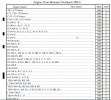
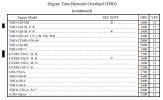
And as far as low TBOs in early Rotaxes, do you hold all aircraft engines to the standards of today? Many certified engines built in the 1940s had low TBOs. Here's Continental's list of current TBOs for their engines dating a long way back:

1782578451714.png
1782578488717.png

Geared engines have especially short TBOs. The GO-300 used in the Cessna 175 is only 1200 hours. The old W670 radial was only 1000 hours. Rotax is not alone in product improvement, are they?
 
Certified? Until recently* (as defined in aviation circles), all the Rotax powered stuff was experimental and didn't need a certified shop. Certainly my friends who flew/fly behind Rotaxes didn't have any problems getting parts or service.
A data pool of 'a couple of people' is not indicative of anything. I posted 'a couple of people' having poor service as late as a few years ago.

I'll notice that you never contradicted my timeline... only posting empirical data.
 
So tell us about your project. How far along are you?
I snagged a run out IO-470. Working on lengthening the BD's fuselage for W&B (common mod), that's gonna require redoing all the controls to the rudder/elevator. Hangar is brutal in summer so I'm kinda stuck in my conditioned garage overhauling the -470 and Pentastar.
 
Bombardier, a Canadian company, bought Rotax in 1970 and we have had Rotax distributors here for a long time. I will remind you that ultralights did not exist in 1970. When they came along, Rotax was already here supplying engines for other applications.

Now, the US has nine times the population of Canada, and I cannot imagine that Americans could not buy engines and parts in most states at least 40+ years ago.

And as far as low TBOs in early Rotaxes, do you hold all aircraft engines to the standards of today? Many certified engines built in the 1940s had low TBOs. Here's Continental's list of current TBOs for their engines dating a long way back:

View attachment 152936
View attachment 152937

Geared engines have especially short TBOs. The GO-300 used in the Cessna 175 is only 1200 hours. The old W670 radial was only 1000 hours. Rotax is not alone in product improvement, are they?
Comparing an engine designed in the 50's to one several decades later and then saying 'gee, look how much better it is' is not making the point you think it is.

I don't care if I have to rebuild a PSRU every 1000 hours. I'll probably be dead long before I hit that mark. The average PPL (non commercial/CFI/career track) will never reach 2000 fight hours.

You also missed all the top ends/cylinders that need replaced at a few hundred hours. The cams/lifters spalled due to disuse etc etc.

I'll just leave this Gemini search result here:

According to data compiled by aviation organizations, the average non-commercial GA pilot in the United States flies roughly 30 to 35 hours per year.

  • At 35 hours a year, it would take a pilot 57 years of continuous, active flying to hit 2,000 hours.
  • Even an active hobbyist flying 50 hours a year needs 40 years to reach that milestone.

So tell me again how a 1200-1500 non-required TBO number is meaningful when it will take the average person 20-30 YEARS to run it that long?

FOr a flight school or club? Yeah, that's different. For the average owner? There are way more things that will break before a geared reduction unit will 'time out'... which is again, a COMPELTLY MADE UP NUMBER BY THE MANUFACTURER.
 
Back
Top