It can happen to anyone.

Turbo-Arrow-Driver

Pre-takeoff checklist
Joined
Apr 8, 2019
Messages
226
Location
NorCal
Display Name
Turbo-Arrow Owner
We just cannot relax.
For years I’ve read about 20,000-30,000 hour pilots, or pilots held in great esteem by our aviation community who bit the dust.

“If they can crash, absolutely so can I.
I must redouble my efforts.”
 
We just cannot relax.
For years I’ve read about 20,000-30,000 hour pilots, or pilots held in great esteem by our aviation community who bit the dust.

“If they can crash, absolutely so can I.
I must redouble my efforts.”
The one that always hits home for me is the 33,000 hour ATP/CFI that got taken out by wake turbulence on his way to Airventure. Maybe it's just because it was so close.

 
Yesterday I posted the final NTSB report for the White Plains Bonanza accident. I wonder if there will be any mechanical similarities caused by detonation: https://www.pilotsofamerica.com/com...ane-missing-possibly-down.141400/post-3707089

From the White Plains accident report:

"The airplane underwent modifications in accordance with (IAW) Supplemental Type Certificates (STC) covering installation ... of new cooling air baffles...
...

The engine manufacturer Standard Practice Maintenance Manual specified that the fuel flow at full power be between 24.9 to 26.6 gallons-per-hour (GPH).
...

An Insight GEM which was installed in the instrument panel ... where it was easily visible by the pilot.
...

Further review of the GEM data associated with the accident flight, correlated with ADS-B data, revealed that the recorded fuel flow values from about takeoff power application to when it decreased and remained at 0 were nearly always above the maximum limit of 26.6 GPH, averaging about 44 GPH with the highest value slightly over 99 GPH. The EGT values, which were not an engine operating limitation, appeared “noisy” and erratic for the No. 4 cylinder and had not trended with the remaining cylinders since December 13, 2022. The oil temperature values from takeoff power application to where the fuel flow decreased to and remained at 0 were above normal, averaging about 693°F.

Data from the GEM for the flight before the accident flight revealed that the CHT values for the No. 4 cylinder were generally equal to or slightly higher than the highest values for the remaining cylinders; however, all CHT readings were below the maximum specified value. The data also indicated that the fuel flow was generally steady and within limits except for a short period about 5 minutes after takeoff power was applied, periodically during the flight, and then again for about 19 minutes before power was reduced. During the times when the fuel flow was erratic and exceeded the maximum specified value, the CHT values for all cylinders were below the maximum value and all trended generally the same. The oil temperature values from takeoff power application to the end of recorded data were above normal, averaging about 1,714°F (these recorded values were likely erroneous)."
 
This one sucks.


What caught my attention in the article was another pilot and instructor who stated "He seemed like a confident pilot to me. I know it’s not pilot error". The flight track shows a long XC flight from FL to TX, and crashed short of the runway. The airplane commenced the descent from a safe altitude. It's hard to imagine this was due to some unavoidable inflight breakup. Stuff happens to everyone. We are all fallible, and that self awareness of our potential to make errors is a key ingredient in all this. Misjudging the approach and landing short can happen to anyone, and we need to have a backup plan to aim for the trees, a road or a lake when that happens (not if it happens), as it did with Richard McFadden, and now this.
 
The FAA notice (linked in the first post above) indicates the pilot declared emergency due to oil covering the windshield. That's all the details I could find until the NTSB prelim comes out.
 
I have no illusions about being Sky King. I definitely plan to add a BRS to my kit build.
 
We know you're not Sky King. For one, you're still alive. At any rate, even the Redhawk bois racing from Oregon to run the intercept reported it on the radio with an almost "I ain't even mad...." tenor when they saw the barrel roll execution. No floor waiver letter needed for that guy! Posters quickly memefied all over pilot training squadrons across the country, it was hallway lore for months.
1771724582487.png

Then the Nonners at public affairs started with the UCMJ-potato and the censoring, and made the kids take it down. RIP Sky King, for just a brief moment, you were indeed One of Us.
 
Over on BT it was noted that apparently the NTSB believes that unsecured baggage affected survivability on this one.

Tie stuff down.
 
There's gotta be some type of durable, non-yellowing clear coat that could repel/cause oil to bead up and disperse off the windshield?
This happens too often (didn't Patey have this problem with a turbine?), there's gotta be technology out there for this or something similar that could be refined or adapted to this application.

Doesn't guarantee a good outcome, but being blind means near zero chance of surviving deadsticking an aircraft to a successful landing.
IMG_3329.gif
 
There's gotta be some type of durable, non-yellowing clear coat that could repel/cause oil to bead up and disperse off the windshield?
Connect the MFD to a Go Pro on the spinner? Might make ya dizzy, though...
 
There's gotta be some type of durable, non-yellowing clear coat that could repel/cause oil to bead up and disperse off the windshield?
Kick the right rudder, apply some left aileron, look through the side window.

The only (remotely practical) solution would be to have a tube at the base of the windshield that could spray a cleaning solution. Don't hold your breath for that STC to become available anytime soon.
 
There's gotta be some type of durable, non-yellowing clear coat that could repel/cause oil to bead up and disperse off the windshield?
This happens too often (didn't Patey have this problem with a turbine?), there's gotta be technology out there for this or something similar that could be refined or adapted to this application.

Doesn't guarantee a good outcome, but being blind means near zero chance of surviving deadsticking an aircraft to a successful landing.
The thing that first pops into my head is - this doesn't happen with a twin.

The second thing that pops into my head is - haven't we had a couple of people here that have had an engine fail w/ oil all over the windscreen and survived it? If yes, those folks could provide some input in addition to the slip suggestion.

Edit - third thought is - explosive bolts to hold the windscreen on, and make sure you've got good sunglasses or some goggles. And a long scarf...

It could with a Skymaster. But at a %50 less likely.
 
Scott Purdue did a video on this, and noted the oil filler cap was loose in the damage videos - also noting he’s never seen it ever get lose in damage before. Fwiw
 
Scott Purdue did a video on this, and noted the oil filler cap was loose in the damage videos - also noting he’s never seen it ever get lose in damage before. Fwiw
Did he also notice the two holes in the crankcase that the NTSB found (per the report linked above)?

"Examination of the wreckage found two holes in the engine crankcase above the location of the Nos. 2 and 4 cylinders."
 
Interesting

Why?
It gives me one more option if I'm otherwise out of options. Of course the best outcome is a safe landing at an airport, followed by a safe landing at an improvised airport (highway, field etc.). If youre going down RIGHT NOW with no choice in the matter, the BRS increases your odds of a survivable impact speed better than hoping you can guide the fuselage into a safe spot at MCA.
 
It gives me one more option if I'm otherwise out of options. Of course the best outcome is a safe landing at an airport, followed by a safe landing at an improvised airport (highway, field etc.). If youre going down RIGHT NOW with no choice in the matter, the BRS increases your odds of a survivable impact speed better than hoping you can guide the fuselage into a safe spot at MCA.
True story, back when I was teaching full-time at 5C1 just over a decade ago, I started taking all of my students on their night cross-countries in the Apollo Fox instead of the 172s. Yeah, it was slower, but the hours counted just the same, we could hit three hours of night flying in two flights, and... the Fox had a lower stalling speed, needed less runway, or roadway if we had a good option underneath us, and it had a BRS. I felt like it was worth having the BRS option over some of the darker areas in the hill country at night. During the day, I'd have tried to land it on some field.
 
The second thing that pops into my head is - haven't we had a couple of people here that have had an engine fail w/ oil all over the windscreen and survived it? If yes, those folks could provide some input in addition to the slip suggestion
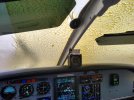
Well, it happened to me. I had the rather huge benefit that my engine kept running and producing power. I also had a couple inches of the left side of the windshield that were clean enough I could press my head up against the window and kinda see forward. The oil, which was pretty dirty, was thin enough to make out the shape of the runway and get aligned. Also good enough to find the taxiway. I gauged my flare out of the side window. Going into a field or a road.... that would've been real tough.

Absolutely no way to make out other traffic though, and honestly I forgot about it until ATC said they had traffic in the pattern on their radar and gave me the ctaf. Thankfully they were paying attention... one was actually ahead of me on short final and made a go around. Probably would have hit him had he landed because I was fast and landed way long.

I wish I had thought of a slip, but I'm not sure it would've helped all that much in my scenario, other than finding the airport. Maybe could've seen traffic that way too. I'm embarrassed I never thought of it, but it's a tool I seldom use in that plane, which is happy to drop like a rock when power is removed. With my luck i would've slipped the wrong direction and moved the oil over the remaining clear-ish patch.

IMG_20220208_132855716_HDR.jpgIMG_20220208_132954930_HDR.jpg
 
Did he also notice the two holes in the crankcase that the NTSB found (per the report linked above)?

"Examination of the wreckage found two holes in the engine crankcase above the location of the Nos. 2 and 4 cylinders."
Losing enough oil out of the filler causing loss of prime in the pump could certainly result in throwing a couple of rods through the case. However, would not securing the oil fill cap cause that much oil to be lost that quickly? I don't have the answer to that one.
 
Well, it happened to me. I had the rather huge benefit that my engine kept running and producing power. I also had a couple inches of the left side of the windshield that were clean enough I could press my head up against the window and kinda see forward. The oil, which was pretty dirty, was thin enough to make out the shape of the runway and get aligned. Also good enough to find the taxiway. I gauged my flare out of the side window. Going into a field or a road.... that would've been real tough.

Absolutely no way to make out other traffic though, and honestly I forgot about it until ATC said they had traffic in the pattern on their radar and gave me the ctaf. Thankfully they were paying attention... one was actually ahead of me on short final and made a go around. Probably would have hit him had he landed because I was fast and landed way long.

I wish I had thought of a slip, but I'm not sure it would've helped all that much in my scenario, other than finding the airport. Maybe could've seen traffic that way too. I'm embarrassed I never thought of it, but it's a tool I seldom use in that plane, which is happy to drop like a rock when power is removed. With my luck i would've slipped the wrong direction and moved the oil over the remaining clear-ish patch.

View attachment 150446View attachment 150447
Wow, what a story. Slipping may have put oil on the only window you could have seen anything out of. I think it is all a gamble at that point. Thanks for the story and pictures.
 
Well, it happened to me. I had the rather huge benefit that my engine kept running and producing power. I also had a couple inches of the left side of the windshield that were clean enough I could press my head up against the window and kinda see forward. The oil, which was pretty dirty, was thin enough to make out the shape of the runway and get aligned. Also good enough to find the taxiway. I gauged my flare out of the side window. Going into a field or a road.... that would've been real tough.

Absolutely no way to make out other traffic though, and honestly I forgot about it until ATC said they had traffic in the pattern on their radar and gave me the ctaf. Thankfully they were paying attention... one was actually ahead of me on short final and made a go around. Probably would have hit him had he landed because I was fast and landed way long.

I wish I had thought of a slip, but I'm not sure it would've helped all that much in my scenario, other than finding the airport. Maybe could've seen traffic that way too. I'm embarrassed I never thought of it, but it's a tool I seldom use in that plane, which is happy to drop like a rock when power is removed. With my luck i would've slipped the wrong direction and moved the oil over the remaining clear-ish patch.
I remember the story, but not the pics. Damn. You did great. The first thought that comes to mind seeing that is the Tyson quote "everybody has a plan until they get punched in the face". Well, you kinda got punched in the face here, and you brought it and the family in.

Since you've been through this, I'll toss out the question - do any of the crazy suggestions on here in addition to a slip sound plausible to you?
Yeah...a parachute.

It's kind of an interesting thought experiment...if what happened to me happened in a Cirrus...do you pop the chute?

Lot's of trees where I was. Parachute deployment is nearly guaranteed survival, but might be waiting hours for rescue. Also some chance of injury, possibly severe if you landed in a tree and flipped or something. If you're close to the airport, do you go ahead and land or pull over the airport? Financially, popping the chute and totaling the plane probably saves money over landing and eating the engine overhaul.

Your Tyson quote is appropos. I can tell you that tunnel vision is real...my wife told me about things later that I don't recall at all. I'm just thankful I didn't have to put it into a clearing. I feel like that would've been 50/50 at best.
 
Back
Top