568 tach / 3 years SNEW experimental Lycoming IO-360 9:1. It does this after more than a 2-3 days of not running especially if it’s cold outside. Started about 200 hours ago and hasn’t really changed much since. Should I be looking to hone/ream the valve guides on #1/#2?

You are using an out of date browser. It may not display this or other websites correctly.
You should upgrade or use an alternative browser.
You should upgrade or use an alternative browser.
Is this “morning sickness”?
- Thread starter Narwhal
- Start date

Pull the plugs after the engine sat for a few days and inspect. Make sure you don't have oil/water fouling the plugs.
If you trust your ignition switch/P-leads (and even then, treat the engine as a loaded gun), pull the prop through all four compression strokes and feel/listen for a difference. You'll easily feel a low/no compression cylinder.
If you trust your ignition switch/P-leads (and even then, treat the engine as a loaded gun), pull the prop through all four compression strokes and feel/listen for a difference. You'll easily feel a low/no compression cylinder.

Gary Ward
En-Route
- Joined
- Jan 16, 2020
- Messages
- 3,640
- Location
- Lawrenceburg, Indiana
- Display Name
- Challenger1
- Home Airfield
- I67
There’s a member here with 390 in tecnam? that had the same problem. Hopefully he will be along.
Last edited:
That would be @FPK1There’s a member here with 390 in tecam? that had the same problem. Hopefully he will be along.

FPK1
Line Up and Wait
Highly recommend you follow
 www.lycoming.com
Cylinder # 2 was my problem and my a&p took care of it...
Service Bulletin No. 388 C
Supersedes Service Bulletin No. 388B and Supplement No. 1 to Service Bulletin No. 388B November 22, 2004 TIME OF COMPLIANCE Helicopter Engines – 300 hour intervals or earlier if valve sticking suspected. All Other Engines – 400 hour intervals or earlier if valve sticking suspected until exhaust...
Cylinder # 2 was my problem and my a&p took care of it...
Ok, thanks. I would think my 2022 manufactured engine would have the high chrome valve guides which are exempt from that bulletin (if I’m understanding it correctly), but I will follow that bulletin all the same since it appears they did not solve the problem, or perhaps I’m unknowingly doing something to cause it.Highly recommend you follow
Service Bulletin No. 388 C
Supersedes Service Bulletin No. 388B and Supplement No. 1 to Service Bulletin No. 388B November 22, 2004 TIME OF COMPLIANCE Helicopter Engines – 300 hour intervals or earlier if valve sticking suspected. All Other Engines – 400 hour intervals or earlier if valve sticking suspected until exhaust...
Cylinder # 2 was my problem and my a&p took care of it...
I spoke with one IA who was pretty confident it was a sticky/tight #2 exhaust valve guide in my case. They said that #2 usually has the highest temperature differential between the valve and guide which causes the build up in the guide and the problems on startup. They also recommenddd MMO in the fuel and that has actually made the problem a lot more rare for me and shorter when it does, but it still happens occassionally.
FPK1
Line Up and Wait
Likely! My 2021 IO-390 engine had a sticky exhaust valve (#2). I would immediately have the mechanic do the wobble test described in the service bulletin...Ok, thanks. I would think my 2022 manufactured engine would have the high chrome valve guides which are exempt from that bulletin (if I’m understanding it correctly), but I will follow that bulletin all the same since it appears they did not solve the problem, or perhaps I’m unknowingly doing something to cause it.
I spoke with one IA who was pretty confident it was a sticky/tight #2 exhaust valve guide in my case. They said that #2 usually has the highest temperature differential between the valve and guide which causes the build up in the guide and the problems on startup. They also recommenddd MMO in the fuel and that has actually made the problem a lot more rare for me and shorter when it does, but it still happens occassionally.
Last edited:
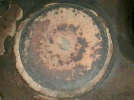
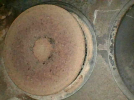
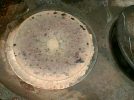
Tied some dental floss to the valve stem and dropped this exhaust valve into the cylinder, then cleaned the valve guide with a 320 grit 12.7 mm ball flex-hone on a cordless drill.
Here’s what the valve & stem, and then the guide looked like after honing. I also dropped the valve into the bottom spark plug hole to clean what I could from the stem but couldn’t really get to the caked up part right near the head. Idk if this will help but worth a try I guess.
Compression was darn near perfect 80/80 before all this , just trying to fix the morning sickness; #2 cylinder. This valve is looking a little more asymmetric than it was 20 hours ago though, so I’m not loving that.

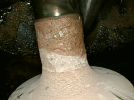
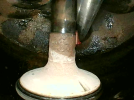
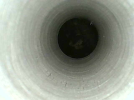
Here’s what the valve & stem, and then the guide looked like after honing. I also dropped the valve into the bottom spark plug hole to clean what I could from the stem but couldn’t really get to the caked up part right near the head. Idk if this will help but worth a try I guess.
Compression was darn near perfect 80/80 before all this , just trying to fix the morning sickness; #2 cylinder. This valve is looking a little more asymmetric than it was 20 hours ago though, so I’m not loving that.
Last edited:
Is the engine run richer than it needs to be? Lycoming guidance on the O-320 and O-360 is to lean any time you're below 70% power. Yet some pilots run them full rich whenever they're below 3000' AGL, regardless of power output. This can gunk up the valves. Is Lycoming's leaning guidance the same for the IO-390?

Stewartb
Final Approach
- Joined
- Nov 21, 2014
- Messages
- 9,026
- Location
- Wasilla, AK
- Display Name
- stewartb
- Home Airfield
- Wolf Lake
That after using MMO in your gas? That’s a lot of crud build-up for 300 hours.
Ok, thanks. I would think my 2022 manufactured engine would have the high chrome valve guides which are exempt from that bulletin (if I’m understanding it correctly), but I will follow that bulletin all the same since it appears they did not solve the problem, or perhaps I’m unknowingly doing something to cause it.
I spoke with one IA who was pretty confident it was a sticky/tight #2 exhaust valve guide in my case. They said that #2 usually has the highest temperature differential between the valve and guide which causes the build up in the guide and the problems on startup. They also recommenddd MMO in the fuel and that has actually made the problem a lot more rare for me and shorter when it does, but it still happens occassionally.
Lycoming changed the valve guide material back in the late '90s, so an engine that new should have had it incorporated. The new guide material seemed to take care of the issue, although it seems to be popping up again in the 390 engines for some reason. My guess is that it has something to do with cooling on those engines.
MMO is a good, cheap way to scavenge lead deposits. I'd keep using it even if it doesn't totally eliminate your problem.
I lean to stumble in ground ops, can’t even taxi up a hill without enriching, lean to 150F rich of peak as soon as I reduce to climb power, and cruise at about 100-150 rich of peak, sometimes 20-30 lean of peak. At 75% cruise closer to 150 ROP and 65% or less closer 100. If there is something I should be doing different with the mixture I’d love to know.
I don't have instrumentation so I lean my O-360-A4M (carbureted) the old fashioned way. On the ground lean it aggressively like you do. In the air, any time I'm below 70% power (most of the time), lean just rich of rough. In flight it gets rough about 50 RPM below peak, so "rich of rough" usually turns out to be about 25 below peak RPM.I lean to stumble in ground ops, can’t even taxi up a hill without enriching, lean to 150F rich of peak as soon as I reduce to climb power, and cruise at about 100-150 rich of peak, sometimes 20-30 lean of peak. At 75% cruise closer to 150 ROP and 65% or less closer 100. If there is something I should be doing different with the mixture I’d love to know.
800 hours on this engine and borescope shows the valves & stems pretty clean and nothing burnt (yet - touch wood). The reason I asked about leaning is my valves look cleaner than yours.
Stewartb
Final Approach
- Joined
- Nov 21, 2014
- Messages
- 9,026
- Location
- Wasilla, AK
- Display Name
- stewartb
- Home Airfield
- Wolf Lake
Lycoming says to lean to peak for cruise power, don’t they?
Lycoming says to lean to peak for cruise power, don’t they?
It’s one option they give for best economy at 65% power or less. Their other option is best power at 100F rich of peak. I usually cruise closer to 75% which I know is above their recommendation of 65%.
If the PoA council of sages think I should try running at peak EGT I’m willing to try it, probably can’t be any worse than the results I’m getting now. The airplane spends 50% of its flight time doing takeoffs and landings or flying at 500 AGL for 5 minutes between landings. A lot of that is done full rich. Mike Busch says the valve sticking is caused by low CHT and running peak EGT would probably result in CHT 10% hotter than what I see now in cruise (380 vs 350) so maybe that would help.
The Lycoming operator manual for the O-320/O-360 section 3.7 "operation in flight" describes 3 methods to lean during cruise:
1. With EGT gauge. At 75% power, lean to 150* rich of peak EGT. Below 75%, lean to peak EGT.
2. With flow meter (N/A for this discussion)
3. With manual mixture control and no instrumentation: At 75% power or less, lean to just rich of rough. That is, lean until engine roughness, then enrich just enough for smooth operation.
PS: if you have an EGT, you can try method (3) and see how the EGT you end up with compares with (1). Generally speaking, below 70% power you can do whatever you want with the mixture control without hurting the engine. Lycoming says to keep CHT below 435*F during high performance cruise and below 400*F for economy cruise. Most folks consider those limits too hot (they are continuous for max service life; the limit is 500*F!), but 350*F may be too cool. I think 380*F would keep the valves cleaner without toasting the engine.
Last edited:
The Lycoming operator manual for the O-320/O-360 section 3.7 "operation in flight" describes 3 methods to lean during cruise:
1. With EGT gauge. At 75% power, lean to 150* rich of peak EGT. Below 75%, lean to peak EGT.
2. With flow meter (N/A for this discussion)
3. With manual mixture control and no instrumentation: At 75% power or less, lean to just rich of rough. That is, lean until engine roughness, then enrich just enough for smooth operation.
PS: if you have an EGT, you can try method (3) and see how the EGT you end up with compares with (1). Generally speaking, below 70% power you can do whatever you want with the mixture control without hurting the engine. Lycoming says to keep CHT below 435*F during high performance cruise and below 400*F for economy cruise. Most folks consider those limits too hot (they are continuous for max service life; the limit is 500*F!), but 350*F may be too cool. I think 380*F would keep the valves cleaner without toasting the engine.
Problem is I’m in a cold climate and the cowling is very efficient at cooling. I’ve read from Mike Busch that I need to take the CHT targets down 20 degrees or so since it’s rare for the plane to be in anything much warmer than 60F. I’m really not sure how to compensate the fact that I could probably cruise at 80% power at 50 ROP in this airplane and still not be over 400 CHT most days (probably would be about 380 in cruise). I could just lean for a target CHT I guess (350?).

Sac Arrow
Touchdown! Greaser!
- Joined
- May 11, 2010
- Messages
- 21,566
- Location
- Charlotte, NC
- Display Name
- Snorting his way across the USA
When the Arrow had that problem, the A&P pulled the plugs, and without removing the cylinders, dropped the valves, fished the stems out the plug holes, and cleaned the lead deposits off of them. That worked.
Stewartb
Final Approach
- Joined
- Nov 21, 2014
- Messages
- 9,026
- Location
- Wasilla, AK
- Display Name
- stewartb
- Home Airfield
- Wolf Lake
It’s hard to know what percentage of power you’re at when running a lightweight fixed pitch climb prop.
The pics you posted look like the engine is accumulating deposits on the valves, which come from excess fuel, insufficient temperatures, or some combination of both. This suggests you can lean the mixture more than you have been, especially if the CHTs are already in range.Problem is I’m in a cold climate and the cowling is very efficient at cooling. I’ve read from Mike Busch that I need to take the CHT targets down 20 degrees or so since it’s rare for the plane to be in anything much warmer than 60F. I’m really not sure how to compensate the fact that I could probably cruise at 80% power at 50 ROP in this airplane and still not be over 400 CHT most days (probably would be about 380 in cruise). I could just lean for a target CHT I guess (350?).
The pics you posted look like the engine is accumulating deposits on the valves, which come from excess fuel, insufficient temperatures, or some combination of both. This suggests you can lean the mixture more than you have been, especially if the CHTs are already in range.
Ok, thanks. I’ll try cruising at something like a 360 CHT target for awhile and see what kind of results I get. That will put me right in the red box at 50 ROP if I go over 65%. Yet the absolute values of the CHT’s will still be ~60 under redline. Maybe I just need to limit cruise to 65% or less to go with that.
Stewartb
Final Approach
- Joined
- Nov 21, 2014
- Messages
- 9,026
- Location
- Wasilla, AK
- Display Name
- stewartb
- Home Airfield
- Wolf Lake
Isn’t CHT redline still 500°?
There’s no published limit in my AFM but I think my G3X is set to redline of 420, I’ll have to check the config file but I’m pretty sure I’ve never been over 390. I could make the redline whatever I want, it just triggers when the warning comes on.Isn’t CHT redline still 500°?
Page 3-12, rightmost column:There’s no published limit in my AFM but I think my G3X is set to redline of 420, I’ll have to check the config file but I’m pretty sure I’ve never been over 390. I could make the redline whatever I want, it just triggers when the warning comes on.
Stewartb
Final Approach
- Joined
- Nov 21, 2014
- Messages
- 9,026
- Location
- Wasilla, AK
- Display Name
- stewartb
- Home Airfield
- Wolf Lake
Every Cub guy I know has worried about the effects of STOL props not providing high enough cylinder pressures due to not high enough manifold pressure. The more power you have, the more it’s true. Lightweight airplane, high power to weight ratio, fixed fine-pitch prop. You have constant speed experience. I bet you didn’t fly around well under square, right? That’s almost certainly what you’re doing in the EX. I’ve never been an Avblend user but what you’re seeing is what it’s made for. Maybe you should blend your fuel 50/50 with pump gas to reduce lead. Lots of guys do it.
FPK1
Line Up and Wait
Mike Busch also recommends to lean to CHT not EGT. Full throttle and adjust mixture for CHT. Ideally with Lycoming, keep CHT over 350 and under 400.

MooneyDriver78
En-Route
- Joined
- Aug 13, 2013
- Messages
- 4,928
- Display Name
- Tom
- Home Airfield
- KSUA
That after using MMO in your gas? That’s a lot of crud build-up for 300 hours.
You want MMO in the oil, that will get it to the valve stems.

Steamflyer
Line Up and Wait
- Joined
- Mar 23, 2022
- Messages
- 954
- Display Name
- Steamflyer
@Narwhal - Lycoming sells/rents reamers to .0005", suggesting that they want a very specific reaming/homing for those guides. Not going to argue with success (if it lasts), but seems less controlled with the method described.
My understanding from years ago working with a prone-to-stick large bore Lyc is that too tight a valve guide is bad (obviously), but so also is too loose as the valve stem will cool quickly along its length and build up crud.
An adjacent thought was also set out in an article some years ago by someone (Busch?) who seemed to suggest that because Lycoming valve are sodium filled, trying to run the cylinders "as cool as possible" could be counter-productive because doing so drives a portion of the valve stem into the "cool enough to coke up" range leading to sticking valves. Running hotter made the whole length of the valve stem hot enough that deposits would not form on the stem.
In my case I resorted to reaming the guides every 100 hours until I bought new cylinders. Those six cylinders were also the last overhauled ones I ever used, though it sounds like from this thread new cylinders are always suffering. In my engine, new from factory, the first 1300 hours were stick-free, and the following 300 were stick-city, after the cylinder overhauls. Obviously many mix-and-match possibilities there.
Stewartb
Final Approach
- Joined
- Nov 21, 2014
- Messages
- 9,026
- Location
- Wasilla, AK
- Display Name
- stewartb
- Home Airfield
- Wolf Lake
That’s funny. My goal is to get temps UP TO close to 400°! The front cylinders on my Continental and Lycoming are blocked with baffles to that goal.The Ted would say that "limits are not goals". If you're trying to keep it under 380 (a good idea), that doesn't mean 379 is ok.
True, but 500*F is an absolute maximum limit. Page 3-6 shows continuous cruise limits which are lower.
Lycoming essentially agrees, and sets the continuous cruise limits at 435*F and 400*F.Mike Busch also recommends to lean to CHT not EGT. Full throttle and adjust mixture for CHT. Ideally with Lycoming, keep CHT over 350 and under 400.
I'd want it to come on a bit lower, at the continuous cruise limits.you guys would want the CHT master warning to come on at 500F then, sounds good.
Overall, operating these engines means walking the line between gunking up the valves because it's too cool, and burning up the valves because it's too hot.
MooneyDriver78
En-Route
- Joined
- Aug 13, 2013
- Messages
- 4,928
- Display Name
- Tom
- Home Airfield
- KSUA
Strength of aluminum drops rapidly above 400°, I use that as my limit.
Yeah, but I'd want the caution closer to 400F.you guys would want the CHT master warning to come on at 500F then, sounds good.

Dan Thomas
Touchdown! Greaser!
- Joined
- Jun 16, 2008
- Messages
- 12,389
- Display Name
- Dan Thomas
The high-chromium-content guides were intended to stop excessive guide wear that resulted in the valve striking the seat off-center, causing valve face and seat wear and sometimes breaking the valve. The excessive clearance also allowed carbon buildup that could cause sticking.
The reason for the new guides: https://www.lycoming.com/sites/defa...0and%20Guide%20Identification%20Procedure.pdf
The old valve wobble test to detect guide wear or carbon buildup: https://www.lycoming.com/sites/defa...Exhaust%20Value%20and%20Guide%20Condition.pdf
The reason for the new guides: https://www.lycoming.com/sites/defa...0and%20Guide%20Identification%20Procedure.pdf
The old valve wobble test to detect guide wear or carbon buildup: https://www.lycoming.com/sites/defa...Exhaust%20Value%20and%20Guide%20Condition.pdf

- Joined
- Sep 11, 2019
- Messages
- 2,886
- Display Name
- Domenick
Maybe a chemist could tell us what magic is in MMO that cleans valves, injectors, and carbs?
Dan Thomas
Touchdown! Greaser!
- Joined
- Jun 16, 2008
- Messages
- 12,389
- Display Name
- Dan Thomas
I think it's the distillates. Same stuff found in automotive engine cleaners.
Maybe a chemist could tell us what magic is in MMO that cleans valves, injectors, and carbs?
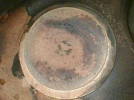
Well I went ahead and used the 12.7 mm ball hone to clean the guide on #2, so far so good, still mid 70’s compression and didn’t get any morning sickness on the first start attempt. Lapped the valve/seat while I was in there just for good measure. I ordered the wobble test fixture for next time. Too early to tell if the fix was good since my morning sickness has been sporadic anyway. The guys on vansairforce.net swear by the ball hone instead of the reamer. Now I will red box-torch this motor at peak CHT non stop and see what happens. Paradoxically my back cylinders which run 20F cooler look cleaner. If low temps were the problem it seems like #3 and #4 would be worse? Here are the exhaust valves in order 1,2,3,4. I just lapped #1 and #2.
Maybe I’m just over analyzing and need to treat it like a 172 with no analyzer, big pull to stumble then enrich a few turns on the vernier. I should probably pay to subscribe to savvy for a year and bug the heck out of their guys instead of you all.
Maybe I’m just over analyzing and need to treat it like a 172 with no analyzer, big pull to stumble then enrich a few turns on the vernier. I should probably pay to subscribe to savvy for a year and bug the heck out of their guys instead of you all.
Attachments
Last edited:
As I suggested earlier, it would be interesting to try that and see what EGT and CHT it produces.... Maybe I’m just over analyzing and need to treat it like a 172 with no analyzer, big pull to stumble then enrich a few turns on the vernier. I should probably pay to subscribe to savvy for a year and bug the heck out of their guys instead of you all.
This sounds better than torching the engine. Remember the standard Lycoming mixture/power/efficiency graph; the shapes of the curves are common to many of these engines:... Mike Busch says the valve sticking is caused by low CHT and running peak EGT would probably result in CHT 10% hotter than what I see now in cruise (380 vs 350) so maybe that would help.
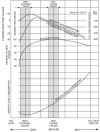
This says:
1. Peak EGT is lean of peak CHT (thus less than peak CHT)
2. Peak EGT is the rich end of the max efficiency range.
3. If the engine runs smoothly lean of peak EGT, it's more efficient and cooler, and power is down about 5% compared to being 150* rich of peak EGT.
Note that all else equal, airspeed is proportional to the cube root of power, so if power drops 5%, airspeed drops 2%.
As I suggested earlier, it would be interesting to try that and see what EGT and CHT it produces.
This sounds better than torching the engine. Remember the standard Lycoming mixture/power/efficiency graph; the shapes of the curves are common to many of these engines:
View attachment 141696
This says:
1. Peak EGT is lean of peak CHT (thus less than peak CHT)
2. Peak EGT is the rich end of the max efficiency range.
3. If the engine runs smoothly lean of peak EGT, it's more efficient and cooler, and power is down about 5% compared to being 150* rich of peak EGT.
Note that all else equal, airspeed is proportional to the cube root of power, so if power drops 5%, airspeed drops 2%.
I get all that, and I did operate lean of peak quite a bit for the first 400 hours or so on this engine. However my CHTs with anything deeper than about 20 lean of peak get below 300 pretty fast, and according to Mike Busch that causes valve guide deposits and sticky exhaust valves, which I did experience. Perhaps the sticky #2 was just inevitable. I was operating 40-50 LOP at 60-70% power pretty routinely before the valve sticking, and getting CHT in the 280-320 range. So maybe 10-20 lean of peak is where I need to be, but that’s almost just peak considering the fidelity of a vernier mixture control and atmospheric variations.