
Inconsistencies in an accident report?

Rick A

Line Up and Wait
PoA Supporter
Joined
Sep 25, 2019
Messages
828
Location
Lancaster, Pennsylvania
Display Name
Rick A
Home Airfield
KLNS
Recently watched a YouTube presentation by Hoover's "Pilot Debrief" about a fatal crash of a PA-180 in Farmingdale, Long Island NY (near KFRG) that experienced a tragic inflight fire and crashed into an industrial area close to the airport. This occurred following the backseat passenger's climb into the baggage compartment to escape flames.

The pilot declared a smoke in the cockpit emergency about 5 miles southeast of the airport and was immediately cleared for a straight in landing on runway 32 (6833' long). Radio communication audio was provided. Yet, Hoover did not provide any audio of the text he briefly displayed that reported there was additional communications between the emergency aircraft and the tower in the traffic pattern.

The only thing I can surmise (total speculation) is the aircraft dove towards the runway at such a high rate of speed a landing was not possible, causing a go-around into a left downwind. The tower was calling traffic which the pilot acknowledged. The NTSB Final Report only mentioned the pilot broke left, got low and crashed implying that the fire likely prevented the pilot from conducting a landing on the long runway.

Near the end of the video Hoover mentions there is a law suit pending, so I believe the video may have been skillfully presented so as not to become part or target of a lawsuit.

My questions are why is the tower audio incomplete in the video presentation (assuming it was not available), but was briefly shown in text (attached photo of my TV during the YouTube)?

Also, why does the NTSB's Final Report not include any details, or recommendations regarding additional components missing from this story (like a possible go-around on fire while trailing smoke) and ATC appearing to operate normally, i.e., calling traffic and informing the pilot they will instruct him when to turn base?


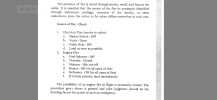
IMG_1977.jpeg
 
That was your first mistake. :biggrin:

Yeah, I hear ya'.

I used to rent Archers out of FRG and am very familiar with the area. I heard about this accident a while ago, but never picked up any of the details, which as reported by the survivor(s) turned out to be horrific.

Reading the transcribed text he presented in the video, ATC's handling of this aircraft seems out of place and not at the level I'd expect to hear when handling an aircraft on fire. I'd like to find out more as a hot button of mine is the robotic tendency of new (and some not so new) pilots to blindly follow ATC commands after declaring an emergency.

Following publication of many Final Reports, it often becomes ancient history with nothing learned, unless you search past the obvious.
 
ATC's handling of this aircraft seems out of place and not at the level I'd expect to hear when handling an aircraft on fire. I'd like to find out more as a hot button of mine is the robotic tendency of new (and some not so new) pilots to blindly follow ATC commands after declaring an emergency
I agree - plenty of cases where pilots don't even declare an emergency, or allow ATC to jerk them around after. If I'm on fire, I'll absolutely exercise 91.3(a)(b) now and deal with 91.3(c) later. None of this "extend downwind, I'll call your base" malarkey.
 
I don’t see anything until after the go around and ATC’s subsequent call to turn base indicating any problems, and once he declared an emergency it looks like he was cleared straight in but didn’t make it to the airport.

But I will note that, to me, “land as soon as possible” doesn’t tell me to fly 5 miles to an airport.

1777482927278.png
 
Last edited:
On the video, there's audio beginning with MAYDAY MAYDAY smoke in the cockpit and he reports being 5 miles southeast of the airport, and is immediately cleared to land straight in runway 32.

At some point on the long final the smoke gets thicker and the pilot opens the door, which spreads the fire.

Once close to the airport (maybe during the go-around?) flames erupt from the floor, including around the feet of the rear seat passenger (a few months later the only survivor), who proceeds to climb into the baggage area. The pilot reported he held the door open with his right arm, which was being cooked, and ultimately was amputated following the crash. He died a few months later from his extensive burns.
 
Emergency the pilot makes all the decisions.
No radio or communications needed.
 
I'm not going to waste time on the video but it sounds like some of your questions/concerns/issues are addressed in material in the accident docket. According to the ATC services review (included in docket) the go-around occurred before the smoke call and subsequent mayday. There is also a partial transcript of comms, which I expect is what you saw and/or heard. Per the summary, "Air traffic services in this event were considered unremarkable, and consistent with all current rules, regulations and procedures."

I'm not sure what you're expecting to find, but the best place to find vetted information is in NTSB materials, not someone else's summary (including mine) of those materials and who knows what other sources; truthful, relevant, or otherwise.


Nauga,
and his source code
 
why does the NTSB's Final Report not include any details, or recommendations
In general, the Final Report is to only report the probable cause and its supporting data. The Factual part of the investigation is where the details are typically reported along with other data and information not part of the probable cause. As noted above, any relevant factual data is released in the Public Docket, however, not all investigative findings are released in the docket for various reasons. As to recommendations, sometimes they are released in the Final but only if directly related to the probable cause but can also be issued separately if they are not a repeat of a previous recommendation.
 
Regarding the discrepancy noted in the OP for the shown ATC transcript vs ATC audio, I think the answer is that the two come from different sources. The displayed ATC transcript is from the NTSB docket and is based on the official FAA ATC recordings, the audio of which is not released to the public. The ATC audio heard in public (e.g., news, YouTube) is from 3rd party sources (e.g., LiveATC) and is frequently incomplete and of inferior quality to the official FAA recordings.

There’s another thread on PoA that addresses this event but to really understand the disturbing nature of this accident, you need to read all of the docket interviews.

Regarding the comments from several regarding YouTube aviation influencers, I say “hear, hear.” I’ve sampled all and currently watch very few routinely. I’m reminded of the Jim Downey line from Billy Madison, “Everyone in this room is now dumber for having listened to it.”
 
Wasn't the initial landing attempt before the fire?

As close as I can gather from the video presentation, which apparently was dramatized (surprise surprise) at the beginning with a Mayday Mayday Mayday call that seems not even closely timed with what was gathered from the NTSB documents regarding distance, communications, ground tracks, and time stamps.

The official ATC communications shared was labeled a "Partial Transcript", and IMO didn't connect all the dots, some of which if disclosed and connected could possibly be more helpful for pilots' learning what not to do, but apparently that is not the purpose of NTSB crash investigations (now I know). The NTSB report only lists the probable cause of the crash was a the leaky pressurized oil line creating an airframe fire.

KFRG tower was very busy, and this aircraft checked in with the tower requesting to land from around 6 miles to the southeast, just outside the KFRG Class Delta. They then were maneuvered around and finally sequenced onto final for nearly 20 minutes (from checking in) when he finally declared the panicked Mayday.

The fact that the pilot didn't declare an emergency much earlier meant he either didn't smell or detect smoke (like other pilots had apparently noticed and reported on prior flights), or he did notice the smell (or light smoke) and dismissed it as not rising to the level of declaring an emergency (the engine was running fine), so dutifully allowed ATC to sequence him in for a full stop landing.

Possibly he did smell smoke and share some information about it with ATC, but if the pilot did not consider the smell important enough to request priority to the runway, it's doubtful any non-pilots working for ATC would suggest it. Whether that was possibly mentioned or discussed during the 20 minutes that preceded the crash, it was not referred to within the partial communications transcript document.

The crash occurred only one minute following the Mayday calls. Maybe that's the point he opened the door and widened the opening with his arm, and the fire immediately spread into the cockpit and initiated the crash. Tragic, indeed.
 
The official ATC communications shared was labeled a "Partial Transcript",
I think you’re reading too much into the “partial transcript.” It probably contains all communication with the accident aircraft, but eliminates nonrelevant communication with the rest of the traffic on frequency.
 
I think you’re reading too much into the “partial transcript.” It probably contains all communication with the accident aircraft, but eliminates nonrelevant communication with the rest of the traffic on frequency.

Yes, you're right. All the relevant communications are there in the NTSB's Partial Transcript, from first checking in at 1937:40 to the crash about 1957:30 . The doomed aircraft never made it to the airport, and a go-around over the airport never occurred (I stand corrected).

The landing clearance was cancelled and he was pulled of final then turned around to enter an extended downwind at 1945:41 (probably to let some waiting aircraft depart) and informed the tower would call his base, which they called at 1950:14 .

He didn't respond to the call to turn base for nearly four minutes (1954:04) and ultimately responded with "smoke in the cockpit immediate landing".

The first Mayday call at happened at 1956:12 "fire mayday mayday". The crash occurred just a short time later (~1957:30) about one mile short of runway 32.

Some aircraft emergencies are elevated to the seriousness of "treat it like smoke in the cockpit". The only thing worse is "fire in the cockpit". Wonder if opening the door to evacuate the smoke contributed to the sudden acceleration of this event?
 

Attachments

Some aircraft emergencies are elevated to the seriousness of "treat it like smoke in the cockpit". The only thing worse is "fire in the cockpit". Wonder if opening the door to evacuate the smoke contributed to the sudden acceleration of this event?
As I noted earlier, I suspect that following the manufacturer’s procedure might have had a better outcome.
 
Aircraft accidents are the result of a chain of events. Where this chain started and where the chain could have been broken we will likely never know. The first item could have simply been a faint smell of fuel in the cockpit prior to takeoff, an abnormal value on the ammeter or a maintenance or preflight inspection that could have been more thorough.
 
Back
Top