How safe are aerobatics?

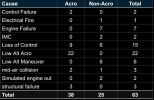
I did a study of Decathlon fatal accidents from 1980 to 2020. Since the Decathlon is the most widely used aerobatic trainer, it is probably fairly representative of the overall novice and sportsman aerobatic population.

Here are the results:

Screenshot_20250508-144241.png

My conclusions from the data:
1. Aerobatic flight is more dangerous than non-aerobatic flight.
2. A significant portion of that additional risk is driven by stupidity. Most of the low altitude accidents were pilots showing off for friends on the ground.
3. The other main cause was poor training, leading to loss of control.

Bottom line: yes, aerobatic flight is dangerous. However, if you get proper training, use an appropriate and well maintained aircraft, and resist the urge to show off, it can be done safely. I have been competing in aerobatics for 25 years, and I'm not dead yet.

Also worth noting that in the last month, two highly skilled aerobatic pilots have died in normal flight operations. One of them is probably the best aerobatic pilot in American history. He died while landing. Flying is dangerous, period. You want safe, stay on the ground.
 
Last edited:
I'm the new guy just poking around and wanted to compliment the accuracy of this post.
I live in a community airpark. We have had two accidents during aerobatics - both instances of failure to "resist the urge".
Neither aircraft nor the pilots were well-suited for the attempted task.
On the other hand, pilots here have been conducting regular aerobatics safely for decades in planes that are designed for it.
I would add that experience in aerobatics can make anyone a safer aviator. Being afraid of an unusual attitude is not a good thing for a pilot.
 
I did a study of Decathlon accidents from 1980 to 2020. Since the Decathlon is the most widely used aerobatic trainer, it is probably fairly representative of the overall novice and sportsman aerobatic population.

Here are the results:

View attachment 140861

My conclusions from the data:
1. Aerobatic flight is more dangerous than non-aerobatic flight.
2. A significant portion of that additional risk is driven by stupidity. Most of the low altitude accidents were pilots showing off for friends on the ground.
3. The other main cause was poor training, leading to loss of control.

Bottom line: yes, aerobatic flight is dangerous. However, if you get proper training, use an appropriate and well maintained aircraft, and resist the urge to show off, it can be done safely. I have been competing in aerobatics for 25 years, and I'm not dead yet.

Also worth noting that in the last month, two highly skilled aerobatic pilots have died in normal flight operations. One of them is probably the best aerobatic pilot in American history. He died while landing. Flying is dangerous, period. You want safe, stay on the ground.


Without flight hours, those figures don’t really quantify the risks. I’m pretty sure that many, many more hours are spent in non-acro flight. Even acro flight is only a handful of minutes out of an otherwise non-acro flight.
 
You want safe, stay on the ground.

I can’t find stats for it, but I wouldn’t be surprised to learn there are more deaths per mile while walking than while flying. (Of course, there are many more deaths per mile while in bed than while flying. Zero in the denominator.)
:devil:
 
Without flight hours, those figures don’t really quantify the risks. I’m pretty sure that many, many more hours are spent in non-acro flight. Even acro flight is only a handful of minutes out of an otherwise non-acro flight.

Agreed, but I'm not trying to quantify the absolute risk, which I generally find a pointless exercise. Rather, I am trying to qualify the risk in useful relative terms. In this case, how safe is aerobatics compared to non-aerobatic flight? Your assumption about flight hours, combined with the total fatalities in acro vs non-acro, is sufficient to answer that question in general terms.
 
I don't fly aerobatics but I'm guessing it's like many highly pleasing activities in that it's only dangerous to those that don't assess the risks involved and train themselves to either avoid or overcome these risks.

Motorcycles, airplanes, guns, and girlfriends are not dangerous but there certainly are risks when dealing with them. Either learn the risks and how to cope, or learn how to let 'em alone ...
 
My opinion is that low level and/or spontaneous acro are bad ideas. I put myself in a bit of a corner one time with a not very high speed pass followed by a steep climb over my sister's farm. That was dumb and risky. A 1 G roll or a 3.5G loop at 4,000' doesn't carry a lot of risk if you're flying the appropriate airplane.

Point is, acro isn't all the same and doesn't all carry the same level of risk.
 
Great point. Aerobatics isn't inherently dangerous. A student pilot on his first solo trip around the pattern is likely at higher risk than Bob Hoover was doing engine-out acro in his Aero Commander.
The important thing is being fully aware of the situation and how to deal with surprises. Being comfortable with the Earth above your instead of below figures into the equation as well.
 
Yeah, no. Aerobatic flight is absolutely more dangerous than non-aerobatic flight. Anyone who thinks otherwise should not be flying aerobatics.

The question is whether it can be performed with an acceptable level of risk. For competent pilots with proper equipment who follow good operational practices, the answer is yes.

But the risk is always there. The IAC is a very small community, and we lose people all the time. We lost Warren Cilliers just a few weeks ago.
 
Much of the maligning of acro lay at the hands of the low-altitude party trick, pro circle included. Filter out that activity subset, and the thing quickly becomes a nothingburger compared to real killers, like recreational IMC.

In short, people ground mort due to insufficient altitude pad way more often than they pull wings off/GLOC while botching acro, even when illegally/ad-hoc flying it in normal/utility cat airplanes. It's the ground proximity that sinks the safety rate (pun intended), not the propensity to miscontrol or relative level of inexperience. That's a compliment to the airplane engineering behind these things btw, even spam cans.
 
Depends on a few things, in order of descending importance:

1) Was it intentional? :o
2) Was it done at a reasonable altitude?
3) Was the pilot trained in the maneuver(s) and how to recover from botching them?

Unintentional aerobatics are quite deadly! And showing off for your friends at low altitude also has a significant negative effect on lifespan.
 
Yeah, no. Aerobatic flight is absolutely more dangerous than non-aerobatic flight. Anyone who thinks otherwise should not be flying aerobatics.

The question is whether it can be performed with an acceptable level of risk. For competent pilots with proper equipment who follow good operational practices, the answer is yes.

But the risk is always there. The IAC is a very small community, and we lose people all the time. We lost Warren Cilliers just a few weeks ago.
To be sure, aerobatic flight requires an increased level of skill and attention to be done safely. No one should engage in any aerial activity they consider dangerous.
 
Side question is whether doing aerobatics properly makes one a safer pilot when flying "normally?" To that I would give an emphatic yes. As I understand it, 121 training and recurrent training is now required to include upset training which is a subset of aerobatics. I took Patty Wagstaff's 5 hour course last year, and I know it helped me. As a sometimes instructor of primary flight students, I have seen how quickly you can get into an "aerobatic" attitude. Aerobatic training gives you the basics to quickly and properly recover. And the aerobatic training (little as it was) gave me a lot of confidence and understanding of stalls, spins and recovery from them. This makes me a better and safer instructor.
 
Correct. I got upset training in the 737 simulator every year. Typically, the instructor would have us close our eyes and then introduce a very nose high or low attitude, or roll beyond 90 degrees. The nose-high scenario is the only realistic one in my opinion, typically from a go around with high thrust and lots of nose-up trim. Recovery sometimes required rolling to 90 degrees of bank and using the rudder to get the nose down. For some reason, Boeing designed the 737 to disconnect the autopilot when the TOGA (Takeoff, Go Around) button is pressed. Great time to increase the workload!
 
I have been peeking over the fence into acrobatics. The 3 big things that jumps out about aerobatics are training, training, and training.

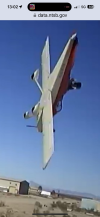
The way I understand this picture The pilot was a retired airline captain flying an RV. Apparently he nosed over when he decided to try a roll. The aircraft exceeded VNE, shed its tail-feathers and assumed the lawn dart posiotion IMG_7044.png
 
Apparently he nosed over when he decided to try a roll.

Which is pretty embarrassing because the amount of training to fly a safe roll is 5 to 10 minutes. Now you can practice slow rolls for years to perfect them. But I have literally taught friends to fly an aileron roll by showing them one and saying "now you try it."
 
That seems pretty odd. A roll doesn't involve the kind of speed that ends that way, unless you split-s from inverted.
I have seen the aftermath of that very sequence of events. It was a Cessna flown by an airline pilot. Similar outcome.
 
That seems pretty odd. A roll doesn't involve the kind of speed that ends that way, unless you split-s from inverted.
I have seen the aftermath of that very sequence of events. It was a Cessna flown by an airline pilot. Similar outcome.
Could have been an attempted barrel roll. Those can evolve into a barrel dive if you really screw it up.
 
Could have been an attempted barrel roll. Those can evolve into a barrel dive if you really screw it up.
Agreed, and many of us (yourself included, I assume) have seen it happen. The final report for the pictured accident calls the final maneuver the result of
"...enter[ing] a maneuver consistent with a split-S" but given the conditions at entry it sure seems more like a botched roll. It looks to be missing the pull at the beginning of a barrel roll. In the end, though, the specific maneuver is largely irrelevant, whatever it was certainly went bad somewhere along the way.

Nauga,
chilled
 
Which is pretty embarrassing because the amount of training to fly a safe roll is 5 to 10 minutes. Now you can practice slow rolls for years to perfect them. But I have literally taught friends to fly an aileron roll by showing them one and saying "now you try it."
Can I be your friend??
 
That seems pretty odd. A roll doesn't involve the kind of speed that ends that way, unless you split-s from inverted.
I have seen the aftermath of that very sequence of events. It was a Cessna flown by an airline pilot. Similar outcome.
RV's typically cruise near yellow line. Red line ain't that far away. So if you start off at yellow line and get the nose down under power, well...
 
RV's typically cruise near yellow line. Red line ain't that far away. So if you start off at yellow line and get the nose down under power, well...
That's one reason I love my biplanes with all that drag. Fly along at cruise, roll inverted and pull, you won't overspeed before getting back level.
 
I've done hundreds of hours of acro, but I doubt I've done more than 3 barrel rolls. It's somewhat of a problematic maneuver from a consistency standpoint.
 
I did not know that. Learn something new every day.
Yeah, my 160 hp RV-6 with a wood prop (horribly underpowered and obsolete according to many of today's builders) cruises at about 155 knots true at 60% power. That's 178 mph. The yellow arc begins at 180 mph.
 
Yeah, my 160 hp RV-6 with a wood prop (horribly underpowered and obsolete according to many of today's builders) cruises at about 155 knots true at 60% power. That's 178 mph. The yellow arc begins at 180 mph.

So is the traditional pitch up needed entering an aileron role?
 
So is the traditional pitch up needed entering an aileron role?
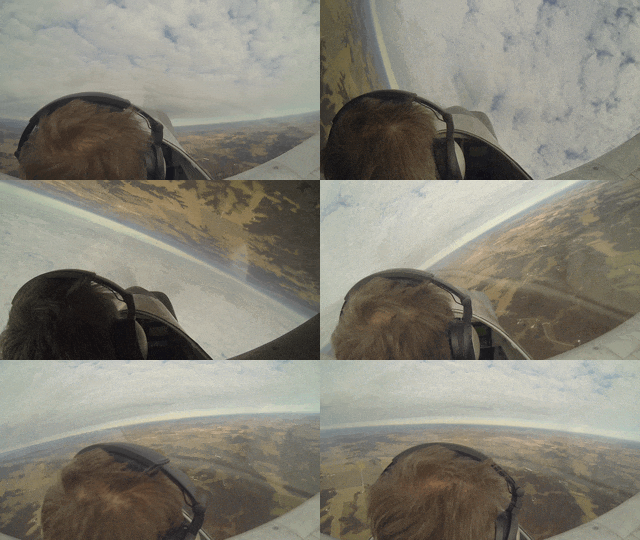
If you have inverted systems and use appropriate control inputs you can do an aileron roll without pitching up. But I don't have inverted fuel or oil systems, so the rolls in the RV-6 are a bit corkscrewy. Or maybe they are barrel rolls without a lot of vertical component.

Ed Haywood probably knows more about performing a good (contest quality) aileron roll than I ever will. Maybe he'll jump in.
 
So is the traditional pitch up needed entering an aileron role?
I pull up just a bit, more than in slower rolling airplanes, but not more than 5-10 deg or so. I also end up equally nose low a lot of the time. :confused:
I have a flop tube in one tank but no FI or inverted oil, so pretty much the same boat as KyleB.
150846421ff161b17a.gif


Nauga,
headbangin'
 
I've done hundreds of hours of acro, but I doubt I've done more than 3 barrel rolls. It's somewhat of a problematic maneuver from a consistency standpoint.
 
Yeah, my 160 hp RV-6 with a wood prop (horribly underpowered and obsolete according to many of today's builders) cruises at about 155 knots true at 60% power. That's 178 mph. The yellow arc begins at 180 mph.
And you probably have at least 50, if not 75, pounds more useful load than them.
 
Ed Haywood probably knows more about performing a good (contest quality) aileron roll than I ever will. Maybe he'll jump in.

I can, but first a bit of pedantry. Different people and organizations use different terminology, but as defined by the IAC (which is US only):

A. An aileron roll uses aileron only. No elevator or rudder is applied during the roll. It is not a competition figure.

B. A roll (also called a slow roll) follows a straight line path through the sky. Lift from the wings varies throughout the roll, so varying yaw and pitch is necessary to prevent the aircraft from descending. It is both a competition figure and a component of many other figures, and can be done horizontally, at a 45 degree angle, or vertically. Rolls can be broken into halves, quarters, and eighths.

Control inputs during a slow roll could be a very long thread. Since the question is about pitch up at the beginning of the roll, the answer is that it depends on roll rate. If you are flying an Extra or such with a 400 degree per second roll rate, it's not necessary. In a slower rolling aircraft like mine, it helps to blend a little pitch up into the start of the roll so you aren't fighting to keep the nose up for the rest of the roll.

In the eyes of the IAC you can do an aileron roll however you want. But fundamentally the maneuver is ballistic. Once you start the roll, you are generating zero lift and the aircraft is falling for the duration of the roll. If you start level, you will finish nose down and accelerating. Therefore, most pilots pitch up before starting the roll. How much depends on roll rate. In my Decathlon, a 30 degree pitch up usually puts you level at the end.

If you use an appropriate entry speed, pitch up sufficiently, and neutralize the elevator before rolling, an aileron roll is hard to botch. It also requires no more than 1.5G, no less than zero G, and cruise airspeed. IMO it is the perfect first aerobatic maneuver to learn, and usually takes only one demonstration to master.

OTOH you can spend a lifetime trying to perfect the slow roll.
 
Last edited:
…But fundamentally the maneuver is ballistic. Once you start the roll, you are generating zero lift and the aircraft is falling for the duration of the roll. …
That makes perfect sense; I did not know it was a zero lift maneuver.
 
Back
Top