
You are using an out of date browser. It may not display this or other websites correctly.
You should upgrade or use an alternative browser.
You should upgrade or use an alternative browser.
Hollister Midair
- Thread starter Hengelo
- Start date


texasclouds
En-Route
- Joined
- Aug 23, 2018
- Messages
- 4,361
- Location
- Bryan, Texas
- Display Name
- Mark
- Home Airfield
- Coulter Airfield CFD
Yikes

If the pilot taking the video was trying to warn the RV on 123.0 about the approaching Cirrus, wouldn't the Cirrus pilot have heard those transmissions?
The discussion on runway markings is also interesting, with the two mentioned publications offering differing guidance, as well as the actual markings themselves.
Lots of holes in the swiss cheese lined up in this one, glad it was a "successful" midair with minimal reported injuries.
The discussion on runway markings is also interesting, with the two mentioned publications offering differing guidance, as well as the actual markings themselves.
Lots of holes in the swiss cheese lined up in this one, glad it was a "successful" midair with minimal reported injuries.

bbchien
Touchdown! Greaser!
Check everything. This is why I don't do KOSH anymore (see other post - becuase a baron (no notam on hand) descended on me from above. My only warning- the cabin came under a shadow from above and behind).
This poor guy didn't have a chance....one keeps the threshold (@ Bravo) in sight but cannot see under his hull. Sigh.
This poor guy didn't have a chance....one keeps the threshold (@ Bravo) in sight but cannot see under his hull. Sigh.

hindsight2020
Final Approach
If I didn't have bad luck I wouldn't have any, but I'll bet on the RV'er on who ends up getting the 709.

Kenny Phillips
Final Approach
- Joined
- Jul 29, 2018
- Messages
- 6,570
- Display Name
- Kenny Phillips
And I hope he has very good insurance.If I didn't have bad luck I wouldn't have any, but I'll bet on the RV'er on who ends up getting the 709.
ateamer
En-Route
- Joined
- Dec 19, 2007
- Messages
- 2,981
- Location
- Port St. Lucie, FL
- Display Name
- ateamer
- Home Airfield
- FD88
The comments on the Youtube video got wrapped up in the RV taking off from the beginning of the pavement rather than the threshold. That is a red herring. Doesn’t matter where on the runway you roll from, there’s still a plane on final. I get that it’s technically not a displaced threshold - they relocated it to where it is but the pavement preceding it is still full strength.

gov98
Pre-takeoff checklist
- Joined
- Apr 26, 2014
- Messages
- 167
- Display Name
- Gov98
Having some familiarity with the airport, but not the collision itself, I find it hard to believe that the relocated threshold had any affect here. As long as I've been to that airport the threshold is where it is, and not coincidentally taxing down the Alpha taxiway is a long taxiway that more is intended *I think* to make it so that CALFire (which is down off of the alpha taxiway) has the easiest and quickest access to the runway possible, but at Bravo you still have >6,000 feet of runway. (All that to say unless you're CALFire you don't want to taxi down Alpha).
I'm sure we're just going to have to wait for FAA/NTSB to say what they're going to say, but two additional thoughts,
1.)Thank goodness everyone survived.
2.)It feels like the person lining up to takeoff should have been more aware that someone was landing, some times at that airport it can feel like there is a line of people coming in to land (for a number of airports in the Bay Area it is the closest airport selling 100LL. (RHV, E16, KWVI, etc.) It can result in some impatience, but rushing is worse.

midwestpa24
Final Approach
One of the reasons the FAA really doesn't like and has been working to remove taxiways that are in-line with a runway. It should either be an actual displaced threshold or nothing at all.

luvflyin
Touchdown! Greaser!
- Joined
- May 8, 2015
- Messages
- 17,444
- Location
- Santa Barbara, CA
- Display Name
- Luvflyin
- Home Airfield
- KVUO
A one sentence reply?? Are you ok dude?If I didn't have bad luck I wouldn't have any, but I'll bet on the RV'er on who ends up getting the 709.
hindsight2020
Final Approach
the monosyllabic brigade whines too much about "big" words, so trying to meet people where they are....A one sentence reply?? Are you ok dude?

Stewartb
Final Approach
- Joined
- Nov 21, 2014
- Messages
- 9,026
- Location
- Wasilla, AK
- Display Name
- stewartb
- Home Airfield
- Wolf Lake
How does the Cirrus not see the RV?
I don’t like straight-ins at uncontrolled airports. This is a good illustration of why.
I don’t like straight-ins at uncontrolled airports. This is a good illustration of why.
How does the Cirrus not see the RV?
I don’t like straight-ins at uncontrolled airports. This is a good illustration of why.
He might have saw him as he was in position and probably thought he would wait. Landing aircraft normally have the right of way. But why didn't the rv see the cirrus?
hindsight2020
Final Approach
The actual Cirrus guy popped up on blancolirio's comment section. Said he never saw the RV and otherwise is grateful to be alive, with a fractured leg apparently. Also said he already gave the FAA his statement. Some people reflexively told him to take his post down lol, though I totally get the paranoia from chatters.He might have saw him as he was in position and probably thought he would wait. Landing aircraft normally have the right of way. But why didn't the rv see the cirrus?
luvflyin
Touchdown! Greaser!
- Joined
- May 8, 2015
- Messages
- 17,444
- Location
- Santa Barbara, CA
- Display Name
- Luvflyin
- Home Airfield
- KVUO
Cachinnating vociferously (lol)the monosyllabic brigade whines too much about "big" words, so trying to meet people where they are....
luvflyin
Touchdown! Greaser!
- Joined
- May 8, 2015
- Messages
- 17,444
- Location
- Santa Barbara, CA
- Display Name
- Luvflyin
- Home Airfield
- KVUO
Straight ins mixing it up with other pattern traffic is one thing. How it applies to departures is another. Even traffic using the pattern makes a certain amount of straight in, typically say a mile or so. The RV may have noticed the Cirrus when it was on downwind and not done what he did. Maybe not.How does the Cirrus not see the RV?
I don’t like straight-ins at uncontrolled airports. This is a good illustration of why.
Stewartb
Final Approach
- Joined
- Nov 21, 2014
- Messages
- 9,026
- Location
- Wasilla, AK
- Display Name
- stewartb
- Home Airfield
- Wolf Lake
Maybe. A straight-in instrument approach to an uncontrolled airport on a bluebird day makes no sense. I don’t know this airport but I live on one that’s similar. Small airplanes aren’t required to have radios. The guy landing needs to look at what’s going on down below. Around here the King Airs and Beech 1900s are VFR and looking for traffic just like the Skywagons and Cubs.He might have saw him as he was in position and probably thought he would wait. Landing aircraft normally have the right of way. But why didn't the rv see the cirrus?

- Joined
- Jun 7, 2008
- Messages
- 2,261
- Display Name
- Andrew, CFI-I
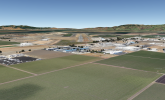
It's easy to analyze this from a chair, but looking at the Google Earth imagery of the approach, it's hard to understand how the Cirrus pilot could have missed another aircraft lined up for takeoff - regardless of whether it was a displaced or relocated threshold. The view of the runway end doesn’t appear significantly obstructed by trees or terrain (the imagery is dated May 2025, so it's relatively current). Could it be that the Cirrus pilot was flying a practice approach and overly focused on the instruments?
Lindberg
Final Approach
Skip to 7:04 if you just want to see the midair without all the commentary.
traumamed
Pre-takeoff checklist
That image is a little unfair. Where is the instrument panel, nose of the plane, and propeller?It's easy to analyze this from a chair, but looking at the Google Earth imagery of the approach, it's hard to understand how the Cirrus pilot could have missed another aircraft lined up for takeoff - regardless of whether it was a displaced or relocated threshold. The view of the runway end doesn’t appear significantly obstructed by trees or terrain (the imagery is dated May 2025, so it's relatively current). Could it be that the Cirrus pilot was flying a practice approach and overly focused on the instruments?
View attachment 143098

You have a point, but you really should be able to see that at some point of your approach. It's hard to see and avoid if you can't see in the direction you are flying.That image is a little unfair. Where is the instrument panel, nose of the plane, and propeller?
bbchien
Touchdown! Greaser!
Landing AC on final has Right-of-way. Another 44709 ride for the RV pilot who is probably done, as he has nothing airworthy to fly. Happy that both survived, I hope the RV pilot is well insured.

Ed Haywood
Final Approach
Any radio calls by either?
Agreed. Holding short with your back to final is bonkers. Visually verifying no aircraft on final before taking the runway is Pilot 101.
One of the reasons the FAA really doesn't like and has been working to remove taxiways that are in-line with a runway. It should either be an actual displaced threshold or nothing at all.
Agreed. Holding short with your back to final is bonkers. Visually verifying no aircraft on final before taking the runway is Pilot 101.
- Joined
- Jun 7, 2008
- Messages
- 2,261
- Display Name
- Andrew, CFI-I
That image is a little unfair. Where is the instrument panel, nose of the plane, and propeller?
Yes, that’s a great point. The pitch angle also matters. But it’s still hard to imagine an approach where the entire section of runway before the threshold is obscured from view. Maybe that’s the case in a Cirrus; I don't know. None of these change the fact that the RV was sitting with his back to the approach and not listening to the radio - a classic swiss cheese scenario where everything lined up.
luvflyin
Touchdown! Greaser!
- Joined
- May 8, 2015
- Messages
- 17,444
- Location
- Santa Barbara, CA
- Display Name
- Luvflyin
- Home Airfield
- KVUO
In the way. The solution to that is move them out of the way. A slip works nicely for thatThat image is a little unfair. Where is the instrument panel, nose of the plane, and propeller?
luvflyin
Touchdown! Greaser!
- Joined
- May 8, 2015
- Messages
- 17,444
- Location
- Santa Barbara, CA
- Display Name
- Luvflyin
- Home Airfield
- KVUO
Any radio calls by either?
Agreed. Holding short with your back to final is bonkers. Visually verifying no aircraft on final before taking the runway is Pilot 101.

- Joined
- May 25, 2006
- Messages
- 21,998
- Location
- KTTA, North Carolina
- Display Name
- Who you kiddin?
- Home Airfield
- KTTA
Interesting that maybe a month ago, there was this big discussion in a FB group on whether you were allowed to begin the takeoff roll on that portion of the taxiway. I agree with you it should not have been a factor in this accident.The comments on the Youtube video got wrapped up in the RV taking off from the beginning of the pavement rather than the threshold. That is a red herring. Doesn’t matter where on the runway you roll from, there’s still a plane on final. I get that it’s technically not a displaced threshold - they relocated it to where it is but the pavement preceding it is still full strength.
This was a little different and it's difficult to imagine not seeing an airplane in what is practically speaking a "position and hold" location, but I have seen two airplanes on final which were apparently unaware of each other.

I've landed an SR-20 (not 22) at normal approach speeds. Threshold was clearly visible.
But...
The RV wasn't on the threshold, it was a decent distance behind. We're good at filtering things with our vision, even assuming the RV wasn't blending it, good chance the Cirrus pilot was focused on the threshold and not looking behind it.
But...
The RV wasn't on the threshold, it was a decent distance behind. We're good at filtering things with our vision, even assuming the RV wasn't blending it, good chance the Cirrus pilot was focused on the threshold and not looking behind it.
Ed Haywood
Final Approach
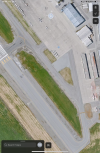
Helpful picture, thanks. So did the RV taxi to the line, visually clear final, then pull out onto the displaced threshold and take off without delay? Or did he taxi onto the threshold and hold?
- Joined
- Jun 7, 2008
- Messages
- 2,261
- Display Name
- Andrew, CFI-I
Years ago, near my home field, there was a collision between a landing and a departing aircraft under similar circumstances. The departing plane was on a turnaround/run-up pad at the very start of the runway, but that area was partially hidden from view on final due to a tall levee. In this case, though, I don’t see any obvious visual obstructions.
Sure, the rules say landing traffic has the right of way - but that doesn’t mean we can just ignore someone waiting to take off. When I’m on final and see an aircraft holding short, my alert level goes up - even if I’ve already talked to them. You never really know - they might think they’re talking to someone else and start an unexpected takeoff roll. All it takes is a small mix-up.
Sure, the rules say landing traffic has the right of way - but that doesn’t mean we can just ignore someone waiting to take off. When I’m on final and see an aircraft holding short, my alert level goes up - even if I’ve already talked to them. You never really know - they might think they’re talking to someone else and start an unexpected takeoff roll. All it takes is a small mix-up.
luvflyin
Touchdown! Greaser!
- Joined
- May 8, 2015
- Messages
- 17,444
- Location
- Santa Barbara, CA
- Display Name
- Luvflyin
- Home Airfield
- KVUO
This one will probably have an NTSB report. We’ll find out then what he says. Or maybe he’ll get on facextereditgram and tell usHelpful picture, thanks. So did the RV taxi to the line, visually clear final, then pull out onto the displaced threshold and take off without delay? Or did he taxi onto the threshold and hold?

3393RP
En-Route
- Joined
- Oct 8, 2012
- Messages
- 4,720
- Display Name
- 3393RP
At the risk of furthering pedantry, which is annoying, I'll point out the threshold is relocated, not displaced.Helpful picture, thanks. So did the RV taxi to the line, visually clear final, then pull out onto the displaced threshold and take off without delay? Or did he taxi onto the threshold and hold?
Sorry.
bonefishpete
Cleared for Takeoff
- Joined
- Nov 10, 2024
- Messages
- 1,360
- Display Name
- Bonefishpete
See and Avoid isn't that the first rule?
onwards
Pattern Altitude
Yes, that’s a great point. The pitch angle also matters. But it’s still hard to imagine an approach where the entire section of runway before the threshold is obscured from view. Maybe that’s the case in a Cirrus; I don't know. None of these change the fact that the RV was sitting with his back to the approach and not listening to the radio - a classic swiss cheese scenario where everything lined up.
I'll start by saying that I am probably the least qualified (by far) of the esteemed posters in this thread (not even IFR rated, although I'd gone through most of the training for it), but my senses are tingling on the tendency of all humans, pilots included, to get very comfortable around routine to the point where basic discipline is lacking. I've flown only small aircraft, but a couple with mindblowingly remarkable instrumentation similar to a modern Cirrus panel, and it's really, really easy to just trust said instrumentation and give your neck a rest from all the constant swiveling and your mind a rest from all the radio chatter. The sky is big, things usually go well.
Still remember the time when I took off from a non-towered after making all the calls and this and that, and as I'm 100ft (edit: 500ft, mistype, but well below pattern alt) off the ground an incoming swings right to left in front of my nose less than 50ft ahead before turning downwind having never made a call that anybody could hear. This one never got reported anywhere because "nothing happened" but it's seared into my trauma centers.
xenadu
Filing Flight Plan
The Cirrus pilot may have seen the RV holding on the parallel taxiway and by the time the RV pulled onto the lead-in taxiway to start his roll the RV was hidden from view.
People are focusing on the relocated threshold because that's what allowed this to happen. If it had been a normal threshold or just not such a silly long lead in taxiway the RV would have been visible to the Cirrus. If the taxiway approached from the left side the Cirrus probably could have seen the RV as well.
I got the impression the Cirrus was practicing instrument proficiency. He says in the comment he was in communication with other traffic about the straight in well ahead of time.
Hopefully the NTSB does a cockpit visibility study. That's the only way we will get answers about what was possible. Often such studies show how insufficient see-and-avoid actually is by time will tell.
midwestpa24
Final Approach

Delta 737 aborts take-off as Aeromexico E190 lands on same runway
Pilots of a Delta Air Lines Boeing 737-800 aborted take-off after an Aeromexico Connect Embraer 190 landed on the same runway at Mexico City International airport.
 www.flightglobal.com
Similar situation in Mexico City, except with bigger airplanes and a tower!

sourdough44
En-Route
I’m not saying I would have seen the other aircraft lined up, but I really try to scan the pavement on final to be sure it’s clear. That’s regardless of radio calls and the rest. I know aircraft holding short are relatively easy to see. The orientation and color with one lined up can be more difficult. Yes, in this case he seemed to start the roll earlier.See and Avoid isn't that the first rule?
I have heard aircraft calling for one airport when on a frequency for the other. The correct frequency is simple, but needs to be triple checked.

Crashnburn
Pattern Altitude
Disclosures. I got my A&P at Hollister and had several training flights to that airport, from KRHV before moving to Colorado..
This seems similar to what I've seen at KLMO, and have been told, and have commented that it's illegal - Line up and wait. This perfectly illustrates why.
I saw and avoided something similar few weeks ago on my initial solo flight at KLMO. As I turned final, (and I was making all my pattern calls) I saw a plane take the runway. I got a little hot about that but side-stepped to the right to go around and made my calls for the go-around. I was settled down by the time I made it back around to final for my best (and last) landing of the day.
I'm glad there were no fatalities.