High oil temp in Lycoming 0360

Cesarmx

Pre-takeoff checklist
Joined
Nov 19, 2020
Messages
188
Display Name
Cabby
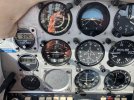
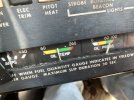
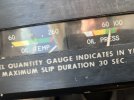
My Beech Sundowner model c23 with a Lycoming 0360 is experiencing High oil temp to red line in the indicator. After 25 years of ownership this is the first time , nothing has changed: no changes done, same engine baffles, same oil for 10 years ( Phillips 10W50 Victory).

Even after leveling off and retarding throttle to 2400-2500 rpm it still high. CHTs 330-360F, EGT 1340F but the good thing is that the oil pressure still in the green healthy arc!

Have replaced the vernatherm and the oil temp sensor once once, and still no joy.

In other blogs somebody suggested to connect the ground of the indicator directly to the engine ground for a possible open circuit, done it but still the same.

The only thing left to replace is the oil temp indicator which I saw a used one at a salvage store but I believe disconnecting the entire cluster of instruments ( Alt, left/ right fuel tanks and oil pressure) which are together in a big aluminum cover ,but separate units, would be a nightmare; at this point, I am more incline to buy an EI oil temp/ press indicator new which I have already a 2 1/4 hole cut out for $650!

Please, Any ideas to share
Many Thanks!
 

Attachments

  • IMG_6024.jpeg
    IMG_6024.jpeg
    2.4 MB · Views: 11
I'm currently chasing the same high oil temp in an io-360. My mechanic is telling me he suspects the oil coolers may be clogged and bypassing. His plan is to flush the oil coolers and go from there.
 
I'm currently chasing the same high oil temp in an io-360. My mechanic is telling me he suspects the oil coolers may be clogged and bypassing. His plan is to flush the oil coolers and go from there.
Yes, I did flush and cleaned the oil cooler with a solvent and rinse out throughly….still the same high temp
 
Was any troubleshooting performed on the oil temp system prior to replacing those parts? If not, may want to take a step back and check things as you may have replaced serviceable units.
Good idea for me to do, thanks!
 
Was any troubleshooting performed on the oil temp system prior to replacing those parts? If not, may want to take a step back and check things as you may have replaced serviceable units.

The first thing I would check is the gauge.
 
The gauge issue is an easy check. Another thing I would do is look at baffling. How old are the seals? Are they still making a good seal around the pressurized plenum above the cylinders? Also, verify that your fuel flow is normal and that your vernatherm is operating correctly. How does your oil look? A worn engine (or a broken ring) can have enough blowby to increase temperatures.
 
A relatively unknown factor that can cause oil temp overreading is a bad engine-to-airframe ground. It only takes a tiny bit of resistance. Normally, the electron flow is from the engine case, through the temperature probe, through the wire to the gauge, and from the gauge to the bus, from the bus to the battery and then to the battery ground. As the probe heats up its resistance decreases and permits more current flow that makes the gauge rise.

A bad ground between the engine and firewall will spike the oil temp. The alternator is pumping electrons into the engine case and from there to the airframe. If there is resistance due to a bad ground, that current looks for other paths, and finds that temp probe and pushes more flow through it to the gauge and bus and battery and ground. The gauge reads higher.

Try turning on the landing lights and see if the gauge goes up. Those lights draw more current and make the alternator work harder, and more current will flow through the sender.

Bad engine grounding is really common. Corrosion, vibration, oil and dirt all affect the connections.
 
With some aircraft you can replace the Sender with a particular value

Resistor to get a set temperature reading. A Piper Tomahawk gave the

info in the Service Manual.
 
Thanks, will do !

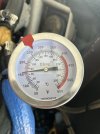
Remove the temp probe from the engine, use a digital thermometer and a cup of hot water. Verify the temperature of the water and put the probe in it. See what the temp on the gauge reads.
 
A relatively unknown factor that can cause oil temp overreading is a bad engine-to-airframe ground. It only takes a tiny bit of resistance. Normally, the electron flow is from the engine case, through the temperature probe, through the wire to the gauge, and from the gauge to the bus, from the bus to the battery and then to the battery ground. As the probe heats up its resistance decreases and permits more current flow that makes the gauge rise.

A bad ground between the engine and firewall will spike the oil temp. The alternator is pumping electrons into the engine case and from there to the airframe. If there is resistance due to a bad ground, that current looks for other paths, and finds that temp probe and pushes more flow through it to the gauge and bus and battery and ground. The gauge reads higher.

Try turning on the landing lights and see if the gauge goes up. Those lights draw more current and make the alternator work harder, and more current will flow through the sender.

Bad engine grounding is really common. Corrosion, vibration, oil and dirt all affect the connections.
Never tried turning the lights on while in the air and read the oil temp ind, excellent idea, will see what it does!
I will add a second ground strap, for the sake of redundancy , from somewhere else in the engine case to a different place in the engine firewall.
Thanks !
 
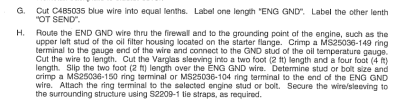
Cessna issued Service Kits to replace the mechanical oil temp gauges in their various airplanes to an electric gauge. Here's the SK for the 182:

https://cessna.org/wp-content/uploads/2020/09/SK182-110A.pdf

Now, the part of that we want to emphasize is this:

1770502085375.png

"ENG GND" is misspelled as END there in (H).

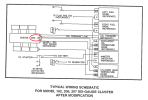
Note the ground wire added between the engine case and the gauge's ground. This is to remove the voltage differential caused by poor engine grounding that then causes gauge spiking.

1770502351588.png
 
The gauge issue is an easy check. Another thing I would do is look at baffling. How old are the seals? Are they still making a good seal around the pressurized plenum above the cylinders? Also, verify that your fuel flow is normal and that your vernatherm is operating correctly. How does your oil look? A worn engine (or a broken ring) can have enough blowby to increase temperatures.
Will do, thanks!
 
Cessna issued Service Kits to replace the mechanical oil temp gauges in their various airplanes to an electric gauge. Here's the SK for the 182:

https://cessna.org/wp-content/uploads/2020/09/SK182-110A.pdf

Now, the part of that we want to emphasize is this:

View attachment 149702

"ENG GND" is misspelled as END there in (H).

Note the ground wire added between the engine case and the gauge's ground. This is to remove the voltage differential caused by poor engine grounding that then causes gauge spiking.

View attachment 149703
Will talk to my AP about this one too, thanks!
 
Never tried turning the lights on while in the air and read the oil temp ind, excellent idea, will see what it does!
I will add a second ground strap, for the sake of redundancy , from somewhere else in the engine case to a different place in the engine firewall.
Thanks !
I rented a 172 many years ago and experienced high oil temperatures so I enriched the mixture eventually fouling the plugs. As it turned out, when you turn the landing light on so others can see you better, even in the daylight, it increased the oil temperature to beginning of redline. So there may be something to the above. I never did hear how they resolved it...
 
A sudden change like that with low-to-normal exhaust and cylinder head temps, is often a faulty gage system.

Bad sender, faulty gage, bad wiring. Latter two more likely. Have sent out several of these for overhaul for the same issue. Boiling water test is an easy first step.

Now if you say “oh but there’s a ton of metal in my oil” perhaps there’s a different pathway.

I don’t think coolers can be flushed in the field - tend to believe pacific coolers that it takes hours of continuous pressurized circulation of magic solvent to clean them. Granted it’s their business. I’ve seen going from ancient to brand new cooler worth about 15 degrees. Unless your cooler suddenly got clogged or the vernatherm ceases to open at all (need to check that in water) feels more like electrical.

So electrical/sensing, cooler system related, or real internal change for the worse.
All those items will be checked out again beginning tomorrow , appreciate it!
Thanks to all for your advices !
 
What brand system do you have? Sender model number? I have temp/resistance charts for Rochester 3080-37 and Stewart Warner 362EW and 280EA.

Model numbers are stamped on the sender.
Charts available: Dropbox changed its sharing functionality and I have yet to figure it out. Email me for the Excel spreadsheet.
 
Last edited:
What brand system do you have? Sender model number? I have temp/resistance charts for Rochester 3080-37 and Stewart Warner 362EW and 280EA.

Model numbers are stamped on the sender.
Charts available: Dropbox changed its sharing functionality and I have yet to figure it out. Email me for the Excel spreadsheet.
Thanks Domenick, I will get you the info!
 
My previous Tiger had a similar issue, took to a mechanic shop that wasn't that good and spent 19 weeks watching it reach red-line on every post mechanic adjustment about 20 min after take off.

Switched mechanics and fields. New one said to not shutdown when arriving at his hangar. Tiger cowl can be opened easily. He used a infra-red temp gauge to check engine block, cylinders, oil cooler with all reporting under 200* when cockpit guage was reporting red line.

Turns out there was a oil temp sensor to cockpit gauge mismatch ... they needed to be from the same company or type. Had spent on vernatherm, flushing etc that was not needed with the original mechanic group.
Yes, you start with the sensor system when temps are otherwise normal as reported by OP. Then you proceed to the more complicated, less likely causes. The Lycoming temp sensors in Tigers, Beeches, and Cherokees are somewhat similar, so the logic chain is also similar.

Not sure why mechanic was so excited not to shut down; if the gage was at redline an immediate IR scan after shut down would have reported the same discrepancy with much greater safety.
And the personal risk involved with a running engine……..yes, that’s the way I am doing it: after shut down I immediately push airplane into hangar, remove top cowling and with and IR meter on hand , start taking temp readings of oil cooler and oil hose lines, vernatherm housing in the back of my engine for knowledge-gain of engine oil temps at different points. ( temps in SE Tx have been in the high 60s to low 70s already)
 
And the personal risk involved with a running engine……..yes, that’s the way I am doing it: after shut down I immediately push airplane into hangar, remove top cowling and with and IR meter on hand , start taking temp readings of oil cooler and oil hose lines, vernatherm housing in the back of my engine for knowledge-gain of engine oil temps at different points. ( temps in SE Tx have been in the high 60s to low 70s already)

Were you IR readings different than your gauge?
 
Were you IR readings different than your gauge?
I will try to fly tomorrow and will take temps via IR meter, this is my plan :
1-Oil cooler 2-by using an 18” mechanical temp meter, I will introduce it thru the oil port immediately after shooting down engine ( I will compare it to the red line on the indicator, if needle still stays there, which is 260 F ) 3- after removing top cowling I will take temp on the Two hoses in and out the cooler on the outside layer. 3- two front cylinders immediately after prop stops too 4- and by the Vernatherm area with IR gun.
I cleaned out the engine to fire wall ground strap on both ends and re tightened
 
Much of this discussion reminds me of something I apply when dealing with doctors: treat the patient, not the lab results. If the patient appears active and healthy but the lab results indicate otherwise, the first action is to understand and resolve the discrepancy, not dive into invasive treatment. Or as some experienced mechanics say, use your head tools before using your hand tools.
 
I will try to fly tomorrow and will take temps via IR meter, this is my plan :
1-Oil cooler 2-by using an 18” mechanical temp meter, I will introduce it thru the oil port immediately after shooting down engine ( I will compare it to the red line on the indicator, if needle still stays there, which is 260 F ) 3- after removing top cowling I will take temp on the Two hoses in and out the cooler on the outside layer. 3- two front cylinders immediately after prop stops too 4- and by the Vernatherm area with IR gun.
I cleaned out the engine to fire wall ground strap on both ends and re tightened
I flew this morning for about 30 minutes and I believe I got it fixed! OAT = 70 F ,clear and winds calm!

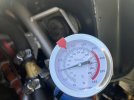
This is the process: I climbed up to 1500 ft -2000ft and retarded the throttle to 2500 rpm for about 25 minutes; after landing and taxied back to hangar ( about 5 minutes) and immediately got off and grabbed the IR gun and measured the oil cooler temp at 104 F, front cylinders #1 -237 F, #3 -232 F and oil temp thru the top spout and measured with a mechanical 16” long stick was 155 F ( barely touching the oil in the sump).
1770918261408.jpeg
1770918779894.jpeg

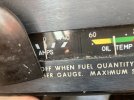
After removing top cowling (about 6-8 minutes): oil cooler 116F ( makes sense no more air coming in the front so got a bit warmer), oil spout 160F, cylinders #1 -215, #3 - 212F, two oil cooler hoses going to back of engine 119F and 112F and Vernatherm housing 148F. CHTs in flight 311-335F during flight. .The oil temp Indicator needle was all the time in the green ( the POH indicates a range in the green from 120-245F, so probably about 150-180F the needle indicated, since it is not a direct relationship scale is hard to assign a number without a chart from manufacturer, and it never increased during the flight!

1770919013797.jpeg
1770918893383.jpeg
1770919620451.jpeg

What I did?
1-Cleaned up ground strap from engine to fire wall real good and re
-tightened
2- In a different blog, someone said that Cessna had recommended with same temp issue, to run a ground wire from the ground strap firewall point directly into the ground on the back of the temp Ind instrument!

That’s all!
I thank all of you (and God)for your recommendations , I only pray it will continue with no more engine oil temp issues!
It has been painful after 6 weeks of dealing with the issue, A bunch of trials and errors (playing with Vernatherm, Temp probe, remade a probe harness with new back connector) too!

Thanks again!
 
Ended up replacing the oil temperature indicator too, after a couple of flights it is working ok for the normal oil temperature indicator too in the green arc
 
Back
Top