GPS 175 and ADSB

Vihurah

Filing Flight Plan
Joined
Aug 1, 2024
Messages
18
Display Name
Alex
Home Airfield
KFDK
so just a quick question

im thinking of upgrading my 150 by popping a GPS 175 in. Now i know the GTX375 is technically more bang for the buck but i already have an adsb compliant Transponder, and my big thing was to get a cheap (lol) WAAS gps and save money to put in G5s. i do a lot of flying through the DC SFRA and would like something more reliable than the one VOR and Aera 660

thing is i have a GDL39 on the dash feeding ADSBin and FISB into the Aera, so i kind of dont want to lose the situational awareness

my question: does anyone know if the Sentry ADSB can feed ADSB/FISB data to a GPS175, or will i need to bite the bullet and figure out how to finance something that comes with the adsb in already installed
 
Welcome, fellow SFRA denizen.

BTDT with my 140. I got a 335, should have gotten a 345.

tl;dr don't dork around with portables, spend the money and get real ADS-B in.
 
You could keep your Aera and use one of the 175's RS232 feeds to it and the Aera becomes a larger map display than the 175's. That would still display you flight plan information as well, including the full approach and missed approach.
 
As far as I can tell, the Sentry will not feed traffic information to the Aera portables. The Sentry uses WiFi and the Aera uses bluetooth (Connect). The Aera only uses WiFi for chart and database updates. Additionally, you wouldn’t be getting any additional information from the Sentry that your GDL 39 isn’t already providing. Neither will feed traffic information to the GPS 175.
I don’t think feeding traffic into the GPS 175 will add much to your situational awareness. The screen is just too small for that. The Aera is good, but an iPad connected to your GDL 39 would be even better.

Don’t discount the reliability of the Aera 660. It’s a great unit, and tethered to your GDL 39, the GPS receiving is just as accurate.
 
Last edited:
The Sentry, no External device, can feed ADS-B data to any panel mounted device. So yes, the GPS175 will give you a nice WAAS GPS and the Approaches that come along with it, but none of the Traffic, Wx, etc. will change from what you have now.

Maybe hold off a year and build up some more cash in the bank and consider the GNX375. You might also look at the GI275 rather than the G5. A lot more bang for the buck and I think you'd be happy with the options it gives you.
 
Concur with M20K. In Garmin world, you can't take ADSB in from portables (Avidyne world is different). And I also agree that the GI275 >> G5. Actually, the 175 and 275 are a killer combo. Had it in my last plane and really loved them. Not to mention they both can be purchased 'over the counter' from Garmin so you can potentially save a lot of time and money having your A&P install. They talk to each other via ethernet so wiring is super easy. You didn't mention what transponder and ADSB-out solution you had, but in the perfect world it would be a Garmin 345 which would feed both the 175 and the 275 also via ethernet. The only other Garmin ADSB box that will feed the 175/275 is the older GDL88. That technically does both ADSB in and out, but you can turn off the 'out' signal if you already have that covered. There are quite a few of these used out there now in the sub $1500 range. Or sell whatever transponder/ADSB-out equipment you currently have and pony up for the 275/375 combo and be done with it!

C.
 
I have a GTN 650xi and a GTN 355, but no ADSB In feeding them as I have a Stratus transponder. I have no plans or desire to change, as the screens are just too small for traffic. I use my tablet for that.

Net net, get the G175 and dual GI 275's. It will set you up for years to come.
 
The GDL39 will not send ADS-B to the GPS175. It will just send it to the Aera. As was already mentioned, the GPS175 screen is very small to have traffic and weather on it, since you already have the Aera 660.
 
  • Like
Reactions: WDD
I had ADSB out with uAvionix tail beacons in a couple of different airplanes and I got ADSB in with a GDL-50 paired to Foreflight on my iPad. It worked well.

With that said, I got an avionics upgrade in late 2023 and I love love LOVE the GNX375. I now see traffic on both the GPS as well as my iPad (the GNX375 pairs Foreflight on my iPad). I also get audible traffic alerts when the GNX375 perceives a traffic risk. It helps a lot! For example, when I was shooting my approaches under the hood, my safety pilot, while competent, was not well-versed with my equipment. I heard the alert: "Traffic, 12'oclock, same altitude, 2 miles." I was immediately eyes up and I spotted the aircraft coming head-on before my safety pilot.

I also like that the GPS and transponder are consolidated into a single unit. It is convenient and saves panel real estate.
 
Not to sidetrack the thread, but do a lot of avionics these days communicate via Ethernet?

Is there a switch in the panel, or are they just direct connect?
 
Not to sidetrack the thread, but do a lot of avionics these days communicate via Ethernet?

Is there a switch in the panel, or are they just direct connect?
No Ethernet. Connecting a portable to the panel is via Bluetooth or WiFi.
 
Not to sidetrack the thread, but do a lot of avionics these days communicate via Ethernet?
Yes there are, but usually proprietary. Connectors are all different too... No RJ-45s or CAT8. :) At least not in smaller aircraft.

In larger "fly-by-wire" aircraft, I believe just about everything is running on a network.
 
Not to sidetrack the thread, but do a lot of avionics these days communicate via Ethernet?

Is there a switch in the panel, or are they just direct connect?
Garmin gear starting from around the GTN time-frame mostly have Ethernet. One exception is equipment that came from the X team (experimental) such as the G3x, G5, etc.

There is no switch. They just direct connect in sort of a mesh topography. For example the GTN has 4 ports, the GI275/GTX345/GPS175/GNC355/GNX375 each have 2 ports and the GTR205/GNC215 has 1.
 
Some of these suggestions are massive overkill for a C150. You will wind up with double the value of the plane in avionics.

Are you looking for legal IFR? If not, stick to portables for Nav and ADS-B. Run Garmin Pilot on a phone or tablet as a backup to your Aera.
 
Last edited:
There is no switch.
Wellll..... Technically I bet the GTNs actually have a small internal switch as they have two connectors. And in the larger aircraft I bet the same is true with the components (internal switch) or they do have a switch - but that is a single failure point, so I wouldn't put in a switch.
 
A different approach. Instead of the 175, consider putting in a Dynon HDX. Moneywise, you would be in about the same ballpark, get a heck of a lot more and probably drop a little weight. You’ll also have something you can expand if and as you want (AP, Com, xpndr, engine monitor,etc). I have both HDX and a 175, and unless you need the waas capability, the HDX is far more useful, and cheaper on an ongoing basis (free DB updates vs $500/yr).
 
IMHO, anything non-WAAS should be avoided if you're looking to get an IFR GPS.
 
Not to sidetrack the thread, but do a lot of avionics these days communicate via Ethernet?

Is there a switch in the panel, or are they just direct connect?
Garmin calls their flavor of Ethernet "High Speed Data Bus" (HSDB). It uses 2 twisted pairs just like traditional 10BaseT ethernet and the actual cable looks just like Cat5, but of course they spec a special 'aviation grade". It is wired point-to-point so any device in the middle of the chain will need multiple ports (most devices have 2-4 ports). Each 'port' requires 4 pins wired in to the traditional DB-style connector (no RJ-45 jacks). In theory, Garmin could have used a 'switch' as the hub of a traditional ethernet star topology, but that would have been an extra box to mount and power up. Probably more info that you wanted.

C.
Nope! Not more info that I wanted at all! Good info.

Is there any sort of debugging info to be obtained if you could hook up a computer into this network? I wonder if they’re using IP, or some other “proprietary” protocol…
 
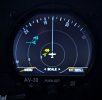
If you are specifically worried about traffic, the AV-30 with an AV-LINK module can be configured to display TIS-B from any portable that uses WiFi. I like the lack of clutter in the display format compared to viewing traffic over a map on your EFB.

The range rings can be zoomed in and out by turning the center control knob. If not installed as a required instrument (AI or DG), the unit can be switched in flight between the various views: AI, DG/HSI, or Traffic. You can wire your Aera to push nav data to the HSI. So if you don't have gyros, a single unit can provide you with an AHI in case of inadvertant IMC, an HSI for cross country nav, and a dedicated traffic display for busy airspace.

Pretty good bang for the buck at $2500 plus $300 for the AV-LINK, and easy to install yourself under A&P supervision. It is not as capable as a GI-275 combined with a Garmin IFR unit, but that is overkill for a lot of Saturday hamburger fliers.

PXL_20250501_002419230 (1).jpg
 
Last edited:
Back
Top