
You are using an out of date browser. It may not display this or other websites correctly.
You should upgrade or use an alternative browser.
You should upgrade or use an alternative browser.
Gami gas has arrived...
- Thread starter Racerx
- Start date
- Joined
- May 15, 2020
- Messages
- 7,765
- Display Name
- Ernie
- Home Airfield
- C81
If it was solved, it would have been implemented. Creating a fuel that can run these engines isn't the problem. The problem is implementation. Asking every airport to replace their infrastructure and every owner very extensive alterations is a non starter. People ***** about needing to replace gaskets on g100ul."The fuel system has been modified to burn fuel grade ethanol in accordance
with STC SE8707SW." That STC is not online as far as I can tell, even though its derived from FAA/Gov't funded research.
Seems that AGE-85 (Aviation Grade Ethanol) solves all the corrosion and vapor issues with a blend of bio-diesel.
I'm really not interested in doing people's research... nothing posted here is a deal breaker. Everything has been solved, for over 20 years.
One of the problems with ethanol is shelf life. And the inability to detect water. That plane on the ramp in the rain. Are you sure those gaskets are doing their job? Is that still ethanol or is it vodka?
Preaching to others to do the research is akin to conspiracy theorists.

Daleandee
Final Approach
- Joined
- Mar 4, 2020
- Messages
- 8,354
- Display Name
- Dale Andee
Bad news from Blancolirio
George can still make money ... just label it aircraft paint stripper. Probably sell at a higher price per gallon too!


Cap'n Jack
Final Approach
I've read all the citations that you posted. Issues with water adsorption and detections, for example, aren't listed in those citations. This is a single airframe- the issues with other airframes aren't discussed.I implore you to read without bias the Baylor papers. Everything you are pointing out has been solved since 1994 (that's when they started the ethanol test, 1996 is when the got the STC
Did you not mention re-pitching the propellor too? See post 91 in this thread by you. Replacing a bladder is neither trivial nor inexpensive. Home-built aircraft might use other materials for tank sealant that are compatible with current fuels. They may not be compatible with something very different than what is used now.I will admit that a 152 is a rather simple AC, but the fuel system was unmodified other than a boost pump and rejet. If an AC does have a bladder then a simple compatibility test is in order. Again, ethanol has been a thing for decades. We know what materials it's harmful to and what it not.
You provide citations that support your point of view. Up until post 118, your citations mentioned nothing about the airframe. Has adsorption of water from the air been solved? It does happen, I've personally observed the results of water adsorption in my work. Water getting into a fuel tank from leaky seals? I can find it with AvGas easily when I sump- not so with ethanol.I'm really not interested in doing people's research... nothing posted here is a deal breaker. Everything has been solved, for over 20 years.
Note that people with motorboats have long had issues with ethanol in fuel. Fiberglass and aluminum tanks were damaged by ethanol and water
That's a lot more than simple "re-jetting"The FAA has put out some whopper ADs... retiring incompatible fuel bladders in return for killing 100LL is an option to consider.
So....this isn't pure ethanol anymore. Cessna doesn't recommend it:Seems that AGE-85 (Aviation Grade Ethanol) solves all the corrosion and vapor issues with a blend of bio-diesel
Perhaps that's why the STC is no longer available and can't be downloaded? This is more recent than your citations. I'm pretty sure it doesn't fix the water adsorption problem.
One other thing not mentioned- galvanic corrosion. Gasoline isn't conductive. Dissimilar metals can be used in a fuel system containing gasoline, because the fuel doesn't complete the electrical path. Pure ethanol is slightly conductive, but becomes very much so when water is added, and thus can complete an electrical path allowing galvanic corrosion. Again, I've had first-hand experience with this in lab equipment when people started using reverse phase solvents with one of our detectors rather than the normal phase solvents previously used.
Last edited:
MackMooney
Pre-takeoff checklist
- Joined
- Aug 7, 2023
- Messages
- 417
- Display Name
- McMooney
I"d be happy just modifying my procedures to run 94ul. If all i have to do is not run 100% at sealevel while it's 110degs, seems easy enough
- Joined
- May 15, 2020
- Messages
- 7,765
- Display Name
- Ernie
- Home Airfield
- C81
Wonder if George swapped gaskets. But the AOPA baron had a bladder leak and it didn't show this level of destruction.So here's the question: George has been running G100UL in his Cirrus for a decade; what's the difference?

Dana
Final Approach
Even for certified products there can be variation. For example, I'm (re)learning about the care and feeding of Stromberg carburetors on older Continental engines. Years ago Stromberg switched from a lapped steel float needle to a neoprene tipped needle, which worked much better... with the 80/87 gas used at the time. Come 100LL, and some (but not all!) neoprene needles had problems swelling and getting stuck closed. I don't know if it was ever figured out, but it seemed to be down to slight differences in the neoprene formulation between suppliers, even though all complied with what spec was applicable. And that's just one small component.
There are a number of elastomers (i.e. rubber) that are compatible with gasoline. There are are also elastomers that are compatible with alcohol. There are very few that are compatible with both, and those are typically harder materials, requiring a different seal design; it's not always just a simple material substitution.
Stromberg eventually dropped the rubber tipped needle and went with a Delrin (plastic) needle, which worked OK (but not great), which because it weighed less required a modification to the carburetor float. It's never simple...

- Joined
- Oct 16, 2019
- Messages
- 8,863
- Location
- Atlanta / Marietta
- Display Name
- Vintage Snazzy (so my adult children say)
- Home Airfield
- KPUJ
Is there a control group for this test? That is, whatever was done with GAMI needed to be done in exactly the same way with 100 LL.That is the same Cirrus that was at RHV which I reported on in my series of videos on paint and materials testing. It was recently flown to a Cirrus service center near Juan for further inspection and repairs.
Michael Luvara
Filing Flight Plan
- Joined
- Jan 17, 2021
- Messages
- 22
- Display Name
- Michael Luvara
If you are referring to what I tested, the answer is yes, the vast majority of it was side by side with 100LL and 4 different samples of G100UL.Is there a control group for this test? That is, whatever was done with GAMI needed to be done in exactly the same way with 100 LL.
- Joined
- Oct 16, 2019
- Messages
- 8,863
- Location
- Atlanta / Marietta
- Display Name
- Vintage Snazzy (so my adult children say)
- Home Airfield
- KPUJ
Did you make the “Blancolirio” video that was posted?If you are referring to what I tested, the answer is yes, the vast majority of it was side by side with 100LL and 4 different samples of G100UL.
Who did what test?
Trying to sort it out.
Last edited:

Pinecone
Final Approach
And GAMI ran some 14 years of testing on several aircraft.The only real answer is 100% ethanol. The FAA ran a 13 year test running 100% ethanol on two AC and absolutely nothing bad happened.
Michael Luvara
Filing Flight Plan
- Joined
- Jan 17, 2021
- Messages
- 22
- Display Name
- Michael Luvara
No. My original post was that what Blancoliro posted was a Cirrus that had leaks after using G100UL ant RHV and it had recently flown to Grass Valley for repairs after being patched to fly there. It’s now there torn apart for inspection and repairs at a Cirrus service center. So it wasn’t testing that was done on that aircraft. I had covered that aircraft (and others) in a series of videos (see mluvara on YouTube) where I did additional materials tests.Did you make the Blancolirio video that was posted?
- Joined
- Oct 16, 2019
- Messages
- 8,863
- Location
- Atlanta / Marietta
- Display Name
- Vintage Snazzy (so my adult children say)
- Home Airfield
- KPUJ
Ah - OK.
Can you give a cliff note version of your test? Exposed a portion of a painted part to UL and another portion to 100LL? Time needed to notice an effect? Etc?
Can you give a cliff note version of your test? Exposed a portion of a painted part to UL and another portion to 100LL? Time needed to notice an effect? Etc?
Dixiebluesky
Pre-takeoff checklist
- Joined
- Feb 25, 2020
- Messages
- 166
- Display Name
- Dixiebluesky
It wasn't really a deliberate test. It was just showing the effects on paint in an airplane using the fuel that had developed a leak.
Dixiebluesky
Pre-takeoff checklist
- Joined
- Feb 25, 2020
- Messages
- 166
- Display Name
- Dixiebluesky
I'm no expert in this by any means but I have a strong suspicion that the xylene is the main culprit. Very well could be wrong.
Michael Luvara
Filing Flight Plan
- Joined
- Jan 17, 2021
- Messages
- 22
- Display Name
- Michael Luvara
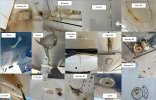
In short, degradation was seen within several days to a week, dependent on age, type of paint, and amount of fuel applied to the part/container. I never saw 100LL have any effect other than blue stain (which 100LL would wipe off). Here is a collage of affected aircraft I am aware of. There is also a user report from a Bonanza that I'll post when I can.Ah - OK.
Can you give a cliff note version of your test? Exposed a portion of a painted part to UL and another portion to 100LL? Time needed to notice an effect? Etc?
While I've had an account here for a few years, I don't have enough posts to yet post links. You can find them on youtube under mluvara.
Michael
Attachments

Michael Luvara
Filing Flight Plan
- Joined
- Jan 17, 2021
- Messages
- 22
- Display Name
- Michael Luvara
m-toluidine is the suspected component with a high boiling point.I'm no expert in this by any means but I have a strong suspicion that the xylene is the main culprit. Very well could be wrong.
Cap'n Jack
Final Approach
Xylene is used in 100LL as an octane booster. I don't know if there is a concentration difference between 100LL and the 100UL.I'm no expert in this by any means but I have a strong suspicion that the xylene is the main culprit. Very well could be wrong.
Dixiebluesky
Pre-takeoff checklist
- Joined
- Feb 25, 2020
- Messages
- 166
- Display Name
- Dixiebluesky
The UL listed up to 20% on the xylene. I don't see any for the LL, I see toluene in the LL. I am just going off of their msds sheets and am not a chemist.Xylene is used in 100LL as an octane booster. I don't know if there is a concentration difference between 100LL and the 100UL.
Michael Luvara
Filing Flight Plan
- Joined
- Jan 17, 2021
- Messages
- 22
- Display Name
- Michael Luvara
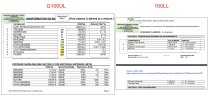
Chevron 100LL SDSXylene is used in 100LL as an octane booster. I don't know if there is a concentration difference between 100LL and the 100UL.
G100UL SDS
Side by side with parker o ring compatibility (left column) and boiling points listed for G100UL.
Michael Luvara
Filing Flight Plan
- Joined
- Jan 17, 2021
- Messages
- 22
- Display Name
- Michael Luvara
For those interested, here are a few more relevant items (now that I can post links)
My testing videos
Notably, this a declaration made by the CEO of the affected Cirrus relating to the damage and history
Cirrus CEO Declaration
Numerous declarations from users and related to a potential early ban on 100LL sales.
GAMA Statement
GAMA posted CEH declarations
A report from Paul Marshall from G100UL use in his Bonanza. Note that he burned 531 gallons, which is about 7% of all G100UL sold in California at the time of his ceasing usage.
Paul Marshall Report
Summary
Michael Luvara
Filing Flight Plan
- Joined
- Jan 17, 2021
- Messages
- 22
- Display Name
- Michael Luvara
Corrected Chevron SDS link as it appears I cannot go back and edit.Chevron 100LL SDS
G100UL SDS
Side by side with parker o ring compatibility (left column) and boiling points listed for G100UL.
View attachment 139719

pfarber
Pattern Altitude
- Joined
- Jun 20, 2021
- Messages
- 1,653
- Display Name
- pfarber
These are not real problems. The fuel used in the Baylor study was NOT pure ethanol but AGE-85. E-85 with biodiesel.If it was solved, it would have been implemented. Creating a fuel that can run these engines isn't the problem. The problem is implementation. Asking every airport to replace their infrastructure and every owner very extensive alterations is a non starter. People ***** about needing to replace gaskets on g100ul.
One of the problems with ethanol is shelf life. And the inability to detect water. That plane on the ramp in the rain. Are you sure those gaskets are doing their job? Is that still ethanol or is it vodka?
Preaching to others to do the research is akin to conspiracy theorists.
You can detect water in ethanol. The amount of water needed to phase-change ethanol is very high, in a 25 gallon tank it would take over a gallon of water. 25 gallons is 3.4cu/ft. 4% of 3.4 is .136cu/ft and that is 130fl/oz. A gallon is 128 fl/oz. And as I posted before, water in ethanol simply goes through the engine. Water in 100LL, unless you completely sump the tanks (and believe it or not most AC fuel tanks are not designed to allow water to be sumped) that water once in the pick up tube will stop the engine.
"In its recommendation letter, NTSB cited 396 cases of engine failure or malfunction, which occurred during the period 1975 through 1981 and involved water in the fuel as a cause or factor. It said these accidents primarily involved smaller, single-engine airplanes, most commonly on takeoff. The accidents resulted in the deaths of 72 persons, serious injuries to 93 persons, and minor injuries to 127 others. NTSB said the accidents "frequently involved older, high-wing Piper airplanes with metal fuel tanks…and high-wing Cessna airplanes, both old and new, with rubberized bladder-type fuel cells…" such as the aircraft mentioned above."
IIRC a certain Cessna has 11 fuel drain points? And there is a video on youtube showing a Cessna fuel tank folding several cups of water because the drains are not located properly.
Phase-change in AGE-85 is a talking point, IMHO.
Cap'n Jack
Final Approach
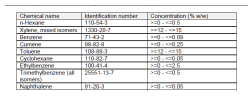
Check the Shell link. It lists xylene, but a lower concentration than the 100UL.Corrected Chevron SDS link as it appears I cannot go back and edit.
There is variation in 100LL.
Last edited:
Dixiebluesky
Pre-takeoff checklist
- Joined
- Feb 25, 2020
- Messages
- 166
- Display Name
- Dixiebluesky
As of now the idea is to find a drop in replacement for the LL. To use the alcohol every airplane has to be fitted with a gasoline reservoir somewhere and then be plumbed up with a way to inject the gas for starting. All fuel flow and performance tables redone. Props repitched in fix pitched props. Mountains of materials testing. Carburetors reworked hoping you get it right. Especially for the certified world this would be an insanely large undertaking.
To use a fuel that has a shelf life of few months.
To use a fuel that has a shelf life of few months.
Cap'n Jack
Final Approach
This statement isn't true See below.The fuel used in the Baylor study was NOT pure ethanol but AGE-85. E-85 with biodiesel.
Sure. With a gas chromatogram. Or measuring the density of the mixture. Not as easily done as with 100 LL.You can detect water in ethanol.
Like infinite? Water and ethanol are 100% miscible.The amount of water needed to phase-change ethanol is very high,
Until you get to the point where there is too much water in the ethanol to allow it to burn. You'll have loss of power prior to that point, just because there is less ethanol to burn. the loss of power will probably stop the engine prior to that point, but I don't know what that point is. But logically, the mixture will be too lean to run as ethanol is replaced with water.And as I posted before, water in ethanol simply goes through the engine.
AGE-85 != pure ethanol. Use one term or the other. Pure ethanol was used by Baylor.Phase-change in AGE-85 is a talking point,
Besides- Cessna says NOT to use it.
- Joined
- Oct 16, 2019
- Messages
- 8,863
- Location
- Atlanta / Marietta
- Display Name
- Vintage Snazzy (so my adult children say)
- Home Airfield
- KPUJ
“Fungible” - drop in replacement.
It’s a mandatory that has to be met.
It’s a mandatory that has to be met.
Dixiebluesky
Pre-takeoff checklist
- Joined
- Feb 25, 2020
- Messages
- 166
- Display Name
- Dixiebluesky
I want to see the lead go for the benefits of less deposits and the ability to use better oils. The environmental alarmism is just nonsense.

Half Fast
Touchdown! Greaser!
- Joined
- May 7, 2016
- Messages
- 21,190
- Location
- Central Florida
- Display Name
- Half Fast
- Home Airfield
- KGIF
“Fungible” - drop in replacement.
It’s a mandatory that has to be met.
I'd clarify that it has to be fungible with 100LL, obviously, but IMHO all approved UL fuels must also be fungible with each other. I think that's likely to be an impossible barrier, and if so we really need one and only one UL fuel.

PaulMillner
Cleared for Takeoff
- Joined
- Jan 14, 2011
- Messages
- 1,010
- Location
- Berkeley, CA
- Display Name
- Paul Millner
- Home Airfield
- OAK
Yeah, that "reporter" is fast and loose with the facts. He states G100UL is exclusively at RHV; it's actually at four airports, WVI, TUP, and RFG. And it's 100LL that has toluene. Typically, up to 20%, but at least Phillips 66 has been observed to blend over 30% toluene at times. The aromatic that's different in G100UL is xylene not toluene. G100UL has only a trace amount of toluene, a percent or two at most. However, G100UL uses an aromatic amine meta-toluidine (MT) at about 3% as an octane booster. Chemical engineers of my acquaintance theorize that maybe it's the MT that attacks the paint. The mechanism requires evaporation of the fuel, leaving parts of the MT mix behind... so yes, that could happen with a leak. It wouldn't happen inside a tank.Bad news from Blancolirio
His cited observations don't support his assertion of not ready for prime time... If you can keep it inside the fuel system, it works fine. The Cirrus had a leaky quick-drain. Interestingly, at Sun 'n Fun, Jeff Kelley who owns Curtis now (manufacturer of quick drains) explained that two years ago he changed seal materials, from rubber to Viton, to be prepared for any of the proposed unleaded fuels. Yay Jeff... time for a quick-drain valve refresh, I guess.
Paul
PaulMillner
Cleared for Takeoff
- Joined
- Jan 14, 2011
- Messages
- 1,010
- Location
- Berkeley, CA
- Display Name
- Paul Millner
- Home Airfield
- OAK
That would seem to make sense, but it's not the FAA's position. Instead, the Executive Director of Aircraft Certification addressing an industry unleaded fuel meeting in DC said that they'll address that crisis when it occurs, not before. Jeesh.all approved UL fuels must also be fungible with each other
Paul
Cap'n Jack
Final Approach
It depends on the 100LL. Some do contain a significant volume of xylenes. See post 145 in this thread.The aromatic that's different in G100UL is xylene not toluene.
Cap'n Jack
Final Approach
Innospec wants to discontinue production of tetraethyl lead by 2030.

 www.avweb.com
I believe there's a couple of companies in China that still make (made?) it, but that information may be a decade out-of-date.
Innospec Wants To Discontinue Producing Tetraethyl Lead (TEL) By 2030
Containing the corrosive properties of TEL production could be too costly to continue.
www.avweb.com
I believe there's a couple of companies in China that still make (made?) it, but that information may be a decade out-of-date.
Half Fast
Touchdown! Greaser!
- Joined
- May 7, 2016
- Messages
- 21,190
- Location
- Central Florida
- Display Name
- Half Fast
- Home Airfield
- KGIF
That would seem to make sense, but it's not the FAA's position. Instead, the Executive Director of Aircraft Certification addressing an industry unleaded fuel meeting in DC said that they'll address that crisis when it occurs, not before. Jeesh.
Paul
That figures. Crises justify more funds.

Hang 4
En-Route
- Joined
- Aug 18, 2017
- Messages
- 3,425
- Display Name
- Hang 4
There's no way ExxonMobil, Shell etc would transition to a Chinese supplier of TEL. Not because of politics, but safety, liability etc. The qualification process for a key fuel component like TEL with the majors is long, arduous and it's unlikely that qualifying a new supplier would be worth it vs just exiting the 100LL business.Innospec wants to discontinue production of tetraethyl lead by 2030.
Innospec Wants To Discontinue Producing Tetraethyl Lead (TEL) By 2030
Containing the corrosive properties of TEL production could be too costly to continue.
I believe there's a couple of companies in China that still make (made?) it, but that information may be a decade out-of-date.
Cap'n Jack
Final Approach
You're probably right. But listing "safety and liability" is a bit funny considering the substance under discussion.There's no way ExxonMobil, Shell etc would transition to a Chinese supplier of TEL. Not because of politics, but safety, liability etc. The qualification process for a key fuel component like TEL with the majors is long, arduous and it's unlikely that qualifying a new supplier would be worth it vs just exiting the 100LL business.

- Joined
- Dec 27, 2011
- Messages
- 1,080
- Location
- Cedar Rapids, IA
- Display Name
- Martin Pauly
- Home Airfield
- KCID
Along those lines: in general, Europe is marching towards phasing out 100LL, and TEL. A quote from AERO this week: "The commission is expected to approve 2032 as the TEL sunset date", said Europe Air Sports (EAS) Vice President Ralf Hubo (reported by Aviation Week yesterday). The exact timeline could change, but I don't anticipate a change in direction.Innospec wants to discontinue production of tetraethyl lead by 2030.
Innospec Wants To Discontinue Producing Tetraethyl Lead (TEL) By 2030
Containing the corrosive properties of TEL production could be too costly to continue.
Which leaves us with two likely candidates for AvGas in the future: G100UL from GAMI and 100R from Swift. Neither one appears to be a slam dunk. The material compatibility concerns raised for GAMI need to be analyzed and better understood; I bet some of that is perceived but some of it may also be real enough to require a mitigation plan of some sort. With 100R, the concern is if it can really work in high-compression engines without eroding detonation margins.
There's a lot of arguments and push-backs when we discuss aviation gas. But the reality is we will have to solve this over the next few years. My hope is that we, the aviation community, can redirect the energy and attention from fights and arguments and ignorance to a more proactive approach to figure this out, and to really understand what aircraft modifications are necessary to work with future fuels. If we just trust in 100LL instead of understanding and preparing for lead-free alternatives, it will likely be a very bad day for many aircraft with piston engines in a few short years.
- Martin
Half Fast
Touchdown! Greaser!
- Joined
- May 7, 2016
- Messages
- 21,190
- Location
- Central Florida
- Display Name
- Half Fast
- Home Airfield
- KGIF
With 100R, the concern is if it can really work in high-compression engines without eroding detonation margins.
That's today's concern about 100R, but I suspect we don't know what we don't know yet. The paint stripping properties of GAMI-gas have only come to light in the last year or two. Might 100R have a similar problem? Almost certainly there will be some as yet unknown issue.
My hope is that we, the aviation community, can redirect the energy and attention from fights and arguments and ignorance to a more proactive approach to figure this out, and to really understand what aircraft modifications are necessary to work with future fuels.

We need to move quickly to discover what issues there are. Unfortunately, as @PaulMillner wrote above, the FAA doesn't seem interested in preventing crises before they occur.
PaulMillner
Cleared for Takeoff
- Joined
- Jan 14, 2011
- Messages
- 1,010
- Location
- Berkeley, CA
- Display Name
- Paul Millner
- Home Airfield
- OAK
Not to mention... the current TEL made in Liverpool is water white... the Chinese TEL is inky black... something unsavory in the mix there!There's no way ExxonMobil, Shell etc would transition to a Chinese supplier of TEL.
Paul