Fuel smell with boost pump io-360

FORANE

En-Route
Joined
Mar 7, 2013
Messages
4,457
Location
TN
Display Name
FORANE
Home Airfield
0a9
On my new lancair with Lycoming io-360 A1A I've noticed the boost pump will cause a little fuel smell when left on for more than a few moments. Of course I know to look for evidence of blue at any fuel line connection. I presume a leak is likely present between the boost pump and engine.

Can a boost pump be activated on the ground with a closed throttle without flooding the motor? If I want to turn on the boost pump to look for the leak, do I first need to disconnect and plug the fuel line at the motor?
Any suggestions for locating the source of the fuel leak?
 
Recently had an airplane do this because the fuel selector valve was missing some screws. I have a friend who's airplane also did this, turned to be a nicked O-ring on a header tank (aerobatic aircraft). Don't know how your fuel system is plumbed. But, after a recent, very scary, experience I take that kind of thing pretty serious.
 
Pull the mixture to cutoff and pump away. You won't flood the engine.
 
Haven't flown a Lancair, but have flown an IO-360 a couple of times. From memory, as Kyleb posts above, if the mixture is above idle cutoff it's going to flow fuel if the pump is on, by design. That's how you prime it. Because while a carb doesn't flow fuel unless you either hit the throttle pump or the engine pulls a vacuum, a mechanical fuel injection system flows fuel based on differential pressure and mixture control. Or in other words, off idle cutoff and with the pump on, it is supposed to flow fuel to the engine. Apologies if you already know all this stuff...and more so if I have the details wrong.
 
During engine start or after engine is running?
I smell fuel in flight if I turn the boost pump on and leave it on for more than a 20-30 seconds or so. I have never left the boost pump on that long on the ground.
 
Activating the electric pump with engine stopped will pump fuel to the engine. It will be injected at the intake ports and eventually run down the
intake pipes to the plenum. On the bottom of the oil sump is a “Sniffle Valve” that should allow fuel to run overboard via tubing.

I’ve seen incorrect / missing valves and tubing in this area. Become familiar and expect to to run overboard is prudent.
 
On my new lancair with Lycoming io-360 A1A I've noticed the boost pump will cause a little fuel smell when left on for more than a few moments. Of course I know to look for evidence of blue at any fuel line connection. I presume a leak is likely present between the boost pump and engine.

Can a boost pump be activated on the ground with a closed throttle without flooding the motor? If I want to turn on the boost pump to look for the leak, do I first need to disconnect and plug the fuel line at the motor?
Any suggestions for locating the source of the fuel leak?
The boost pump has a seal that can leak. Normally, the seal cavity is vented overboard. Who knows on your Lancair?

Paul
 
At idle cutoff your servo should restrict fuel flow to cylinders. Any that gets through, like when priming, will drain through the sniffel if an intake valve is open or into the exhaust if an exhaust valve is open. The problem may require fuel flowing. No threat, just understand you’ll see raw fuel at the sniffel and exhaust.

Is this a Bendix fuel system or does it have EFI?

High pressure pump installation location is an interesting problem for builders. Where is yours installed? Hopefully the outlet side is easy to access.
 
Last edited:
I smell fuel in flight if I turn the boost pump on and leave it on for more than a 20-30 seconds or so. I have never left the boost pump on that long on the ground.
In flight - I'm not a mechanic - that doesn't sound right at all. In the Arrow IO-360 I've flown it was SOP to turn on the electric fuel pump before landing. In that aircraft I believe the fuel system is pretty similar between carb and mechanical FI, where there's both a mechanical engine driven pump and an electric pump in parallel, and you run both on takeoff, landing, and tank switches. All of my info is about that plane, same engine, and again not an expert, but fuel smell in flight sounds like a problem to uneducated me.
 
High pressure pump installation location is an interesting problem for builders.
That there. It matters. Is it forward or aft of the firewall? Could be in either place. Cessna used to put it on the firewall, engine side, but now it's under the floor. A leaking pump inside the cabin will stink it up. On the firewall, in flight? Probably not so much.
 
I’m not familiar with Lancair. I presume there are pumps for wing tanks? High pressure pumps have two paths for fuel. High pressure and bypass for when the pump isn’t on. The Ts for that plumbing add terminations. A high pressure pump usually has at least 6.

EFI uses fuel return lines to either an accumulator tank or to the main tanks (so does Continental injection.) Some mechanical injection installations use a purge valve, which is essentially a pilot-controlled fuel return. You need to know what you have before you can troubleshoot effectively.
 
EFI uses fuel return lines to either an accumulator tank or to the main tanks (so does Continental injection.)
Cessna has been installing a return line in their 172s for the last 20 years or so. Lycoming engines. Some problems with vapor drove that.

1755284950811.png
You need to know what you have before you can troubleshoot effectively.
Yup. Otherwise it's throw-parts-at-it-until-the-problem-goes-away.
 
At idle cutoff your servo should restrict fuel flow to cylinders. Any that gets through, like when priming, will drain through the sniffel if an intake valve is open or into the exhaust if an exhaust valve is open. The problem may require fuel flowing. No threat, just understand you’ll see raw fuel at the sniffel and exhaust.

Is this a Bendix fuel system or does it have EFI?

High pressure pump installation location is an interesting problem for builders. Where is yours installed? Hopefully the outlet side is easy to access.
No idea where or if I have a sniffel.
It's a Bendix system.
I can hear the pump in the cabin. I know there's one pump just forward the pilot side stick on the floorboards; not sure but I think that's the boost pump. Will be looking into it this weekend.
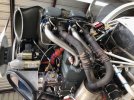
Engine-13.jpgEngine-1.jpgEngine-11.jpg
 
In flight - I'm not a mechanic - that doesn't sound right at all. In the Arrow IO-360 I've flown it was SOP to turn on the electric fuel pump before landing. In that aircraft I believe the fuel system is pretty similar between carb and mechanical FI, where there's both a mechanical engine driven pump and an electric pump in parallel, and you run both on takeoff, landing, and tank switches. All of my info is about that plane, same engine, and again not an expert, but fuel smell in flight sounds like a problem to uneducated me.
This brings up another point I was thinking about asking in a separate thread. I also have used a boost pump in my other Lancair just like you describe: an electric pump in parallel, and you run both on takeoff, landing, and tank switches (tank switches not applicable to that install as the header is the only tank that feeds that motor). In the new Lancair, the seller said the only time he used the boost is for priming before a cold start and tank switches if feeding from a tank other than header.

Question is when should a boost pump be activated in an io-360 powered EAB? Of course with an EAB there is no guidance on boost pump usage. Once I find and fix the fuel odor with the boost pump, should I be using the boost on takeoff and landing in addition to the cold start priming and tank switches?
 
That there. It matters. Is it forward or aft of the firewall? Could be in either place. Cessna used to put it on the firewall, engine side, but now it's under the floor. A leaking pump inside the cabin will stink it up. On the firewall, in flight? Probably not so much.
It's in the cabin. I think on the floorboards. Will figure it out this weekend. I have a complete fuel diagram on paper but it's at home and I am away from home at the moment.
 
This brings up another point I was thinking about asking in a separate thread. I also have used a boost pump in my other Lancair just like you describe: an electric pump in parallel, and you run both on takeoff, landing, and tank switches (tank switches not applicable to that install as the header is the only tank that feeds that motor). In the new Lancair, the seller said the only time he used the boost is for priming before a cold start and tank switches if feeding from a tank other than header.

Question is when should a boost pump be activated in an io-360 powered EAB? Of course with an EAB there is no guidance on boost pump usage. Once I find and fix the fuel odor with the boost pump, should I be using the boost on takeoff and landing in addition to the cold start priming and tank switches?
Generally speaking, low wing aircraft, I’d be running the boost pump on takeoff and landing. If the mechanical pump fails you don’t want to be worrying about troubleshooting and throwing a boost pump switch. Off in cruise is fine where you have more time if the engine sputters. Also, without the boost pump you may not get sufficient pressure on full throttle resulting in a leaner mixture on takeoff.
 
If you have a diaphragm pump on the engine? Boost on for takeoff and landing is a good habit. My engine driven pump makes plenty of pressure but diaphragms fail so the electric pump is on for safety. I installed a blue idiot light in my panel and added “pump on” to my pre-takeoff checklist. Leaving it on won’t hurt anything. Do you have an engine-driven pump? Some builders omit it and use dual electric pumps. You really do need to get familiar with your fuel system. Remember John Denver.

You have a Superior cold air induction. There’s a pipe plug on the bottom that works perfectly for a sniffle valve. I don’t see one on your engine. The plug is just aft of the servo. Here’s a pic of a typical sniffle valve. This one didn’t fit well on my engine so I found a different, lower profile one and made a drain tube that avoids my exhaust. Sniffles are one way valves. They only drain when the engine is off. Manifold pressure (vacuum) closes the valve.
 

Attachments

  • IMG_0485.jpeg
    IMG_0485.jpeg
    1.6 MB · Views: 8
  • IMG_0484.jpeg
    IMG_0484.jpeg
    2.5 MB · Views: 8
Last edited:
I do just as Salty says, too, and that's consistent with all the manuals I've seen for PA-28 series. Not sure it applies to other aircraft. As a minor point, for a plane with a carb, I turn on the electric pump before I start, and watch the pressure come up. Then start and turn off the electric pump for taxi. That way I know I have two pumps that both produce pressure, and I turn the electric on for takeoff. Electric goes off at about 1000'. Then when I switch tanks I watch the pressure when I turn the electric pump on, and in most planes the pressure goes up just a little bit. I'm kinda a baby, and I like knowing I have those two separate pumps.
 
Another photo of a sniffle valve for you reference:

IMG_4837.jpeg

IO360-M1A. Sniffle valve located on bottom of sump, just forward of muffler shroud (lower center of photo).
 
Hmmm, I will have to read on sniffle valves. I see where it would install on my Superior cold air intake. A cursory reading on VAF finds a lack of consensus on their necessity.

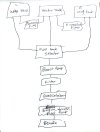
As mentioned, I'm away from where I have the fuel diagram for the plane so I can't post it now. The plane has 3 fuel tanks; two wing tanks and a header tank. The system is typically run in automatic mode where the wing tank transfer pumps will be turned on to automatically fill the header tank once the header gets below a set level. The header tank feeds the motor. In the event the automatic system fails due to sensor, the transfer pumps may be manually activated. In the event the transfer pumps fail, there is a fuel selector which may be used to feed the motor from any tank directly. In automatic mode the fuel system requires no management other than monitoring from start to shutdown for an entire 1,500 nm flight.
If you have a diaphragm pump on the engine? Boost on for takeoff and landing is a good habit. My engine driven pump makes plenty of pressure but diaphragms fail so the electric pump is on for safety. I installed a blue idiot light in my panel and added “pump on” to my pre-takeoff checklist. Leaving it on won’t hurt anything. Do you have an engine-driven pump? Some builders omit it and use dual electric pumps. You really do need to get familiar with your fuel system.
Yes, the motor has an engine driven pump on the accessory case. I did a little cursory reading on boost pump usage in injected motors and think I read some reports of rough running with the boost on. Certainly with the old carbed Lycoming powered Lancair I ran the boost pump as you mention; of course this practice was not because it was in a operating manual but rather it was just how I was taught... I'm learning.
 
That’s a lot of plumbing, and that means lots of places to inspect in your search for the fuel smell source. Where is the header tank located? Inside the cabin, I suspect. I wonder how it’s vented.

Airflow Performance has a nice sump drain (sniffel valve) that’s more universal than the Lycoming part. FYI.
 
That’s a lot of plumbing, and that means lots of places to inspect in your search for the fuel smell source. Where is the header tank located? Inside the cabin, I suspect. I wonder how it’s vented.
Header is between the firewall and instrument panel. Like all Lancair header tanks, it has a vent line to the belly. Yes, alot of plumbing which also means weight... But, I think, given there's one boost pump that works for all 3 tanks, I believe it's located downstream of alot of that plumbing. I believe the boost pump is between the fuel tank selector and gascolator; if that's the case, there is only one relatively short section of pipe likely responsible for the fuel odor.

Lots of plumbing:
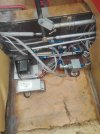
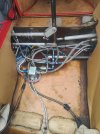
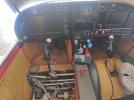
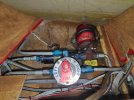
Left transfer pump, right transfer pump and then tank selector forward of left seat. Boost pump by fuel selector out of sight under floor carpet.
IMG20250419115837.jpgIMG20250419115250.jpgIMG20250419124912.jpg
 
Last edited:
That's a lot of possibilities there. It might be such a tiny leak that you won't find a stain, or maybe just a tiny stain on the underside of some connection.

It takes very little fuel to stink up a cockpit. Many years ago we had a 150 that had a persistent fuel odor in the cabin. Could find nothing. Finally I made a "sniffer" tool to sample the air right at the various connections. It is nothing more than a small rubber funnel, made from a scrap of rubber diaphragm material and cut to contour itself to my nose, with about 30" of 1/4" poly tubing leading from the small end of that funnel. Duct tape holds it together, with a couple of staples to hold the lap seam of the funnel. Hold it on your nose, and guide the tube end to fuel system connections and keep sniffing. When I got to the two primer line bulkhead fitting connections on the cabin side of the firewall, I got a real dose of fumes. No stains at all there. I put a wrench on those tiny tube nuts and found one of them finger-tight. Snugged it up, problem gone.
 
And more possibilities.
I located all fuel lines through the cockpit today. Ran the boost pump and checked connections with white paper towel. No blue stains and couldn't smell a thing. My wife said she has never smelled fuel in this plane. Maybe I'm just imagining it.
Will have to make myself a sniffer.

IMG20250816101806.jpg
 
Will have to make myself a sniffer.
Finding the right diaphragm sheet is the hard part. Nobody rebuilds anything anymore, so industrial suppliers don't keep such stuff much. Last year I tried to find a machine shop with a stock of C93200 rotocast bronze, a common material for making new bearings and bushings for machinery; nobody had it. I'd have had to buy a full 12-foot length, expensive and enough to last me for 250 years.

So for the rubber sheet, try some baffle seal material. The softer silicone stuff might be about right. Tomorrow I'll look for my sniffer and post a picture.
 
And more possibilities.
I located all fuel lines through the cockpit today. Ran the boost pump and checked connections with white paper towel. No blue stains and couldn't smell a thing. My wife said she has never smelled fuel in this plane. Maybe I'm just imagining it.
Will have to make myself a sniffer.

View attachment 144114
I see the previous owner used the precision tool known as Channellocks on the fuel filter. That would be a good place on which to focus when searching for the leak.
 
my only observation is that’s a lot of flex hose.

Check your accumulator tank vent.
 
my only observation is that’s a lot of flex hose.

Check your accumulator tank vent.
I have an accumulator? It has a gascolator.
Presumably, if I did smell fuel when I had the boost pump on in flight, the odor would likely originate between the boost pump and where that fuel like exits through the firewall. The boost pump flows through that filter, a short section of flex hose to just out of view, one long aluminum pipe to the nipple on the firewall. Not many connections there and all were clean.
 
I think you said you smell it shortly after you start running the boost pump. If the header tank fills quickly from the boost pump (you can calculate how long it should take based on automatic high-low ranges and the pump rating), then any additional fuel the engine doesn’t use is going overboard, is that right? Does the vent line to the belly have much staining? Is it sealed well where it exits the cabin?
 
I think you said you smell it shortly after you start running the boost pump. If the header tank fills quickly from the boost pump (you can calculate how long it should take based on automatic high-low ranges and the pump rating), then any additional fuel the engine doesn’t use is going overboard, is that right? Does the vent line to the belly have much staining? Is it sealed well where it exits the cabin?
Sounds like I didn't make myself clear. The boost pump does not fill the header. The boost pump is between the fuel tank selector and the gascolator.

There are crossfeed pumps between the wing tanks and the header tank. There is a digital fuel gauge on the header tank. When the header tank gets to 6 gal the wing crossfeed pumps automatically kick on and fill the header until 8.5 gal where they automatically kick off. If they failed to kick off and overfilled the header then it would flow out the header vent on the belly but I have not seen that occur. The vent on the belly is under the center tunnel between pilot and copilot sticks; I have never seen any significant amount of blue there.

Typical operation is to feed the motor from the header tank. On my last flight I decided to try running the motor in flight directly from a wing tank. As a precaution, I turned on the boost pump prior to using the fuel selector to changing tanks. I left the boost pump on for likely the better part of a minute which is much longer than I have ever left the boost pump on for and the only time I have ever used the boost pump in flight or with the engine running.

CamScanner 08-17-2025 10.41.jpg
 
Have you tried one of those 12V Scentsy things?? Should mask the odor nicely.
 
I have an accumulator? It has a gascolator.
Presumably, if I did smell fuel when I had the boost pump on in flight, the odor would likely originate between the boost pump and where that fuel like exits through the firewall. The boost pump flows through that filter, a short section of flex hose to just out of view, one long aluminum pipe to the nipple on the firewall. Not many connections there and all were clean.
Yes. Your third tank is an accumulator tank, not a header tank, at least by definitions I’ve been taught. Headers sit high in a high wing airplane to provide fuel during a climb when a tank may become unported. In the Cub world, most of us that build/rebuild planes add aft tank ports and delete header tanks for simplicity’s sake. Accumulators I’m familiar with are for fuel systems that require a fuel return, but most exp builders route the return to a main tank.

If you rule out liquid leaks at your fuel lines and terminations, the obvious place (to me) to look for a smell source is the venting. I’m not familiar with low wing airplanes so have no idea how or where they vent the fuel system. As for inspection I wouldn’t ignore anything upstream of the pump, or the pump itself.

FWIW, my FI system has two tanks, selector, strainer (gascolator), high pressure pump, engine driven pump, flow transducer with pressure sender, and servo, in that order. The selector is by my seat, all else is firewall forward. No flex lines until after the high pressure pump, because nothing before that moves. No filter. My strainer screen handles that.
 
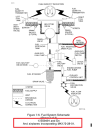
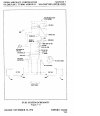
Here's an illustration from the build manual. My 235/340 is very similar to this illustration. It includes sight gauges for fuel in the header and sight gauges in the fuel transfer lines to determine when the wing tanks run dry. Only difference in that plane is the boost pump is on the cabin side of the firewall before the gascolator.
The 360 is different. It is much more involved including digital level gauge, automatic transfer, and ability to feed the motor from wing tanks directly. Many or possibly most 360's omit the header tank, have no header or accumulator tank, and feed the motor from the wing tanks individually. I have heard of issues with inaccurate wing tank level gauges in some of those. I much prefer having a header tank.Screenshot 2025-08-17 at 12-26-59 document - fuel system.pdf.png
 
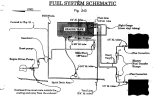
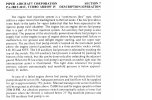
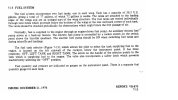
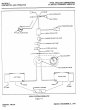
If I can get these to post correctly, attached are the fuel systems for two different PA-28's with IO-360s, an Arrow 3 and a Turbo Arrow 4. The turbo has a return line and a two speed pump, the non-turbo does not. For whatever it's worth.
 

Attachments

  • arrow-t-fuel-2.jpg
    arrow-t-fuel-2.jpg
    188.3 KB · Views: 6
  • arrow-3-fuel-2.jpg
    arrow-3-fuel-2.jpg
    133.3 KB · Views: 6
  • arrow-3-fuel-1.jpg
    arrow-3-fuel-1.jpg
    125.3 KB · Views: 6
  • arrow-t-fuel-1.jpg
    arrow-t-fuel-1.jpg
    112.9 KB · Views: 5
If I can get these to post correctly, attached are the fuel systems for two different PA-28's with IO-360s, an Arrow 3 and a Turbo Arrow 4. The turbo has a return line and a two speed pump, the non-turbo does not. For whatever it's worth.
I see the manual advises boost pump use on tank switch and for takeoff & landing. That's what I did with my 235/340. I'm thinking about returning to that procedure with this plane. Probably will make @Dan Thomas sniffer then run on the ground with boost pump until I either smell fuel or not then use the sniffer if any fuel odor is present.
 
You aren’t imagining it.
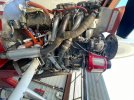
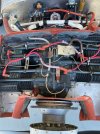
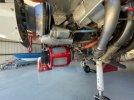
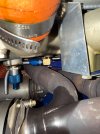
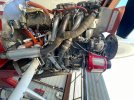
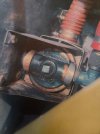
Well, the old salty one was right. We found the leak. Maybe presumptuous of me to refer to it as the leak instead of a leak, but we found one. It wasn't in the cabin which was surprising we were able to smell it. In the pic below you can see the gascolator on the firewall surrounded by an aluminum box. Out of view on the top of the gascolator the fuel line was leaking enough to paint the gascolator top blue. The box hid it out of view. It was only present when the boost pump pressurized that line.Engine-13.jpg
 
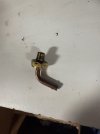
Managed to scrape up a pic of it. Those threads had no sealant on them.
IMG20250903113223.jpg
 
Back
Top