Fuel additive safe for 0-200's

Gone Flyin

Pre-takeoff checklist
Joined
Nov 30, 2020
Messages
147
Display Name
Gone Flyin
Started using Redline S1's fuel additive in my new-to-me 2014 Ford 150. The product contains a much more concentrated amount of the active ingredient PEA than the competition. Even Chevron's Techron, that created the product.

Red Line SI-1 Complete Fuel System Cleaner primarily contains a concentrated blend of polyether amines (PEA) (typically 30-40%), high-temperature and low-temperature detergents, and a synthetic upper cylinder lubricant (often based on synthetic base stocks).

The product does a remarkable job of cleaning the carbon from the valves and piston crown. Test after test shows it works... at least in auto engines.
I've had one valve carb up needing the Indian Rope Trick to fix it. It's lots of work.

Toying with the idea of using it (one ounce per gallon) in my 0-200 engine.

Has this been done by anyone else and were there any issues.
 
I would skip it and save the money. As hinted above, you don't know how this will react to the Av Gas formula, let alone the lead. I'm usually skeptical about additives anyway. Just fly regularly, manage your fuel mixture and enjoy flying.
 
So, according to Google's AI, PEA is not recommended for use in engines like the 0-200 for a number of reasons.

  • Material Compatibility Concerns: PEA is a powerful detergent solvent. Aircraft fuel systems utilize older elastomeric seals, gaskets, and bladder tanks that may degrade, swell, or crack when exposed to unapproved concentrations of specialized automotive detergents.
  • Risk of Fuel System Contamination: While PEA cleans deposits, it can dislodge old varnish or scale inside the aircraft fuel tanks. This loose debris can travel downstream, potentially plugging the fuel injector nozzles or carburetor jets mid-flight.

However, there is a fuel treatment that is approved by the FAA for such use.


If you are struggling with severe lead fouling in your Continental engine from 100LL fuel, the only widely FAA-approved chemical solution is Alcor TCP Fuel Treatment.
  • Unlike PEA (which cleans carbon and general deposits), TCP specifically acts as a lead scavenger.
  • It chemically alters the tetraethyl lead (TEL) byproducts during combustion, changing them into non-conductive lead phosphate that safely blows out the exhaust rather than shorting out your spark plugs.
  • TCP is specifically approved for use via an STC in non-turbocharged Continental, Lycoming, and Franklin engines.

Interesting.
 
MMO when you're ready to go!
What is that other uber creation that adds 100 HP, reduces emission to zero, and creates its own fuel. Purple something. May or may not involve magnets.
 
However, there is a fuel treatment that is approved by the FAA for such use.


If you are struggling with severe lead fouling in your Continental engine from 100LL fuel, the only widely FAA-approved chemical solution is Alcor TCP Fuel Treatment.
Two different products for two very different purposes. TCP is specifically for lead fouling while the other products claim a variety of other benefits.
 
I'd analyze my leaning technique before using this and becoming a test pilot
 
What is that other uber creation that adds 100 HP, reduces emission to zero, and creates its own fuel. Purple something. May or may not involve magnets.
You might want to read the reviews on this product... or, do you think all these plane owners are on the take from Tempest ;)
 
So, according to Google's AI, PEA is not recommended for use in engines like the 0-200 for a number of reasons.

  • Material Compatibility Concerns: PEA is a powerful detergent solvent. Aircraft fuel systems utilize older elastomeric seals, gaskets, and bladder tanks that may degrade, swell, or crack when exposed to unapproved concentrations of specialized automotive detergents.
  • Risk of Fuel System Contamination: While PEA cleans deposits, it can dislodge old varnish or scale inside the aircraft fuel tanks. This loose debris can travel downstream, potentially plugging the fuel injector nozzles or carburetor jets mid-flight.
This appears to present some minor negative issues.
 
I fly the C90 which is essentially the same engine. These low compression engines were designed for use with ethanol free 80/87 leaded avgas which is almost impossible to find. Using 100LL tends to load up the head/valves/plugs with carbon. Aggressively leaning the engine tends to help. There is an STC to make aircraft engines ‘legal’ to use unleaded gas. The modifications required by the STC to make an aircraft legal mostly consist of buying & applying a decal and completing the 337.

I’ve been toying with buying non-ethanol mogas at the local gas station to fill up at my hangar, and using 100LL if I have to refuel elsewhere. Unleaded mixes perfectly with leaded fuel. I attended the unleaded fuel seminar at Oshkosh last year. All of the concerns about unleaded fuels pertain to high compression/turbocharged, and are virtually irrelevant to our low compression engines

Besides that the pump gas is a a couple bucks per gallon cheaper than 100LL.
 
Carbon or lead bromide? TCP is the solution for lead bromide as posted earlier.
I dunno, I’m just a dumb mechanic. It looks black. How do you tell the difference? Send it out for spectral analysis?
 
What I stated at the start. So, why the hesitation to use it, then?
Well, you started with an automotive fuel cleaner that was supposed to be like Techron. Your Continental is way more likely to be lead fouled than carbon foulded. Leaning aggressively on the ground and once in level flight will help a lot. TCP will also help, not sure where there's been any hesitation to use it. I did for a while until I better understood the power of the red lever.
 
I fly the C90 which is essentially the same engine. These low compression engines were designed for use with ethanol free 80/87 leaded avgas which is almost impossible to find. Using 100LL tends to load up the head/valves/plugs with carbon. Aggressively leaning the engine tends to help. There is an STC to make aircraft engines ‘legal’ to use unleaded gas. The modifications required by the STC to make an aircraft legal mostly consist of buying & applying a decal and completing the 337.

I’ve been toying with buying non-ethanol mogas at the local gas station to fill up at my hangar, and using 100LL if I have to refuel elsewhere. Unleaded mixes perfectly with leaded fuel. I attended the unleaded fuel seminar at Oshkosh last year. All of the concerns about unleaded fuels pertain to high compression/turbocharged, and are virtually irrelevant to our low compression engines

Besides that the pump gas is a a couple bucks per gallon cheaper than 100LL.
I have the autogas STC for my O200 and have been running E0 for a while, no complaints.
 
If you are getting carbon deposits in your cylinders you are not leaning properly or you have a cylinder pumping oil. You can solve the former by aggressively leaning on the ground and in the air during cruise. The latter requires repair or replacement of the cylinder to stop oil bypass into the cylinder. If you are running your engine right, even on 100LL, your plugs will be squeaky clean with a light coating of tan ash. If you want to further combat lead deposits, TCP additive works, but quite frankly, proper leaning and cylinder maintenance will prevent carbon, oil, or lead fouling in most engines. I quit using TCP long ago once I learned proper leaning technique.
 
Seems we are jumping back and forth, here.

Carbon is the result of improper leaning.... correct me if I'm wrong... but, deposits (little round blobs) on the valves is the result of lead which theoretically can be helped by a product like TCP.

Is this the consensus and if so, why not just use it?

I've done the Indian Rope Trick on my valves. Looks easy in the videos but way harder.

If TCP can prolong the time between this adventure, I'll pays the money and takes my chances.
 
Carbon is the result of improper leaning.... correct me if I'm wrong... but, deposits (little round blobs) on the valves is the result of lead
They're both the result of a very rich mixture, with the lead deposits getting an extra helping hand due to low cylinder temperatures (running full rich at idle) not allowing the lead scavengers to function properly.
 
Seems we are jumping back and forth, here.

Carbon is the result of improper leaning.... correct me if I'm wrong... but, deposits (little round blobs) on the valves is the result of lead which theoretically can be helped by a product like TCP.

Is this the consensus and if so, why not just use it?

I've done the Indian Rope Trick on my valves. Looks easy in the videos but way harder.

If TCP can prolong the time between this adventure, I'll pays the money and takes my chances.
In my aircraft, I had to take the prop, nose bowl, and engine sheet metal off to take the valve covers off to do the rope trick.

Not fun.
 
They're both the result of a very rich mixture, with the lead deposits getting an extra helping hand due to low cylinder temperatures (running full rich at idle) not allowing the lead scavengers to function properly.
I lean the **** out of my Cessna 150 but still had problems with one valve. If this TCP can help to eliminate issues in the future I plan to use it.
 
Last edited:
In my aircraft, I had to take the prop, nose bowl, and engine sheet metal off to take the valve covers off to do the rope trick.

Not fun.
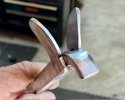
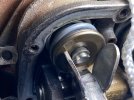
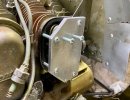
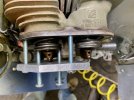
Not fun for me either...but, a great learning experience. I ended up making specialized tools for my 0-200 that made my flying buddies quite jealous.

IMG_8057.jpg

IMG_8376.jpg

IMG_8529.jpg

IMG_8530.jpg
 
Just ordered a can of TCP.

$100 delivered will give me 15 tank fill-ups. I'll pour off into 30ml bottles to keep in the plane.

Use one bottle per wing tank (30ml/10 gallons) in my Cessna 150M.
 
FYI, TCP is toxic and absorbs through the skin.

Common nitrile gloves have short break through times. Better are butyl, PVA or Viton gloves.
 
Just ordered a can of TCP.

$100 delivered will give me 15 tank fill-ups. I'll pour off into 30ml bottles to keep in the plane.

Use one bottle per wing tank (30ml/10 gallons) in my Cessna 150M.
There's a note on the Alcor site saying "Do not carry aboard aircraft" - :(
 
" I'll pour off into 30ml bottles to keep in the plane"

I would not put it in just any plastic bottle
 
Back
Top