Figuring Out the Patterns

wanttaja

Final Approach
Joined
Jun 7, 2008
Messages
5,667
Location
"War-Torn" Portland
Display Name
Ron Wanttaja
Home Airfield
Twin Oaks Airpark
Last July, I moved to a new area. Still getting used to the nearby airports.

Tried to fly to one last week. From the radio calls, they were using 35. But...they were flying right hand patterns.

This kind of threw me, because I thought I'd researched that airport and didn't remember anything mentioning a right hand pattern.

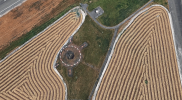
So...figured I'd just fly over and check the segmented circle. But, as it turns out, THAT wasn't a help....
1775270443722.png
No bars at the end of the segments to show which pattern is preferred.

I should note that all the aircraft on the frequency appeared to be helicopters, and, of course, they are given more leeway in such matters (the part in Part 91 about staying clear of fixed-wing traffic).

So...what should I have done? Entered the right-hand pattern with the eggbeaters, gone my own way and flown a left-hand pattern, or used the other runway entirely?

Ron Wanttaja
 
"Fly Baby Heavy entering left downwind for 35 ... caution wake turbulence." :biggrin:
 
Last July, I moved to a new area. Still getting used to the nearby airports.

Tried to fly to one last week. From the radio calls, they were using 35. But...they were flying right hand patterns.

This kind of threw me, because I thought I'd researched that airport and didn't remember anything mentioning a right hand pattern.

So...figured I'd just fly over and check the segmented circle. But, as it turns out, THAT wasn't a help....
View attachment 151241
No bars at the end of the segments to show which pattern is preferred.

I should note that all the aircraft on the frequency appeared to be helicopters, and, of course, they are given more leeway in such matters (the part in Part 91 about staying clear of fixed-wing traffic).

So...what should I have done? Entered the right-hand pattern with the eggbeaters, gone my own way and flown a left-hand pattern, or used the other runway entirely?

Ron Wanttaja
What airport?
 
Interesting. All the information indicates left traffic for all runways, yet right traffic on 35 (and 22) makes sense since it keeps normal airplane traffic out of the center area.

My guess is that it’s about the helicopters following the requirement to “avoid the flow of the aircraft”

Are you hearing airplanes doing right traffic?
 
Officially, the absence of L's mean that there is left traffic for all runways.

I was never able to get the FAA to admit to a discrepency in some of the printed things like the AFH when L's are present. Things are pretty clear if the L's point in the same side of the runway, but someone found a odd runway where they point in opposite directions, so either the airport is wrong or the AFH is.
 
Last July, I moved to a new area. Still getting used to the nearby airports.

Tried to fly to one last week. From the radio calls, they were using 35. But...they were flying right hand patterns.

This kind of threw me, because I thought I'd researched that airport and didn't remember anything mentioning a right hand pattern.

So...figured I'd just fly over and check the segmented circle. But, as it turns out, THAT wasn't a help....
View attachment 151241
No bars at the end of the segments to show which pattern is preferred.

I should note that all the aircraft on the frequency appeared to be helicopters, and, of course, they are given more leeway in such matters (the part in Part 91 about staying clear of fixed-wing traffic).

So...what should I have done? Entered the right-hand pattern with the eggbeaters, gone my own way and flown a left-hand pattern, or used the other runway entirely?

Ron Wanttaja
You should have looked up the causes of accidents at that airport and then gone from there...
 
45.1945481,-123.1360678

What are they growing there?
 
All the references I find now say left-hand pattern.

Ron Wanttaja
As you, and others, have hinted helicopters tend to fly a fight hand pattern both to keep out of the way of fixed wing aircraft and for better visibility as the PIC tends to sit in the right seat.
This reference in turn cites the Helicopter Flying Handbook:

45.1945481,-123.1360678

What are they growing there?
Other that the question, what information are you trying to convey? I saw nothing in the link about traffic patterns so they are left traffic.
I've no idea what they are growing.
 
Interesting. All the information indicates left traffic for all runways, yet right traffic on 35 (and 22) makes sense since it keeps normal airplane traffic out of the center area.

My guess is that it’s about the helicopters following the requirement to “avoid the flow of the aircraft”

Are you hearing airplanes doing right traffic?
Only had been to the airport once before, and the other runway had been in use by both fixed wing and helicopters (with standard left-hand pattern). No fixed wing in the pattern, that day.

Ron Wanttaja
 
Maybe hit the “Help” button (looks a lot like a PTT switch) and asked whether FW should be flying a LH or RH pattern?
What, and admit that I was anything BUT an all-knowing, aviation he-man? :)

If I'd actually needed or even planned to land there that day, I would have got on the horn. As it was, I was just passing by with a thought of shooting a couple of touch-and-goes (which are prohibited at my new home base).

Ron Wanttaja
 
Was I the only one who looked at the post and thought it was about the hay or whatever crop is in the field?
 
Only had been to the airport once before, and the other runway had been in use by both fixed wing and helicopters (with standard left-hand pattern). No fixed wing in the pattern, that day.

Ron Wanttaja
Then I'd be expecting right traffic. Two rules at play.
1. It's left traffic for fixed wing aircraft unless indicated otherwise,
Huh...didn't know that. Thanks!
Really?

2. Helicopters are to avoid the the fixed wing flow.
 
As you, and others, have hinted helicopters tend to fly a fight hand pattern both to keep out of the way of fixed wing aircraft and for better visibility as the PIC tends to sit in the right seat.
This reference in turn cites the Helicopter Flying Handbook:
I'm not so sure about seat position being the rationale.

But in terms of keeping out of the way, that's written in the regs. Which means at an airport with right traffic, helicopters are flying left traffic. So I guess no one can see the runway :D
 
My preferred "summertime" airport has a lot of chopper traffic, two state police, a medical transport and a couple of local businesses. They seem to avoid normal patter ops by taking off and landing whenever/wherever they choose - and simply CTAF announce what they intend ("departing over taxiway Alpha"). There is even a local TV station chopper that lands directly on the fuel ramp area designated for helis. We even have occasional Coast Guard choppers using the field for training exercises. It never seems to be a problem, but it must be confusing for someone new to the area.
 
No bars at the end of the segments to show which pattern is preferred.

I should note that all the aircraft on the frequency appeared to be helicopters, and, of course, they are given more leeway in such matters (the part in Part 91 about staying clear of fixed-wing traffic).
First question should be, "What does the regulation say?

14 CFR 91.126​
(b) Direction of turns. When approaching to land at an airport without an operating control tower in Class G airspace—​
(1) Each pilot of a powered fixed-wing aircraft must make all turns to the left unless the airport displays approved light signals or visual markings indicating that turns should be made to the right, in which case the pilot must make all turns to the right; and​
(2) Each pilot of any other powered aircraft must avoid the flow of the aircraft specified in paragraph (b)(1) of this section.​

Airplanes are in (1), helicopters are in (2). Helicopters are not required to make turns in a specific direction as are airplanes.

Huh...didn't know that. Thanks!
For your airplane, the criteria are whether or not there are approved light signals or visual markings indicating that turns should be made to the right. You picture shows no such signals or markings, so airlines are required to make turns to the left.
 
My plane is in for annual at twin oaks right now. If it would help balance the Qi, I can make MMV look serene by doing a box departure to left, then right, then overfly opposite traffic on my way south :D

I don't really fly into MMV anymore. Too much spillover from the HIO trainers.
 
Officially, the absence of L's mean that there is left traffic for all runways.

Huh...didn't know that. Thanks!

Probably was covered during my initial flight training, but that was 55 years ago. Eyes probably brushed the diagrams when studying for BFRs, but that particular quirk apparently didn't register.

And since then, it was not something that came up, all that often. Any flying I did, I had researched the airports I'd intended to fly to, and knew the patterns prior to takeoff.

With the move to an airport ~180 miles away, my prior knowledge went out the window, and I started from scratch. I put together something I call a "Rutter" with airport diagrams and key information in very large type (so that I didn't have to dig out reading glasses in flight). Managing data in a single-seat open cockpit airplane is a bit of a challenge; electronic devices tend to get washed out by sunlight, there's not much room to store anything, and the breeze makes handling paper products a bit more sporty. For charts, etc, I use the "One-Cheek Sneak."

Otherwise, I've got a little storage space between the air fryer and the espresso machine. This IS the Northwest, after all. :)

So when I flew to the airport that day, I had consulted my Rutter (a term for a similar personal notebook in the sailing ship days) and "knew" the patterns were left hand for both runways. So when I was approaching the field and hearing all the traffic flying right hand for 35, I was a bit nonplussed.

Sure, I'd known that this was a common practice for helicopters (but not at my old home field) but it left me with a bit of a quandary.

- Should I fly the right-hand pattern for 35 like the helicopters, or
- Should I fly a left-hand pattern for 35, or
- Should I fly the left-hand pattern for Runway 22, which is the designated calm-wind runway for the airport.

Was inclined to do the latter, but there would be a bit of a problem. With the traffic out of 35, our paths would be crossing with the helicopters on climb-out and me on downwind.
1775328344013.png
Pattern sizes are shown as smaller than they really would be, but the cross-over area is still about the same.

Now, I realize the helicopters would probably be lower. But with a low-wing airplane, I'd have very little visibility of the path of the helicopters climbing out while I was on downwind. Just didn't like that. I still do the "NORDO Shuffle" when needed, but there's always a chance of missing something.

Best option was probably to fly a left-hand pattern for 35. But there were several helicopters flying that right-hand for 35, not just one. Didn't enjoy the prospect of having to shoehorn in there.

But...like I said, I had just come by the airport on a whim. No real reason to enter the pattern at all, so I stayed high and turned for somewhere else.

Ron Wanttaja
 
- Should I fly the right-hand pattern for 35 like the helicopters, or
- Should I fly a left-hand pattern for 35, or
- Should I fly the left-hand pattern for Runway 22, which is the designated calm-wind runway for the airport.
You should follow 14 CFR 91.126, which I posted above.

You will not find anywhere that says a segmented circle without base-leg indicators means left traffic. According to the regulation, the lack of approach markings (or light signals) indicating right turns means that you must make left turns. It is the lack of right-base indications on that segmented circles that indicates left turns are required per 91.126.
 
That’s my Airport.

For fixed wing all patterns are supposed to be left patterns. Except for helicopters, and there are a lot of helicopters, they tend to fly right patterns or whatever the hell they want. It’s kind of crazy. A lot of the helicopters head for the center of the runway, some of them head to the grass some of them head to a built-up landing pad on the north side of the airport. Firefighting helicopters do bucket training on the west side of the airport. A lot of practice auto rotations from very high to just above the surface.

Calm wind runway is supposed to be 22 but that’s not always adhered to.

A lot of airplanes coming straight in on the ILS 22 and the biz Jets do straight in to 22 and out from whatever the hell runway they want to.

It’s annoying, but somehow it works.

Also, the helicopter guys doing training tend to push ceiling and visibility minimums right to the edge. I’ve many times seen them going in and out of low clouds.

(Can you tell I don’t like the helicopter guys? I know they have a job to do, but they do tend to take liberties.)
 
Last edited:
I'm not so sure about seat position being the rationale.

But in terms of keeping out of the way, that's written in the regs. Which means at an airport with right traffic, helicopters are flying left traffic. So I guess no one can see the runway :D
I suspect seat position plays a role. Are there other ways for helicopters to keep out of the way other than flying opposite traffic patterns? Opposite pattern is probably the easiest way.

Sometimes, right traffic for fixed wings is specified to keep noise on one side of the airport, but helicopters tend to be noisier.
Are autogiros considered helicopters? Powered lift?
 
Are autogiros considered helicopters? Powered lift?
That struck me too in the reg. I was aware of the left-hand rule for fixed wing and right-hand rule for helicopters, but I hadn't actually read the rule which seems to pretty clearly say that anything other than a fixed-wing aircraft needs to stay out of the prescribed traffic pattern.
 
That struck me too in the reg. I was aware of the left-hand rule for fixed wing and right-hand rule for helicopters, but I hadn't actually read the rule which seems to pretty clearly say that anything other than a fixed-wing aircraft needs to stay out of the prescribed traffic pattern.
it’s amazing what we find out when we read the reg instead of the Cliff Notes ;)

And it’s not really “stay out of the prescribed traffic pattern,” just “avoid the flow” of fixed wing aircraft by those who are not required to follow the fixed wing rule.
 
Last edited:
That’s my Airport.
Thanks for the local insight. Flew over there today. There were three helicopters in the pattern, using 22. At least two were flying right-hand patterns, didn't hear the third.

At the same time, another helicopter called a three-mile-final to 22...and fifteen seconds later, a FIFTH helicopter called an eight-mile final.

So, yeah, rotary-wing city there, today. Schmookeeg says they're from Hillsboro Airport, sounds about right. Looking at my own track log, it took me about 15 minutes from my home drome to McMinnville. Hillsboro is actually further away, so those helicopters are flying ~20 minutes to get to a field to practice their approaches...and,of course, 20 minutes back. Seems like they should be able to find something closer.

Ron Wantaja
 
There is a helicopter flight school based there (Jerry Trimble Helicopters) plus some firefighting helicopters. Plus a couple of other miscellaneous ones. They also do maintenance there so it attracts helicopters from various other airports around the area.
 
Sometimes, right traffic for fixed wings is specified to keep noise on one side of the airport, but helicopters tend to be noisier.
Are autogiros considered helicopters? Powered lift?

Autogyros are not helicopters or powered lift; they rely on forward speed to stay up just like an airplane; they can't hover. That said, they can often fly really slow and descent really steep so using the chopper pattern may be appropriate.

Opposite patterns are often used for gliders and ultralights as well. That said, when I had an ultralight at a GA airport I flew the pattern on the same side, but kept it really tight and kept my head on a swivel.
I'm sorry for the confusion. I know autogiros are neither powered lift nor helicopters. These types or aircraft are rotary wing aircraft, which prompted the question about whether powered lift or autogiros followed the same traffic patterns as helicopters.

No, but they are rotary wing, not fixed wing. LH pattern traffic is only specified for fixed wing.
I meant for the purposes of this discussion, I classed them together the same as helicopters. See above.
 
Last July, I moved to a new area. Still getting used to the nearby airports.

Tried to fly to one last week. From the radio calls, they were using 35. But...they were flying right hand patterns.

This kind of threw me, because I thought I'd researched that airport and didn't remember anything mentioning a right hand pattern.

So...figured I'd just fly over and check the segmented circle. But, as it turns out, THAT wasn't a help....
View attachment 151241
No bars at the end of the segments to show which pattern is preferred.

I should note that all the aircraft on the frequency appeared to be helicopters, and, of course, they are given more leeway in such matters (the part in Part 91 about staying clear of fixed-wing traffic).

So...what should I have done? Entered the right-hand pattern with the eggbeaters, gone my own way and flown a left-hand pattern, or used the other runway entirely?

Ron Wanttaja
According to that segmented circle, all approaches are straight in.
 
According to that segmented circle, all approaches are straight in.
Ever notice that the reg only refers to “the airport displays approved light signals or visual markings indicating that turns should be made to the right” as the exception to the fixed wing left traffic rule?

No mention of AFD entry, although I guess “RP” on a sectional might be considered an “airport display”?
Ever see an FAA publication with a diagram of a segmented circle with that depiction? It sure isn’t was shown in diagrams 4-3-2 of the AIM or 14-38 of the PHAK.

Subject: SEGMENTED CIRCLE AIRPORT MARKER SYSTEM, AC150/5340-5D
(6) Right-Turn Indicators. The use of the segmented circle airport marker system is encouraged. Only the “L” shaped indicators, formed by using the landing strip and traffic pattern indicators referred to above, are required for compliance with Title 14 CFR part 91, General Operating And Flight Rules, AND ARE USED ONLY ON RUNWAYS USING RIGHT-HAND TRAFFIC PATTERNS.

Part 91. Each pilot of a powered fixed-wing aircraft must make all turns to the left unless the airport displays approved light signals or visual markings indicating that turns should be made to the right, in which case the pilot must make all turns to the right;

There is no regulation including charts maybe due to the fact you are not required to have charts.
 
Last edited:
Many airports have no segmented circle or other traffic direction markings, but still show "RP" on the chart and note right traffic in the A/FD.

You're not required to carry charts, but you are required to "become familiar with all available information concerning that flight."
 
Ever notice that the reg only refers to “the airport displays approved light signals or visual markings indicating that turns should be made to the right” as the exception to the fixed wing left traffic rule?

No mention of AFD entry, although I guess “RP” on a sectional might be considered an “airport display”?
Wouldn't that be covered by "Unless otherwise authorized or required"?
 
Back
Top