FFS. I need a new hobby.

Reminds me of an A&P tale of woe... A plane with retractable gear got an oil quick-drain valve, but the latter was apparently not tested with a gear swing prior to flight. The gear mechanism, on raising the gear, managed to perfectly depress the quick-drain, which worked according to its name and design and released all of the engine oil.
IIRC, there's an AD on quick drains on Arrows and 32R's over this.
 
The added bonus of this experience is that you've seen and legitimately handled a 'certified' FWF hookup, so when you get to it on your RV you can figure out what you like about that approach vs. DIY'ing stuff.

Also - you need a heat resistant 'Super C' decal to put on that purdy red block somewhere.
 
We have quick drain on the club Arrow. It must be a good one. Wouldn't have it any other way.
 
Did you write up break-in instructions?
Following the Lycoming service instruction.

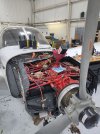
Today was a ground run. We cranked the engine with the plugs out until we got oil pressure, then buttoned everything up and took her outside. 1000rpm until the oil reaches 140, then 1500 for 15 min, then 2000 for a mag drop test and prop cycle test, then WOT for 10s to verify static rpm. Low idle check and idle mixture check, then change the oil and check the filter/suction screen.

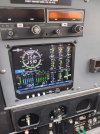
Engine fired up on the second blade and ran perfect. Cht and egt were stable & even, oil pressure was perfect. All the checks were perfect. Engine ran smooth. Filter & screen had about what you'd expect to see for a brand new engine. I couldn't be happier.

Next step is thorough preflight, making sure the weight of the paperwork exceeds that of the airplane, and then a 2hr break-in flight. Another oil change/check, and assuming everything looks good, then 25 hours to the next change. Hopefully the rings are seated by then and I can start flying her normally.
 
Last edited:
It's black :biggrin: what do you want to know?
I assume it has to be positioned around the moving bits, I guess I'm curious how it's held into place around the propshaft.
Since our club planes don't really go anywhere, I've never seen it before in detail.
 
I assume it has to be positioned around the moving bits, I guess I'm curious how it's held into place around the propshaft.
Since our club planes don't really go anywhere, I've never seen it before in detail.
There's enough of a nose on the crankcase to hold it. The part that holds the crank seal. There's enough room to run it out from behind the ring gear. As you can see we stuck it in some flame sleeve to insulate it from the heat of the cylinder and wedged it under the pushrod tubes. I wouldn't want to count on it for very long after being twisted around and exposed to all that heat, but it would get you home without removing the prop in the event of a belt failure.

The main benefit is that the main belt will never break if it knows you have a spare.

ETA: If you go back a page or two, you can see the nose I'm talking about pretty clearly in some of my earlier build photos.
 
Last edited:
I'm not going to cast too many aspersions on the heater box. At the time it was removed, someone thought "well, we have plenty of time to worry about that thing" and when we put it on, we thought, "let's get this on here so we can hear this engine run". No one thought about it in the intermediate term. It wasn't a safety of flight item, and would've been fine until the next annual, but it just seemed to me that there was no better time than now to get a new one. I had told the guys that i wanted to keep the cost down as much as possible this year (lol), so it's possible it was looked at and not deemed bad enough to condemn yet. The mufflers are only a year old, so the exhaust system should be sorted for a few years. I'll be much happier if I never hear that rattling noise again, particularly coming from an engine that I just put together...

If you hear that rattle now, you may want to look and make sure the 10mm is in the tool box. :)
 
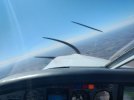
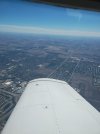
2 hr flight today went well. Engine ran great. Smoother than the previous incarnation. Seems to be more powerful as well. Couldn't keep her out of the yellow arc at 75% power, even at 6500'. Eventually I got smart and dropped the gear. Seems to be 5-10 knots faster at the same power setting.

Brought her in and found almost no metal in the screen/filter. Only burned about 1/2 quart in 2 hours.

Alternator field wire broke about one hour in. Continued flying for another hour on battery power, and voltage only dropped from 13 to 12.7. Pretty good performance from the EarthX. Nice to know as I was worried about the lower rated amp hours. Didn't even shut the autopilot off.

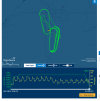
Speaking of the autopilot, Garmin flies pretty nice holding patterns:

1742856624370.png

I was equally nervous about the engine and about the wind....20G30, 40 degrees off the runway, in a plane I haven't flown in 5 months. The PA32 laughs in the face of crosswinds though. Wound up having a damn nice landing and making the first turnoff.
 
Last edited:
Congrats! Where to next for the long X countries to break in the engine?
 
good question...
I was running through IL last Wednesday (flew to Detroit to pick up a car and drive it back). Almost thought about detouring down I-55 to see if you needed a case of brewskis to celebrate after you got the engine back on, but I figured you were busy on the farm so I didn't inquire. Even so, te winds/storms were making the trip exhausting enough as it was. Had to hide out in Dwight for a bit to let the hail/storm pass by!
 
Back
Top