Engine wouldn't start. He drained the oil and went back without the Camguard and it started fine.
Apparently the mix was too slippery for the starter adapter, or at least that's what he said.
Smaller Continentals use a slip-clutch in the starter Bendix. That gear is engaged all the time and spins with the crankshaft, and the clutch lets it do so without wear. But as the clutch wears a bit from normal starting, it develops flat spots on the engagement dogs that spread out the pressure on them, and slipperier lubes won't let them grab the shiny shaft they need to so as to turn the crankshaft.
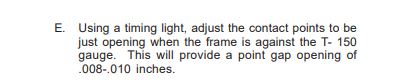
I'd start with timing, impulse coupler and spark plug wire connections at mag and plugs. That all assumes it's spark related.
If it started at all, that stuff is all probably OK.
Run up ok makes impulse coupling more likely, but my money is still on a mag getting bumped and shifting
If the mag was shifted, the runup would NOT be ok.
WAG is mag was bumped out of timing some how.
Guessing is no way to repair an airplane.
Could be as simple as a rag blocking an air intake.
It would not have started at all.
_______________________
P-leads have been known to get worn and fray, and the shield wires contact the core wires and short the mag. Their terminals at the mags have been known to get bent and short out on the mag housing. Mechanics have been known to disconnect P-leads to make filter access easier (or even possible), and if they get the leads crossed and reconnected to the wrong mags, the switch shorts the impulse mag and the occasional weak spark from the other mag then has to fire the engine, and it doesn't do that well at all. Once the engine starts, the misconnected leads will not affect the runup.
The P-leads are the most vulnerable things back there near the filter. They need checking first, and their proper connections confirmed.
Very often problems like this are due to extremely simple stuff, yet everyone goes chasing ideas much farther from being likely. Based on guesses, most of it. I can see this one ending up with a new injection servo, a new starter, a new battery, new cables and contactors, new ignition switch, and lastly, two new mags, at which point the shorted P-lead will be noticed, finally, and fixed with a dollar's worth of parts and ten minutes of labor.
God gave us education in aircraft maintenance and repair, wiring diagrams, and tools like multimeters and mag timers to help find the gremlins. Guessing is expensive and unproductive.



 I have learned much from your responses above.