Engine wasn’t broken in with mineral oil, how shafted are we?

Phillips 66 X/C Aviation Engine Oil 25w-60 for Normal and Break-in Use

Phillips 66 X/C (Cross-Country) Aviation Oil 25W-60 is an ashless dispersant, multigrade engine oil specially formulated for year-round use in aircraft piston engines. It provides distinct performance benefits compared with single-grade engine oils, including easier starting and faster oil circulation at low temperatures, reduced warm-up time, and reduced oil consumption in most engines.


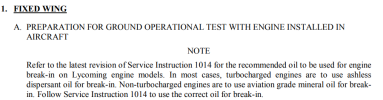
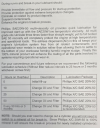
From Lycoming's break-in instructions Lycoming break-in SI 1427C

1765559671193.png

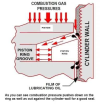
AD oil for break-in on turbocharged engines. The higher cylinder pressures force the rings outward against the cylinder walls harder and the rings and cylinder wear until they're mated. A mineral oil there would result in rapid wear.

Non-turboed engines need mineral for break-in.

The right oil for the right engine for the right results. Doing your own thing will get expensive in a hurry.

1765560005118.png
 
@Philip98, do you have good/thorough Borescope images yet? If so... cylinder walls glazed, honed, or broken in nicely?
 
From Lycoming's break-in instructions Lycoming break-in SI 1427C

View attachment 148039

AD oil for break-in on turbocharged engines. The higher cylinder pressures force the rings outward against the cylinder walls harder and the rings and cylinder wear until they're mated. A mineral oil there would result in rapid wear.

Non-turboed engines need mineral for break-in.

The right oil for the right engine for the right results. Doing your own thing will get expensive in a hurry.

View attachment 148040
They do indeed make recommendations like tearing a healthy engine apart at 12 years and or 2000 hours as well. So there’s that. But I have read where the Type M of the Phillips X/C meets Lycoming requirements?
 
Last edited:
Nothing here has changed in a long time. Break NA engines with mineral oil. AKA Type M. Multi-grade version available if needed. Turbos from Lycoming use AD oil. Not familiar with 25W60 for small pistons - 15W50 is typical. All this is written down. Of course it's GA, so there's always those who are "I know they say X, but I know it's Y."

Much is irrelevant, since so many GA owners don't even use their aircraft enough to properly break them in - couple hours here, couple there, wow, my CHTs have come down, all is perfect. Six months later the ship has 17 hours. A year later cylinder issues already cropping up. Then they can go online and explain how new cylinders are crap, etc.
 
I don’t know what O-540 Lycoming engines you fly, but a quart every 4 hours is excessive.
I've posted that owners (even here on PoA) don't find it excessive, actually its normal.

What basis are you using for your statement?

You just think its high?

It's not by Lycomings own oil consumption formula. Actually is low to mid range usage by lycoming standards.
 
The formula from Lycoming is a guide to determine for the mechanic when to recommend repair.
So if its BELOW that number there is nothing of concern? Correct? Right now OP is burning 1/4 to 1/2 the MAX oil consumption limit. And as I posted, other o-540 owners are seeing the same .25qt/hr burn. So OP is not an outlier.

Remember OP has not given any other information other than a VERY QUESTIONABLE oil consumption rate. That rate HAS stabilized, and there are NO other performance issues. Remember this was a field overhaul. Parts are at serviceable, not new limits.

OP asked for advice. Many people just looked at a questionable consumption rate and regurgitated that its time to rip off all the cylinders. Really? That's not advice, that's guessing.

Right now there is an Owner feels bad problem, not a mechanical one.

Best practice would be to troubleshoot the issue and find a root cause. If an engine oil consumption has stabilized, is within consumption limits, and there are no other performance/operational issues then fly and monitor.

Boroscope the engine? Yes. Leakdown/compression check? Yes. Accurately monitor oil consumption? Yes.

OR

Remove cylinders, replace rings, measure and hone cylinders... sure that's that's a thing you can spend thousands on. Does your AnP have a honing machine? Is he just gonna get a ball hone and have at it?

RIght now OP has a working motor... let an AnP attack it with tools and you are risking 'infant mortality' once those through bolts are off.
 
Nothing here has changed in a long time. Break NA engines with mineral oil. AKA Type M. Multi-grade version available if needed. Turbos from Lycoming use AD oil. Not familiar with 25W60 for small pistons - 15W50 is typical. All this is written down. Of course it's GA, so there's always those who are "I know they say X, but I know it's Y."
Well, part of the problem is that it depends which "written down" instructions you look at. Lycoming may say "straight mineral oil", but the engine shop that just overhauled my Lycoming O-360 (America's Aircraft Engines) says AD oil. Here is the relevant section from the "written down" instructions they included when my engine was shipped back to me:
1765721652510.png
 
From Lycoming's break-in instructions Lycoming break-in SI 1427C

View attachment 148039

AD oil for break-in on turbocharged engines. The higher cylinder pressures force the rings outward against the cylinder walls harder and the rings and cylinder wear until they're mated. A mineral oil there would result in rapid wear.

Non-turboed engines need mineral for break-in.

The right oil for the right engine for the right results. Doing your own thing will get expensive in a hurry.

View attachment 148040
SB 1014N

"
All other engines must be operated on non-dispersant mineral oil during the first 50 hours of operation, or
until oil consumption has stabilized. Use of LW-16702, while required for certain engine models as listed in
Part B above, could inhibit break-in on other engine models and therefore should not be used during break-in.
Reference Service Bulletin No. 446, Service Bulletin No. 471, and/or Service Instruction No. 1409 for
additional information. If an ashless dispersant oil is used in a new engine, or a newly overhauled engine, high
oil consumption might possibly be experienced. The additives in some of these ashless dispersant oils may
retard the break-in of the piston rings and cylinder walls"

Read that and tell me that Lycoming is or is not might possibly be should be could be correct about AD oil. lol
 
Well, part of the problem is that it depends which "written down" instructions you look at. Lycoming may say "straight mineral oil", but the engine shop that just overhauled my Lycoming O-360 (America's Aircraft Engines) says AD oil. Here is the relevant section from the "written down" instructions they included when my engine was shipped back to me:
View attachment 148092
Those are for ECI cylinders, correct?

Lycoming has an 'all engines (except turbo) one break in oil' mentality that might, possibly, maybe, should be followed.
 
Well, part of the problem is that it depends which "written down" instructions you look at. Lycoming may say "straight mineral oil", but the engine shop that just overhauled my Lycoming O-360 (America's Aircraft Engines) says AD oil. Here is the relevant section from the "written down" instructions they included when my engine was shipped back to me:
View attachment 148092
This is perfectly emblematic of the issue in GA. Lycoming made the engine you have. All of the parts in the rebuild were either made by Lycoming or by someone who has proven that their part is equivalent to the Lycoming part (think superior cylinder sets, bearings, etc.) via the PMA process.

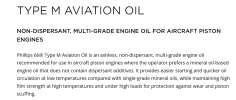
Most of the words in the big paragraph appear to be lifted from Phillips. X/C 20W50 is an oil, as I understand it, that is made 100% from non-synthetic stock. Of course, it still has the viscosity modifiers (polymers that coil and uncoil with temperature to a first order) and, most critically, the ashless dispersants. They make a similar oil called "Type M" that does not have the ADs in it. Probably for a reason.

IMHO the written down instructions for a Lycoming are those written by Lycoming; they have the "regulatory" wording. Nothing America's Engines did, or more importantly, could do, can change that engine from conforming to Lycoming's specifications.

By the time problems crop up it's years later and the overhauler is long off the hook and/or it's not technically possible to prove that the problems were due to improper break in.

FWIW it's worth, I have done the initial or full break-in on four engines in the past six months alone.
 
So if its BELOW that number there is nothing of concern? Correct? Right now OP is burning 1/4 to 1/2 the MAX oil consumption limit. And as I posted, other o-540 owners are seeing the same .25qt/hr burn. So OP is not an outlier.

Remember OP has not given any other information other than a VERY QUESTIONABLE oil consumption rate. That rate HAS stabilized, and there are NO other performance issues. Remember this was a field overhaul. Parts are at serviceable, not new limits.

OP asked for advice. Many people just looked at a questionable consumption rate and regurgitated that its time to rip off all the cylinders. Really? That's not advice, that's guessing.

Right now there is an Owner feels bad problem, not a mechanical one.

Best practice would be to troubleshoot the issue and find a root cause. If an engine oil consumption has stabilized, is within consumption limits, and there are no other performance/operational issues then fly and monitor.

Boroscope the engine? Yes. Leakdown/compression check? Yes. Accurately monitor oil consumption? Yes.

OR

Remove cylinders, replace rings, measure and hone cylinders... sure that's that's a thing you can spend thousands on. Does your AnP have a honing machine? Is he just gonna get a ball hone and have at it?

RIght now OP has a working motor... let an AnP attack it with tools and you are risking 'infant mortality' once those through bolts are off.
Here's my rub. Say OP has a stuck or broken oil control ring. They never tell the A&p of oil consumption rate. One owner doesn't think its an issue. The other owner doesn't tell the A&p because they're JUST under Lycoming limits. Below that number doesn't mean everything is OK. That number is just the threshold of definitely being grounded. And that number isn't max rated HP. The number is whatever HP you were cruising at. Much like an airspeed indicator, we don't go from green to red. There's a yellow arc. And op is on the far end of the yellow arc.

Say A&P does a leak down test. Compression says things are ok. They keep flying along fat dumb and happy. But something could be very wrong. I've seen some pretty crazy things and the engines just keep plugging along.

I agree OP needs to do some diagnosing before pulling cylinders. But just letting an A&P deal with it isn't the answer either. There's zero harm in scoping the cylinders.
 
From experience, a quart in four hours is at the very high side of "normal." The formulae for consumption are based as much on ensuring that no oil pickup starvation will occur in any pitch attitude in flight, assuming the sump was full at the start of the flight and the full fuel capacity was consumed during the flight. Sump capacity is also sized in relation to this demand.

In fat numbers I'd expect an IO/O-540 to consume around one quart in seven to twelve hours. Mine years ago ran right around one quart in 10-12 hours for about 1200 hours.
 
But my warranty is with my overhaul shop, not with Lycoming, so maybe not...?
This. Those specific shop warranty instructions prevail. Unfortunately, too many people forget to follow those specific instructions which only matter when something doesnt go right.
 
IF you are actually burning oil it should be evident by examining the

Combustion Chambers. While scopes are available at reasonable prices

it may not be needed. A small penlight can show if the piston tops

are wet or evidence of “ponding”. It could be 1 jug is the issue or not

at all.

IIRC no one has mentioned examining the Breather for proper location.

Incorrect placement can cause oil to siphon out.

Is the belly oily?
 
This. Those specific shop warranty instructions prevail. Unfortunately, too many people forget to follow those specific instructions which only matter when something doesnt go right.
I would query the shop ahead of time, ask why they go against the TCDS owner's advice for break-in, and then get in writing that they will warrant an engine broken in per their, not Lycoming's recommendations.

And of course, they can always fall back on the "it's within the oil burn limits specified by Lycoming" when things go sideways and they don't want to repair. Not saying the aforementioned shop would do this, but certainly have seen it happen.

Also remember, these are not crate motors - even if they do warrant the engine, you'll have months of downtime as nothing is ever in stock.
 
I would query the shop ahead of time, ask why they go against the TCDS owner's advice for break-in, and then get in writing that they will warrant an engine broken in per their, not Lycoming's recommendations.
Simple. Because the shop is warrantying their workmanship and not Lycomings work. Whoever is the TCDS holder is moot. And that was the point of my comment: follow the overhauling shop’s written instructions and not Lycomings. As to any prior inquiries, my recommendation has always been to fully understand their warranty and post-mx policies before you turn a single blade.
 
Simple. Because the shop is warrantying their workmanship and not Lycomings work. Whoever is the TCDS holder is moot. And that was the point of my comment: follow the overhauling shop’s written instructions and not Lycomings. As to any prior inquiries, my recommendation has always been to fully understand their warranty and post-mx policies before you turn a single blade.
So you would go with a shop that knows more than Lycoming, which designed and built the engine. The shop just put it back together with some new parts, perhaps with a great amount of attention to detail, which some might attest is sometimes lacking at the OEM, but otherwise that's about it. They don't inject secret sauce nor may they.

In the end, in most cases, it probably turns out ok either way. A good shop will warrant their work - had one recently. Owner was down another 3.5 months. It'll turn out ok in the end. Patience is a big virtue in piston GA.
 
So you would go with a shop that knows more than Lycoming, which designed and built the engine.
Yes in most cases and especially with a shop that applies years of field experience which Lycoming is limited in applying for various reasons.

They don't inject secret sauce nor may they.
Sure they can provided they follow legitimate routes to “inject their secret sauce.” For example, some will write their own acceptable instructions to perform that mx or OH. Or it can be as simple as applying additional sealant or paint at key areas that reduces corrosion by 100%. Unfortunately, there are certain individuals who do not follow a legitimate route and only work off personal opinion as a “legitimate” reference.

In the end, in most cases, it probably turns out ok either way. A good shop will warrant their work
It does. However, outside any part/equipment failure, the majority usually fall under a single root cause: the owners did not follow the appropriate post-maintenance instructions when operating the aircraft.
 
It does. However, outside any part/equipment failure, the majority usually fall under a single root cause: the owners did not follow the appropriate post-maintenance instructions when operating the aircraft.
Agree with this. Though in addition to owners being unable to follow instructions or have a clue in general, the principal root cause is simply disuse. Aircraft engines were not meant to be used 50 hours a year in brief intervals. Air cooled combustion by-product filled engine - what could go wrong letting it sit?
 
Agree with this. Though in addition to owners being unable to follow instructions or have a clue in general, the principal root cause is simply disuse. Aircraft engines were not meant to be used 50 hours a year in brief intervals. Air cooled combustion by-product filled engine - what could go wrong letting it sit?
In the context of the thread, the break-in should be treated much differently than how the owner will utilize their aircraft in “normal” conditions. Without a doubt, if you don’t finish the break-in within a defined time period then you will only create more problems. However, once the break-in is finished, I’ve found its not just plain disuse, but how the owner manages that lack of regular use.

For example, an engaged owner who takes the time to mitigate the risks of 50 hrs per year will still have a solid engine and aircraft in the end vs an owner who only puts oil and gas in their aircraft when they fly that same 50 hours. And the same can be said for all the aircraft systems from the electrical system to the amount of corrosion found. Unfortunately, a good number prefer only the oil/gas route and complaining online why their 60 year old electrical system doesn’t work after putting in a new $500 battery.
 
Well, part of the problem is that it depends which "written down" instructions you look at. Lycoming may say "straight mineral oil", but the engine shop that just overhauled my Lycoming O-360 (America's Aircraft Engines) says AD oil. Here is the relevant section from the "written down" instructions they included when my engine was shipped back to me:
Yeah, and there's something there that is important:

1765757747018.png

It's a 100% mineral oil, so it doesn't have the synthetic anti-friction additives that hamper break-in.
 
I've posted that owners (even here on PoA) don't find it excessive, actually its normal.

What basis are you using for your statement?

You just think its high?

It's not by Lycomings own oil consumption formula. Actually is low to mid range usage by lycoming standards.
I only have about 10,000 behind Lycoming engines and 2,000 behind O-540s. My experience is you rarely have to add oil to them when they have been broken in and maintained properly.
 
SB 1014N

"
All other engines must be operated on non-dispersant mineral oil during the first 50 hours of operation, or
until oil consumption has stabilized. Use of LW-16702, while required for certain engine models as listed in
Part B above, could inhibit break-in on other engine models and therefore should not be used during break-in.
Reference Service Bulletin No. 446, Service Bulletin No. 471, and/or Service Instruction No. 1409 for
additional information. If an ashless dispersant oil is used in a new engine, or a newly overhauled engine, high
oil consumption might possibly be experienced. The additives in some of these ashless dispersant oils may
retard the break-in of the piston rings and cylinder walls"

Read that and tell me that Lycoming is or is not might possibly be should be could be correct about AD oil. lol

1. Lycoming says that, for naturally-aspirated engines, straight mineral oil should be used for break-in.

2. The OP's mechanic put Aeroshell W100 Plus into the overhauled engine.

3. The OP reports high oil consumption that is not improving. This implies that break-in did not take place, and consequent glazing will prevent further break-in.

Now, what are we supposed to think? There have been many suggestions here about this or that factor, but the fact remains that Lycoming's advice was ignored and now oil consumption is terrible, on a par with a thoroughly worn-out engine.

Borescoping will almost certainly show glazing.

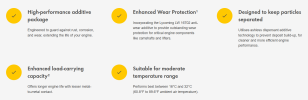
From Aeroshell's website https://www.shell.com/business-cust...ston-engine-oils/aeroshell-oil-W100-plus.html we read:

1765843268841.png

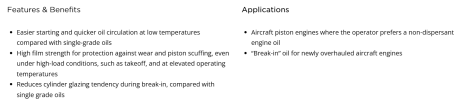
Ok. So it guards against wear, which is NOT what we want for break-in. We need those rings and cylinders to wear each other until they have mated and there are no gaps left between the rings and cylinder walls. No cylinder and no ring is perfectly round, see? I have had plenty of experience with that in air compressors in heavy trucks and earthmoving equipment, where any lack of break-in results in "oil pumping" that contaminates the entire air system. In an aircraft engine excessive oil consumption means fouled spark plugs and exhaust valves, excessive blowby of corrosive gases and particulates into the crankcase, and other hassles.

The additive LW 16702 is the stuff added to 15W50 and was aimed originally at the owners of the H2AD and a few other models of engines that suffered unusual cam and lifter wear. It is mandated by an Airworthiness Directive, 80-04-03R2, either by being incorporated in the oil (as with the Aeroshells that have it) or added separately at oil changes.

It has enhanced load-carrying capacity, a byproduct of that additive's anti-friction qualities.

Let's not have any more nonsense about a quart in 4 hours being just fine simply because it's within Lyc's limits. Lycoming would not say that it's ok in a freshly-overhauled engine.
 
Here's poplar groves break in procedure. It definitely differs from Lycoming. But... They're the ones that would warranty it if something went awry. Interestingly they discourage power settings greater than 75%
 
Here's poplar groves break in procedure. It definitely differs from Lycoming. But... They're the ones that would warranty it if something went awry. Interestingly they discourage power settings greater than 75%
Well, they got one thing right: use mineral oil for break-in. But they're wrong about the 75% max power setting. I broke in numerous Lycomings using their recommendations, which call for max power for climb, 75% cruise for one hour, another hour varying between 65% and 75% and a final 30 minutes at full throttle. Our engines used very little oil. Very, very little.

Their assertion that high power results in glazing due to heat. That's wrong. High power creates more cylinder pressure that puts outward pressure on the rings, accelerating break-in and preventing glazing.
I'll be honest. I stopped reading before I got to the why.
 
For the folks who advocate break in with AD oil, just be honest, admit you are too lazy to get mineral oil, you are willing to risk of a failed cylinder break in is minimal and are willing to follow the advice on others like you.
 
For the folks who advocate break in with AD oil, just be honest, admit you are too lazy to get mineral oil, you are willing to risk of a failed cylinder break in is minimal and are willing to follow the advice on others like you.
???

I'm not advocating anything. I want to do the right thing. I'm frustrated that there's a debate about this. I do not know why my engine shop--which has been in business for decades with a good reputation and has been praised by people I trust who have been in the aviation business for decades--specifies to use AD oil. But I doubt it is because they are lazy or are "following the advice of others like them".

Certain people cannot resist making it personal when they disagree. My advice is to ignore them.

Bottom line:
A) The manufacturer specifies non-AD oil. They have by far the largest data set of outcomes, so that should be most people's baseline position.
B) If the engine shop providing the warranty for your overhaul specifies differently, you should follow their instructions instead. Because, money.
 
“I will note that our break in period wasn’t super smooth. On the first flight (which I did), I only flew for maybe 5 minutes because the fuel line wasn’t fastened and I started having engine surging, as the fuel supply was interrupted and resumed, so I made an immediate emergency return to the airport.“

Way back when some people recommended this procedure for break in.

Run engine less than 1 minute. Check for leaks. Tow aircraft to end of runway. Start engine and immediately take off.

I didn’t use this procedure for an engine break in but limited run time on ground to the absolute minimum.
 
Well, they got one thing right: use mineral oil for break-in. But they're wrong about the 75% max power setting. I broke in numerous Lycomings using their recommendations, which call for max power for climb, 75% cruise for one hour, another hour varying between 65% and 75% and a final 30 minutes at full throttle. Our engines used very little oil. Very, very little.

Their assertion that high power results in glazing due to heat. That's wrong. High power creates more cylinder pressure that puts outward pressure on the rings, accelerating break-in and preventing glazing.
Yep. A decade back I bought a Ford with the Ecoboost V6. They were known to burn oil. So I drove it out of the lot, and did an "Italian Break-in" as soon as the temp gauge was in the green. It burns zero between oil changes. Engines need hammered to get those rings seated. The "glazing" is akin to seasoning an iron frying pan; if it's done properly, it ain't coming off without physical intervention.
 
???

I'm not advocating anything. I want to do the right thing. I'm frustrated that there's a debate about this. I do not know why my engine shop--which has been in business for decades with a good reputation and has been praised by people I trust who have been in the aviation business for decades--specifies to use AD oil. But I doubt it is because they are lazy or are "following the advice of others like them".
What I would do is ask this shop why they make this recommendation while the companies who manufacture new cylinder assemblies say to do something different. Maybe they will give you some reason in their manufacturing process that indicates AD oil.

But until then, Lycoming , Continental and Superior Air Parts all say to use mineral oil.
 
Back
Top