Engine timing and ROP/LOP questions

Rick A

Line Up and Wait
PoA Supporter
Joined
Sep 25, 2019
Messages
828
Location
Lancaster, Pennsylvania
Display Name
Rick A
Home Airfield
KLNS
I have an Lycoming IO-360-A3B6 just in for annual, and I know just enough about airplane engines to be dangerous.

The mechanic calls today and asks why is my timing set at 25 degrees TDC when the book calls for 20 degrees? I don't have a clue. It's starting and running just fine at 25 degrees TDC and I assumed all was good and set within spec.

Asked him (a WAG) if maybe because the last mechanic knew I'm running mostly LOP except during climbs, maybe he cheated a little last year if/when the mags were advanced a little for some unknown reason, rather than a simple mistake, or some kind of creep?

Shared with him that I read somewhere that when running ROP the plugs ignite the mixture while the piston is coming up, and while running LOP the mixture is ignited while the piston is moving downwards away from the plug. Would this be true? Or matter if related to the proper book timing setting?

He said in either case the timing will always be set the same, but possibly the amount of power being produced could vary the position of the piston related to TDC. Which I don't understand.

Can anybody set me straight?
 
Shared with him that I read somewhere that when running ROP the plugs ignite the mixture while the piston is coming up, and while running LOP the mixture is ignited while the piston is moving downwards away from the plug. Would this be true?
No.

The optimal timing will change some with mixture, - generally it would be more efficient to run a little more advanced when lean, but your timing is one size must fit all and too advanced could lead to detonation at high power when you are not lean.

Set it according to the book.
 
Set it according to the book.
Suggest you do this.

Mags do not have variable timing, the engineers knew this when they wrote the specs, and picked the spec to give you the best performance without damaging your engine. As mentioned above, you don't want to have detonation associated with too much timing advance.

Unlike motors in cars and motorcycles which have a wide range of RPM, aircraft engines are relatively slow turning big bore engines. For example, a motorcycle engine's high RPM will result in faster piston speed, less time for the mixture to burn, and hence high RPM engines benefit greatly from advancing the spark. Not so much with our engines.

Bonus Trivia from Oshkosh Sure Fly Seminar: Unlike motorcycle and car engines, aircraft engines do experience different /lower air pressure and density at higher altitude. Less pressure in the cylinders during compression / lower manifold pressure. The oxygen and fuel molecules are farther apart, and require more time to burn. So advancing the timing when manifold pressure is lower will help the engine. Hence the electronic ignitions for our GA aircraft rely not on RPM but manifold pressure to guide the computer advancing the spark. Spark will not advance unless the MP is in lower part of green arc.

This doesn't apply of course to turbo charged engines.
 
Common mistake. The majority of 4-cyl Lycomings (parallel valve) use 25°. I suspect the last guy who timed it just assumed it was 25° without checking the data tag. Time it per spec or risk an expensive kick-back when starting, let alone premature ignition during normal ops and subsequent excessive cylinder pressures. It’ll also kill a composite prop.

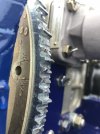
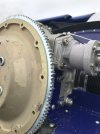
Pics of my first start of a 20° engine that was timed at 25°. IMG_4546.jpegIMG_4551.jpeg
 
Rick. I had a Lycoming IO360A3B6D in my Mooney that I took care of for many years. As I recall the proper timing is in fact 25 degrees. I’d ask the mechanic which “book” says otherwise. He may be wrong.
 
For the Lycoming IO-360-A3B6D, the specified ignition timing is 25° BTDC (before top-dead-center) on both sides of the dual magneto. This model does not have the optional 20° BTDC setting that some other IO-360 variants received. Always set timing per the engine data plate and type certificate.

Why the confusion? Lycoming’s Service Instruction 1325A changed certain IO-360 models from 25° to 20° BTDC, but the A3B6D was not included in that change; the IO-360 Type Certificate Data Sheet also notes that the optional 20° timing applies to “all models except IO-360-A1B6D and A3B6D.

What else is this mechanic wrong about?
 
It should be stamped on the engine data tag and a mechanic should check it before timing it. If it’s an angle valve, also pay attention when replacing spark plugs as they’re probably long reach.
 
What else is this mechanic wrong about?
Great question Lance. He's new, and his boss (an IA) was out on a flight, so he called me late in the afternoon. Sent out an email with this information out tonight, and it will be straightened out tomorrow! Thanks to everyone for the quick responses.
 
What exact engine do you have?
For the Lycoming IO-360-A3B6D, the specified ignition timing is 25° BTDC (before top-dead-center) on both sides of the dual magneto. This model does not have the optional 20° BTDC setting that some other IO-360 variants received. Always set timing per the engine data plate and type certificate.

Why the confusion? Lycoming’s Service Instruction 1325A changed certain IO-360 models from 25° to 20° BTDC, but the A3B6D was not included in that change; the IO-360 Type Certificate Data Sheet also notes that the optional 20° timing applies to “all models except IO-360-A1B6D and A3B6D.

What else is this mechanic wrong about?

I have an Lycoming IO-360-A3B6 just in for annual,

Not sure why comments are being made about the D version when the OP doesn't have that engine.
 
Plane registration says it's a J model which normally would be a D version with the Bendix dual mag and 25 deg timing. If I made the wrong assumption, I'm sorry.
 
Plane registration says it's a J model which normally would be a D version with the Bendix dual mag and 25 deg timing. If I made the wrong assumption, I'm sorry.
No need to apologize. Back in the early 90's the original engine having the two mags (in one assembly) sharing the same drive was replaced with the newer M20J engine version with two independent mags, and installed under a STC (Lake Aero's I believe). In addition to the mag differences, I recall a different prop governor was also needed to achieve the proper RPM's.

Sold my half of another Mooney (1980 M20J) with the original combined mag and moved to Pennsylvania. Shortly afterwards that plane experienced an engine failure due to some broken plastic magneto part, and my former partner successfully glided it onto a runway. When it came time for an engine overhaul on my 1982 M20J. the bad experience with my former ride was a big part of biting the bullet and installing the new engine under the STC.

Sounds like you had good experience with the Bendix combined mags on your J model. I've been told their dangerous reputation hasn't turned out to be as bad some of us (including me) were lead to believe.

Will be getting this timing issue straightened out later this morning.
 
I remember a few instances where the dual mag hold down bracket came loose and the mag fell off the back of the engine.
 
He said in either case the timing will always be set the same, but possibly the amount of power being produced could vary the position of the piston related to TDC. Which I don't understand.
To elaborate a bit.

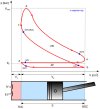
This is the "typical" pressure (vertical axis) as a function of volume inside the cylinder as the piston goes up an down.
1755178185485.jpeg
Bottom is the piston going up and down (left and right) in the cylinder.
Starting at "a" is the intake stroke - the piston is going down, the intake valve is open, and you are sucking air and fuel into the cylinder. b starts the compression stroke. IGN is the point where the spark plug fires. C the piston is at the top of the stroke, combustion is started, and we start the expansion stroke where the pressure above the piston is pushing it down and sending power to the crankshaft. EVO the exhaust valves open, e to a, the piston is pushing the burned air/fuel out the exhaust. Rinse and repeat.

The area with the +W in it is the work done by the combustion - how much power you get out of the engine. You want to fire the plugs a a point where the area in that graph is maximized for maximum power. You can see that the plugs need to fire before top dead center (point C) to get the combustion started. Too soon and the pressure will rise too much as the piston is coming up - the piston has to fight the increase in pressure - plus there is more potential for detonation (knock) because peak pressures / temperatures are too high - that's when you start melting pistons. Too late and you "waste" some of the expansion stroke as the piston goes down. The exact optimal timing depends on things like air fuel ratio (leaner burns slower), engine speed (faster speed, you need to get the fire started earlier), and manifold pressures (lower pressure burns slower). But, unlike your car, most aircraft engines run a fixed ignition timing - less complex to implement if you have mechanical magnetos, and you typically operate in a limited power / speed range so timing is set for the best value at "typical" operating conditions and limited by concern for detonation.
 
Slight Tangent:

All in all, dang does @Lance F know about Mooneys!

Is the service bulletin making the change to 20 degrees optional or “this isn’t an AD but do it anyway”?
 
Slight Tangent:

All in all, dang does @Lance F know about Mooneys!

Is the service bulletin making the change to 20 degrees optional or “this isn’t an AD but do it anyway”?

Yeah, he's the "got milk" guy of Mooney engines.

 
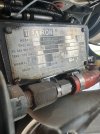
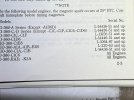
Waiting to hear from Lycoming, but at this point it appears this IO-360-A3B6 engine is likely to be set at 20 degree BTDC unless they have more information to share that no one is yet aware. (left edge cut short, they're all IO-360's on the list)
 

Attachments

  • IMG_5010.JPEG
    IMG_5010.JPEG
    1.1 MB · Views: 16
  • IMG_0815.jpg
    IMG_0815.jpg
    314.3 KB · Views: 16
Information we received today during a conversation with an engineer at Lycoming.

He says the IO-360-A3B6 calls for only 20 degrees BTDC (rather than most of them set at 25 degrees). The reasoning for the reduction to 20 degrees was to improve cold starts and to provide better cooling to the valves and rings.

He also included it has something to do with the impulse coupling lag on the drives for the mags. However, he believes that most O & IO-360's call for 25 degrees so it shouldn't matter which setting as long as the engine temperatures were keep in check following Lycoming operating recommendations.

And, whatever setting listed on the engine's data plate should what always should be used.

P.S. May be mistaken on this, but I've led to believe the left mag impulse coupling used on my engine reduced the amount of degrees of advance down to zero every time it "clicks" during propeller rotation while starting. Don't know enough to understand then why there would be any difference between 20 and 25 degrees of advance in relation to the impulse coupling. Or, if my belief in the workings within an impulse coupling are even valid.
 
Back
Top