Engine Failure low Altitude

Good advice here. I'll add one thing. If it's night, then turn on the landing light. If you don't like what you see, then turn it off.

The best answer I know is to put your feet on the glareshield, lean forward as far as possible, and kiss it good-bye ... :biggrin:
 
I believe it was Bob Hoover who advised " Fly that son of a ***** all the way into the crash."
 
My comment is it wasn't an emergency procedure it was just a procedure as rehearsed.

Brian
CFIIG/ASEL

I'm not sure what you mean here. Are you saying that because you brief and rehearse something beforehand, it's not an emergency? I can't agree with that. I see no reason to not treat a rope break on a glider as an emergency. You comply with the memory items (from my time in the 2-32 I seem to remember Glide - Establish, Release - Pull Twice) and hopefully land safely.

In the turbines I fly, we rehearse (ad nauseum in the sim) and brief engine out procedures before every takeoff, but if we did lose an engine it certainly would be considered an emergency. Even though the immediate action, memory items are essentially nothing other than "maintain aircraft control".
 
I’m wondering what everyone else’s take is on this. We’re all taught aviate, navigate, communicate. Period. Fly the airplane.

Say we have an engine failure in a light single engine piston airplane, at low altitude.

My main advice is - don't try to do any aerobatic maneuvers. Airplanes don't stall on their own. Trim all the way up if needed, and fly with a very light touch. Then guide the airplane to an area within your forward field of view. Forget the stuff behind you.

I've heard some people advocating for pushing the nose down until you feel negative G's etc.. There is really no need for that. If you trim and fly with only one finger you will not stall or spin.
 
Advice? I thought that was in the FARs…

Tools, who ALWAYS follows the rules.

BTW, engine failure simplifies things, like being surrounded. It’s an undetermined power loss that is much more interesting.
At low altitude, you are unlikely to determine or know the cause if you stall / spin.
 
I'm not sure what you mean here. Are you saying that because you brief and rehearse something beforehand, it's not an emergency? I can't agree with that. I see no reason to not treat a rope break on a glider as an emergency. You comply with the memory items (from my time in the 2-32 I seem to remember Glide - Establish, Release - Pull Twice) and hopefully land safely.

In the turbines I fly, we rehearse (ad nauseum in the sim) and brief engine out procedures before every takeoff, but if we did lose an engine it certainly would be considered an emergency. Even though the immediate action, memory items are essentially nothing other than "maintain aircraft control".

All I mean by that is if you have the emergency procedure down cold and are proficient in all the skills required to perform it. It seems less like an emergency than just an inconvenience. It doesn’t mean that depending on the situation declaring an emergency isn’t part of the procedure.
A good friend and CFI I used to work with had a 172 engine quit while doing stalls at altitude. When he tried to restart it it wouldn’t even turn over so obviously wasn’t going to restart. He briefly considered trying to air start it (dive) but wasn’t sure why it would turn over and didn’t want to waste the altitude trying to. So, he did what he practiced with students probably 3-5 times a week, i.e. setup for a landing in a farmers field. He told me once he decided that was what he was going to do then it was just another landing. which mirrors two things I like to say about emergency procedures. 1. Make your emergency as normal as possible. 2. It is just another landing.

Brian
CFIIG/ASEL
 
My main advice is - don't try to do any aerobatic maneuvers. Airplanes don't stall on their own. Trim all the way up if needed, and fly with a very light touch. Then guide the airplane to an area within your forward field of view. Forget the stuff behind you.

I've heard some people advocating for pushing the nose down until you feel negative G's etc.. There is really no need for that. If you trim and fly with only one finger you will not stall or spin.
I am not a fan of full up trim advice unless that is how you normally land. Like my previous post says . 1. It is just another landing. 2. Make it as normal of landing as possible. If you practice many takeoffs and landings you should know the difference between takeoff and landing trim, so just trim for landing.

IMO the push down until you feel negative G’s is only appropriate if you are hanging on the prop at Vx below a few hundred feet. If you have a power failure there an aggressive push is the only way you are going to maintain enough energy to stop the descent enough to land when you get back to the ground.

Perhaps the other thing the push down to zero G’s advice does, is it may help the counter the disbelief response that tends to be to naturally pull up.

Brian
CFIIG/ASEL
 
It is just another landing.
Every landing I've ever made has been power-off. A few were into the field just beyond the threshold, most were on the grass next to the paved runway. None were a cause for alarm. Should a rope ever break for real, my plan is to make it a non-event.
 
How low is low? My engine stoppage happened at about 2000 AGL. (Likely induction or carb icing) Pitch to best glide, pick out a landing spot, then go through the engine stoppage troubleshooting memory list (carb heat, mags, fuel pump, switch fuel tank, mixture). Engine restarted at 500 AGL, otherwise landing in a flat snowy field. My copilot/IPC instructor was hovering over the fuel selector if we were committed to an off-airport landing. Much lower and I would not have had much time for the troubleshooting list. Fly first, troubleshoot as time permits.

I've also had a partial power anomaly (excessive engine vibration) just after takeoff (100 AGL) after a cylinder replacement. That one scared the bejeebers out of me. My initial thought was a cylinder valve failure. Reduced power slightly to reduce vibration and buy some time if the engine was going, picked on a landing spot (golf course fairway off the runway end). Fortunately I could maintain adequate airspeed in a shallow climbing turn to gain more altitude and options while remaining within gliding distance of the crossing runway and/or golf course. Reached pattern altitude and did some very quick troubleshooting (mags, already at full rich and fuel pump on for takeoff, didn't seem to be a fuel issue, mag switching no help), pulled power and landed immediately on the runway. Turned out to be a failed spinner.

The common thread: maintain adequate airspeed, pick out the safest emergency landing spot, troubleshoot later (if time).

Unfortunately, at our airport we had a newly minted pilot (100 hours experience) rent a C172, somehow encounter carb icing on a CAVU fall day, and manage to stall and spin the plane into a large farm field that was an ideal off-airport landing spot. To avoid this kind of fate, you need to brush up on your emergency procedures and put it into action when an anomaly strikes. My primary instructor many years ago drilled that into each and every student. I'm glad he did. Not only did we do the ritual "your engine failed" on almost every flight, we also did aborted takeoffs as well. (And I've had to implement an aborted takeoff, too, in real life flying.) Stay safe out there.

 
“If you’re faced with a forced landing, fly the thing as far into the crash as possible.”

— Bob Hoover

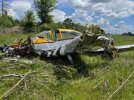
11April 2023, Night VFR in a Project Navion returning from Culpeper, VA to XS09. Overflew our field, couldn't see the solar Runway edge lights, made a turn back to KCXO at 2000' . I was moving along at 150 kias, I pulled back power and the engine just stopped. Old tank sealant occluded the gascolator. I was 2 miles from end of our runway when I ran out of altitude. Lowered landing gear at 400 ft to have landing lights and all I saw were the tops of trees. It takes a great deal of will power and practice not to jerk the yoke back but Bob Hoover said, fly the plane and I never wanted to be a stall, spin casualty. The Navion is Robust. NTSB report only took 5 months. also you can listen to the AOPA There I Was podcast with Richard McSpadden. I am flying another Navion and will continue to do so.
 

Attachments

  • IMG_7500.jpg
    IMG_7500.jpg
    13.8 KB · Views: 21
  • IMG_6580.jpg
    IMG_6580.jpg
    55.4 KB · Views: 21
Back
Top