Do you do your own spark plugs?

4RNB

Cleared for Takeoff
PoA Supporter
Joined
May 24, 2016
Messages
1,392
Display Name
4RNB
I am coming up on an oil change and would like to begin cleaning my spark plugs. I am most interested in your process and what tools you have or suggest.

Here is what I think I know:
1. I need to get extra spark plugs on hand for a couple of reasons. If I drop on I should assume it is bad. Also, if I have at least an extra set I can remove the old at the airport, exchange for replacement, then bring home to clean. I do not yet have a hangar secure enough to keep lots of tools other than at home.
2. I need to learn what kind of spark plugs I have to properly gap and test, let alone replace, perhaps keep track of this on my maintenance reminder sheet. I can likely learn this from the engine manual, old records, or perhaps by looking at any writing on the spark plugs?
3. I need a transport tray.
4. It seems that for cleaning, most keep a small vibrating tool to gently clean deposits off. Then use a wire wheel to clean the threads, then gap by hand or using a more expensive press type tool. Then sandblast with either a small tool or a bigger tool, make sure to remove any abrasive sand afterwards. This is a lot of tools and I've never seen them for sale used here.
5. Test spark plug in a tester, ensuring a good spark, including under pressure. 135 psi for Lycomings?
6. Massive plugs have narrower ranges, fine wire a bit more. .18 +/-
7. Install new copper washers and light thread sealant, not at the engine side inner two threads.
8. Carefully hand thread to not cross thread. Then use a torque wrench, set maybe 30-35.
9. Reattach wires, making sure to not overly twist them.

What I have read and watched so far made no comments on specific rotation ideas other than to do so based upon time.

I've watched the Kit planes video.

Where am I deficient?
What tools do you use and why?
How often do you do this?

Thanks.
 
Assuming a certified application?
I do my own. In EAB application I use https://www.g3ignition.com/magmod.html for wires on slick or bendix mags and I have been using the NGK 3961 plugs which are currently running around $3 a plug. When I converted to the g3i system with dual slick mags I noticed it started easier and ran better immediately. At annual there is no checking or cleaning plugs; simply replace plugs with new.
 
Seems I am short. Engine is IO540-D4A5

Input desired regarding tools and processes. All this stuff is expensive!
 

Attachments

  • Image 5-11-25 at 08.21.jpeg
    Image 5-11-25 at 08.21.jpeg
    630 KB · Views: 15
I do my own plugs. Used to be a top alcohol drag racer and we used 16 plugs per 1/4 mile pass. Always used new plugs every run so we could read them to tune the engine for the next pass.
So naturally I was going to do my own aviation plugs when I started flying my own plane.
I have 2 sets I rotate in and out of the plane.
The tools to service your plugs are inexpensive except for the pressured tester/cleaner which I don't have.
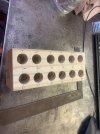
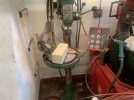
Here's a couple pictures of the tools I use.
f91ab2c1-774e-4a05-94ef-8ed3aac48899.jpg

That's a pile of lead that I picked out after blasting them above.
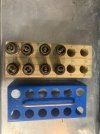
I made a second plug holder, got to have 2 when rotating plugs.IMG_4150.jpegIMG_4149.jpegIMG_4153.jpeg
 
Last edited:
I do my own plugs. Used to be a top alcohol racer and we used 16 plugs per 1/4 mile pass. Always used new plugs every run so we could read them to tune the engine for the next pass.
So naturally I was going to do my own aviation plugs when I started flying my own plane.
I have 2 sets I rotate in and out of the plane.
The tools to service your plugs are inexpensive except for the pressured tester/cleaner which I don't have.
Here's a couple pictures of the tools I use.
f91ab2c1-774e-4a05-94ef-8ed3aac48899.jpg

That's a pile of lead that picked after blasting them above.

What do you do for pressure testing?
 
What do you do for pressure testing?
I don’t.
I have flown 1500+ hours so far in my plane and haven’t found a bad plug yet. I have wore out a couple sets though.
I use a blast cabinet to clean the plugs with a larger glass bead and low pressure. The larger bead is less prone to getting stuck in the plug. Low pressure helps keep the bead from fracturing, imo
 
You can pick up an air spark plug cleaner and media for 25 bucks on Amazon. That, a labeled tray, and a tester are the key tools.
 
Last edited:
Do you know how to soften your copper gaskets?
41e3f531-78e6-4465-9f70-167223316134.jpg

2094494b-f3e5-43c1-bbdb-1e40657919cc.jpg

Sometimes I have to keep freshly cleaned plugs in a sealed bag with descendent in it to keep them from rusting during certain parts of the year in my hangar. I later found big enough bag to put the holder into it.
f16e25da-0822-4393-a76d-867a85f3faf5.jpg
 
Last edited:
I use a blast cabinet to clean the plugs with a larger glass bead and low pressure. The larger bead is less prone to getting stuck in the plug. Low pressure helps keep the bead from fracturing, imo
I do the blast cabinet thing as well but I use crushed walnut shells as media. I figure if I miss getting a piece or two of media out of the plug it will just burn up. Additionally, it's a softer media so less likely to erode the insulator. I would stay away from a wire wheel as an errant piece getting stuck in the plug may turn it into a glow plug. But, if you use a blast cabinet you won't need one anyway. When I am done blasting, my plugs look practically new.

Tip: Never blast directly into the plug. I always clean at an oblique angle. Less chance of media getting stuck and less chance at damaging insulator.
 
What do you do for pressure testing?
Look on ebay or other venues for used aircraft spark plug testers. There are also a couple off brand testers that can be bought new for <$700. Perhaps by an off-brand tester and charge your buddies a few nickels to clean and test their plugs and pay it off in a year or two?
 
I do my own. I throw them out and put new ones in at about $3 apiece. :D even with 9 cylinders to fill it’s barely $50. Not worth my time messing with the old ones.
 
The official plug servicing stuff: https://www.championaerospace.com/wp-content/uploads/2015/06/AV6-R-Aug20141.pdf

Read and learn.

Champion's grit for plug cleaning is silicon carbide, a super-hard and sharp abrasive. It lasts a long time, and is more visible than glass bead if it gets stuck in the plug well. If it gets into a cylinder, it will tear it up real good. Major scoring. I have powerful reading glasses that I used to inspect that plug well after blasting.

Too much blasting pressure, for too long, erodes the electrodes and shortens plug life. Take it easy.
 
Last edited:
I do my own. Assuming regular "massive" plugs you need:
-wrenches to R&R. I use a torque wrench, including a crow's foot on the B-nut, I don't think the guys in the shop bother...
-antiseize...current recommendation is copper
-gap gauge. champion sells one that works well for airplane plugs
-electrode squeezer tool for setting the gap on worn plugs
-go/no go gauge to tell when the plug is worn out. You stick the electrodes up to it and if they pass into the hole the plug should be replaced.
-picks to remove lead fouling and blaster media
-an abrasive blaster. You can get a cheap one and they work fine. If you lean aggressively, there's not much to clean anyway.
-I don't bother with the resistance/pressure testing. The shop does when they pull them at annual. I'm not sure how critical this is. I carry an extra plug and the tools to change it in my tool kit.
-A big bag of gaskets is nice to have. One of these days I'll get around to annealing the old ones.
-A tray aids in rotating them. You could make one, but I bought one because they're pretty cheap. All of this stuff is actually pretty cheap, especially compared to the cost of the stupid plugs.
 
Only thing to add is here in FL they get rusty. Wire brush outside and silver spray paint. Tape the top threads and spray them in the plug tray.
 
I have one of these plug cleaner with I would assume it is supplied with the right media? I have not used it yet, the picture is my buddy’s blaster cleaner that his mechanic uses. Maybe I should use mine instead of the blast cabinet? Old habits are hard to break.


IMG_5319.jpeg
I love fixtures for engines. The stainless one is for hemi pushrods. We took the pushrods out every night to save the titanium springs.
 
Last edited:
Experimental.
Might as well take full advantage of that. Your motor will run better, and it will cost much less to use auto plugs. If you know how to time a slick or bendix you may realize they are a PITA to time. You may realize they are increasingly expensive to maintain. While you may not wish to convert to emags now, they will be less expensive in the long run and you can swap them into your new build when it's time. If you aren't aware of how ridiculously simple it is to time an emag, do yourself a favor and look that up. I can time both emags in under 1 minute.
 
I am coming up on an oil change and would like to begin cleaning my spark plugs. I am most interested in your process and what tools you have or suggest.

Here is what I think I know:
1. I need to get extra spark plugs on hand for a couple of reasons. If I drop on I should assume it is bad. Also, if I have at least an extra set I can remove the old at the airport, exchange for replacement, then bring home to clean. I do not yet have a hangar secure enough to keep lots of tools other than at home.
2. I need to learn what kind of spark plugs I have to properly gap and test, let alone replace, perhaps keep track of this on my maintenance reminder sheet. I can likely learn this from the engine manual, old records, or perhaps by looking at any writing on the spark plugs?
3. I need a transport tray.
4. It seems that for cleaning, most keep a small vibrating tool to gently clean deposits off. Then use a wire wheel to clean the threads, then gap by hand or using a more expensive press type tool. Then sandblast with either a small tool or a bigger tool, make sure to remove any abrasive sand afterwards. This is a lot of tools and I've never seen them for sale used here.
5. Test spark plug in a tester, ensuring a good spark, including under pressure. 135 psi for Lycomings?
6. Massive plugs have narrower ranges, fine wire a bit more. .18 +/-
7. Install new copper washers and light thread sealant, not at the engine side inner two threads.
8. Carefully hand thread to not cross thread. Then use a torque wrench, set maybe 30-35.
9. Reattach wires, making sure to not overly twist them.

What I have read and watched so far made no comments on specific rotation ideas other than to do so based upon time.

I've watched the Kit planes video.

Where am I deficient?
What tools do you use and why?
How often do you do this?

Thanks.
If you are not already an EAA member, join. Then make friends with the chapter members - the odds are all the tools you'll need are somewhere among the chapter membership. I'm lucky, that our chapter owns a hangar at the airport and most of the tools are there.
 
If you are not already an EAA member, join. Then make friends with the chapter members - the odds are all the tools you'll need are somewhere among the chapter membership. I'm lucky, that our chapter owns a hangar at the airport and most of the tools are there.
An addition…they’ll even teach you how to clean the plugs.
 
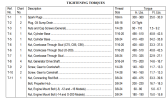
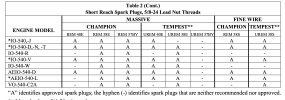
Continental's torques for spark plugs and other stuff, for the small engines (up to O-200):

1746992944558.png

The plug torque for a larger engine like the IO-520 is the same:

1746993207182.png

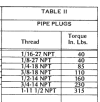
Elsewhere on POA we discussed pipe thread torques:

1746992988687.png

The "18" in the first entry is 1/8" NPT. Typo. Note the rather low torques.

Now, Lycoming:

1746993386857.png

420 inch-pounds is 35 foot-pounds. All Lycomings get the same sparkplug torque.

So, 30 and 35 are the numbers to remember. Continental comes earlier in the alphabet than Lycoming, so it gets 30, while Lyc gets 35. That's how I remembered it.

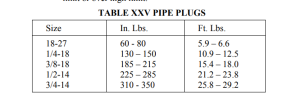
Lycoming's pipe plug torques:

1746993574851.png

The sharp-eyed reader will see that Lycoming's pipe plug torques are a lot lower than Continental's. In any case, overtightening tapered plug threads can split some very expensive parts. VERY expensive.
 
I do my own. Assuming regular "massive" plugs you need:
-wrenches to R&R. I use a torque wrench, including a crow's foot on the B-nut, I don't think the guys in the shop bother...
-antiseize...current recommendation is copper
-gap gauge. champion sells one that works well for airplane plugs
-electrode squeezer tool for setting the gap on worn plugs
-go/no go gauge to tell when the plug is worn out. You stick the electrodes up to it and if they pass into the hole the plug should be replaced.
-picks to remove lead fouling and blaster media
-an abrasive blaster. You can get a cheap one and they work fine. If you lean aggressively, there's not much to clean anyway.
-I don't bother with the resistance/pressure testing. The shop does when they pull them at annual. I'm not sure how critical this is. I carry an extra plug and the tools to change it in my tool kit.
-A big bag of gaskets is nice to have. One of these days I'll get around to annealing the old ones.
-A tray aids in rotating them. You could make one, but I bought one because they're pretty cheap. All of this stuff is actually pretty cheap, especially compared to the cost of the stupid plugs.
Would you know which spark plug to change if you were traveling somewhere or would you have to check all of them?
 
Would you know which spark plug to change if you were traveling somewhere or would you have to check all of them?
The engine monitor will tell me which cylinder and which mag; just have to figure out if it's connected to the top or the bottom plug. Considering how easy as it is to take the top cowl off, and what a pain the bottom one is, I'd change the top one first and see if that solved the problem.
 
I do my own plugs. Used to be a top alcohol drag racer and we used 16 plugs per 1/4 mile pass. Always used new plugs every run so we could read them to tune the engine for the next pass.
So naturally I was going to do my own aviation plugs when I started flying my own plane.
I have 2 sets I rotate in and out of the plane.
The tools to service your plugs are inexpensive except for the pressured tester/cleaner which I don't have.
Here's a couple pictures of the tools I use.
I made a second plug holder, got to have 2 when rotating plugs
Blah blah blah, look at all my tools and cool stuff.

And you didn't even call out the most important one - the beautiful dog. One demerit coming your way!
 
Blah blah blah, look at all my tools and cool stuff.

And you didn't even call out the most important one - the beautiful dog. One demerit coming your way!
Thanks for the doggy compliment. Yeah I do show off too much. Cruiser is a fixture at the airport, he goes with me 99% of the time and fly's great with me in the back seat. He is 14 years old on the 20th of this month. I bet he has 700 hours with me flying.
38745f69-6fd6-4528-aa0d-3958fb7a8056.jpg

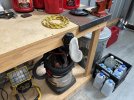
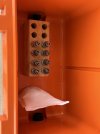
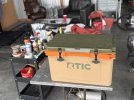
I blasted these plugs clean the other day. They had 122 hours since last cleaning. My current plugs have 117 hours on them since last cleaning. The mag check has still been good but I know I will need to replace them soon. I still have to pick the lead out, inspect them and set the gaps. Until I do that I tossed them into this cooler with a damp rid in there with them to keep them from rusting. Plus they will smell nice!! lol It's been raining a lot around here. Big PIA but worth it! IMG_5335.jpegIMG_5336.jpeg
 
Last edited:
Back
Top