Dehumidifier in T Hanger

wetzelaviation

Pre-Flight
Joined
Dec 5, 2023
Messages
46
Location
Chesapeake, VA
Display Name
Wetzel Aviation
Home Airfield
KCPK
I wanted to share my experience with installing a dehumidifier in my T Hangar for those in humid parts of the country. The model I chose is the Airecoler 70 pint (Airecoler 70 Pints Commercial... https://www.amazon.com/dp/B0GS629KHF?ref=ppx_pop_mob_ap_share) and it’s working well.

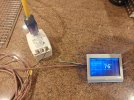
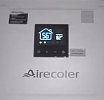
The first day I installed it the humidity was over 60:
IMG_0594.jpeg
It’s showing 56% here 2 hours after turning it on but was 68/69 when we started.

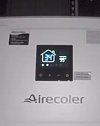
After 12 hours we were in the 30-40 range
IMG_0621.jpeg

That’s a huge improvement. This unit had a positive pump and pumps the water under the hangar door as you can see in the lower right hand corner of this photo and onto the ramp.

IMG_0652.jpeg

I read anything under 50% is good so I’m happy with these results. That $400 investment might just save some maintenance down the road.

Just thought I would share.

I think any decent unit would work and there are some cheaper alternatives but I liked the positive pump and ability to monitor remotely.
 
Cool, thanks for sharing. I think it has a place, but I’m still of the mindset that regular use is going to benefit the airplane more than a dry hangar.
 
The humidity not only effects the engine, but every part of the plane that is susceptible to corrosion - including airframe and avionics. Good move on getting the dehumidifier - now seal up that hangar real good!
 
Good move on getting the dehumidifier - now seal up that hangar real good!
Every t hangar ive been in, it's not just your hangar that you'd need to seal. But your hangar neighbors as well.

I'm skeptical of the internal humidity reading. Would like to see the reading from a standalone meter.
 
These hangars are sealed very well. I’ll get some other data for the ones that want to see the additional data.
 
Curious to know what maintenance you believe it will save on? You might also want to put a another hygrometer at the opposite side of the hangar from the dehumidifer.
I’ll check this and get back with you. These hangars are sealed at the floor very well. The doors probably are not as well sealed but I’ll check other areas in the hangar and post that data.
 
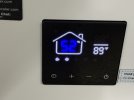
I'm planning on installing a dehumidifier in the crawlspace area of one of our cabins. The commercial dehumidifier we bought is not internet connected and we want to be able to monitor the humidity in that space remotely. We use Honeywell thermostats on all our HVAC units to monitor and control them remotely. So I figured I would use one of the Honeywell thermostats to monitor the humidity remotely through the Honeywell app which we're already using. No problem, we just need 24 VAC supplied to the thermostat. It works. The OP could do the same if there's WIFI around.
IMG20260831071151.jpg
 
Ooh neato. does the RH% change if you move the unit within the hangar? like is this a hyper-local dry-air situation?

I've been toying with A/C in the hangar as a way to flare off excess solar generation. This might be a cheaper stopgap until I get around to it. Does it have a scheduler function?
 
Most de-humidifiers I have seen are 120 volts.
Most AC units are 240 volts.
Most T-Hangars I have seen provide only 120.

It's an interesting idea, but my first thought was similar to this:
Yeah. Putting a dehumidifier in any hangar I ever had would be like trying to reduce the humidity for the entire county.
I'd like to see more results, especially from a hygrometer set on the other side of the hangar, as @Bell206 said.
 
Mini-split heat pump with an inverter drive is a way better option for just a tad more money. A dehumidifier is an air conditioner that pumps the hot air back into your environment.... so its kinda self defeating. Engine dehumidifiers require extra steps and cannot provide any heat if you need it.

Only issue with a mini-split is that that you need an outside wall.
In a pinch, could you vent through the roof?
 
I've been considering this as well. Like most, my hangar is not a hermetically sealed chamber. With an enclosed volume of roughly 14,500 ft3, and with various gaps and discontinuities through which air is free to flow, it will take a unit 2-3x the size of that needed for the same volume of air in a dwelling. The goal is not to reduce the humidity to the vanishing point*, but to around 30%. Even if that goal is not practically achievable, a reduction of 25% or more may make the effort worthwhile.

The better solution would be to bring the airplane home to southern AZ where I now reside. Perhaps some glorious day, a hangar will become available and I'll do just that.

*For some airplanes with important parts made of wood, very low humidity could prove detrimental--especially if it were subjected to a sudden and dramatic change. Just a hunch.
 
I used a dehumidifier in a 2 car garage. It was very effective and made it feel great inside without AC during the summer.
My T hangar has too many air gaps in the walls that would make it impossible to get dry during the hot and humid summer days and nights.
I have let a fan run in my hangar when the humidity is high, it helps.
 
Last edited:
I have never seen a sealed T-hangar. What are the odds the relative humidity outside also decreased during the experiment? In 20 years I've seen a lot of attempts to dehumidify an unconditioned, marginally sealed, uninsulated metal building. I've yet to see a success story.
 
What are the odds the relative humidity outside also decreased during the experiment?
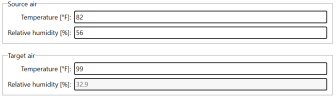
From the calculator that I posted above. I admit I was guessing on the target temperature since it was hard to read on the second photo.

1788299454427.png
 
I use a 305 pint dehumidifier. My hangar is sealed pretty good so no issues there. I'm also in the process of installing a 5 ton ducted mini split heat pump.. I had to get approval from the county attorney and then from the board of commissioners but luckily both gave me the green light on the install. The hardest part of this install is that I'm the second hangar to the end so that means a 65ft 4" pipe chase through my neighbors hangar for the refrigerant lines.
 
From the calculator that I posted above. I admit I was guessing on the target temperature since it was hard to read on the second photo.

View attachment 154717
This is the answer. The temperature change inside the hangar drove the entire change in relative humidity.

Partial pressures of gasses and all that. You'd need a hermetically sealed hangar (or almost) for anything but a monster sized dehumidifier to make an impact. 'Cause that gaseous H20 is gonna find its way in...
 
Last edited:
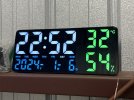
Just to show some things that people have inquired about. Here is the farthest point in the hangar.

IMG_0689.jpeg

Humidity is 80% outside right now so no the humidity outside did not decrease. In fact currently humidity outside is 80% and inside the hangar it’s 44%.

Here is also the other side (farthest distance from the unit, ignore the incorrect time and date as we must have lost power at some point)

IMG_0686.jpeg

So inside ranges from 44% to 54%

The goal is 55% or lower so I’m happy with the results.

We have really high humidity most days this time of year so to see it in a range from 30-55 I’m gonna take that as a win for the experiment.

Yes in my graph humidity dipped to 50 but that’s when I was seeing the 30’s
 
Humidity is 80% outside right now so no the humidity outside did not decrease. In fact currently humidity outside is 80% and inside the hangar it’s 44%.
In general, the RH inside a hangar is going to be lower than outside in the summer because it'll be warmer inside than outside the hangar. So we need to know RH inside, temp inside, RH outside, and temp outside to calculate if there is really less airborne moisture inside the hangar or if the RH is simply lower because of a temperature difference.
 
Doors were closed all day:
IMG_0690.jpeg

Opened the doors and 15 mins later

IMG_0691.jpeg

So it’s definitely having an effect.

About to close up for the day and we will see where it lands.
 
In general, the RH inside a hangar is going to be lower than outside in the summer because it'll be warmer inside than outside the hangar. So we need to know RH inside, temp inside, RH outside, and temp outside to calculate if there is really less airborne moisture inside the hangar or if the RH is simply lower because of a temperature difference.
I’ll post tomorrow with this info as I’m gonna be working on a plane tomorrow so I’ll be out here and can give you all parameters, inside, outside, etc.
 
Ooh neato. does the RH% change if you move the unit within the hangar? like is this a hyper-local dry-air situation?

I've been toying with A/C in the hangar as a way to flare off excess solar generation. This might be a cheaper stopgap until I get around to it. Does it have a scheduler function?
The RH changes a little bit if you move around the hangar but not much. This one can be set to turn on then it gets to 55%. As soon as it hits 55% RH it kicks on. It can schedule on a timer but it’s set to try and beep humidity below 55%.
 
I used a dehumidifier in a 2 car garage. It was very effective and made it feel great inside without AC during the summer.
My T hangar has too many air gaps in the walls that would make it impossible to get dry during the hot and humid summer days and nights.
I have let a fan run in my hangar when the humidity is high, it helps.
I noticed it was more comfortable working in the heat today with a fan on. I worked a few hours and didn’t mind it. Normally I’m there an hour and I’m drenched.
 
Back
Top