Couple questions

bdoss2006

Pre-Flight
Joined
Mar 1, 2025
Messages
72
Display Name
bdoss2006
I have a few questions. The first concerning flight instruments.

Why does an altimeter not need to be set for temp as well as pressure to determine the true altitude? Since they both affect air density and pressure, wouldn’t setting the temp be needed to make it correct? Also, sorta on the same topic, since an ASI uses dynamic pressure and the difference from static pressure, why is IAS not automatic TAS? If dynamic pressure goes down due to less dense air, therefor indicating a lower IAS, then static pressure will also go down. Wouldn’t that mean it will be TAS no matter what the pressure is because the relationship between the two is still the same?

Last question on weather. Thankfully this time of year is about past us, but how do yall plan and make go/no go decisions on the summer evenings when the pop up thunderstorms happen about everyday? Theres never a very good forecast for them. TAFs usually just have a 30% probability, and anything else just says it’s possible. They just pop up out of nowhere. Is there some weather product or forecast you can use to aid in decision making, or am I just stupid and one should be able to predict from the conditions when it will happen?
 
Last question on weather. Thankfully this time of year is about past us, but how do yall plan and make go/no go decisions on the summer evenings when the pop up thunderstorms happen about everyday? Theres never a very good forecast for them. TAFs usually just have a 30% probability, and anything else just says it’s possible. They just pop up out of nowhere. Is there some weather product or forecast you can use to aid in decision making, or am I just stupid and one should be able to predict from the conditions when it will happen?

I don't consider a forecast of potential isolated thunderstorm development to be a game changer in the summer time if they are strictly airmass types not due to any frontal activity, as long as you do the following:

Stay visual below any cloud bases in conditions that allow for good visibility at a safe altitude, in the daytime.
Plan a route and as you proceed keep miles of distance between tall cloud buildups that you encounter, divert left or right as necessary.
When you see rain-shafts don't fly through or beneath them, keep a good distance in the clear away.
If you're equipped, use a NEXRAD weather depiction and make sure it's similar in location to what you are viewing outside the windows.
Stay aware of where runways are located in case the buildups begin to cluster up and block your intended route.
Always have an out and never wait too long to implement a change of plans to backtrack or find an airport that's in the clear to regroup if necessary.


What you should never do:
Attempt to climb above vertical developing (or existing clouds) in an effort get on top and proceed visually above or between the cloud buildups.
Continue to fly towards a very widespread area of building cumulus, if you can't go around it then stay away from it.
Fly into rain, cloud, or any area that reduces your visibility.
Proceed at night while navigating anywhere near buildups or scattered thunderstorms.


Stick with the above recommendations and don't be afraid to proceed and take a look. Around much of America the majority of summer forecasts include chances of scattered airmass type thunderstorm development. And almost always there's adequate room to fly in-between them.
 
You need an altimeter for 2 reasons:
1.Don't hit the ground
2.Don't hit other airplanes

The setting you hear over the radio and dial into the Kollsman window is already adjusted for temperature, so that takes care of 1. Everybody using the same setting takes care of 2.
 
I have a few questions. The first concerning flight instruments.

Why does an altimeter not need to be set for temp as well as pressure to determine the true altitude? Since they both affect air density and pressure, wouldn’t setting the temp be needed to make it correct? Also, sorta on the same topic, since an ASI uses dynamic pressure and the difference from static pressure, why is IAS not automatic TAS? If dynamic pressure goes down due to less dense air, therefor indicating a lower IAS, then static pressure will also go down. Wouldn’t that mean it will be TAS no matter what the pressure is because the relationship between the two is still the same?

Last question on weather. Thankfully this time of year is about past us, but how do yall plan and make go/no go decisions on the summer evenings when the pop up thunderstorms happen about everyday? Theres never a very good forecast for them. TAFs usually just have a 30% probability, and anything else just says it’s possible. They just pop up out of nowhere. Is there some weather product or forecast you can use to aid in decision making, or am I just stupid and one should be able to predict from the conditions when it will happen?
The altimeter has numerous errors and displays indicated altitude, not true altitude. For an altimeter to display true altitude it must be set to a proper airport altimeter setting and the standard temperature for that altitude exists. That assumes there is not an error in the altimeter. A correction card exists in the airframe logbooks recording altimeter errors for IFR current aircraft.

The TS forecast you provide is for scattered air mass thunderstorms. The forecast could say there is a 100% chance of TS, but only 30% of the forecast area would experiance them.
 
Last edited:
I have a few questions. The first concerning flight instruments.

Why does an altimeter not need to be set for temp as well as pressure to determine the true altitude? Since they both affect air density and pressure, wouldn’t setting the temp be needed to make it correct?
The altimeter is not meant to measure true altitude and never does except under standard conditions with a perfect instrument and static system. Temperature error is usually too small to be a concern, but there is such a thing as a Cold Temperature Airport, which are typically in mountainous areas and require IFR approach minimums to be increased when temperature is below a certain number. This is not something you should worry about as a student pilot. The altimeter setting is adjusted for temperature so that your altimeter reads field elevation on the ground. That adjustment is why sometimes the altimeter setting and sea-level pressure (SLP in a METAR) can be different (even after converting hPa to "Hg).

Also, sorta on the same topic, since an ASI uses dynamic pressure and the difference from static pressure, why is IAS not automatic TAS? If dynamic pressure goes down due to less dense air, therefor indicating a lower IAS, then static pressure will also go down. Wouldn’t that mean it will be TAS no matter what the pressure is because the relationship between the two is still the same?
The airspeed indicator doesn't know density and the ratio of dynamic to static pressure isn't fixed or linear across all speed ranges and air densities. Think about the converse: if your ASI did NOT have a static source in addition to the pitot tube, it would be wildly inaccurate at different altitudes, instead of the relatively small inaccuracies between IAS an TAS that we see in GA.
 
since an ASI uses dynamic pressure and the difference from static pressure why is IAS not automatic TAS?

I'll take another angle on this.

Your IAS measures the force of the air, the air mass (number of air molecules, air density) TIMES the air velocity. It's this "Air Force" that pushes against your pitot tube to give you your AIS as well as pushes against your wing and keeps you in the air.

Now say you go to altitude, go to a lower density air. The air might be moving fast, but with so few air molecules you just don't have the same "push" as you did in thicker air. Thus the IAS shows lower than the actual air velocity because those few air molecules just aren't punching that pitot tube as hard. BUT you need to pay attention to the IAS as that will give you your true stall speed, maneuvering speed, etc. regardless of how fast the air molecules are moving past your plane.

TAS: We do also need to keep track of how fast the air is moving regardless of the air density, thus we compute TAS by taking IAS and adjusting for air density and temperature. After all, it's the TAS that ultimately gives us our Ground Speed - the real "how soon do I get there". We climb to higher altitude even with its lower IAS to go faster because of less air resistance in the thinner air.
 
Why does an altimeter not need to be set for temp as well as pressure to determine the true altitude? Since they both affect air density and pressure, wouldn’t setting the temp be needed to make it correct?
The altimeter just measures pressure. The temperature may affect that pressure, but in effect when you dial in the altimeter setting you're just zeroing out the instrument to compensate for a nonstandard pressure, regardless of what causes that nonstandard pressure. It's accurate enough for normal flying.
Also, sorta on the same topic, since an ASI uses dynamic pressure and the difference from static pressure, why is IAS not automatic TAS? If dynamic pressure goes down due to less dense air, therefor indicating a lower IAS, then static pressure will also go down. Wouldn’t that mean it will be TAS no matter what the pressure is because the relationship between the two is still the same?
The altimeter doesn't directly measure dynamic pressure; it measures the difference between total pressure at the pitot tube (pitot = "P-tot" = "pressure total") and static pressure. Total pressure is static pressure plus dynamic pressure. The static pressure, including any temperature or density factors, cancels out on both sides of the equation, so you're left with dynamic pressure, which is proportional to density, which is inversely proportional to temperature.
 
The altimeter is not meant to measure true altitude and never does except under standard conditions with a perfect instrument and static system. Temperature error is usually too small to be a concern, but there is such a thing as a Cold Temperature Airport, which are typically in mountainous areas and require IFR approach minimums to be increased when temperature is below a certain number. This is not something you should worry about as a student pilot. The altimeter setting is adjusted for temperature so that your altimeter reads field elevation on the ground. That adjustment is why sometimes the altimeter setting and sea-level pressure (SLP in a METAR) can be different (even after converting hPa to "Hg).


The airspeed indicator doesn't know density and the ratio of dynamic to static pressure isn't fixed or linear across all speed ranges and air densities. Think about the converse: if your ASI did NOT have a static source in addition to the pitot tube, it would be wildly inaccurate at different altitudes, instead of the relatively small inaccuracies between IAS an TAS that we see in GA.
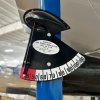
I always like this airspeed indicator to easily explain density effect on indicated airspeed. 1787922067704.jpeg
 
^^^^ This ^^^^ The altimeter setting that you dial in to the Kollsman window is your corrected pressure.
 
A high time airline capt told me that (in the summer) if you're on the ground by 2:00 you'll miss 80% of those popups. Lots of morning flying June-September.
 
Back
Top